There is a very particular kind of frustration that hits dental practices about four months into posting. The videos are landing. One of them - the hygienist scaling a decade of tartar off the model mouth - did 1.4 million views. The comments are full of "this is so satisfying" and "I need to go to the dentist."
And Tuesday's hygiene column still has the same three open slots it had in May.
That gap is almost never a content problem. It is a handoff problem - and in this profession it has a twist most others do not. Dental content travels nationally by default, and your chair does not move. The person who wrote "I need to go to the dentist" lives eleven hundred miles away, and the one who lives ten minutes away has been meaning to call for eight years and is still afraid of what you will say.
So you can earn the attention of a million people and fill nothing. Meanwhile the ones who could sit in your chair are making a series of small, separate decisions between "this office seems kind" and "my new-patient exam is Thursday at 4." Most practices have quietly built four or five of the nine.
This guide is about sealing those leaks. It picks up where the 90-day growth roadmap leaves off and plugs into the broader strategy in our complete TikTok guide for dentists. If people are already watching you, everything below is about making sure the ones who can actually reach you find their way to your new-patient form - without a lecture, and at the pace they are ready for.
The short version:
- Views are not the product - a patient inside your drive radius who keeps the second appointment is. A few hundred people in your metro beat a million scattered viewers, because only one group can be in your chair on Tuesday.
- Your profile is the front desk. City and "taking new patients" in the bio, a pinned trio that dissolves the fear and the shame, and a new-patient form one tap away that asks for the city first.
- The door is a form, never "DM me." An inbox cannot ask where the person lives, and it is not a place to receive a photo of anyone's mouth.
- Your inbox will receive four messages - the emergency, the photo, the in-metro request, and the out-of-radius case inquiry. Each needs a prepared reply before the first one arrives.
- The first visit has to match the video. If the walk-through promised that nobody lectures, nobody lectures - and the team on camera should be the team in the room.
- Track kept second appointments, never DM volume. You will undercount this channel unless you measure it, and you can measure it without a single patient ever appearing in a marketing spreadsheet.
What's Inside
- 1. Why Views Don't Fill a Schedule
- 2. The Patient Ladder: Nine Rungs From Viewer to the Family That Follows
- 3. Rungs 1-3: Turning Nationwide Views Into People Inside Your Drive Radius
- 4. Rung 4: The Trigger Moment - Your Profile Is the Front Desk
- 5. Rung 5: Earning the New-Patient Request (CTAs That Work Under Your State Board)
- 6. Rung 5, Continued: The Four Messages and the Reply for Each
- 7. Rung 6: The First Visit Has to Match the Video
- 8. Rungs 7-9: Recall, the Big Case, and the Family That Follows
- 9. High-Intent Content: The Videos That Actually Produce New-Patient Requests
- 10. HIPAA and the State Board at the Inquiry Stage
- 11. Tracking Which Videos Are Actually Filling the Schedule
- 12. Amplify the Video That Already Fills the Schedule - Before the Benefits Deadline
- Frequently Asked Questions
1. Why Views Don't Fill a Schedule
A view is a stranger watching tartar come off a model mouth for eleven seconds. A new patient is a person deciding to sit in a chair, open their mouth, and let someone they have never met look at the thing they have been embarrassed about for years. Nothing about the first automatically produces the second.
In practice, dental accounts leak patients in five predictable places. See how many of these describe your account right now:
- The audience is the whole country and your chair is on one street. A satisfying clip reaches viewers from Maine to San Diego, which feels incredible and fills nothing. This is the national-dental-account trap the pillar guide warns about: a huge following, a flood of "how much for veneers" from four time zones away, and a hygiene column that never changes. Your view count is measuring how many people find teeth satisfying, not how many could book on Monday.
- The next step is invisible. The video ends, the viewer thinks "I really should go," and nothing on screen tells them where or how. Four seconds later they are watching someone restore a cast-iron pan, and the thought is gone until the next time they bite down on something cold.
- The profile makes them work. They tap your name, and the bio says "Smiles by Dr. J 🦷 | Coffee first" with no city, no hint of whether you take new patients, and no word about insurance. The link goes to a website whose new-patient button is three menus deep. Every extra tap costs you a slice of the people who were finally ready.
- The request goes cold - and it took them eight years to send it. Asking a dentist to look at teeth you are ashamed of is one of the hardest messages a person writes. When it sits for a week, they do not follow up. They conclude that this, too, was a bad idea, and it may be another year before they try anyone.
- Nobody knows what it costs, or whether it is "too late." A huge share of people who would happily be your patients never reach out. They assume they cannot afford it, that you will be angry, or that their mouth is too far gone for a normal office. If your videos never address those three, your audience quietly self-disqualifies.
Here is the encouraging part: every one of those is fixable in an afternoon, and none of them require you to make better videos. You need the path between the video and the first visit to be short, obvious, city-anchored, and free of judgment.
2. The Patient Ladder: Nine Rungs From Viewer to the Family That Follows
We call the path the Patient Ladder. The pillar guide introduces it; this guide is about repairing it. Each rung is a separate decision the person makes, and each one has its own failure mode:
- Viewer - they watched one walk-through to the end. They know nothing about you. The only job here is to be worth another eleven seconds, which mostly means opening with the sentence already in their head instead of your credentials.
- Follower - they followed because you made something embarrassing feel ordinary. The job is to make it obvious there is a lane to follow for, rather than a correction one day, a dance trend the next, and then a holiday-hours graphic.
- Someone who now believes coming back will not be a lecture - the rung only your profession has. Weeks of content later, the shame has quietly dissolved, and you are the office they picture when they imagine finally going.
- Trigger moment - the chipped tooth before the wedding, the school form, the benefits letter, the toothache that finally will not quit, the new insurance card in January. You do not cause this rung; you are simply present for it. It is why requests arrive in lumps rather than a steady drip.
- New-patient request - and the photo in the DMs - they raised their hand. Most hands say "are you taking new patients?" Some say "is this a cavity?" with a picture attached. This is the fragile rung, and the first one you can directly measure.
- First visit - the request was answered, the exam is on the schedule, and they showed up. This rung belongs to your response time, your forms, and whether the room matches the video, not to your camera.
- The recall relationship - the six-month visit they actually keep. This is the rung that makes you different from most of this series: the therapist's success is a client who no longer needs her, yours is a patient who comes back twice a year for as long as they live in town.
- The big case - the crown when it is time, the aligners they have been thinking about since the explainer, the implant they finally feel safe enough to ask about. It only happens on a foundation of recall visits that felt like the account promised.
- Referral - the family that follows - the spouse who books because someone at home finally likes their dentist, the kids, the coworker who has been "meaning to." And colleagues refer: the pediatrician, the physician, the orthodontist two towns over who now has a name to write down.
Two things follow from this shape. First, you cannot skip rungs. Videos that ask first-time viewers to book an exam convert badly, because you are demanding rung five behavior from rung one people.
Second, your worst rung caps everything above it. A practice with brilliant content and a new-patient form nobody checks fills fewer chairs than a practice with average content and a reply that arrives the same afternoon.
Before you make another video, walk the ladder yourself. Open your account in a private browser window as if you were a 38-year-old in your city who has not seen a dentist since a bad experience in college and just got the benefits letter. Where exactly do you get stuck?
3. Rungs 1-3: Turning Nationwide Views Into People Inside Your Drive Radius
Reach is not the goal. Reach among people who can get to your chair is the goal. Three thousand followers inside your metro is a full hygiene column for years. Three hundred thousand spread across the country is a lovely thing to have and an inbox full of people asking what you charge for veneers.
Your audience shape is the two radii problem in miniature. A general practice fills its schedule from a drive of fifteen to twenty minutes. A cosmetic, implant, or full-arch case will drive three hours or fly in. So "local" means one thing for the schedule path and something wider for the case path - but for both, it is a shape you can draw on a map, not a nation.
Everything about rungs one through three is about making that fit unmistakable, to the algorithm and to the humans watching:
- Say your city out loud, in the video. Not as a pitch - as context. "I'm a general dentist in Tampa, and this is the question our front desk gets three times a day." One sentence tells the viewer and the platform where you are, and it quietly tells everyone else that the new-patient link is not for them.
- Balance travelers with anchors. The DIY-dentistry correction and the satisfying clip travel nationally and build the audience. The insurance explainer, the "here is what our office actually looks like" tour, the local Halloween video, and replies to commenters in your metro anchor you to a place. The content ideas library sorts fifty-plus ideas into those two piles; a roughly four-to-one mix keeps the account growing without letting it drift national by accident.
- Hook on the fear, never the shame. "If your heart races in the dentist's parking lot" brings you someone who recognizes their own life. "If your teeth look like this, you have gum disease" over a close-up of someone's neglected mouth brings you an audience that laughs at strangers - and it confirms the exact fear that has kept your future patient away. The pillar's hook rule builds rung three. The shame hook builds a following that never books.
- Show the room and the team. Filming in your real operatory - with the model mouth, the mask and loupes off for talking heads, and the frame rules from the filming guide - turns you from a voice over a satisfying clip into a room someone can picture sitting in, with faces they will recognize at the front desk. For a person whose biggest fear is the unknown, that glimpse does more than any credential.
- Be there every week. Rung three is built by repetition, not reach. The person who finally believes you will not lecture them has usually seen you a dozen times over two months. The account that posts three times and stops never gets there.
- End with a reason to follow, not a reason to book. "I answer one front-desk question every Tuesday" moves rung one to rung two. "Book your exam today" does not, because they do not know you yet.
Then check the map. TikTok's follower analytics show where your audience lives, but your most honest indicator sits one rung higher: the share of new-patient requests that come from inside your drive radius. If that share is climbing, rungs one through three are working. The growth roadmap builds that check into the 90-day plan.
This is also the one place paid amplification changes the math outright. Promotion lets you choose the metro directly instead of hoping the algorithm finds it - more on that in section 12.
4. Rung 4: The Trigger Moment - Your Profile Is the Front Desk
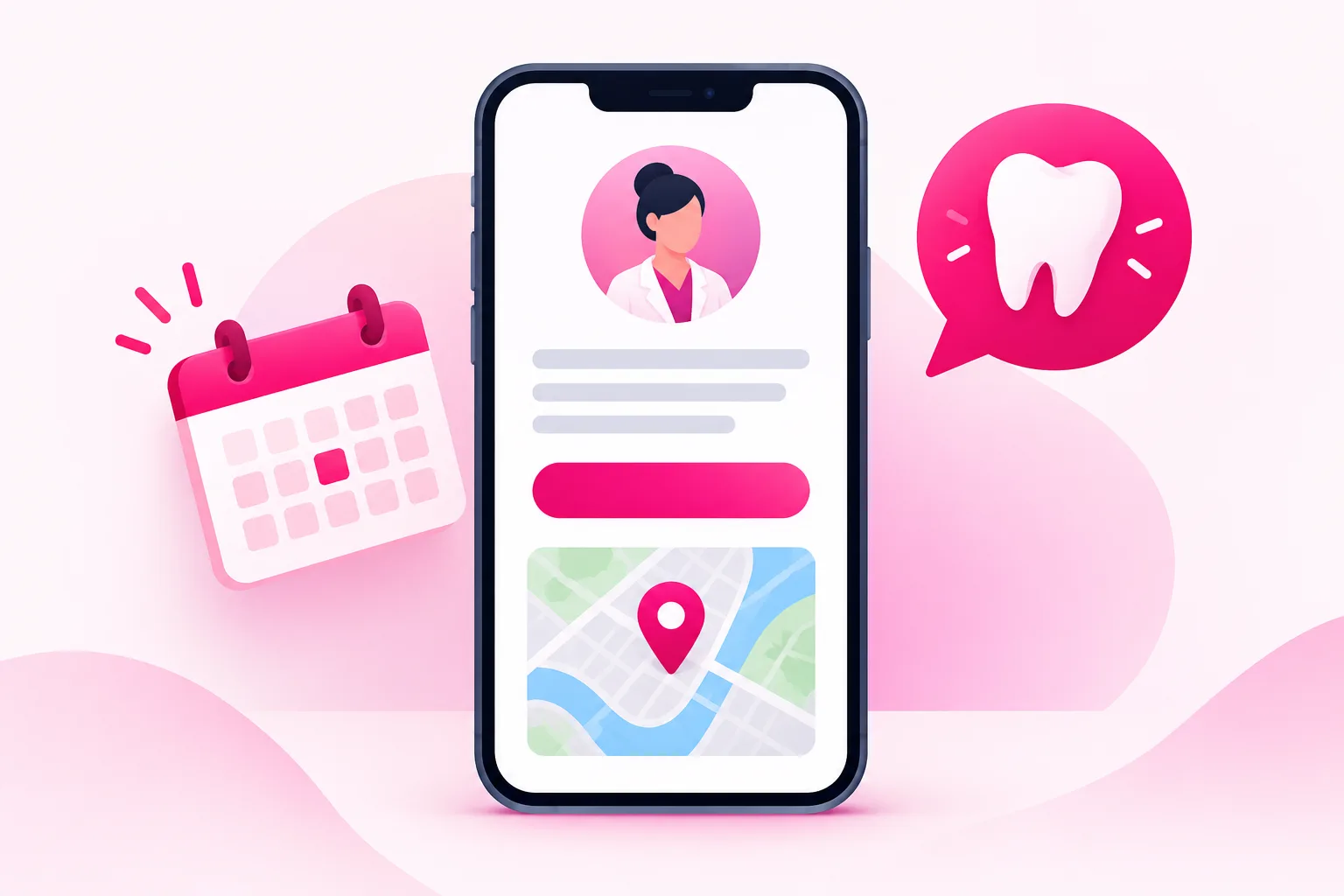
Rung four is the one you do not control. A molar cracks on a popcorn kernel. The school sends home a form that needs a dentist's signature. The insurance company mails a letter about benefits that expire December 31. A new card arrives in January. A daughter gets engaged and her mother looks at her own smile in the photos.
In that moment, a person who has been quietly watching you for months finally taps your name. What happens in the next six seconds decides whether they become a patient or go back to chewing on the other side. Treat that screen the way you treat your actual front desk: calm, clear, and obvious about where to go next.
The bio: your lane, your city, and whether you have room. Not "creating confident smiles." Something a nervous person can act on:
"General & family dentist, Tampa. Nervous patients welcome - nobody here lectures. Taking new patients now. Most PPO plans + a membership plan if you have no insurance. Education only. Not monitored for emergencies: call the office."
Use titles exactly as your state grants them - "cosmetic dentist" is not an ADA-recognized specialty, and many boards restrict the claim. And if hygiene genuinely is booked out three months, say "waitlist" rather than absorbing requests you cannot serve. An honest bio still books the people who will wait for you, and it sends the rest toward an office that can see them this month.
The pinned trio. You get three pinned slots, and they are the only part of your feed whose order you control. Use them for the three fears that stop people from reaching out:
- The come-back walk-through - "it's been eight years - here is exactly what happens when you come back, and nobody is going to lecture you." What we ask, what we look at, what we do not do on day one. This is the video that dissolves the shame, and it is the one a person holding a benefits letter most needs to find. The ideas library has a dozen versions of it.
- A short who-we-are video - your name, your city, the hygienist who will actually clean their teeth, the front-desk person who will answer the phone, and who you see and do not see. It turns an account into an office with faces, and it gently filters the out-of-radius requests before anyone has to be turned away.
- The what-it-costs video - what a new-patient exam and cleaning runs, which plans you take, what an annual maximum is, and what the membership plan covers for people with no insurance. Almost nobody in the profession makes this video, and it removes the barrier that silently disqualifies the largest share of your audience. The cost explainer formats keep the numbers general so the video stays true.
The link, and what sits behind it. One tap, landing on something that takes a minute to complete. Not your full website, and not a page of eleven buttons. For the schedule path, the destination is a new-patient request form, and it should live on your practice-management system or a HIPAA-compliant form tool - because the moment someone types "I think I have an abscess" into it, it is health information.
- Ask the city first. "What city are you in?" is the first question, not the last. Someone forty minutes away is a fan, not a patient, and a kind page that says so - and suggests they look for a general dentist near them - is better than a request that sits in a queue you will never fill.
- Keep it tiny. Name, phone or email, city, insurance yes or no, and a best time to call. One optional line: "Roughly how long since your last visit?" The full health history comes later, through the portal, once there is an appointment on the schedule.
- Put the emergency line on the form. A sentence at the top - "This form is checked during office hours. If you have facial swelling, fever, or trouble swallowing, go to an emergency room. For a dental emergency, call [number]" - costs you nothing and matters enormously to the one person who needs it.
- Offer a time, not a wait. If your system allows online scheduling for new patients, let them pick the exam slot right after the city screen. Choosing a time themselves converts far better than "we will be in touch."
For the case path, the link is a consult-with-photos intake instead - on a HIPAA-compliant platform, never through the DMs - and the pinned trio becomes the signature-procedure explainer, the travel-and-financing video, and the who-we-are. The monetization guide covers that intake in detail.
One seasonal note. The pinned trio and the link can follow the benefits calendar. From late September through December, the use-it-or-lose-it explainer takes the first pinned slot, because that is what the year-end wave arrives looking for. In late December it swaps for the new-plan walk-through. In August, the back-to-school checkup video can take a slot. A profile that anticipates the moment books the moment.
5. Rung 5: Earning the New-Patient Request (CTAs That Work Under Your State Board)
This is the rung where most dental accounts either get shy or get pushy, and both cost patients. The shy version never mentions that you take new patients at all - a real problem in a profession where people assume the good offices are full and the ones with openings must be bad.
The pushy version sounds like a mailer - "New patients: FREE whitening with your first exam! Limited time!" - and attracts one-visit shoppers who want the whitening and never keep the second appointment, while the careful, anxious people who make the best recall patients scroll past.
What works is a call to action that names the moment the viewer is in, lowers the stakes, and points at the form:
- The long delay: "If it has been years and the part you dread is what we will say about it, I made a video about exactly what happens when you come back. It is pinned. We are in Tampa and taking new patients, and the request link is in my bio."
- "Too far gone": "There is no mouth we have not seen a version of. Nobody here is going to be shocked, and nobody is going to lecture you. That is a promise, and it is on video."
- The cost fear: "If money is the thing stopping you, watch my video on what a first visit actually costs and what the membership plan covers before you decide you cannot afford it."
- The benefits deadline: "If you have dental insurance, there is a number on your plan that resets to zero on December 31 whether you used it or not. Here is how to find it and what you can still get done before then."
- The fear itself: "If your heart races in the parking lot, tell us on the form. We have a whole way of doing the first visit for nervous patients, and it starts with you keeping your coat on if you want to."
- The universal one: "Ask the general version of your question in the comments and I will answer it in a video." It costs the viewer nothing, gives you your next video, and keeps the specifics of anyone's mouth out of a public thread.
Five things to keep off your videos, whatever state you practice in. First, anything that sounds like a promise. "Painless," "guaranteed," "the best dentist in Tampa" - most boards treat these as misleading, and the ADA Principles of Ethics say nothing in your advertising may be false or misleading in any material respect.
Second, before-and-after photos that do not meet your state's rules. Many boards allow them with conditions - the patient's written authorization for this use, no alteration, comparable lighting and angle, and a disclosure that results vary. Some are stricter. Know yours before the reveal goes up, and know that TikTok's ad rules will not let you promote the reveal later anyway.
Third, unlabeled discounts and bait specials. A new-patient special is legal in most states but often has to disclose the exact conditions, the regular fee, and the expiration - and a free-whitening bait offer attracts the one-visit shopper the monetization guide warns about. If you offer a special, make it the exam-and-x-rays bundle that begins a relationship, disclosed properly.
Fourth, telling the viewer what is wrong with their mouth. "If your gums bleed, you have periodontal disease - book now" is a diagnosis of a stranger, and it also makes the video ineligible for promotion later under TikTok's personal-attributes rule.
Fifth, the phrase "DM me a photo." It feels helpful and it is the most expensive four words in the vertical. It invites people to send pictures of their mouths into a channel that was never built to protect health information, it cannot screen for city, and it turns your evenings into an unlicensed telehealth service. The new-patient form is the door. Say so, kindly, every time.
6. Rung 5, Continued: The Four Messages and the Reply for Each
If you fix exactly one thing from this article, fix this one. No matter how clearly your bio says "use the form," people will message you. Those messages come in four kinds, and you need a saved reply for each before the first one arrives.
Message one: the emergency. "My face is swelling and I can't sleep, can you see me tonight?" You cannot triage a stranger over DM, and no dentist can. The rung breaks when you go silent because you are unsure what you are allowed to say. What works is warm, prepared, and short:
"I'm glad you reached out, and I'm sorry you're hurting. I can't assess anything over messages and this inbox isn't checked around the clock. If you have swelling in your face or neck, a fever, or any trouble breathing or swallowing, please go to an emergency room now - that is not a wait-until-morning situation. For anything else, call our emergency line at [number] and you'll reach a real person."
Be honest with yourself about what this reply is. It is a kindness, not a safety net. You will not see every message in time, and you should never imply that you will. The real protection is built before the message: the emergency line in the bio, in a pinned comment on every video, and on the form.
Message two: the photo. "Is this a cavity?" with a picture attached. This is the message unique to your profession, and it is the one that tempts every dentist to help. Do not diagnose. The reply the pillar guide recommends does three things - it declines honestly, it removes the shame, and it points at the door:
"Thanks for trusting me with this. I genuinely can't tell from a photo - nobody can, and I wouldn't want to guess about your mouth. If it's hurting or you're worried, that's reason enough to get it looked at, and nobody is going to lecture you about how long it's been. If you're near Tampa, the new-patient link in my bio gets you in this week. If you're not, any general dentist can check this at a regular exam."
Say the first half publicly once as a video - "why I can't tell you what that is from a picture, and what I can tell you" - and it becomes one of your most-saved posts. Then delete the photo from the thread once you have replied. It is a picture of someone's health, sitting in an app.
Message three: the in-metro request. "Hi, I'm in Riverview - are you taking new patients?" The reply does one thing: it moves them to the form, without engaging with anything clinical.
"Yes, we are - and thank you for reaching out, that's not a small thing to do. I keep anything about your teeth out of this inbox because it isn't private enough, so the next step is the short form at the link in my bio. Our front desk replies to every request the same business day."
Then keep the promise. The rule for new-patient requests is the same business day, every time. This person may have taken eight years to write to you, and silence confirms every fear they had about asking. The front desk owns this - it is the most natural fit in the office - with one firm boundary: they schedule, they never assess. "Is this a cavity?" gets the photo reply, from anyone who touches the inbox.
Message four: the out-of-radius case inquiry. "How much for veneers? I would fly in." For a schedule-path practice this is the message you handle worst - usually by not answering, or by quoting a number. The person asking just decided to trust you with the thing they are most self-conscious about. A "no" that leaves them with a next step is still help:
"Thank you for asking - and for trusting me with it. I can't quote anything without seeing you, and I'm a general practice that serves the Tampa area, so I wouldn't be the right fit for someone traveling. I made a video on what to ask any dentist before you commit to veneers, and how to tell a licensed office from a 'veneer tech.' It's pinned. Please don't let this 'no' send you to a rented room with a ring light."
If you are a case-path practice, this message is the whole business, and the reply points at the consult-with-photos intake instead - still never a quote, still never a diagnosis in the DM. Either way, that reply is the honest escape from the national-account trap. You cannot treat them, but you can make sure the trust you built gets spent on finding someone licensed - which, in a genre full of unlicensed composite veneers, is a public service.
Then measure it. Pick a week, log the time of every new-patient request and every first reply, and look at the median gap. Most offices that do this for the first time find a number that surprises them - and fixing it is free.
7. Rung 6: The First Visit Has to Match the Video
Here is the quiet advantage of patients who come from content: they arrive different. A person who found you in an insurance directory is comparing forty names and has no idea who any of you are. A person who has watched twenty of your videos already knows how you talk, what your hygienist looks like, and whether they believe you when you say nobody lectures.
Practices that build a real in-metro audience report the same three things about these first visits:
- The fear is mostly handled. They watched the walk-through. They know about the x-rays, the probing, and the conversation that comes after. The nervous-patient protocol you described on camera is the one they are expecting, and expecting it is most of what makes it work.
- The fee conversation is easier. Your what-it-costs video had that conversation weeks ago. They arrive knowing roughly what the exam runs, what an annual maximum is, and whether they want the membership plan.
- They show up. People who have watched you for months keep their appointments. Show rate is the least glamorous number in a practice and, in a finite schedule, one of the most valuable - a no-show new patient is worth less than none, because the slot was going to be filled by someone.
Which means the job on the first visit is not to sell. It is to be the office from the videos. If the walk-through promised that nobody lectures, nobody lectures - not the dentist, not the hygienist, not the front desk making small talk about "wow, it's been a while." If the who-we-are video introduced a hygienist by name, that hygienist should be the one who greets them. The team on camera is the team in the room, or the promise is broken in the first ninety seconds.
Between the request and the visit, remove friction. Send the health history through your secure portal the same day the appointment is made. Offer an exam within a week or two if you possibly can - the trigger moment has a shelf life. Link the come-back walk-through in the confirmation text. It is already public, it is already made, and it is the best no-show prevention you own.
The lapsed adult, handled well. The most valuable new patient in your schedule is often the one who has been away the longest - not because you will upsell them, but because a decade of deferred care means a real treatment plan, presented honestly, that they have finally decided they are ready to hear.
Present it the way your videos would: what is urgent, what can wait, what each thing costs and why, and what the benefits letter means for the order. The monetization guide shows why case acceptance on treatment you already diagnosed is the second income stream of a dental account, and it starts here, in the chair, with the same tone as the feed.
One thing is unique to you. This patient may feel like they know you - they have seen you two dozen times, and you met them four minutes ago. Let that be warm rather than strange: "You've probably seen more of me than I have of you, so tell me what you're most worried about and we'll start there." And mention, lightly, that nothing about their care will ever appear on the account unless they sign a specific authorization for it - said in the chair, it reads as respect.
8. Rungs 7-9: Recall, the Big Case, and the Family That Follows
The seventh rung. In most of this series, the conversion is the sale. In dentistry, the conversion is the kept second appointment - the six-month recall visit that the new patient actually shows up to. A first visit is a trial. A kept recall is a relationship, and it is the only unit that makes the economics of the whole account work.
The account helps with this rung more than you would expect. A patient who chose you for how you explained things keeps following you, and every video they watch between visits is a small renewal of the reason they came. Three habits protect it:
- Book the recall before they leave, and make it feel like the videos. The hygiene visit is where the promise is tested twice a year. If it feels rushed, judged, or different from the account, the second appointment quietly does not get kept.
- Post as if Thursday's patient is watching - because they are. A patient who found you on TikTok keeps following you. The "is this person a patient, and did they sign for THIS use?" test from the filming guide matters most here, because the person who might recognize themselves in a clip is now in your chair.
- Never guilt patients into the account. Asking a patient in the chair to follow, duet, or appear on camera puts pressure on someone in a vulnerable position. If a patient volunteers, the authorization form exists for exactly that. Otherwise, the account is for the public and the chair is for them.
The eighth rung. The big case does not come from a video. It comes from a recall relationship in which the patient has heard you explain, on the feed, why a crown costs what it costs and what happens if a cracked tooth waits - so that when it is their tooth, the conversation is already half over.
The practical move is the one the monetization guide calls printing the unscheduled-treatment report: the list of diagnosed, accepted, never-scheduled work already sitting in your system. The cost explainers you make for the public are keyed to whatever appears on that list most, and the September benefits explainer works the whole list at once. The account sells nothing in the chair. It makes the explanation familiar before it is personal.
The ninth rung. Here is the rule that separates you from the therapist version of this guide: you can ask for reviews and referrals - most state boards permit testimonials with conditions - but the conditions matter, and HIPAA does not relax for a five-star review.
- Ask after the kept recall, not the first visit. A review from someone who has been back is honest in a way a first-visit review is not, and it is the visit at which the "nobody lectured me" promise has been kept twice.
- Never respond to a review with anything about their care. Even confirming that the reviewer is a patient is a disclosure. Regulators have settled cases with dental practices over exactly this. "Thank you for the kind words" is the whole reply, to every review, good or bad.
- No incentives, no scripts, no cherry-picking. Review platforms prohibit paying for reviews, the FTC prohibits fake or incentivized ones without disclosure, and several boards treat a testimonial that is not a genuine patient experience as misleading advertising. Ask everyone, or ask no one.
- A review is not a video testimonial. Putting a patient on camera saying "they fixed my smile" is a testimonial in advertising, which many states regulate separately - and it is a patient on camera, which requires the social-media authorization the filming guide describes.
The referrals you can build on purpose come from two directions:
- The family. The spouse who books because someone at home finally likes their dentist. The kids, once the parent has seen how you talk to nervous people. The simplest referral ask in dentistry is "we take families - want us to hold a slot for the kids the same afternoon?"
- Colleagues who watched you explain something. The pediatrician asked "do you know a dentist who is good with anxious kids?" three times a week. The orthodontist two towns over needs a general dentist to send patients back to. The ER physician who saw your video on when a toothache is an emergency now has a name to write on the discharge sheet. A clear who-we-are video is the easiest thing in the world to forward.
9. High-Intent Content: The Videos That Actually Produce New-Patient Requests
Not all dental content converts equally. The videos that go furthest are usually the travelers - the lemon-juice correction, the satisfying scaling clip, the mail-order-aligner warning. Those build the audience, and you should keep making them.
But the videos that produce new-patient requests are a different, quieter category. They are watched by far fewer people, most of whom are close to a decision:
- The come-back walk-through. What happens, minute by minute, when you have not been in eight years - and what does not happen. The single most valuable video a schedule-path practice can own, because the people searching for it are, by definition, about to choose a dentist.
- The cost video. What a first visit runs, what an annual maximum is, why a crown costs what it costs, what the membership plan covers. Keep plan specifics general so the video stays accurate. Almost nobody makes it, and it converts.
- "We are taking new patients in [city]." Said plainly, on camera, by you, with the hygienist in frame. It sounds too simple to matter and it is routinely the video that produces the most requests, because it answers the question stopping people from asking.
- "Is it too late for my teeth?" The most common unspoken objection in the profession. Answer it without a horror-story close-up: there is no mouth you have not seen a version of, and the plan always starts with what is urgent, not with everything at once.
- The benefits-deadline explainer. What resets December 31, how to find your remaining maximum, and what can realistically be done in the time left. Filmed in September, pinned in October, it is the highest-intent seasonal video in the vertical.
- What the nervous-patient visit actually looks like. The hand signal that means stop, the option to keep your coat on, the sedation conversation - described honestly, without "painless." People avoid what they cannot picture.
- "I had a bad experience last time." Explain what a nervous-patient protocol is and why offices differ - without disparaging a colleague. The person with one bad experience is often the most ready to try again with someone they have already vetted.
- Why I can't tell you what that is from a photo. It serves the in-metro viewer and the out-of-radius one equally, it is the link you will paste into a hundred replies, and it is generous in a way people remember.
Notice what every item on that list has in common: none of them needs a patient in the chair, and none of them tells the viewer what is wrong with their mouth. That second point matters later, because it is what makes them eligible for promotion.
A useful ratio is roughly four audience-building videos to one high-intent video. And because demand arrives in waves, high-intent videos work best published 30 to 60 days ahead. Build the walk-through, the cost video, and the benefits explainer in early September for the year-end wave, and the new-plan video in early December for January. The seasonal section of the ideas library maps the rest of the year.
10. HIPAA and the State Board at the Inquiry Stage
Most advice about dentists on social media covers compliance at the content stage - the authorization before anyone appears on camera, the rooms you never film. That is the easy half. The harder half happens after someone reaches out, and it is where otherwise careful offices get into trouble.
The inbox is not a clinical channel. The moment a stranger sends a photo of their mouth and asks what it is, you are holding health information in an app that will never sign a business associate agreement. Do not diagnose, do not store it, and move every real inquiry to your compliant form. Delete the photo from the thread once you have replied.
The diagnosis-by-comment problem. "My tooth hurts when I drink cold water - is that a cavity?" Answering for that person is an assessment you have not done, and it starts to look like a doctor-patient relationship you never agreed to, possibly in a state where you hold no license. Answer the general version in a video - "here are the four things cold sensitivity can mean, and how a dentist tells them apart" - where it helps everyone.
The "you're my dentist!" problem. Sooner or later a current patient will comment publicly - "Dr. J did my crown last week and it was great!" You cannot confirm that anyone is or is not your patient, and replying "so glad it went well!" confirms it. The safest public response is a warm reply that says nothing about them: "Thank you for the kind words." Never more.
Praise is not a testimonial - until you use it as one. A stranger commenting "this video finally got me to book an appointment" is simply a comment. Screenshotting it into your next post moves it toward advertising, which your state board regulates, and you often cannot know whether the author is a patient. Leave praise where it lands.
The impersonation problem. As your account grows, scammers clone it and message your followers offering "veneer deals" or asking for a deposit to hold an appointment. Your followers are, by definition, people who are anxious and trusting. Tell them - on camera and in your bio - that you never message first, never quote in DMs, and never take payment through the app. Report clones the day you find them.
The rest of the checklist:
- Disclaim clearly and consistently. "Education, not dental advice. Watching my videos does not make you my patient." In the bio, and out loud now and then.
- Screen for city before anything else. On the form and on the confirmation call. For the case path, screen for the region and for travel logistics before the consult intake goes any further.
- Minors: the parent books, and the teen is asked. A sixteen-year-old asking about aligners in the DMs gets the photo reply plus "have a parent fill out the form." And if a minor ever appears on camera later, the parent signs the authorization and the teen is asked separately.
- Train and bind anyone who touches the inbox or the form. A front-desk team member who sees new-patient requests is seeing health information and is already covered by your HIPAA training - extend that training to the social inbox explicitly. Their script is scheduling and the four saved replies. Nothing else.
- Hygienists and associates: know whose form it is. If a hygienist's personal account is producing requests, the link should go to the practice's form, not a personal one, and the practice's social-media policy should say so. Associates in a group or DSO setting: get the intake path in writing before the first request arrives.
- Specialty and title claims in the bio. "Cosmetic dentist" and "implant specialist" are restricted in many states unless you hold a recognized specialty. "General dentist who does a lot of cosmetic work" is honest and almost always fine.
- Discounts and specials. If the CTA involves a new-patient special, check your state's disclosure rules - many require the regular fee, the conditions, and the expiration date in the same place as the offer.
- Protect the team. Your front desk will read heavy messages from people you cannot help, and the occasional cruel comment about a colleague's teeth on camera. Set hours for the inbox, keep the four replies handy, and let the office manager own the escalation.
A necessary caveat: this is a general overview for planning purposes, not legal, regulatory, or clinical advice. Your obligations depend on your state dental board, your license, HIPAA as it applies to your practice, and your employer or DSO. The pillar guide's compliance section covers the content-stage rules; for anything specific, your board, your dental association, your privacy officer, and your liability carrier are the right call.
None of this is a reason to stay off the platform. It is a reason to spend one hour writing four replies and one form, and then let everything after that be just posting. The same discipline runs through the patient-acquisition playbook for healthcare professionals and the therapist version, where the inbox is a privacy surface in exactly the same way.
11. Tracking Which Videos Are Actually Filling the Schedule
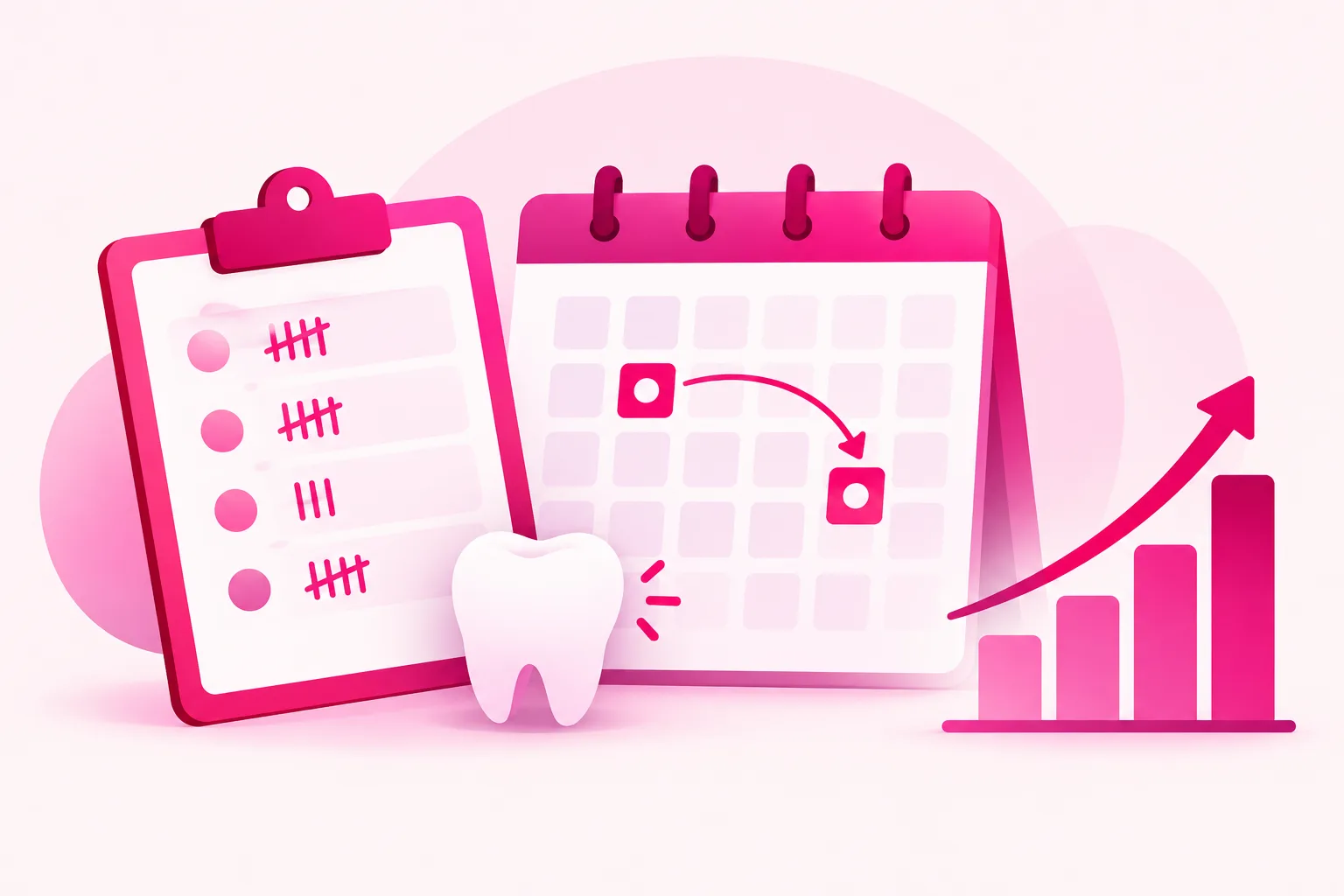
Dental practices consistently underestimate what social is producing, for two reasons. First, a person who watched forty of your videos over three months does not describe themselves as a "TikTok lead." They say they found you online, or they say a friend mentioned you, or they say nothing.
Second, the lag. The person who followed you in August books the week after the benefits letter arrives in October. Meanwhile the source that gets the credit is whatever they typed into a search bar the day they finally reached out.
You do not need attribution software. You need five habits - and one rule that sits above them: counts, never names. A marketing tally is not part of the patient record, and nothing that identifies a patient belongs in it. Keep the tally on your practice system, not in a spreadsheet on someone's laptop.
- Ask on the new-patient form. "How did you find us?" with social media as a named option, not a text box people leave blank.
- Give your TikTok profile its own request link. A dedicated form or landing page separates those requests from your insurance-directory and website traffic, and lets you watch volume move after a particular video.
- Track the in-radius share. Every month: how many requests came in, and what share had a city inside your drive radius? This is your version of a local-audience check. A rising share means the ladder is filling from the top. A fast-growing account with a falling share is drifting national.
- Count the lapsed-patient requests. The optional "roughly how long since your last visit?" line on the form is the sixth signal from the growth roadmap - the one only a dental practice can measure. Count the requests that answer in years. The insurance directory and the mailer never reach that person; only the account that made coming back feel ordinary does.
- Count backwards from kept second appointments, not forwards from views. Once a quarter, tally how many new patients from each source completed a first visit, and how many of those kept the recall. Tallies only. That short table tells you what to make more of and what to amplify.
One number to ignore: DM volume. A flood of messages feels like demand, and it is usually a symptom of the national-account trap - people you cannot treat, sending photos into a channel you should not be using.
Then look at the number that actually matters: cost per new patient who keeps the recall, valued at the relationship. Not one exam - the whole arc. As an illustration only: two hygiene visits a year for the years they live in town, the family that follows, and the periodic case worth more on its own than many professions' entire client relationship. Against that, a no-show new patient is not a small loss. It is a slot that was going to be filled by someone who would have stayed.
Compare that against what you pay for insurance-directory placement, mailers, or per-lead vendors, and how many of those leads keep a second appointment. Most offices that run this honestly find the content channel is not close. The monetization guide works through those economics in detail.
12. Amplify the Video That Already Fills the Schedule - Before the Benefits Deadline
Once the ladder is intact, you have something most practices never build: a video you can prove converts. Not a video that got views - a video that produced in-radius new-patient requests, and requests that became patients who kept the recall.
That changes what paid promotion is for. You are no longer gambling on whether the content works; you already know it does.
You are buying more of the right people seeing it - and for a dental practice, "the right people" is unusually precise. It is your drive radius, drawn tightly, which promotion can target by location in a way the organic algorithm never will. A viewer forty minutes away who loves your videos is a fan; every dollar that reaches them is a dollar that did not reach the person ten minutes away who could book on Monday. Case-path practices point the same tool at the region the signature procedure actually draws from.
Then there is timing. Promoting your proven benefits-deadline explainer to your own metro in early October reaches people while they are deciding, weeks before the year-end rush. The come-back walk-through in late December reaches the January wave. Amplify before the wave, not during it - the same video in mid-December reaches people who have already booked somewhere, or given up on the benefit entirely.
Three rules are stricter for you than for most. The ad is always an explainer, never a testimonial. Consent to post is not consent to promote - if a patient appears in the video, their authorization has to cover paid use, so the safest videos to amplify are the ones with no patient in them at all. And under TikTok's ad policies, a promoted video and its caption cannot assert or imply that the viewer has a condition, and before-and-after imagery is restricted - which is why the high-intent list in section 9 is built the way it is. "What actually happens when you come back after eight years" is promotable. "Bleeding gums? You have gum disease" is not.
That is what our TikTok promotion service is built to do: take the educational video that has already proven it produces new-patient requests and put it in front of more people inside your drive radius, ahead of the benefits deadline. The rule is the same one that governs the whole growth roadmap: amplify proof, not hope. For the mechanics of promoting an existing organic video, the Spark Ads guide walks through the setup step by step. Whatever you promote still has to satisfy TikTok's ad policies, your state board's advertising rules, and HIPAA.
Frequently Asked Questions
How do dentists actually get patients from TikTok?
Through a nine-step path, not a single viral video. Someone watches one walk-through, follows because you made an embarrassing situation feel ordinary, slowly comes to believe that coming back will not be a lecture, hits a trigger moment - a chipped tooth before a wedding, a school form, the benefits letter, a toothache that finally will not quit - sends a new-patient request, shows up to a first visit that matches the video, keeps the six-month recall, says yes to the crown when it is time, and then brings the family. Most practices build four or five of those rungs. They earn real trust from a nationwide audience and then lose it in the handoff: the bio never names the city, the only door is a DM, or a request from someone who took eight years to send it sits unanswered for a week. Fixing the handoffs usually fills more of the schedule than posting more videos.
How many followers does a dentist need before TikTok brings in patients?
Far fewer than most practices expect, because the number that matters is followers inside your drive radius, not total followers. Satisfying clips and veneer reveals travel nationally by default, so a dental account can reach a million people and have almost none of them within twenty minutes of the chair. Schedule-path practices that convert usually see their first "I found you on TikTok" new-patient request somewhere between 1,000 and 5,000 followers, once the account has anchored itself to a city. And a hygiene column is finite: a single-dentist office may only need a handful of new patients a month who keep their appointments to stay full. A few hundred people in your metro who trust you is a full schedule. For the case path, the math is different - one implant or aligner consult from a regional audience can be worth thousands - but the rule is the same: measure the people who can reach you, not the crowd.
What call to action works best for dentist TikTok videos?
Soft, specific, tied to the moment the viewer is in, and always pointing at a new-patient form with the city on it - never at your DMs. "If it has been years and the part you dread is what we will say about it, I made a video about exactly what happens when you come back. It is pinned. We are in Tampa and taking new patients, and the request link is in my bio" works because it names the fear and the place. Avoid anything that promises an outcome, "painless" and "guaranteed" claims, before-and-after photos that do not meet your state board's rules, unlabeled discounts and bait specials, and "DM me a photo" - a social inbox is not a place to receive or discuss anyone's dental care. The highest-converting dentist CTA is often simply "ask the general version of your question in the comments and I will answer it in a video."
Should dentists answer DMs from people sending photos of their teeth?
Answer them, but never clinically. A photo of a stranger's mouth cannot be diagnosed, and a reply that engages with what you see starts to look like care you have not agreed to provide, on a channel that was never built to protect health information. Prepare four saved replies before you need them: an emergency reply that names the signs that belong in an emergency room (facial swelling, fever, trouble breathing or swallowing) and gives your after-hours line for everything else, a photo reply that says plainly that nobody can tell from a picture and that hurting or worrying is reason enough to be seen, an in-metro reply that moves the request to your form, and a warm out-of-radius reply that points the case inquiry to your consult intake or to a general dentist near them. Say the photo reply once publicly as a video and it becomes one of your most-saved posts.
How do I know whether TikTok is actually filling my schedule?
Put "How did you find us?" on your new-patient form with social media as a named option, give your TikTok profile its own request link so those requests are separated from insurance-directory and website traffic, and track three numbers every month: how many requests came from that link, what share of them were inside your drive radius, and how many answered the optional "how long since your last visit?" line with years. Then, once a quarter, count backwards: how many new patients from each source completed the first visit, and how many kept the second appointment. The kept second appointment is the number - a no-show new patient is worth less than none. Keep counts, never names, on your practice system rather than in a marketing spreadsheet. Most offices find the channel produces more than they thought, because of the lag: the person who books after the benefits letter arrives often followed in August.
When is the best time of year for a dental practice to start getting patients from TikTok?
Now, whenever you are reading this - but aim the effort at the calendar. Demand for a new dentist arrives in two predictable waves: October through December, when insurance annual maximums and FSA balances expire on December 31 and people who have been putting it off suddenly have a deadline, and January, when new plans, new cards, and resolutions land at once. That means the come-back walk-through, the what-it-costs explainer, the benefits-deadline video, and the "we are taking new patients in [city]" video should be filmed and pinned by September and again in early December, 30 to 60 days ahead of the people they are for. If you are starting in early summer, you are not late. You are in batching season, with time to build the whole library before the benefits wave.
Know which video brings in the new-patient requests?
Then you already know where the budget belongs - and when. Viryze amplifies the educational video that has already proven it produces in-radius new-patient requests, putting it in front of more people inside your drive radius before the benefits deadline and the January wave arrive, so the trust you built turns into first visits with people who can actually sit in your chair - and come back in six months.
Promote the video that fills your scheduleRelated Reading
- TikTok for Dentists: The Complete 2026 Guide - the full strategy this patient-acquisition path plugs into.
- Growing a Dentist TikTok: From 0 to 100K Followers - the 90-day roadmap that builds the in-radius audience you convert here.
- How Dentists Make Money on TikTok in 2026 - why schedule quality is the first income stream, and what comes after it.
- Dentist TikTok Content Ideas: 50+ Video Concepts That Fill the Schedule - the travelers and anchors that fill the top of this ladder.
- How to Film Dental Content for TikTok (HIPAA, Operatory Setup & Patient Consent) - the consent and frame rules that make the high-intent videos safe to make.
- Getting Patients from TikTok: Turn Views Into Booked Appointments - the parallel conversion playbook for medical practices.

Head of Creator Success at Viryze
TikTok growth strategist helping creators reach their first 100K followers through data-driven promotion strategies.