Most guides to making money on TikTok start with the Creator Rewards Program. This one starts with an adult who hasn't seen a dentist in eight years, sitting in your parking lot, deciding whether to come in - and the decade of visits that follow if they do.
The Creator Rewards Program pays roughly $0.40 to $1.00 per 1,000 qualified views, so a satisfying scaling clip seen a million times earns a few hundred dollars. An adult who comes in twice a year for hygiene, exams, and the periodic x-rays is worth roughly $400 a year for as long as they live in town - and most stay for years, bring a partner and the kids, and eventually need the crown, the implant, or the aligners. For a practicing dentist, TikTok is not a place that pays you. It is a place where the people who will pay you for a decade decide whether it's safe to come back.
Dentistry is also different from every other licensed profession we cover in one way that makes the money question genuinely more interesting: one office can be two businesses. A general practice fills its hygiene schedule from a fifteen-minute drive radius. A cosmetic, implant, or full-arch case will drive three hours or fly in. The video that travels (the veneer reveal) is not the video that fills Tuesday's hygiene column, and the two businesses need two audiences, two intake paths, and two scoreboards. Most dental accounts drift into the second by accident while hoping for the first.
This guide covers all seven streams in the order they actually turn on - what each is worth, when it becomes available, what HIPAA, your state dental board, the ADA Principles of Ethics, and the FTC have to say about it, and where the wasted effort is. It builds on our complete TikTok guide for dentists and the 0 to 100K growth roadmap. If you haven't built the account yet, start there - this is what the account is for.
The honest summary:
- Recall patients are the business. One converted adult who keeps every hygiene appointment stays for years and multiplies across the family. Every creator stream on this page combined is usually a rounding error next to that.
- Case acceptance is where content earns most, and fastest. The patient who watched your crown explainer in the feed says yes in the chair. That revenue was already in your chart, on the unscheduled-treatment report.
- The case path is real money with a wide radius. Implants, aligners, veneers, and full-arch cases will travel to you - if the intake is a consult-with-photos form, not your DMs, and the before-and-after stays inside your state board's rules.
- Product deals are real, and they belong to the creator path. The whitening, toothbrush, and water-flosser economy pays a premium for the credential - if the disclosure is clean and you never endorse what your correction videos warn about.
- Platform payouts come last, if ever. Chasing Rewards pulls a dental account toward shock close-ups that break the platform's graphic-content rules and the hook-on-the-fear-never-the-shame rule at the same time.
- Every stream here is governed by HIPAA, your state dental practice act and board, the ADA Principles of Ethics, and FTC disclosure rules. Read them before you turn anything on.
What's Inside
- 1. The Math That Changes Everything
- 2. Stream One: The Recall Patient Who Keeps Every Appointment (The Schedule Path)
- 3. Stream Two: Case Acceptance, the Unscheduled-Treatment Report & Membership Plans
- 4. Stream Three: The Case Path - Implants, Aligners, Veneers & Full-Arch
- 5. Stream Four: Product Partnerships (Where the Creator Path Earns)
- 6. Stream Five: CE Courses, Speaking & Media Commentary
- 7. Stream Six: Creator Payouts, TikTok Shop & LIVE
- 8. The Hidden Stream: Recruiting & Keeping Your Hygienists
- 9. The Compliance Layer: Getting Paid Without a Board Complaint
- 10. The Sequence: What to Turn On, When, and in Which Season
- 11. Tracking It: The Only Three Numbers That Matter
- 12. The Monetization Mistakes That Cost Dentists Money
- 13. Accelerating: Put Budget Behind the Videos That Fill the Schedule
- Frequently Asked Questions
1. The Math That Changes Everything
Run the comparison honestly and the strategy writes itself.
A #TeethTok creator with a million followers might see a five-figure year from platform payouts, plus brand deals if they hustle. To get there they need enormous, constant, nationwide reach - and the money stops the moment the posting stops.
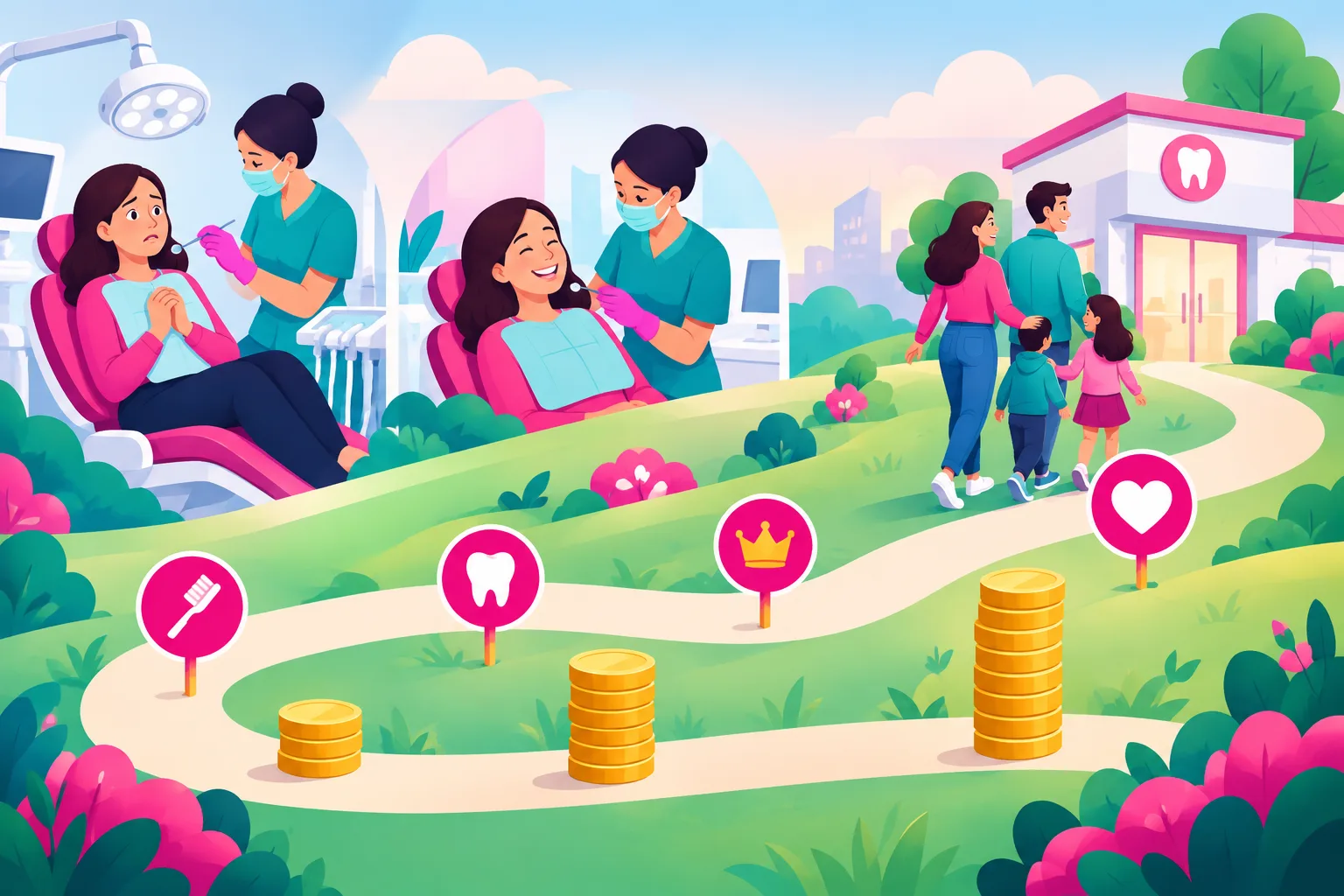
A general dentist with 3,000 followers inside her drive radius gets four new-patient requests a month from the account. Say a typical adult recall patient is worth around $400 a year - two hygiene visits, two exams, the periodic x-rays. That is roughly $19,000 in year one from about 48 patients, unimpressive on any creator dashboard. But almost none of them leave. In year two they are still coming while 48 more arrive, and the account is producing around $38,000 a year in hygiene revenue alone. By year three it is past $57,000, from patients who never had to be re-won - before a single crown, a partner who switches practices, a child's first visit, or the aligners the patient asked about at their second cleaning.
This is the inversion at the heart of dental monetization: you are not selling attention to advertisers, you are converting a very small number of nearby people into recall relationships that last as long as they live in town. Which means every monetization decision gets tested against one question: does this bring me closer to people who can sit in my chair and keep coming back, or does it trade them for strangers?
Here is the part that makes this profession different, and harder: the strangers are very easy to get. An accountant has to fight for attention. You never do. Teeth are one of the largest satisfying-content genres on the platform, and the algorithm will cheerfully hand a practice on the east side of one city two million viewers who live nowhere near it. Every one of those views feels like success and pays like a hobby - unless you have chosen the case path or the creator path on purpose, in which case those views are the raw material of a real business. The pillar guide calls this the schedule-or-case choice, and it is the single most important monetization decision in this niche.
There is a second inversion, and dentistry shares it with almost no other profession: a large share of the money content produces is already in your chart. Every practice-management system has an unscheduled-treatment report - crowns, fillings, and periodontal therapy that were diagnosed, presented, and never booked. Patients decline not because they don't need it but because they heard the number before they understood the why. A calm explainer watched in the feed months earlier changes the conversation in the chair. That revenue costs nothing to acquire, because the patient is already yours.
And a third, which is dentistry's alone: a schedule is finite. A hygiene column has eight slots a day whether or not anyone shows up, so the goal is never volume for its own sake. It is schedule quality - the patient who keeps every appointment, the family that fills a Saturday morning together, the case that fits what you do best. A new patient who no-shows the second visit is worth less than no patient at all, because they held a slot a recall patient would have kept. Keep that in mind as we go through the streams; it is why the scoreboard in section 11 counts kept appointments, not requests.
2. Stream One: The Recall Patient Who Keeps Every Appointment (The Schedule Path)
The new patient a dental account converts is a specific person, and knowing who they are changes what you make. They are almost never someone shopping for a dentist. They are the lapsed adult - the one who has been putting off the call for years, who avoids the mirror, and who has decided you will lecture them the moment they open their mouth. The video that converts them is not the veneer reveal. It is the no-judgment walk-through: here is exactly what happens when you come back after eight years, and nobody is going to make you feel bad about it.
That patient is also, quietly, the most valuable new patient in dentistry. A lapsed adult's first-year treatment plan is routinely the largest of any patient type - periodontal therapy instead of a cleaning, restorations that have been waiting, sometimes the crown that was inevitable three years ago. None of that is upselling. It is the care they stayed away from, explained by the person who made it feel safe to come back. The account earns here not by selling but by dissolving the shame that kept the work from ever being done.
Three things make this stream work, and all three are infrastructure rather than content. First, the city-first new-patient form - the request form asks for the city before anything else, so the front desk can see in one glance whether the person is a patient or a traveler. Second, the prepared reply for the photo in the DMs ("I can't tell you anything useful from a photo, and I'd rather look properly - here's the link, and nobody here lectures"), because every dental account gets that message daily and the answer must never be a diagnosis. Third, the second appointment: the walk-through patient who keeps their second visit is a recall patient; the one who doesn't was a curiosity. The growth guide's growth signals section explains why kept second appointments are the number to watch and why DM volume is the number to ignore.
Then the family follows. The partner who switches practices, the child's first visit, the teenager whose aligners come up at the second cleaning. Recall relationships in dentistry multiply across households in a way almost no other service does, which is why the honest lifetime value of one converted lapsed adult is not $400 a year - it is a family, for as long as they live in your metro.
3. Stream Two: Case Acceptance, the Unscheduled-Treatment Report & Membership Plans
Print your unscheduled-treatment report before you read this section. For most practices it is the largest pile of money on the premises: treatment that was needed, diagnosed, presented, and never scheduled. Industry surveys put case acceptance for presented treatment well below half in many offices, and the reason is rarely the price. It is that the patient heard "$1,400" before they understood what a crown is, why the cracked tooth won't heal, or what waiting actually costs.
This is where explainer content earns first and fastest, at any follower count, because the audience is already your patients. The what-it-costs-and-why explainers - why a crown costs what it costs, what happens if you wait on a cracked tooth, why the hygienist said "deep cleaning" and what that means, what an annual maximum is - are watched in the feed three months before the next recall visit. The patient arrives having already had the conversation with you, calmly, on their own couch. The chair-side presentation becomes a confirmation instead of a pitch. Practices that post these consistently report higher acceptance on exactly the procedures they explained on camera, and existing patients call to schedule work that has been sitting on the report for two years.
Then there is the calendar, which no other vertical has. Most dental insurance annual maximums and FSA balances reset on December 31. The benefits-deadline explainer - here is what "use it or lose it" means, here is how to check what you have left, here is why December fills up - published in September works the entire unscheduled report at once. Pair it with a front-desk outreach to the same list and October through December becomes the year's most productive quarter, on treatment you already diagnosed.
The second half of this stream is the membership plan. Roughly a third of American adults have no dental insurance, and most of them assume that means they can't afford you. An in-house plan - a monthly or annual fee that covers the hygiene visits, exams, and x-rays and discounts treatment - is recurring revenue that no insurer touches, and the "no insurance? here is what a membership plan is, and what it costs compared to paying as you go" explainer is the video that sells it. It also converts a specific lapsed viewer: the one whose real barrier was the bill, not the drill. Check your state's rules on in-house plans (a few regulate them like insurance products) and keep the terms simple enough to explain in sixty seconds - which is also a good test of whether the plan is any good.
Notice that none of this needs a new follower. It needs your existing patients to know the account exists - a small sign at checkout, a line in the recall text, the hygienist mentioning "we actually made a video about that." Practices that never tell their own patients about the account leave the fastest-earning stream on this page switched off.
4. Stream Three: The Case Path - Implants, Aligners, Veneers & Full-Arch
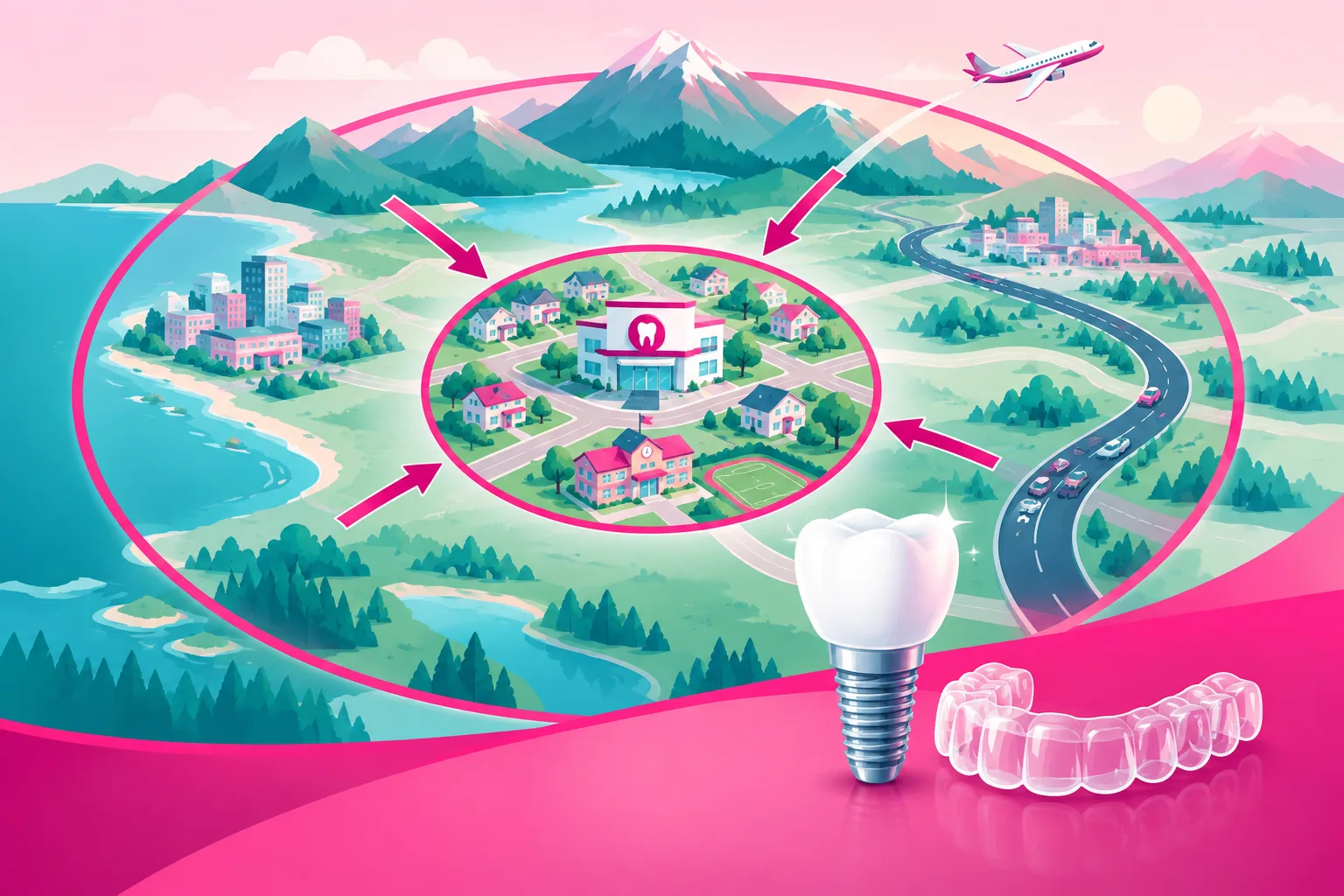
Now the second radius. A single implant runs several thousand dollars. A clear-aligner case runs several thousand more. A set of veneers is priced per tooth and a full-arch restoration is priced like a car. For these, people drive three hours, book a hotel, and fly in - which means the audience for the case path is regional or national, and the video that finds them is the one the algorithm loves to travel: the reveal, the smile-design walk-through, the full-arch day-of.
But the video that converts the case is a different video. It is the explainer: what a full-arch consult actually involves, what an implant costs and why, what the alternatives are and who each one is right for, how financing works, what the two travel days look like. The reveal earns the view. The explainer earns the consult. Case-path accounts that post only reveals collect a huge audience that admires the work and never books, because nobody ever told them how it would go.
The intake is the whole business here, and it must not be your DMs. A case inquiry arrives with photos, and photos of a mouth are protected health information the moment they reach you - so the path is a consult-with-photos form on a HIPAA-compliant platform, linked from the bio, with the prepared reply moving every DM there. That form also filters: it asks where the person is, what they are hoping to change, and whether they are ready to travel, so the treatment coordinator spends her time on consults that can happen. The financing explainer belongs in the pinned trio for exactly the same reason; the case-path patient needs to know the monthly number before they will fill out anything.
Compliance is tightest on this path, because it is the most heavily advertised corner of dentistry and boards know it. Before-and-after photos are permitted in most states but with conditions - the patient's written authorization for this use, no retouching, and in several states a disclosure that results vary. "Cosmetic dentist" is not an ADA-recognized specialty and many states restrict how the phrase can be used; a general dentist who does beautiful cosmetic work says exactly that. "Painless," "guaranteed," and "best" are the words that generate complaints. The filming guide's never-show list covers the sedation footage and the on-camera lines that end careers.
And the order rule. Because one office can genuinely run both paths, the temptation is to run both at once, and the result is an account that does neither well. The pillar guide's advice stands: fill the hygiene schedule first, because the recall base is the cash flow that funds everything else, then build the case brand on top of it - or, if you are already a case-focused practice with a referral network, commit to the case path and stop measuring yourself against Tuesday's hygiene column. What you cannot do is let the algorithm decide, because it will always choose the reveal.
5. Stream Four: Product Partnerships (Where the Creator Path Earns)
The oral-care product economy is enormous: whitening strips and kits, electric toothbrushes, water flossers, tongue scrapers, floss picks, mouthwash, kids' brushes, mouthguards, and the aligner companies. Every one of those brands wants a dentist in the video, because the credential is what they are buying. This is the stream where a dentist with a national audience can earn real money, and where a dentist with a local practice can quietly spend the trust that fills the schedule.
The test is the across-the-chair test: would you hand this product to a patient and tell them to use it? If yes, and the terms are honest, take the deal. If the answer is "it won't hurt anyone," decline, because a patient who buys on your word and is disappointed has learned something about every other recommendation you make. Products with an ADA Seal of Acceptance make the test easy; a whitening product that promises eight shades in three days does not.
One partnership deserves its own warning. Mail-order aligner companies pay well for dentist endorsements, and the same account's most valuable correction videos explain what an unsupervised aligner cannot check - bone levels, gum health, bite. A dentist who takes that money has just contradicted the content that made the audience trust her. Never endorse the thing your corrections warn about.
The rules: disclose every sponsorship and affiliate link clearly, up front, in the video and the caption, under the FTC endorsement guides - "#ad" at the start, not buried in hashtag twenty. Prescription-strength products (high-fluoride pastes, chlorhexidine) are restricted in consumer-facing promotion by manufacturers and the platform. Your state board treats a paid endorsement as advertising, and several states have specific rules on testimonials and endorsements by licensees. Associates and DSO dentists read the employer policy first; many restrict paid endorsements outright, and some practices sell competing products at checkout. And on a practice account, a product deal is an interruption of the education your local audience follows you for. The clean answer for most practice owners is a small number of products they already recommend in the operatory, disclosed, and nothing else.
6. Stream Five: CE Courses, Speaking & Media Commentary
Dentistry has a built-in course market that most professions envy: every licensed dentist and hygienist must complete continuing-education hours to renew, and they pay for them. A dentist whose account has taught colleagues something - a clinical technique, a practice system, a way of explaining treatment that raises acceptance - can turn that into a CE course, a study-club session, or a hands-on workshop. Getting a course approved for CE credit through a recognized provider takes work, but it turns "a video colleagues liked" into "a course a hygienist's employer will pay for."
A word about the course that always appears first, though: the "how I grew my dental TikTok" course. Sold before your own hygiene schedule is full, it is a hobby teaching a hobby. Sold after, with the unscheduled-treatment numbers to prove the method, it is a legitimate practice-management product. Fill the schedule before you teach anyone how.
Speaking follows the same curve. State dental associations, study clubs, hygiene programs, and DSO leadership meetings all need speakers who can talk about patient communication, case acceptance, or team culture - and a dentist with a visible account is an easy booking. Add a speaker bio and a professional email to the site the month the first request arrives, and pitch your state association one session before anyone else does.
Media commentary rarely pays directly but feeds every other stream. Local news wants a dentist for the Halloween-candy segment, the latest viral DIY trend, the community-water fluoride debate, and the back-to-school mouthguard story, every single year. Regional and national outlets want the dentist who calmly corrected a dangerous trend before it spread. Say yes to all of it; it is the most credible advertising your practice will ever run, and it costs an hour.
7. Stream Six: Creator Payouts, TikTok Shop & LIVE
The Creator Rewards Program pays for original videos over a minute long that hold qualified views, at roughly $0.40 to $1.00 per 1,000. Satisfying clips on the model mouth and long walk-throughs qualify, and a dental account with real reach can see a few hundred dollars a month from it. Take it; it's free. But never make a decision because of it. The content that maximizes Rewards in this genre drifts toward shock - the neglected-mouth close-up, the dramatic extraction, the "if your teeth look like this" hook - which breaks TikTok's graphic-content rules, violates the hook-on-the-fear-never-the-shame rule, and drives the exact lapsed patient you want further away, for a payout that wouldn't cover one hygiene visit.
TikTok Shop turns a dentist into a retailer. Selling the electric toothbrush or the whitening kit you recommend, with disclosure, is legitimate and some creator-path dentists do well with it. On a practice account, weigh it honestly: every Shop video is a sales pitch to a local audience that followed you for education, and a patient who bought a $30 product from your feed thinks about that when you present a $1,400 crown.
LIVE is a Q&A tool, not a revenue stream. Gifts are trivial, and a LIVE is the most dangerous place on the platform for a dentist, because a real person is asking about a real tooth in real time and every instinct says to answer. The rule holds: education about conditions in general, never a diagnosis of the person asking, and the prepared reply moves them to the form. Run LIVEs to build trust with the local audience if you enjoy them, and keep the hygienist on camera with you - the team is the cast here too.
8. The Hidden Stream: Recruiting & Keeping Your Hygienists
Nobody puts this on a monetization list, and for many practice owners it is the largest number on the page. Dentistry is in a documented, prolonged hygienist shortage. An empty hygiene column is lost production every day it stays empty, a recruiter's placement fee is a meaningful fraction of a year's salary, and the turnover cost of a front-desk or assistant hire - the posting, the interviews, the training weeks - is real money that never shows up as a marketing expense.
The team-as-cast content the pillar guide describes - the hygienist starring in the satisfying clip, the assistant explaining what she loves about the job, the front desk owning the question log, a Friday that looks like a place people want to work - is the recruiting ad, and it runs for free, every week, to every hygienist in your metro who is scrolling after a bad day somewhere else. Practices with visible, warm team accounts report candidates who arrive already sold, having watched the account for months.
Two practical moves: add a careers link to the profile during hiring windows and take it down when the role is filled, and let team members build their own audience on the account rather than treating them as props. A hygienist with a recognizable on-camera presence is harder to lose and easier to promote, and the pride of being the face of the account is the kind of retention a raise can't buy. Written consent and a social-media policy for staff on camera are covered in the filming guide's consent section.
9. The Compliance Layer: Getting Paid Without a Board Complaint
Every stream above intersects with rules that vary by state and by employer. This is a map of where to look, not legal advice - your state dental practice act and board control, and your state dental association exists for precisely these questions.
- HIPAA is the bright line under every stream. A smile is identifiable. Any patient who appears in any video - organic, promoted, sponsored, or in a course - needs a specific written authorization for social-media use, separate from the consent to treatment, revocable, and never a condition of care. It should be signed before sedation and should say whether paid promotion is covered. Photos that arrive in your DMs are protected health information the moment you have them.
- Content that generates patients is advertising. State dental practice acts and the ADA Principles of Ethics prohibit advertising that is false or misleading in any material respect. No guaranteed outcomes, no "painless," no "best dentist in the city."
- Titles must be accurate. "Specialist" is generally reserved for the ADA-recognized specialties and the state's licensing categories. Cosmetic dentistry is not one of them, and many states restrict "cosmetic dentist" and "implant specialist" claims by general dentists. Hygienists and assistants use the credential their state recognizes and nothing more.
- Before-and-after photos have rules. Most states permit them with conditions - the patient's authorization for this use, no retouching, sometimes a results-vary disclosure. A few states restrict them further. Check before the reveal becomes the pinned video.
- Discounts and new-patient specials have disclosure rules. Many states require the full terms, the regular fee, and the expiration to appear with any discounted offer, and some restrict "free" offers tied to other services. The "$59 new-patient special" caption is a common complaint.
- Testimonials are usually permitted, with conditions. Unlike therapists, dentists in most states can share patient testimonials - with written authorization, no compensation unless disclosed, and nothing that implies a guaranteed result. A handful of states still restrict them; know yours.
- Never diagnose a stranger. Not in a comment, a DM, a LIVE, a course, or a sponsored video. The prepared reply is the only answer to the photo in the DMs. A virtual consult for an existing patient is teledentistry and follows your state's teledentistry rules.
- Disclose every partnership. The FTC endorsement guides govern sponsored content and affiliate links; your board expects the same honesty and may add rules for licensee endorsements. Prescription-product promotion has its own rulebook.
- Minors and staff on camera. A parent signs for a minor patient, and the teenager is asked separately. Staff sign a written consent under a social-media policy that says what happens to the footage if they leave.
- Read your employer's policy before you earn anything. DSOs and group practices frequently restrict endorsements, use of the practice name, and filming on premises. The compliant route for many associates is a personal account with no practice name and no patient footage - which is also the creator-path account.
- Paid promotion is advertising too. Putting budget behind a video does not change what it is. If the organic video complies, the promoted version generally does - keep the same disclosures, confirm the patient's authorization covers promotion, and note that TikTok treats cosmetic procedures as a restricted ad category with its own rules on before-and-after imagery and age targeting.
None of this is a reason to stay off the platform. It is the reason your competitors are still posting the team doing a dance trend - and the dentists who spend one afternoon reading their practice act's advertising section get to build confidently for years while everyone else waits for permission. The pillar guide's compliance section covers the full framework, and the filming guide covers the production side of the same discipline.
10. The Sequence: What to Turn On, When, and in Which Season
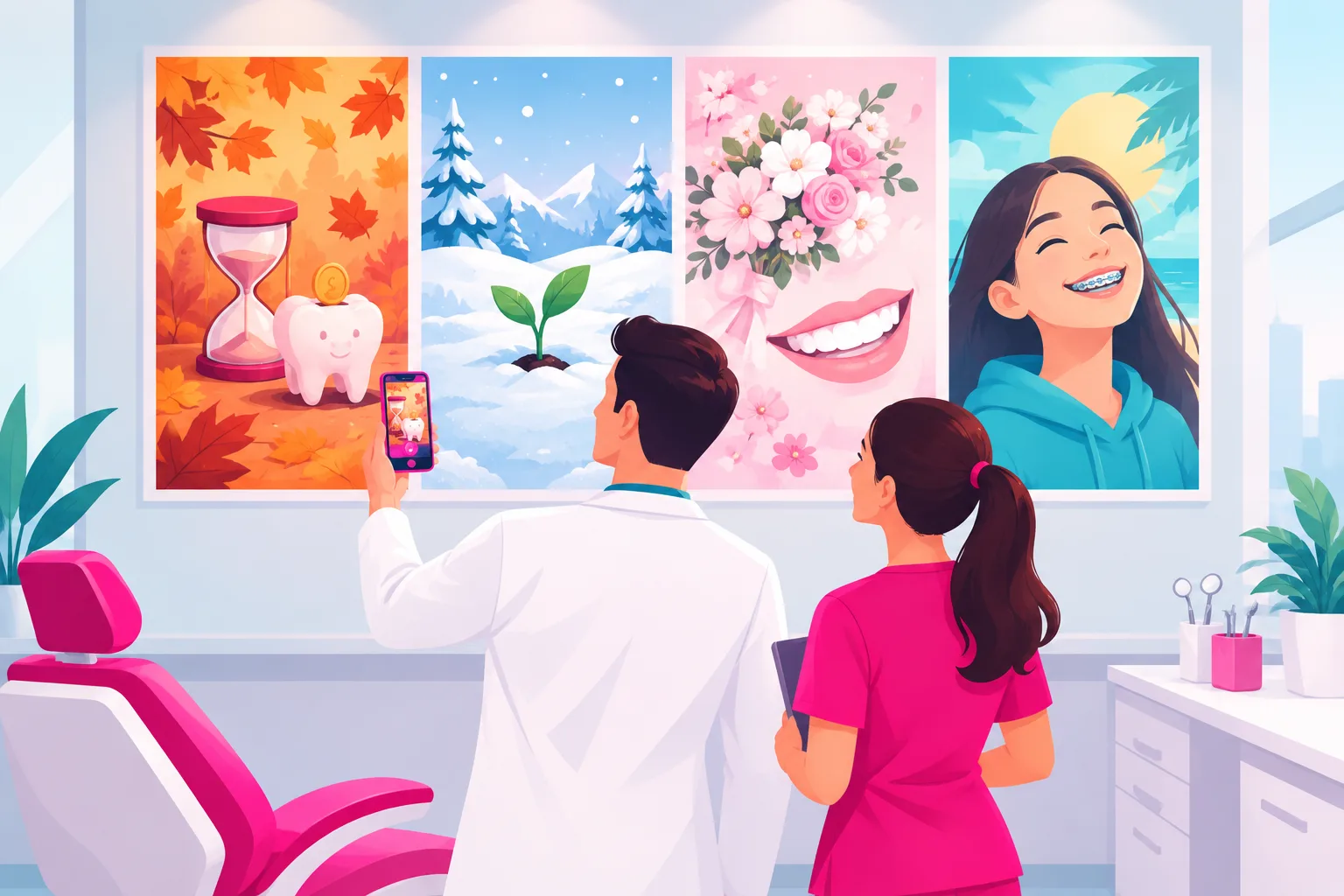
Turning everything on at once is how dentists end up with a content habit that feels like a second job and pays like a hobby. Do it in this order instead - and notice that the first decision is not a stream at all:
Before anything: the path, in writing
Schedule path, case path, or the hybrid in a decided order. It decides the bio, whether the city is spoken out loud, which form is linked, and which of the streams below you are even building toward. Everything after this assumes the schedule path first; case-focused practices swap Streams One and Two for Stream Three, and creator-path dentists swap in the product and course sequence.
0 - 1,000 followers: the one job
Make it trivially easy for a local adult to book you without being judged. City-first new-patient form, the prepared photo reply saved as a quick response, the pinned trio (the walk-through, the cost explainer, the "who we are" team clip). Tell your existing patients the account exists - case acceptance starts rising from the first explainer they watch. Ignore every other stream completely.
1,000 - 5,000: cost explainers on a schedule, and the report
New-patient requests are steady enough to shape. Add one what-it-costs-and-why explainer a month keyed to the unscheduled-treatment report (make the video about the procedure that appears on it most), publish the membership-plan explainer, and build the benefits-deadline explainer for its September slot.
5,000 - 10,000: the case intake and the first lead magnet
If the case path is in your plan, this is where it starts: the consult-with-photos form on a compliant platform, the financing explainer in the pinned trio, the first explainer for the signature procedure. Schedule-path practices add a lead magnet instead - a "what to expect when you come back" guide that collects emails for the recall wave.
10,000 - 50,000: speaking, media & the first partnerships
Requests start arriving unprompted. Add the speaker bio and professional email, pitch your state association one session, and take the product partnerships that pass the across-the-chair test - a small number, disclosed. Add the careers link during hiring windows; the recruiting stream is fully on by now.
50,000+: CE courses, national partnerships & the path decision again
Only now is the audience large and defined enough that a CE course or a national sponsorship generates real money - and only if it doesn't cost the local trust density that fills the schedule. Check your follower-territory breakdown: if the account has quietly gone national, this is the moment to decide whether it has become a case account or a creator account, and to give the practice its own local account rather than let one account do two jobs badly.
Now lay the calendar over it, because in this profession demand is event-driven and the biggest event has a date:
- June - August: build and film. Start the 90-day engine in early summer so the benefits explainer lands in September. Shoot the walk-through library and the cost explainers in the summer admin days. Teens start braces and aligners, back-to-school checkups and mouthguards fill August, and orthodontic consults peak - the case path's aligner content belongs here.
- September - December: the benefits deadline. Publish and pin the "use it or lose it" explainer in September, run the unscheduled-treatment outreach beside it, and hold the line on the schedule as October through December fills. Halloween is the easiest media booking of the year and the most-shared seasonal video.
- Late December - February: new plans, then the kids. The new-plan walk-through ("your maximum just reset - here is how to use it well") goes up the last week of December for the January resolution wave. February is Children's Dental Health Month: the first-visit demystifier for parents and the pediatric content.
- March - May: whitening season. Weddings, proms, and graduations drive the year's cosmetic-curiosity peak. The honest whitening explainer (what works, what the strips can't do, what a lemon does to enamel) sells in-office whitening and protects viewers at the same time; case-path veneer explainers land here too.
- All year: the DIY correction. The platform delivers a new dangerous trend weekly. Correcting it kindly is the account's native genre, travels nationally, books the media segment, and costs nothing but ten minutes on the admin day.
Notice what stays constant across every tier and every month: the form and the prepared reply. Practices lose more lapsed adults to an unanswered new-patient request in the second week of October than to any strategic choice on this page. Answer within the hour, in the same no-judgment voice as the video.
11. Tracking It: The Only Three Numbers That Matter
Views, followers, and DM volume are the numbers TikTok shows you, and none of them is revenue. Track these three instead, monthly, in a spreadsheet your front desk owns:
- Kept second appointments from TikTok new-patient requests (schedule path) or consult requests that arrived with photos through the form (case path). Add "how did you hear about us?" to the form and count only the answer that mentions the account. A request that never becomes a kept second visit is not a patient. This is Stream One's scoreboard and the growth guide's decided-order rule made measurable.
- Case acceptance on the procedures you explained. Your practice software reports acceptance by procedure. Compare the three months after a crown explainer to the three months before; then watch the unscheduled-treatment report shrink after the September benefits video. This is Stream Two, and it moves before any follower count does.
- The share of followers inside your radius. The follower-territory breakdown in your analytics. For the schedule path this number should stay high; when it falls, the account is drifting toward the traveler and the next two months will feel busy and pay nothing. For the case path, watch the share inside the region the procedure actually draws from.
One optional fourth line, which only dentistry can measure: the growth guide describes adding "how long since your last visit?" to the new-patient form and counting the answers in years. It is the direct measure of whether the walk-through is doing its job - dissolving the shame that kept people away - and a practice whose "years" count rises is earning the largest first-year treatment plans in the profession, ethically, from people who finally came back.
12. The Monetization Mistakes That Cost Dentists Money
The bait offer
The free-whitening special and the $59 new-patient exam attract the one-visit shopper who never keeps the second appointment, trip the discount-disclosure rules in many states, and teach the metro that you compete on price. The walk-through attracts the recall patient. Lead with the walk-through.
The national-dental-account trap
A huge following built on reveals, a flood of "how much for veneers" DMs from four time zones away, and a hygiene column that never changes. If you did not choose the case path on purpose, with a consult intake and travel logistics ready, this is the most expensive success on the platform.
Endorsing what you correct
The mail-order aligner sponsorship, the miracle whitening kit, the charcoal paste. The money is real and the contradiction is fatal: every correction video you have ever made now reads as a sales tactic.
Diagnosing from the DM photo
It feels helpful, it happens fifty times a week, and every one is dentistry practiced on a stranger with no exam, no x-ray, and no record - plus PHI sitting in a consumer messaging app. The prepared reply exists so you never have to improvise.
Selling the growth course before the schedule is full
"How I grew my dental TikTok" sold to colleagues at 8,000 followers and a hygiene column with holes in it is a hobby teaching a hobby. Fill the schedule, then teach the method with the numbers.
Chasing the satisfying-clip payout
Rewards money nudges the account toward shock close-ups and neglected-mouth hooks. The payout would not cover one hygiene visit, the platform restricts graphic content, and the hook confirms the fear that kept your best future patient away.
The unsigned reveal
A before-and-after with a treatment consent but no social-media authorization, a post-sedation clip the patient thought was funny, a minor without a parent's signature. One complaint takes every stream on this page with it.
Never telling your own patients about the account
Stream Two is the fastest money on this page, and it requires exactly one thing: the patients already in your chart knowing the videos exist. A checkout sign and a line in the recall text switch it on.
13. Accelerating: Put Budget Behind the Videos That Fill the Schedule
Everything above is organic, and organic is enough to build a full hygiene schedule over a year. But once the tracking spreadsheet in section 11 shows which explainer produces kept second appointments - and it will be one or two videos, not ten - there is a faster route, and it is unusually well-suited to dentistry.
Paid promotion of a proven explainer solves the two-radii problem the organic algorithm never will: promoted reach goes exactly where you point it. Point the no-judgment walk-through at your metro, drawn tightly, and it reaches lapsed adults who can actually sit in your chair instead of admirers in another state. Point the implant or aligner explainer at the region the procedure genuinely draws from. The arithmetic is generous because the payback is a recall relationship or a case, not a sale: one converted lapsed adult repays a modest budget many times over in the first year's treatment plan alone, before the family follows.
And the timing lever is real. Promoting the benefits-deadline explainer to your radius in October, while people are quietly doing the math on their annual maximum, costs a fraction of competing in mid-December when every practice and lead-gen vendor in the country bids for the same person - most of whom have already booked somewhere. The same logic runs the new-plan walk-through in the last week of December for the January wave, and the first-visit demystifier for parents in late January for February.
That's exactly the model behind our TikTok promotion service: selective amplification of the videos that already earned it, targeted to the people who can sit in your chair, timed to run ahead of the trigger moment. Promoted dental content follows every rule in section 9, and a few are stricter in a paid placement: consent to post is not consent to promote, so the patient's authorization should say it covers paid use; TikTok treats cosmetic procedures as a restricted ad category with rules on before-and-after imagery and age targeting; and its personal-attributes rule means the promoted video can't imply the viewer has a condition - which is one more reason the inner-sentence hook is the hook a promoted video can use. Amplify the explainer, never the bait offer. For the mechanics of promoting through TikTok's native tools, see the Spark Ads guide; for the local-discovery mechanics that help any business serving a drive radius, the local business TikTok marketing guide.
Frequently Asked Questions
How much money do dentists make on TikTok?
It depends entirely on which path the account is on. The Creator Rewards Program pays roughly $0.40 to $1.00 per 1,000 qualified views on longer videos, so a satisfying scaling clip seen a million times earns a few hundred dollars. A schedule-path dentist earns almost nothing from the platform directly and instead converts a small number of nearby viewers into recall patients: an adult who comes in twice a year for hygiene, exams, and periodic x-rays is worth roughly $400 a year for as long as they live in town, and most stay for years, bring a partner and children, and eventually need a crown, an implant, or aligners. A case-path dentist with a regional audience earns from the signature procedure itself, where a single implant or aligner case is worth several thousand dollars and a full-arch case tens of thousands. A creator-path dentist with a national audience earns from whitening, toothbrush, and oral-care partnerships, continuing-education courses for colleagues, and speaking. Most practice accounts should measure TikTok income as new-patient requests and case acceptance valued at lifetime revenue, not as payouts.
Can dentists do brand deals with whitening and toothbrush companies on TikTok?
Yes, and oral-care brands actively seek dentists because the credential is what they are paying for. The rules: disclose every sponsorship and affiliate link clearly and up front under the FTC endorsement guides; recommend only what you would hand a patient across the chair, because one partnership your patients regret spends the trust that generates every other stream; be careful with prescription-strength products (high-fluoride pastes, chlorhexidine rinses), which manufacturers and the platform restrict in consumer-facing promotion; never make claims the product cannot support or imply a guaranteed result; do not endorse a mail-order aligner company while your correction videos explain what an unsupervised aligner cannot check; and if you are an associate or work for a DSO, read the employer social-media and conflict-of-interest policy first. Your state dental board treats a paid endorsement as advertising, so it must not be false or misleading, and a few states restrict testimonials or require specific disclosures.
Can a dentist charge TikTok followers for advice or sell products directly?
A dentist can sell education and products, but not diagnoses. Telling a stranger in a comment, a DM, a LIVE, or a paid consultation what is wrong with their tooth from a photo is practicing dentistry on someone who is not your patient, which creates liability and, in many states, a licensing problem - and it is the single most common request a dental account receives. The safe version is the prepared reply that moves the person to a new-patient exam or, for the case path, a consult-with-photos intake through a HIPAA-compliant form. What you can charge for: the exam and consult itself, a virtual consult for an existing patient where your state permits teledentistry, continuing-education courses for colleagues, workshops and speaking, and physical products through TikTok Shop with FTC disclosure. General education for the public should stay free; it is the marketing that fills the schedule, and charging for it would make it both a worse product and a worse ad.
How does TikTok content increase revenue from existing dental patients?
Through case acceptance on treatment you already diagnosed, which is where most practices leave the most money on the table. Every practice-management system has an unscheduled-treatment report: crowns, fillings, and periodontal therapy that were presented and never booked. The most common reason a patient declines is that they heard the number before they understood the why. A calm "why a crown costs what it costs and what happens if you wait on a cracked tooth" video, watched in the feed three months before the next recall visit, changes the conversation in the chair from a sales pitch to a confirmation. The benefits-deadline explainer in September does the same for the whole unscheduled list at once, and the membership-plan explainer sells recurring in-house plans to the third of adults who have no dental insurance. This stream costs nothing to acquire, because the patient is already in your chart.
How many followers does a dentist need to make money on TikTok?
Far fewer than the follower count suggests, as long as they live within driving distance. Practices commonly report their first "I found you on TikTok" new-patient form between 1,000 and 5,000 followers when the account is anchored to a city and the content is explainer-led, and one recall patient who brings a family pays for the whole effort. Case acceptance rises from the first explainer your existing patients watch, at any follower count. The thresholds that matter are for the other paths: the case path needs a regional audience that trusts you enough to drive three hours, which usually means tens of thousands; oral-care brands and speaking requests start noticing a dentist with a clearly defined audience in the same range; and continuing-education courses want a colleague audience that took years to build. The follower number matters less than the share of followers who could sit in your chair, which TikTok shows in the follower-territory breakdown in your analytics.
Should a dentist choose the schedule path or the case path to make money on TikTok?
Decide the order on purpose, because drifting between them is the most expensive mistake in the niche. The schedule path anchors the account to a city, builds a drive-radius audience with walk-throughs and cost explainers, and is measured in in-metro new-patient requests who keep the second appointment; it pays in recall relationships and families that stay for years. The case path builds a regional or national audience for a signature procedure, is measured in consult requests that arrive with photos through your form, and pays in individual cases worth thousands each. Dentistry is unusual in that one office can legitimately do both, so the answer is usually a sequence: fill the hygiene schedule first, because the recall base funds everything else, then build the case brand on top of it. The trap is a huge national following, a flood of "how much for veneers" messages from four time zones away, and a hygiene column that never changes.
Know which explainer brings in the patients who keep their second appointment?
Then you already know where the budget belongs. Viryze amplifies the educational videos that have proven themselves, putting your best no-judgment walk-through or benefits-deadline explainer in front of thousands more adults inside your drive radius before the trigger moment lands - so the trust you built converts into local followers, booked first visits, and recall patients who stay for years, instead of views from people who will never sit in your chair.
Promote your best walk-throughRelated Reading
- TikTok for Dentists: The Complete 2026 Guide - the full strategy and compliance framework behind every stream on this page.
- Growing a Dentist TikTok: From 0 to 100K Followers - the 90-day roadmap that builds the local audience this monetization depends on.
- Dentist TikTok Content Ideas: 50+ Video Concepts That Fill the Schedule - the walk-throughs and cost explainers that turn viewers into kept appointments.
- How to Film Dental Content for TikTok (HIPAA, Operatory Setup & Patient Consent) - the consent-first production system, including the authorization that covers paid promotion.
- How Veterinarians Make Money on TikTok in 2026 - the same recall-relationship revenue logic in the other profession where the satisfying clip travels.
- How Healthcare Professionals Make Money on TikTok - the broader clinician playbook, for the med-spa and multi-specialty practices next door.

Head of Creator Success at Viryze
TikTok growth strategist helping creators reach their first 100K followers through data-driven promotion strategies.