
Every other nonprofit in this series had to find its subject. A food bank has to figure out how to film hunger without a face; a clinic has to film care without a patient. You have a kennel full of the single most-watched thing on the platform, and a new one arrived this morning.
That is the gift of running an animal shelter or rescue account, and it is also the trap. The dog who lifts his paw to the kennel door will be watched in forty states. He can only be adopted in one. The same video that makes him the internet's favorite dog for a day brings two hundred applications, a hundred and ninety of which are from people who cannot drive to him, and the account that does not have a plan for those hundred and ninety treats them as failed adopters instead of what they are: donors, sharers, and the audience for the next dog.
This guide is the animal-welfare-specific companion to our complete TikTok guide for nonprofits, which covers the foundations every cause account shares. Here we cover what changes when the subject is an animal who can be adopted and leave your feed forever, when the most effective-looking content is the one that hurts the mission, when kitten season is the calendar, and when the third audience in your inbox is a person who can no longer keep their dog.
The short version:
- Adoption is hands. The medical fund is dollars. Adopters, fosters, and volunteers live within a drive of the building; the gift that pays for the surgery can come from anywhere. Every video asks the right one of the two.
- Describe the home, not the heartbreak. The adoptable-animal video that says "no cats, a fence, and someone home most of the day" finds the forty right people. The one that begs finds the four thousand wrong ones.
- Never post the intake photo. Suffering imagery and euthanasia countdowns raise money once and shrink the account for years. Tell the recovery from the other side.
- Kitten season fills the building. Build in winter. The foster roster that survives spring is recruited in February, and the receipt that funds December is filmed in October.
What's Inside
- 1. Why Shelters Hold the Platform's Native Currency (and Why That Cuts Both Ways)
- 2. Adoption Is Hands, the Medical Fund Is Dollars
- 3. The Six Formats That Empty Kennels
- 4. The Long-Stay Animal: A Series That Finds the Home Instead of Begging for One
- 5. No Suffering Imagery: Hook on the Fix, Never the Cruelty
- 6. Foster Recruitment: The Most Valuable Rung of the Hands Path
- 7. The Adoption Ladder and the Four Messages in Your Inbox
- 8. The Shelter Year: Kitten Season to GivingTuesday
- 9. The Mistakes That Keep Shelter Accounts Small
- 10. Paid Amplification: Fill the Foster List Before Kitten Season
- Frequently Asked Questions
1. Why Shelters Hold the Platform's Native Currency (and Why That Cuts Both Ways)
Every nonprofit benefits from TikTok. Animal shelters and rescues start with three advantages the rest of the sector has to manufacture, and each one has a cost attached.
- The genre already exists, and it is enormous. Animal content is one of the largest categories on the platform and has been since the platform existed. Our guide for pet creators is built on that fact. You are not inventing a format or persuading anyone to care about your subject; you are walking into a room that has been waiting for a shelter to show up with the real thing. The cost: the room is national, and your mission is local.
- Every animal is a story with an ending you can film. A food bank's work never finishes. Yours finishes every time a leash goes out the front door, and the adoption-day video is the happiest ending on the internet. The cost: the subject of your best series leaves your feed forever, so the account is a rolling cast, not a mascot, and the person who followed for one dog has to be given a reason to stay for the next.
- The viewer already wants the fix. The pillar guide's rule is to hook on the fix, never the pity, and for most causes that takes discipline. For you, the fix is the most natural thing on the platform: a specific animal, a specific home, a specific surgery. The cost: the pity version of your content - the intake photo, the countdown, the cage - performs spectacularly in the short term, which is exactly why so many shelter accounts are built on it and stuck.
Put those together and animal welfare looks like the easiest lane in the nonprofit world. It is also the one where the gap between what gets views and what fills kennels is widest. The rest of this guide is about closing it.
2. Adoption Is Hands, the Medical Fund Is Dollars
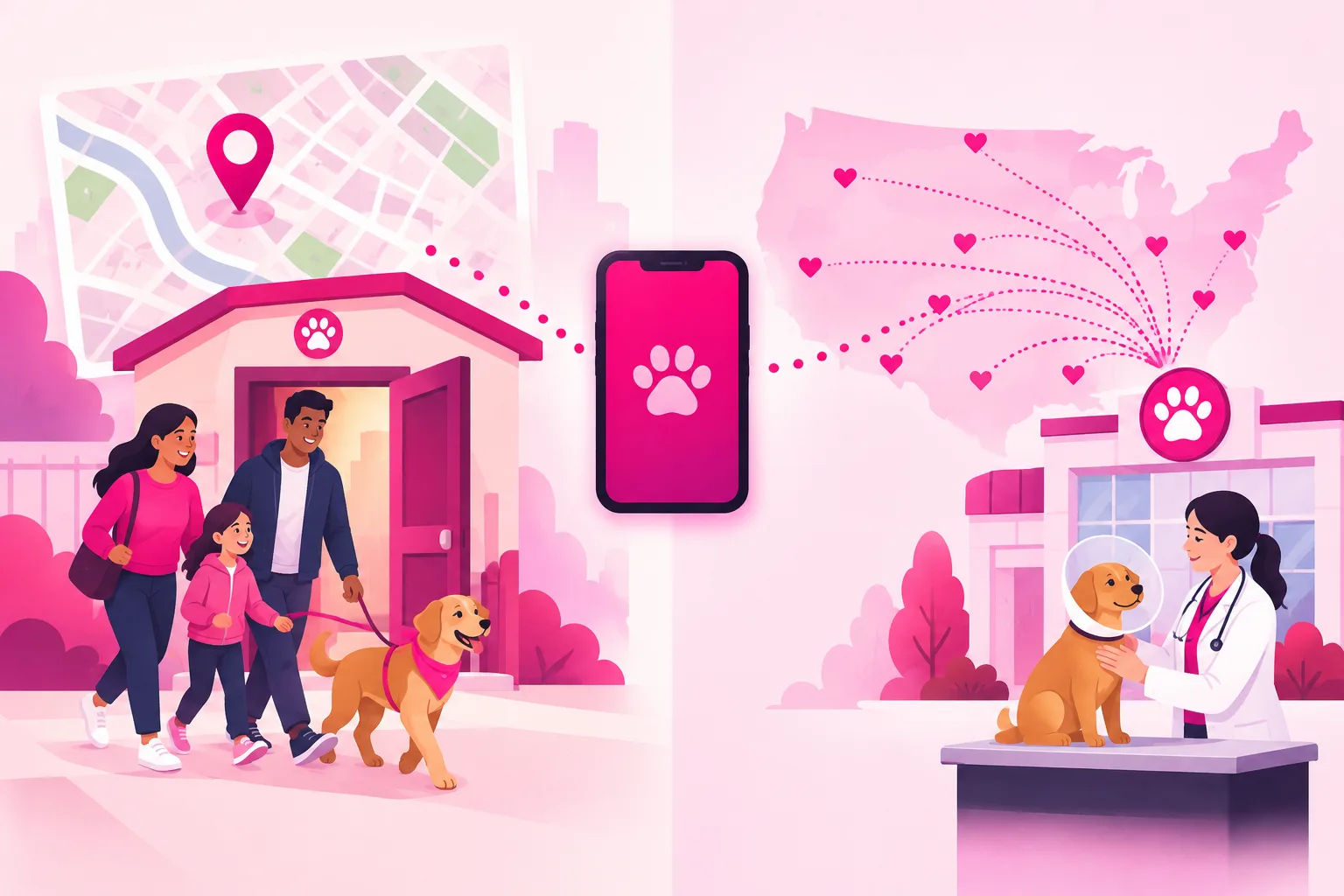
The pillar guide's defining idea is that a nonprofit has two maps: money travels, hands don't. No sub-vertical lives that split more literally than yours. An adoption, a foster placement, a volunteer shift, a donated bag of food, and a lost-pet reunion all happen inside a drive radius. The gift that pays for the heartworm treatment, the orthopedic surgery, the kitten formula, and the new kennel floor can come from a stranger three time zones away who will never see your building.
The hands path is your adoption floor. Adopters, fosters, volunteers, transport drivers, the person who brings in the found stray, and the family who shows up to the Saturday adoption event. Every video on this path says the city out loud, in the first line of the caption and in the bio, and ends with a step a local person can take this week: the application, the foster form, the shift. Measured in applications with a local zip code, foster slots filled, and animals who went home.
The dollars path is your medical fund. First gifts, second gifts, monthly donors, and the birthday fundraiser someone runs for you in a state you have never visited. Every video on this path ends by pointing at the donation page, and the page has a visible monthly option and an email field, for the reasons our fundraising guide spells out. Measured in donors who give a second time, never in views.
The practical rule for a shelter is that out-of-area love always gets a dollars ask. "I would adopt him in a second if I lived closer" is the most common comment on any adoptable-animal video that travels, and it is not a failed adoption. It is a donor introducing themselves. The prepared reply - "You can't drive to him, but you can pay for his knee - the link is in the bio, and we'll show you the surgery" - turns the national audience from a frustration into the thing that funds the local work. Unless your organization runs a transport program that genuinely places animals across state lines, do not let a viral dog turn your adoption counselors into a national call center.
And the application form asks for the zip code first, before the name, so the pile sorts itself. The three-button profile page in our supporter-acquisition guide - give, volunteer, get help - becomes adopt, foster, and give for you, and the medical fund is the one button that does not need a city.
3. The Six Formats That Empty Kennels
The pillar guide describes six formats that work for every cause. Here is what each becomes when the cause has fur, starting with the one most shelter accounts already make - and usually make without the half that matters.
- 1. The adoptable-animal introduction that describes the home. Not "Biscuit needs a hero." The video says who Biscuit is and who he needs: a four-year-old shepherd mix who has to be the only dog, is fine with kids over ten, pulls on leash and is learning not to, and would be happiest with a fence and someone home most of the day. Specificity feels like it shrinks the audience. It does the opposite job: it finds the forty right applicants instead of the four thousand wrong ones, and it is the most honest marketing you will ever do. One animal per video, filmed at eye level, with the volunteer who knows him best talking about him like a friend.
- 2. The long-stay series. The dog on day two hundred, told with honesty instead of pity, with an update every week until the day he leaves. It is the most powerful recurring format a shelter has, and it is so specific to your work that it gets its own section below.
- 3. The adoption day and the update. The leash going out the door, the first ride, and - the part most accounts forget - the message from the adopter two weeks later with the dog asleep on their couch. The update is the hands path's version of the receipt: proof that the thing you asked people to do worked. It closes the loop for everyone who shared him, and it is the video that makes the next application easier. Get the adopter's permission before posting their face or first name; many would rather you post the dog.
- 4. The what-fostering-actually-is explainer. The single highest-leverage video a shelter can make, because the foster list is what decides whether kitten season is manageable or a crisis. Section 6 is about it.
- 5. The medical-fund receipt. "Last month, your gifts paid for this: Daisy's heartworm treatment, two spay-neuter days, a litter of five bottle babies for six weeks, and the new kennel floor in the back row." Shown, line by line, with the animals in it where consent and welfare allow. This is the dollars path's conversion video, exactly as the pillar describes, and animal welfare is the one cause where the receipt is also the cutest thing you post.
- 6. The kind correction. Your version of the cause correction, and the shelter world has a deep bench of myths to correct on its own feed: that shelter animals are broken, that black dogs and cats are harder to place because something is wrong with them, that a bully-breed dog is a bully-breed dog, that a cat who hides on day one is unfriendly, that an older dog cannot settle in. Said kindly, by someone who clearly loves the animals, with a specific animal who disproves it sitting in frame.
Behind those six sit the two formats that fill out the week: the come-with-me shift - the six a.m. kennel cleaning, the walk rotation, the laundry mountain, which is the best volunteer-recruitment content you will ever make - and the comment reply filmed in front of the animal the comment was about. Notice what is not on the list: the staff doing the trend of the week. If the team loves it, let it season the account. It adopts out nobody.
4. The Long-Stay Animal: A Series That Finds the Home Instead of Begging for One

Every shelter has one. The big grey dog who has watched a hundred others leave. The senior cat who was surrendered when her person went into care. The pair who have to go together. The long-stay animal is the hardest animal in the building to place and, handled with care, the most powerful series a shelter account can run - because it is the one story on your feed that the audience can follow over time, and following over time is what turns a viewer into a follower.
- Count the days honestly, never as a guilt trip. "Day 212 with Gus" is a framing the audience understands instantly and will come back for. The tone decides everything: it is a diary, not an accusation. The video is about Gus - what he did today, what he is learning, who he loves at the shelter - and not about the people who have failed to adopt him.
- Say why, plainly. The reason an animal has stayed is usually a real constraint: a bite history that means an adults-only home, a medical condition with a monthly cost, a size that landlords refuse, a need to be the only pet. Hiding it produces a return, and a return is worse for the animal than another month in the building. Saying it - "Gus needs a home with no other dogs and a person who has had a strong dog before; here is what that looks like" - is the match, and the match is the whole point.
- Show the progress, not just the wait. The day Gus walked past another dog without reacting. The first time he took a treat gently. The volunteer who comes in every Tuesday just for him. A long-stay series that is only "still here" is a countdown with a different label. One that shows an animal becoming more adoptable every week is a story, and stories get shared by people who are not looking for a dog.
- Let the audience help in the ways it can. Far-away viewers cannot adopt Gus, but they can sponsor his training sessions, pay for his monthly medication, and share him into the feed of someone who lives twenty minutes from you. The series gets a standing dollars ask for the national audience and a standing hands ask for the local one, in that order, every episode.
- Close the loop, whatever the ending. When Gus goes home, the adoption video is the most-watched episode and the update two weeks later is the receipt. When the ending is harder - a medical decline, a decision made for his welfare - tell it, with dignity and in a sentence, and thank the people who followed him. Audiences forgive a sad ending told honestly. They do not forgive a series that simply stops.
One long-stay series at a time is enough. The rest of the adoptable animals get the introduction format from section 3, and the series gets the pinned spot on the profile, updated the day the ending comes. A pinned "still available" video for an animal who went home a month ago is the fastest way to teach the audience that your account is not current.
5. No Suffering Imagery: Hook on the Fix, Never the Cruelty
This is the section that separates the shelter accounts that grow for years from the ones that spike and shrink. The pillar guide warns every cause off the pity hook. Animal welfare is the one sub-vertical where the pity hook has an entire established culture behind it - the intake photo of the emaciated dog, the cruelty-case image, the "URGENT: will be euthanized Friday" post with a clock on it - and where it demonstrably produces gifts and shares in the short term. Here is why it still hurts you, and what to do instead.
- It raises money once and trains the audience to scroll. The first cruelty image stops the thumb. The fifth one is what the viewer learned to expect from your account, and the platform's algorithm learns alongside them. Within a few months the account that leads with suffering is being skipped by the exact people who would have adopted, fostered, and given monthly, and it is left with an audience that shows up only for emergencies.
- It makes you the saddest place in the city's mind. The hands path needs families to want to walk into your building on a Saturday. A feed of cages and countdowns tells them the building is where animals go to die, and they take their children to the pet store instead. The account that shows the walks, the volunteers, the adoption days, and the dog asleep in the office becomes the place a family wants to visit.
- It can compromise the case. Photos from an active cruelty investigation are evidence. Posting them before law enforcement and your legal counsel have cleared it can affect a prosecution and, in some places, an ongoing custody dispute over the animal. Nothing from an active case goes on the account until the people running the case say it can.
- Tell the recovery from the other side. The rule that replaces the intake photo: show the cone, not the wound. The soft bed, the first slow walk, the day the bandage came off, the weight gain shown by the volunteer lifting her more easily. The hard part is described in a sentence - "When she came in she weighed half what she should have" - and never shown. The recovery series gets more saves, more shares, and more second gifts than the intake photo, because people come back to see how she is doing. The pet-creator community figured out long ago that the audience wants to see the animal doing well; our pet filming guide has the practical craft of filming an animal that is not yet comfortable.
- Be honest about euthanasia without a countdown or a culprit. Some shelters, especially municipal ones with an intake they cannot refuse, face capacity decisions. When that is true, say it plainly and once - "We are over capacity, and these are the dogs we most need fosters for this week" - with the foster form, never with a ticking clock on a specific animal and never with a sentence that blames the public. The clock trains scrolling and panic-adoptions that come back. The blame shames the very people you need to walk through the door, including the ones who will someday have to surrender a pet.
The never-show list in our filming guide gets three shelter-specific lines: the intake photo, the surrender counter and the person standing at it, and anything from an active cruelty case. Everything else in the building is content.
6. Foster Recruitment: The Most Valuable Rung of the Hands Path
Ask any shelter director what they would wish for and most will not say money. They will say fosters. A foster home is a kennel you do not have to build, a bottle-baby kitten who survives because someone fed her at two in the morning, and a dog who becomes adoptable because he finally got to decompress on a couch. The foster list decides whether kitten season - the spring-to-fall stretch when litters arrive faster than anyone can place them - is a hard season or a disaster. And almost no shelter account makes the one video that grows it.
- The explainer dismantles "I could never." The two reasons people do not foster are that they think they will keep every animal and that they think it costs money and expertise they do not have. The video answers both from a real foster's kitchen: the shelter provides the food, the supplies, and the vet care; the commitment can be two weeks, not two years; the point is that the animal leaves for a home, and the goodbye is the win. The honest line - "yes, some fosters adopt, and we call it a foster fail, and we love it" - makes the whole thing human.
- The bottle-baby video is the foster call that works. A volunteer feeding a kitten who fits in one hand, with the caption explaining that this kitten needs a foster for six weeks and the next litter needs one next week, is the most-shared thing a shelter posts in spring. It ends with the city and the foster form, never with a generic "please help."
- The short foster is the on-ramp. Weekend fosters, holiday fosters, a day out for a long-stay dog, a two-week decompression stay: each is a small, safe step that turns a follower into a hands-path supporter without asking for their spare room for a year. Our supporter-acquisition guide describes the first shift as the rung everything depends on; for you, that rung is the first foster weekend.
- Fosters are your cast. The pillar's rule is that volunteers and frontline staff carry the account, not the executive director. Your version is the foster filming the kitten on her own kitchen floor, with a short release on the foster agreement and a saved sound you have the rights to use. It is the warmest footage you will get, it costs the shelter nothing, and it recruits the next foster better than any staff member can.
- Recruit in February for March. The first litters arrive before anyone is ready. The foster explainer is posted and promoted in late winter, when the building is quiet and the audience is making plans, so that the roster exists before the first box of kittens is left at the door. Section 10 comes back to this.
The "I could never, I would keep them all" comment appears under every foster video you will ever post. Reply to it on camera, from a foster who has said goodbye to thirty animals and is holding the thirty-first. That reply is a recruitment video, and the person who made the comment comes back to watch it.
7. The Adoption Ladder and the Four Messages in Your Inbox
Views become adopters, fosters, and donors through the same supporter ladder every nonprofit climbs, and the mechanics are covered rung by rung in our supporter-acquisition guide. Here is what changes when the first gift is an animal going home.
- The belief rung is "shelter animals are not broken." For most causes, the belief the ladder has to build is that the money does what you say. For you, it is that the animal in the video will become a normal, wonderful pet. The kind correction and the update video build it; the intake photo destroys it.
- The trigger is usually a loss, a move, or a child. The old dog died in the spring. The apartment finally allows pets. The kids are old enough. Your content cannot create these moments; it can make sure that when one arrives, yours is the account the family already follows, with the city in the bio and the adoption page one tap away.
- The application asks zip first. Then the home: other pets, children, fence, landlord. Not as a gate but as a match, so the counselor's first conversation starts from the right animal rather than from "which one did you see on TikTok?"
- The meet is the product you sell on TikTok. Nobody adopts from a video, and you should never ask them to. The ask is the small, safe step: "Come meet him Saturday, no commitment, the counselor will tell you honestly if he is the right fit." Sell the visit. Let the counselor and the dog do the rest.
- The update is your 48-hour thank-you. Our supporter-acquisition guide calls the second gift the real conversion and the fast thank-you the rung the sector loses most supporters on. Your equivalent is the follow-up to the adopter two weeks out: a text asking how it is going, a request for one photo, an offer of help with the first rough week. It prevents returns, it produces the update video, and it turns an adopter into an alumni family that tags you in every video of their dog for the next decade.
- The top rung is the alumni family. They foster when you call, they give monthly to the medical fund, they bring the kids to volunteer, and their dog's own account - there is always an account - sends you a steady stream of local followers who already believe. Track the share of adopters who do any of those things within a year. It is the truest measure of whether the first adoption went well.
Four shelter-specific inbox messages deserve a prepared reply alongside the four in the supporter-acquisition guide:
- "Is he still available?" Fast, warm, and honest in both directions. If yes: the application link and the adoption hours, with the zip-first form doing the sorting. If no: "He went home on Tuesday - and here are three dogs who need the same kind of home." Never leave this message unanswered for days; the person who sent it is the warmest lead you will get this week.
- The out-of-area adopter. "I'm in another state, can I adopt him?" gets the kindest version of the two-maps rule: unless you run transports, no - and here is how to find a shelter near you, here is his medical fund if you want to help him anyway, and please follow so you see the next one. A gift and a share from this person are worth more than a refused application.
- The surrender request. This is the shelter's version of the pillar's third audience, the person who needs you, and the message arrives in your DMs more often than you expect: "I can't keep my dog anymore, what do I do?" The saved reply is warm, carries no judgment, and leads with the alternatives before the intake: the pet food pantry, the behavior helpline, help with a landlord letter, the rehoming tools that let them place the dog themselves, and - honestly - your current capacity and how your intake works. The person who was treated kindly at the hardest moment of their pet ownership becomes a donor. The one who was shamed tells everyone they know what your shelter is like.
- "I found a stray." A saved reply with the local protocol: most veterinary clinics and shelters will scan for a microchip at no charge, where to post the found animal, what your area's stray-hold rules mean for a finder, and when to bring the animal in. Many found pets are close to home, and the finder who is coached to knock on doors first often reunites the pet faster than you can - which is a video, with their permission.
8. The Shelter Year: Kitten Season to GivingTuesday

The giving calendar that runs every nonprofit's year still applies to you, and it is layered over a second calendar that most causes do not have: the one the animals keep. Post and promote four to six weeks ahead of each moment.
- Late winter (February): recruit before kitten season. The building is at its quietest and the audience is at its most receptive. The foster explainer, the bottle-baby how-to, and the "what we will need in six weeks" video are posted now and promoted to your metro. This is the single highest-return month on the hands path.
- Spring (March-May): kitten season begins and volunteers are recruitable. The first litters arrive. The daily foster call, the kitten-formula receipt, and the come-with-me shift carry the account. National Volunteer Week in April and National Adopt a Shelter Pet Day on April 30 give you two ready-made moments, and the spay-neuter explainer - the honest video about why the kittens keep coming - is the correction of the season.
- Summer (June-August): the building is full. Kitten season peaks, intake climbs, and shelters across the country report their busiest lost-pet days in the week after the Fourth of July as frightened animals bolt from fireworks. The microchip and lost-pet video belongs in late June; the heat-safety video belongs in the first hot week. Then comes the biggest adoption moment of the year: Clear the Shelters, the annual August adoption campaign run with local NBC and Telemundo stations, when hundreds of participating shelters reduce or waive fees. Your adoptable-animal introductions are filmed in July so that the week itself is spent at the front desk.
- Fall (September-November): build the receipt, recruit the holiday fosters. Intake eases, and the dollars path takes over. The medical-fund receipt and the long-stay series are built in October with no ask attached, exactly as the pillar's calendar prescribes. The holiday-foster call goes out in November, because the dogs who spend Christmas on a couch come back more adoptable - and many do not come back at all, because the foster adopts them.
- Year-end (GivingTuesday, December 1 in 2026, through December 31): the ask. The receipt gets its ask, the monthly program gets its push, and the "home for the holidays" adoption push gets a kind, honest note on pets as gifts: the old blanket ban has softened in the sector's own research, and the useful video is the one that says a surprise pet is a bad idea but a planned family adoption over the break is a wonderful one.
- January: thank, report, and catch the returns gently. The thank-you video and the year-in-review receipt come first. Then the January conversation nobody enjoys: some holiday adoptions come back. A video that says, without shame, "if the first month is hard, call us before you give up - here is what usually helps" prevents more returns than any adoption-counseling pamphlet. The fan-organized Betty White Challenge, which since 2022 has sent small gifts to shelters around January 17, is a dollars-path moment worth a prepared thank-you.
Map your own version - a rescue that pulls from rural shelters, a sanctuary that never adopts out, and a municipal shelter with mandatory intake each peak differently - and write it down. Every decision in the next two sections is easier once you know which weeks you are aiming at.
9. The Mistakes That Keep Shelter Accounts Small
Most stalled shelter accounts are making one of these seven errors, usually with great consistency:
- Running the urgent-list account. Every post is a countdown, every animal is a crisis, and the audience is trained to arrive only for emergencies. It is the shelter's version of the pity-hook plateau in our growth roadmap, and it is the most common way a shelter concludes the platform does not work.
- Building a national fan club with no zip code. Half a million followers, a famous dog, no city anywhere in the bio, and an adoption floor that never changed. The national audience is not the mistake. The missing ask for it, and the missing city for the local one, is.
- Shaming the public. The surrendering owner, the family who returned a dog, the person who bought from a breeder, the neighbor who did not spay. "Adopt, don't shop" works as an invitation and fails as an accusation, and the people you are tempted to shame are your future adopters, your future donors, and - in the case of the local veterinarians and the other rescues you transfer animals with - your partners. Educate about the cause; never disparage the community.
- Posting the intake photo. Covered in section 5. It raises money once and costs the account for years.
- Letting the committee or the city hall run the account. Municipal shelters especially: the video of a dog who arrived this morning cannot wait for next week's approval meeting. The pillar's rule of one approver with a one-page never-post list and a same-day turnaround is the only cadence that works with a rolling cast.
- Making the staff the whole cast. Shelter work is exhausting and the turnover is real. An account built on one charismatic staff member collapses when they leave. Build it on the animals, the volunteers, and the fosters, with the staff as guides.
- Never closing the loop. The dog goes home and the account simply moves on. Everyone who shared him never learns it worked, the adopter is never thanked, and the next ask starts from zero. The update video is the receipt; the signals that matter - saves, local comments, applications, second gifts - are what to watch instead of the view count.
10. Paid Amplification: Fill the Foster List Before Kitten Season
Organic content builds the asset. Paid amplification is how you point it at the weeks that matter, and animal welfare is unusually well-suited to doing it responsibly, because the demand has a calendar, the two maps tell you exactly whom to reach, and the thing you most need is a sign-up rather than a sale.
The logic is simple. By the time you consider spending a donor's dollar, you already know which videos work: the foster explainer that produced applications, the medical-fund receipt that produced second gifts, the adoptable-animal introduction that locals commented on. Promotion is not a gamble on new creative. It is buying more of the right attention for a video that has already proven it moves people, which is exactly how the pillar guide's promotion section says a nonprofit should spend.
Three shelter-specific rules shape the campaign. Two maps, two campaigns. The foster and adoption videos are promoted to adults inside your drive radius and nowhere else, because a foster application from three states away is a polite reply, not a placement. The medical-fund receipt is promoted more widely, because that gift can come from anywhere, and it goes to a page with a monthly option and an email field so the donor it finds can be thanked and asked again. Promote the explainer, never the plea. Ad policies restrict shocking or distressing imagery far more strictly than your organic feed does, and the foster explainer and the receipt convert colder audiences better anyway. The video you promote is the one that describes the home or shows where the money went. Time it to the two seasons. February and March for the foster list, before the first litter arrives; late October and November for the receipt, before retail advertisers crowd the auction ahead of GivingTuesday.
The economics are the board conversation. One emergency surgery can cost more than a month of modest promotion; one foster home recruited in February saves a kennel for the whole of kitten season; and a donor who gives a second time is worth several times a first gift. The discipline the pillar insists on applies with extra force here, because every ad dollar is a donor's dollar: measure the foster campaign in applications with a local zip code and the receipt campaign in second gifts, and stop anything that is producing only views. Our fundraising guide's tracking section has the spreadsheet.
That is exactly what our TikTok promotion service is built for: taking the foster explainer or the receipt that already works and putting it in front of thousands more of the right people - your metro for hands, wider for dollars - with budget flowing to the audiences that respond. For the mechanics of promoting an existing organic video, the Spark Ads guide walks through the setup step by step.
Frequently Asked Questions
Does TikTok actually work for animal shelters and rescues?
Yes, more naturally than for almost any other kind of nonprofit, because animals are one of the largest genres on the platform and a shelter has a new one every day. The catch is that the audience the videos attract is national and the people who can adopt, foster, or volunteer live within a drive of the building. A shelter account works when it says its city out loud, asks far-away viewers for the thing they can actually do - a gift to the medical fund or a share - and measures itself in applications with a local zip code and donors who give a second time, not in views.
What should an animal shelter post on TikTok?
Six formats do most of the work: the adoptable-animal introduction that describes the home the animal needs, the long-stay series that counts days with honesty instead of pity, the adoption-day and update video that closes the loop, the what-fostering-actually-is explainer, the medical-fund receipt that shows where last month's gifts went, and the kind correction of a myth about shelter animals. Behind them, the come-with-me volunteer shift and the comment reply fill the week. Dances and trends can season the account; they adopt out nobody.
Should a shelter post photos of abused or neglected animals to raise money?
No. The intake photo and the cruelty-case image get a spike of gifts once and then train the audience to scroll past your account, make the shelter the saddest place in the city's mind, and may compromise an active investigation. Tell the recovery from the other side: the cone and the soft bed, the first walk, the day the bandage came off, with the hard part described in a sentence rather than shown. The same rule applies to euthanasia: be honest about capacity when you must, never as a countdown and never by shaming the public.
What do we do when a video goes viral and applications come in from all over the country?
Treat it as two separate audiences that arrived at once. The applications inside your drive radius go to the top of the pile, which is why the form asks for a zip code before anything else. Everyone else gets a warm, prepared reply with a different ask: the medical fund for that animal, the foster program if they are closer than they think, a shelter near them if they are not, and a follow so they are still there when the next animal needs a share. A national audience that gives and shares is an asset; a national audience you treat as failed adopters is a wasted one.
When should a shelter promote a TikTok video with paid budget?
Before the season that will fill the building, not during it. The foster-recruitment explainer is promoted to adults in your metro in February and March, ahead of kitten season, when a foster sign-up is worth more than any gift. The medical-fund receipt is promoted more widely in late October and November, before retail advertisers crowd the auction ahead of GivingTuesday. Promote the video that already produced applications or gifts organically, never a distressing image, and measure it in foster applications with a local zip code and donors who give again.
How many followers does a shelter need before TikTok fills kennels and the foster list?
Far fewer than the numbers the platform celebrates, as long as a meaningful share of them live nearby and the rest are on your email list. A few thousand local followers who see every adoptable animal and every foster call can keep the foster roster full through kitten season; a half-million followers across the country can fund the surgery of every animal who needs one. Those are two different successes. Measure the first in applications with a local zip and filled foster slots, the second in second gifts and monthly donors, and never in the follower count alone.
A necessary caveat: this is a general overview for planning purposes, not legal advice. Your obligations depend on whether you are a private 501(c)(3) or a municipal agency with public-records and procurement rules, on your state's charitable-solicitation registration and stray-hold laws, on the privacy of adopters and surrendering owners, on the evidentiary rules around any active cruelty case, and on the platform's current policies for nonprofit accounts and ads. The compliance section of the pillar guide covers the rules every nonprofit shares - and when a specific video is in doubt, a five-minute question to your counsel or your state animal-welfare association before you post is cheaper than any answer after.
Ready to fill the foster list before kitten season?
You already have the video that works - the foster explainer that started the applications, the receipt that brought a donor back a second time. Viryze amplifies that proven content to thousands more of the right people, in your metro for the hands path and wider for the dollars path, timed to the weeks before the building fills. Trust you have already earned, in front of the people who can actually show up or give again.
Promote your best videoRelated Reading
- TikTok for Nonprofits: The Complete 2026 Guide - the foundations every cause account shares, from the two maps to compliance.
- Getting Donors and Volunteers from TikTok: Turn Views Into Monthly Supporters - the full supporter ladder and the prepared inbox replies your adoption funnel runs on.
- How to Film Nonprofit Content for TikTok - consent, dignity, and the never-show list.
- Nonprofit TikTok Content Ideas: 50+ Video Concepts - the receipts, corrections, and come-with-me shifts that adapt cleanly to a shelter.
- TikTok Fundraising for Nonprofits: How to Raise Money in 2026 - the donation page, the monthly program, and the tracking behind the medical fund.
- TikTok for Pet Creators: The Complete Guide - the craft of the genre your animals already belong to.
- TikTok for Veterinarians: The Complete 2026 Guide - the sister guide for the clinics your medical fund pays.

Head of Creator Success at Viryze
TikTok growth strategist helping creators reach their first 100K followers through data-driven promotion strategies.