There is a very particular kind of frustration that hits nonprofit accounts about four months in. The videos are landing. One of them - the volunteer walking the camera through the warehouse at six in the morning, explaining where last month's donations went, shelf by shelf - did 900,000 views. The comments are full of "this is what every charity should do" and "how do I help?"
And Saturday's shift still has the same four open slots it had in May. The donor database added nine names, and six of them gave five dollars once.
That gap is almost never a content problem. It is a handoff problem - and in your sector it has a shape no business in this series has. A nonprofit is asking one audience for two completely different things. Money travels. Hands don't. The person who wrote "how do I help?" lives eleven hundred miles away and could fund a week of your program tonight if you gave her somewhere to do it. The person who lives ten minutes away and could actually carry boxes on Saturday never saw a sign-up link.
So you can earn the attention of a million people and fund nothing. Meanwhile the ones who could give again or show up again are making a series of small, separate decisions between "this organization seems real" and "I give fifteen dollars a month and I'm there the first Saturday of every month." Most organizations have quietly built four or five of the nine steps between those two sentences.
This guide is about sealing those leaks. It picks up where the 90-day growth roadmap leaves off, sits beside the fundraising guide, and plugs into the broader strategy in our complete TikTok guide for nonprofits. If people are already watching you, everything below is about making sure the ones who can give find the page, the ones who can show up find the shift, and both of them hear from a human within two days.
The short version:
- Views are not the product - a donor who gives a second time and a volunteer who comes back for a second shift are. A viral spike that produces three thousand five-dollar gifts and no second gifts has produced a mailing list you do not have.
- Every video is for one of two maps. Money travels and hands do not, so a national audience is not wasted here - it just gets a different ask. "Come Saturday" is for your city. "Fund forty boxes" is for everyone.
- Your profile is the front door. Lane, place, and ask in the bio, a pinned trio that ends with the receipt, and a three-button page - give, volunteer, get help - one tap away, with the monthly option visible and the zip code asked first.
- The door is a page, never "DM us." An inbox cannot ask where the volunteer lives, cannot show a monthly option, and is not a place to screen anyone who needs your help.
- Your inbox will receive four messages - the person who needs help, the in-metro sign-up, the in-kind offer, and the out-of-area volunteer. Each needs a saved reply before the first one arrives.
- The 48-hour thank-you is the rung that decides everything above it. The sector loses roughly four first-time donors in five. The ones who are thanked specifically, by a human, within two days are the ones who give again.
- Track second gifts and second shifts, never views or DM volume. You will undercount this channel unless you measure it, and you can measure it without a single person you serve ever appearing in a spreadsheet.
What's Inside
- 1. Why Views Don't Fund a Program
- 2. The Supporter Ladder: Nine Rungs From Viewer to the Birthday Fundraiser
- 3. Rungs 1-3: Two Maps, One Account - Building Belief Before the Ask
- 4. Rung 4: The Moment - Your Profile Is the Front Door
- 5. Rung 5: Earning the First Gift or the First Shift (Asks That Work Without Pity)
- 6. Rung 5, Continued: The Four Messages and the Reply for Each
- 7. Rung 6: The First Shift and the First Gift Have to Match the Video
- 8. Rungs 7-9: The 48-Hour Thank-You, the Second Gift, and the Advocate
- 9. High-Intent Content: The Videos That Actually Produce Gifts and Sign-Ups
- 10. Dignity, Privacy, and the Charity Rules at the Inquiry Stage
- 11. Tracking Which Videos Are Actually Filling Shifts and the Donor Database
- 12. Amplify the Video That Already Brings Supporters - Before GivingTuesday
- Frequently Asked Questions
1. Why Views Don't Fund a Program
A view is a stranger watching a volunteer stack cans for eleven seconds. A donor is a person deciding to hand money to an organization they have never visited, on the belief that it will do what the video said. A volunteer is a person deciding to give up a Saturday morning and walk into a building full of people they do not know. Nothing about the first automatically produces either of the others.
In practice, nonprofit accounts leak supporters in five predictable places. See how many of these describe your account right now:
- The video had no ask. It got 800,000 views, the board was thrilled, and nothing in the building changed, because nobody who watched was given a next step. This is the awareness trap the pillar guide warns about: an account that is famous and broke. Your view count is measuring how many people find the work moving, not how many were ever invited to join it.
- The video made the wrong ask for its map. "Come volunteer this Saturday" shown to the whole country is a wasted ask - and "give" shown only to the neighborhood leaves most of the map untouched. Most accounts never notice which map a given video is for, so the national audience gets the local ask and goes away feeling useless, which is the one thing a willing supporter should never feel.
- The profile makes them work. They tap your name, and the bio says "Strengthening our community since 1994 💚" with no city, no hint of what a gift does, and a link to a homepage whose donate button is three menus deep and whose volunteer page says "email us for opportunities." Every extra tap costs you a slice of the people who were finally ready.
- The only door is a DM - and some of the people knocking need help. An inbox cannot ask a volunteer where they live, cannot show a donor the monthly option, and is the wrong place entirely for the message that says "I need food and I don't know what to do." When the account is run by whoever has the phone that week, that message can sit for days.
- The first gift is the last thing they ever hear about. They gave twenty dollars on December 30, received an automated tax receipt, and the next message from you was another ask in March. Sector benchmarks have put first-time donor retention at roughly one in five for years, and the missing thank-you is most of why. The volunteer version is the eager sign-up who hears nothing for two weeks and quietly concludes you did not need them.
Here is the encouraging part: every one of those is fixable in an afternoon, and none of them require you to make better videos. You need the path between the video and the second gift to be short, obvious, matched to the right map, and warmer than a tax receipt.
2. The Supporter Ladder: Nine Rungs From Viewer to the Birthday Fundraiser
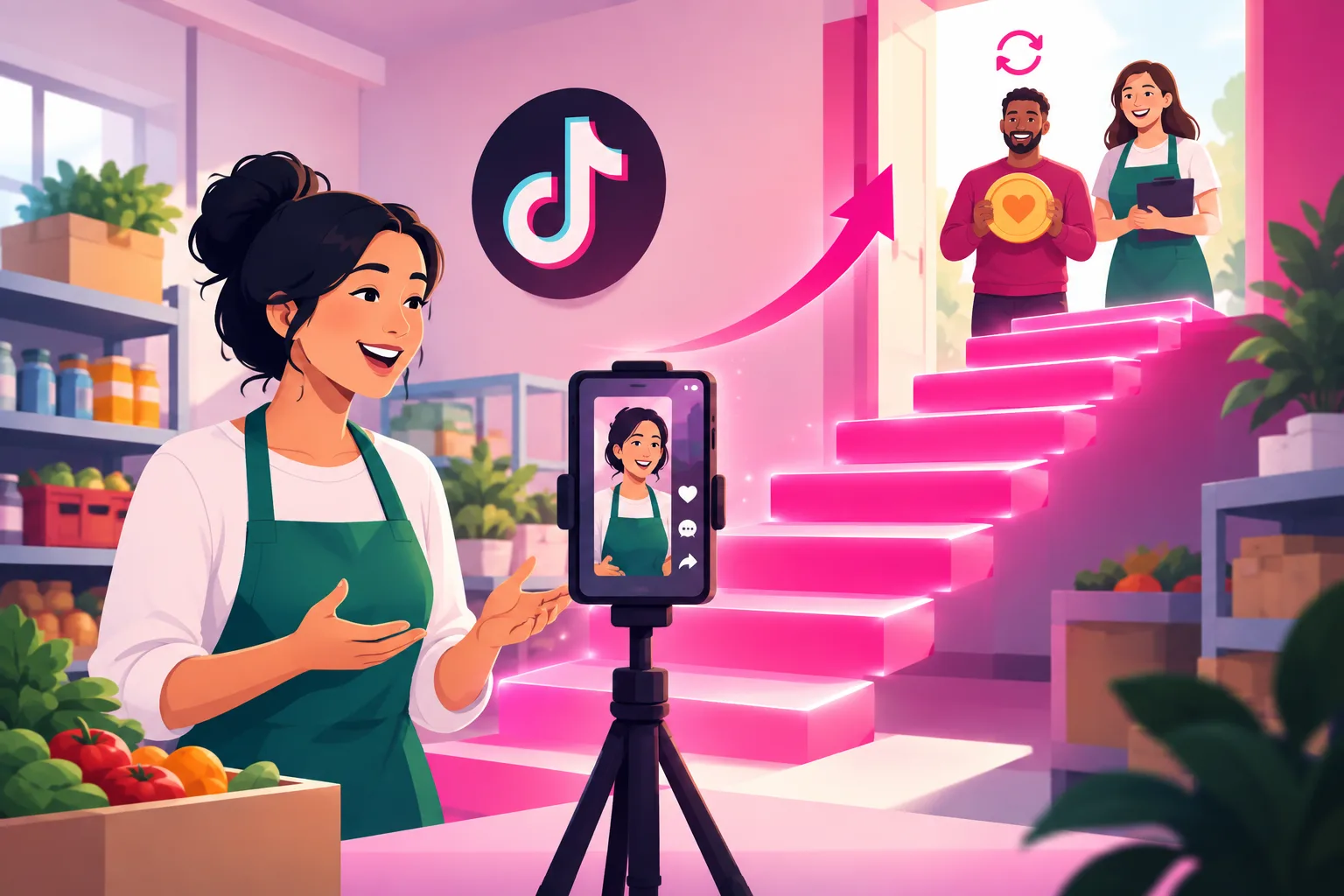
We call the path the Supporter Ladder. The pillar guide introduces it; this guide is about repairing it. Each rung is a separate decision the person makes, and each one has its own failure mode:
- Viewer - they watched one receipt or one cause correction to the end. They know nothing about you. The only job here is to be worth another eleven seconds, which mostly means opening on one solvable thing instead of your name and founding year.
- Follower - they followed because you showed them something they did not know about their own city or their own cause. The job is to make it obvious there is a lane to follow for, rather than a receipt one day, a gala flyer the next, and then a graphic with a logo on it.
- Someone who now believes the money does what you say - the rung only your sector has. "How much goes to overhead?" is the question under every gift not given, and weeks of receipts later it has quietly dissolved. You are the organization they picture when they imagine finally giving to something.
- The moment - GivingTuesday, a match, a news story about your cause, a birthday, a snow day that closes the schools your program feeds, December 30. You do not cause this rung; you are simply present for it. It is why gifts and sign-ups arrive in lumps rather than a steady drip.
- First gift or first shift - and the message asking for help - they raised their hand. Most hands say "how do I sign up?" or tap the give button. Some say "I have a couch, do you want it?" And some say "I need help." This is the fragile rung, and the first one you can directly measure.
- The first shift, and the first gift that felt like something - the sign-up became a person who showed up and was greeted by the volunteer from the video; the gift became a confirmation page that looked like the receipt. This rung belongs to your confirmation email, your greeter, and your donation page, not to your camera.
- The thank-you - within 48 hours, specific, and from a human. This is the rung where the sector loses four donors in five, and it is the one that makes you different from every business in this series: your "customer" just gave you something for nothing and is waiting, mostly without knowing it, to find out whether it mattered.
- The second gift, the second shift, and the monthly donor - the real conversion. A donor who gives twice is far more likely to keep giving than one who gave once, and a volunteer who comes back for a second shift is far more likely to become a regular. The monthly invitation belongs here, after the second gift, not at the first moment.
- Fundraiser and advocate - the birthday fundraiser, the coworkers brought to a shift, the stitched video that says "this is the place I told you about." And partners refer: the church that adopts a Saturday, the company that matches, the school counselor who now has a name to give a family.
Two things follow from this shape. First, you cannot skip rungs. Videos that ask first-time viewers to set up a monthly gift convert badly, because you are demanding rung eight behavior from rung one people - and worse, they train your audience to hear every video as a collection plate.
Second, your worst rung caps everything above it. An organization with brilliant receipts and a thank-you that is an automated PDF converts fewer monthly donors than an organization with average videos and a fifteen-second thank-you from the volunteer who packed the box.
Before you make another video, walk the ladder yourself. Open your account in a private browser window as if you were a 34-year-old in your city who just watched your receipt for the third time, has forty minutes free on Saturday, and twenty dollars she would like to see do something. Where exactly does she get stuck?
3. Rungs 1-3: Two Maps, One Account - Building Belief Before the Ask
Reach is not the goal. Reach among people who can act is the goal - and in your sector, who can act depends on what you are asking for. Three thousand followers inside your metro is every Saturday shift filled through November. Three hundred thousand spread across the country cannot carry a single box - but they can pay for all of them.
That is the two maps problem in miniature. The hands path - volunteers, in-kind gifts, event seats, adopters, and the people who need your service - lives inside the drive radius. The dollars path - first gifts, second gifts, monthly donors, peer fundraisers - is borderless. Every other profession in this series has to fight its national audience. You get to use yours. What you cannot do is make the same ask to both.
Everything about rungs one through three is about building belief with both audiences at once, and making it unmistakable - to the algorithm and to the humans watching - which map each video is for:
- Say your city out loud in hands-path videos. Not as a pitch - as context. "We're the food pantry in the blue warehouse behind the bus depot on Fourth, and this is the question our volunteers get asked most." One sentence tells the viewer and the platform where you are, and it quietly tells everyone else that the Saturday sign-up is not for them - while the receipt still is.
- Balance travelers with anchors, and label the ask. The receipt, the one story, and the cause correction travel nationally and build the donor audience. The come-with-me shift, the how-to-get-help walk-through, the specific-need list, and replies to commenters in your metro anchor you to a place. The content ideas library sorts fifty-two ideas into those two piles. The rule that keeps the account honest: a traveler ends with "the link has a monthly option," an anchor ends with the city and the shift. Never the reverse.
- Hook on the fix, never the pity. "Here is what twenty dollars did last Tuesday" brings you someone who wants to be part of a solution. A close-up of someone's worst day over sad music brings you an audience that looks away - and it takes something from the person in the frame that no amount of money returns. The pillar's hook rule builds rung three. The pity hook builds a following that never gives twice.
- Show the receipt, over and over. Rung three is the belief that the money does what you say, and nothing builds it like the monthly "where last month's gifts went, line by line" video. It is the conversion video of your sector. One receipt is a nice post. Nine receipts in a row, each with a real number, is an organization a stranger will trust with a recurring charge on her card.
- Show the volunteers and the work, not the director and the logo. Filming on program days with the frame rules from the filming guide - hands, boxes, the truck, the woman in the apron who has sorted donations every Saturday for nine years - turns you from a cause into a room someone can picture walking into, with faces they will recognize at the sign-in table. For a nervous first-time volunteer, that glimpse does more than any mission statement.
- Be there every week. Rung three is built by repetition, not reach. The person who finally believes you has usually seen you a dozen times over two months. The account that posts three times around the gala and stops never gets there - and neither does the account where every post is an ask.
- End with a reason to follow, not a reason to give. "I post the receipt on the first of every month" moves rung one to rung two. "Donate today" does not, because they do not believe you yet.
Then check both maps. TikTok's follower analytics show where your audience lives, and the growth roadmap explains how to read that split by path: the in-metro share is everything for hands and nearly irrelevant for dollars. But your most honest indicator sits one rung higher - the share of volunteer sign-ups that come from inside your drive radius, and the share of first-time givers who come back. If those are climbing, rungs one through three are working.
This is also the one place paid amplification changes the math outright. Promotion lets you choose the metro for a hands-path video and the whole country for a receipt, instead of hoping the algorithm sorts it out - more on that in section 12.
4. Rung 4: The Moment - Your Profile Is the Front Door

Rung four is the one you do not control. GivingTuesday lands. An employer announces a match. The local news runs a story about the thing you fix. A friend's birthday fundraiser shows up in someone's feed. The schools close for a snow day and a parent suddenly wonders who feeds the kids who eat at school. It is December 30 and a person who has been meaning to give to something all year has one day left.
In that moment, a person who has been quietly watching your receipts for months finally taps your name. What happens in the next six seconds decides whether they become a supporter or go back to scrolling. Treat that screen the way you treat the person at your actual front door: calm, clear, and obvious about where to go next.
The bio: your lane, your place, and the ask. Not "strengthening our community." Something a ready person can act on:
Hands path: "Free groceries, no ID needed · East Tulsa · Tue & Thu 4-7 · Volunteer, give, or get help below."
Dollars path: "We pay the vet bills that would otherwise end an adoption · Every gift gets a receipt video · $15/month keeps one dog in a home."
The lane tells the viewer and the algorithm what you are. The place tells a local viewer you are reachable, or the cause named precisely tells a distant donor what their money touches. The last line is the ask that "raising awareness" never includes. The growth roadmap's foundation section covers the profile photo (the volunteer's face, never the logo) and the business account setup that adds the link without waiting for 1,000 followers.
The pinned trio: mapped to the three doubts. A person at rung four has three questions they will never type. Pin one video for each:
- "Does this organization actually understand the problem?" - your best-performing cause correction. The myth about your cause, corrected plainly, on your own feed.
- "What would it actually be like to show up?" - the come-with-me first shift for the hands path, or the how-to-get-help walk-through for the people you serve. The shift videos visibly cut first-shift no-shows, because the nervous volunteer has already seen the parking lot, the sign-in table, and the person who will greet them.
- "Does a small gift do anything?" - the receipt. "Here is exactly what twenty dollars did last month." The third pin quietly converts more than the other two combined.
The link: a three-button page, one tap away, never "DM us." The bio link opens a page with three plain buttons - give, volunteer, get help - and the page behind each one is built for the person at rung four:
- Give lands on a donation page whose suggested amounts match the receipt ("$20 = one week of groceries for one family"), with the monthly option visible by default rather than hidden behind a checkbox, an email field, and a "how did you hear about us?" line with TikTok as an option. The fundraising guide builds this page element by element.
- Volunteer opens a short form that asks for the zip code first, before the name. It screens the four-time-zones sign-up politely, it tells you instantly whether your hands-path content is reaching your own city, and it lets the out-of-area volunteer see the honest answer - "we are a local program, here is how to help from where you are" - before they feel rejected. Then: available days, a phone number, and nothing else. Every extra field is a slice of Saturday's crew.
- Get help goes to hours, location, what to bring, what not to worry about ("you do not need ID or an appointment"), and 211 for tonight. If your address is confidential, it says how to reach you without giving it. This button is the one most organizations forget, and it is the one that serves the third audience watching your account.
Every one of those buttons replaces a DM. That matters more for you than for any business in this series, because the messages your inbox receives include some that no social inbox should ever be handling - which is section 6.
One last rung-four detail: the moment has a calendar. The giving calendar tells you when the taps will come - GivingTuesday on December 1 in 2026, the last three days of December, National Volunteer Week in April, back-to-school. Swap the pinned trio to match: the receipt and the match video in November, the first-shift walk-through in March and August. The front door should know what season it is.
5. Rung 5: Earning the First Gift or the First Shift (Asks That Work Without Pity)
Rung five is where the viewer raises a hand, and it is the rung most nonprofit accounts either skip entirely ("we don't want to seem salesy") or hammer in every post ("donate now" under a video of someone's worst day). Neither works. The asks that produce first gifts and first shifts share four properties.
They are specific. "Support our mission" is not an ask; it is a slogan. An ask names a number, a day, or a thing:
Hands: "We need twelve people this Saturday from nine to noon at the warehouse behind the bus depot on Fourth. No experience, no lifting over twenty pounds unless you want to. Sign up at the link - it asks for your zip code first so we know you can actually get here."
Dollars: "Twenty dollars is one week of groceries for one family. That is what last month's gifts did - here is the list. The link has a monthly option, and every monthly donor gets the receipt video on the first."
In-kind: "This week we are out of exactly three things: size 4 diapers, peanut butter, and twin sheets. Not clothes - we are full on clothes, and we have nowhere to put them. The drop-off hours are in the pinned video."
They are tied to the moment. The ask that works on December 30 ("if you have been meaning to give to something this year, here is what twenty dollars does here") is not the ask that works in March ("Saturday shifts are open again and the person who greets you is Marisol"). The timing section of the content library lists which ask belongs to which stretch of the year.
They match the map. A traveler - the receipt, the story, the correction - asks for the gift, because its audience is everywhere. An anchor - the shift, the walk-through, the need list - asks for the hands and says the city, because its audience has to be able to drive there. The fastest way to make a willing national viewer feel useless is to end a receipt with "come volunteer Saturday."
They point at the page, never at the inbox. "Link in bio - give, volunteer, or get help" every time. "DM us to help" is the most expensive four words in your sector: it turns a volunteer coordinator into a receptionist, it hides the monthly option, and it puts the person who needs help in a queue behind someone offering a couch.
And here is what to avoid, because each of these quietly lowers the rung above it:
- Asking in every post. Four videos of the work for every ask. An account that asks in every post becomes a collection plate, and people learn to scroll past collection plates.
- The pity ask. A suffering face over sad music gets a first gift from some viewers and permanently loses the trust of the person in the frame and most of the audience. It is also the ask least likely to produce a second gift, because nobody wants to be reminded of how they were made to feel.
- Round, inflated, or unverifiable numbers. "Your gift feeds a thousand children" when it does not. Every number in an ask has to be one you could show on a receipt video, because you will.
- Asking for what you cannot use. Do not ask for donated furniture you have nowhere to store, or volunteers for a shift that is already full. An eager supporter who is told "actually, no" after raising a hand is a supporter you will not get back. If Saturdays are full through November, say so and open a waitlist.
- Asking people you serve to vouch for you. The person who received help last week is not your testimonial. Rung five is built on the receipt and the volunteers, never on asking someone who depends on you to perform gratitude on camera.
Finally, the ask that produces the most first gifts in your sector is often not an ask at all. It is: "Ask me the question you have always wanted to ask a charity in the comments, and I will answer it with the receipt." The replies - "how much goes to salaries?" "why do you need money if you get food donated?" "what happens to stuff you can't use?" - become the most-saved videos you will ever post, and the people who asked them become the donors who believe you.
6. Rung 5, Continued: The Four Messages and the Reply for Each

If you fix exactly one thing from this article, fix this one. No matter how clearly your bio says "use the link," people will message you. Those messages come in four kinds, and you need a saved reply for each before the first one arrives - and one named person who owns the inbox, including on Friday night.
Message one: "I need help." "I saw your video. I have two kids and nothing in the house and I don't know what to do." This is the message unique to your sector, and it is the one no social inbox was built to receive. A DM is not the place for casework - you cannot screen anyone here, you must not ask for documents here, and it is not confidential. But the person deserves an answer in minutes, not days. The reply the pillar guide recommends is warm, prepared, and complete:
"Thank you for reaching out - I'm really glad you did. You don't need an appointment or ID. We're open Tuesday and Thursday from four to seven at [address or how to reach us], and you'll leave with about a week of groceries. Nobody will ask you questions you're dreading. If you need something tonight, call 211 and they can tell you what's open near you right now. I'm going to delete this message after you've read it, just so it isn't sitting in an app - but please come Tuesday."
Say the first half publicly once as a video - "what actually happens the first time you come in, and the questions nobody is going to ask you" - and it becomes one of your most-saved posts, pinned under the get-help button. Be honest with yourself about what the DM reply is: a kindness, not a safety net. You will not see every message in time, and the real protection is built before the message - the get-help page, the hours in the bio, and 211 in a pinned comment on every walk-through.
Message two: the in-metro sign-up. "Hi, I'm in East Tulsa - how do I volunteer?" The reply does one thing: it moves them to the form, warmly, and it sets the expectation for what happens next.
"Yes - and thank you, that's not a small thing to offer. The quickest way is the volunteer button at the link in my bio; it asks for your zip code first so we can put you on the right shift. You'll get a confirmation the same day from Marisol, who runs Saturdays, with where to park and what to wear. She's the one in the green apron in most of our videos, and she'll be the one who meets you at the door."
Then keep the promise. The rule for sign-ups is the same business day, every time, and the confirmation comes from a named person. Volunteer coordinators lose more first shifts to a two-week silence than to anything else. The person who owns the inbox schedules; they never improvise a shift that does not exist.
Message three: the in-kind offer. "I have a couch in great condition, do you want it?" Or forty bags of clothes. Or a van. This is the message you handle worst - usually by saying yes to everything and ending up with a storage problem, or by going silent because the answer is no. In-kind gifts are the hands path's money, and they need the same specificity as the ask:
"Thank you so much for thinking of us. We're honestly full on furniture right now and have nowhere safe to store it - but [local furniture bank] takes couches and picks up, and I'd rather yours end up in a home than our hallway. The three things we are actually out of this week are in the pinned video, and the drop-off hours are on the get-help page. If you ever want to give in a way that lets us buy exactly what's missing, the give button is there too - and you'll see what it bought in next month's receipt."
A "no" that leaves them with a next step is still help. Keep a short list of the organizations in your city that take what you cannot, so that every in-kind message gets a door - and never post a need you cannot store.
Message four: the out-of-area volunteer. "I'm in Ohio and I love what you do - how can I help?" For a hands-path organization this is the most common message you will receive, and the worst reply is silence, because this person just offered you their time. The second-worst is "unfortunately we only take local volunteers," which turns a willing supporter into a rejected one. Money travels. Give them the map they are actually on:
"That means a lot - thank you. We're a local program, so Saturday shifts are for people who can get to Tulsa, but there are three real ways to help from Ohio. The give button funds exactly what the volunteers hand out, and you'll see it in the receipt video on the first of every month. The email sign-up means you'll hear what your gift did before anyone else. And if you want to do something bigger, a birthday fundraiser takes about five minutes to set up - the how-to is pinned. Also: if there's a food pantry near you, they need Saturday people too, and I promise they'd be glad to see you."
That reply is the honest escape from the awareness trap. You cannot put them on a shift, but you can make sure the trust you built gets spent - on your program through the dollars path, or on the pantry near them, which in your sector is a win either way.
Then measure it. Pick a week, log the time of every sign-up and every first reply, and look at the median gap. Most organizations that do this for the first time find a number that surprises them - and fixing it is free.
7. Rung 6: The First Shift and the First Gift Have to Match the Video
Rung six belongs to your confirmation email, your greeter, and your donation page - not to your camera. It is the rung where the person finds out whether the account was telling the truth, and it is where a surprising number of first-time supporters quietly become one-time supporters.
The first shift. The come-with-me video promised a specific experience: this parking lot, this sign-in table, this person in the green apron, no experience needed, nobody standing around wondering what to do. Deliver exactly that:
- The confirmation is the video in writing. Same day, from the named coordinator: the address, where to park, what to wear, what time to arrive, who will greet you, and a one-line "here is the two-minute video of what Saturday looks like" link. A reminder the day before cuts no-shows more than anything else you can do.
- The greeter is the person from the video. If Marisol runs Saturdays on camera, Marisol meets them at the door. A first-time volunteer who walks in and recognizes a face has already had their biggest fear - being a stranger in a room full of regulars - dissolved before they pick up a box.
- Give them a job in the first five minutes. Standing around is how first shifts become last shifts. The task should be real, explained once, and finishable - and the photo release on the sign-in sheet, with the "no photos" sticker beside it, should be offered the same way as the name tag: optional, routine, no pressure.
- Before they leave, invite them to the second shift. Specifically: "The first Saturday of next month is the big distribution, and we could really use you - want me to put you down?" The second-shift invitation made in person, in the building, converts far better than an email a week later.
The first gift. The receipt video promised that twenty dollars is one week of groceries for one family and that gifts are reported line by line. The page and the follow-up have to look like that promise:
- The amounts on the page are the amounts in the receipt. If the video said twenty dollars, the suggested amounts are twenty, forty, and a monthly fifteen - not "$100 / $250 / $500 / Other," which tells a twenty-dollar donor they are in the wrong place.
- The confirmation page and email are human. Not "Transaction complete." A sentence from the person in the videos, a line about what this month's gifts are being spent on, the date of the next receipt video, and the tax receipt attached underneath, not instead.
- The email sign-up happens here, not later. A follower is rented and a list is yours. The donation page captures the email; the volunteer form captures it; the get-help page does not ask for it. This is the single thing that makes a viral spike survivable - it is the only way to reach three thousand five-dollar donors in January and tell them what their gift did.
The team in the videos is the team at the door and the name on the confirmation. When a nonprofit builds a following on the volunteers and then hands the first shift to a clipboard and the first gift to a payment processor, the mismatch is what people remember. The fundraising guide's monthly-giving section covers the page mechanics in detail; this section is about the human on the other side of them.
8. Rungs 7-9: The 48-Hour Thank-You, the Second Gift, and the Advocate
This is the section that separates your sector from every business in this series. A dentist's new patient paid for a cleaning and received a cleaning. Your new donor paid for nothing they will ever hold, and is now waiting - mostly without knowing it - to find out whether it mattered. The rung that answers that question is the thank-you, and it is where the sector loses four first-time donors in five.
Rung 7: the 48-hour thank-you. Three rules, none of them negotiable:
- Within 48 hours. Not at the end of the quarter, not in the annual report. The gift is still a decision the person remembers making for about two days. After that, it is a line on a credit card statement.
- Specific. "Your gift will help us serve our community" is a form letter. "Your twenty dollars is in this Thursday's order - it is the peanut butter and the size 4 diapers from the pinned video" is a thank-you.
- From a human. A fifteen-second video from the volunteer in the apron, sent to every first-time donor that week, or a handwritten line on a card. For the December wave, pre-record it in November: "If you're getting this, you gave for the first time this week, and here is what is happening with it." Record ten variations; the point is that a person said it, not that it was unique.
The volunteer version is the same rung: the same-week "you were part of this" message with a photo of the finished distribution (no faces of people served, per the filming guide's never-show list) and the number of families served that Saturday. A volunteer who learns what their three hours did is a volunteer who comes back.
Rung 8: the second gift, the second shift, and the monthly donor. This is the real conversion, and it is where you stop counting first gifts and start counting the ones that came back:
- The second ask is tied to the receipt, not to a new emergency. Thirty to sixty days after the first gift, the donor receives the receipt video - here is what last month's gifts did, including yours - and only then a gentle "if you'd like to be part of next month's, the link is the same." The second gift comes from proof, not from a louder need.
- The monthly invitation belongs after the second gift. A donor who has given twice has decided you are real. "Fifteen dollars a month is one family, every month, and every monthly donor gets the receipt first" lands here in a way it never does on a first-time viewer. The fundraising guide covers the January conversion of December's one-time donors - the most valuable video of your year - and why it works.
- The second shift is invited in person and confirmed the same day. Then the regular is made, not recruited: a standing first-Saturday slot, a name on the shift board, and eventually a turn on camera, if they want one.
- Count it. Second gifts and second shifts are the honest measure of whether any of this is working. They live in the donor database and the volunteer roster, never in the analytics tab - section 11.
Rung 9: the fundraiser and the advocate. The top of the ladder is a supporter who brings supporters, and in your sector that happens three ways:
- The birthday fundraiser. Keep a five-minute setup video pinned from October onward, and send the link in the thank-you to every second-time donor. One supporter's birthday page routinely brings in eight to twelve first-time donors who already trust the person who asked. The matching and peer-to-peer sections of the fundraising guide have the kit.
- Bring-a-friend Saturday. Once a quarter, the shift ask is "bring one person who has never been." Volunteers recruit volunteers far better than videos do, and the friend arrives with their first-shift fear already dissolved.
- The partners who refer. The church that adopts a Saturday a month, the company that matches its employees' gifts, the school counselor who now knows exactly whom to tell a family about. These relationships start when someone at those organizations watches your receipt - so send it to them on purpose.
One boundary holds the whole top of the ladder together: the people you serve are never asked to be the advocates. A family that received groceries last month is not asked to "share their story," make a video, or leave a review. If they volunteer one day, with real consent and an easy no, that is their choice and a gift - but rung nine is built on donors, volunteers, and partners, never on gratitude performed by someone who depends on you.
9. High-Intent Content: The Videos That Actually Produce Gifts and Sign-Ups
Most of your content should build rungs one through three - the receipts, the corrections, the work without faces. But a specific handful of videos are the ones a person at rung four actually watches right before they tap give or volunteer. Make each of these once, well, and keep it findable. Every one of them is also safe to promote, because none of them need anyone you serve on camera:
- The monthly receipt. "Here is exactly what last month's gifts did, line by line." The conversion video of the sector. Posted on the first, every month, with real numbers - including overhead, said plainly.
- "What twenty dollars actually does here." One amount, one outcome, filmed on the day it happened. This is the video the donation page's suggested amounts are built from.
- The come-with-me first shift. Parking lot, sign-in table, the greeter by name, the first task, the finish. Pinned from March and August; it is the video that cuts first-shift no-shows.
- "What happens the first time you come in for help." No ID, no appointment, the questions nobody will ask, what you leave with, 211 for tonight. The program-access video, pinned under the get-help button.
- "We need twelve people on Saturday." The specific shift ask - number, day, time, place, city - posted the Monday before, every week a shift is open.
- The three-things-we-are-out-of list. The specific-need video, with the drop-off hours and the honest "not clothes, we are full." In-kind gifts arrive without the storage problem.
- The match announcement. "Through Friday, every gift is doubled by a longtime supporter, up to five thousand dollars - here is what happens to the match if we don't reach it." Real, specific, capped, and honest, as the fundraising guide lays out.
- The thank-you-and-report video. The January one especially: "Here is what December did. If you gave once, here is the monthly option, and here is why it matters more than the gift you already made."
- The reply to "where does the money go?" Answered publicly, with the receipt, every time someone asks it in the comments. The single most-saved format in the vertical.
- The same-day news video. When a disaster or a news story about your cause lands, the plan is already written: what you are doing today, what you need (hands or dollars - decide in advance), and where the link goes. Banked and ready, as the content library recommends.
Notice what is not on this list: the gala save-the-date, the board member's welcome message, the logo animation, and anyone's worst day. High-intent content answers the question the person at rung four is actually asking - will this do what you say, and what would it be like to be part of it - and it answers with proof.
10. Dignity, Privacy, and the Charity Rules at the Inquiry Stage
The pillar guide covers the content-stage rules - consent for people you serve, the political line, solicitation registration, who owns the account. The inquiry stage has its own set, and most of them are about what happens in the inbox and on the forms:
- The inbox is not a confidential channel, so it is never casework. Nobody is screened, assessed, or asked for documents, income, or immigration status in a DM. The "I need help" reply gives hours and 211 and nothing else, and the message is deleted from the thread once it has been read. Never screenshot a DM for a video, even with the name blurred.
- A supporter's name and gift are private by default. Thanking a donor publicly by name, or reading out gift amounts in a video, needs their permission first - the thank-you video says "to everyone who gave this week," not "to Jennifer for her fifty dollars." The same goes for the volunteer who signed up but did not sign the photo release.
- The written acknowledgment is the law, not a courtesy. Under IRS rules, a donor who gives $250 or more in a single gift needs a written acknowledgment from you to claim the deduction, stating the amount and whether any goods or services were provided in return. Automate it on the donation page, and keep the human thank-you separate - the receipt is paperwork, the thank-you is the relationship.
- Honor what the ask said. If the video said the money buys diapers, the money buys diapers, or the receipt video explains why it did not. Gifts raised for a specific purpose are restricted to it in most states, and a TikTok caption counts as an ask.
- Registration follows the dollars path across state lines. Roughly forty states require charities to register before soliciting their residents, and how that applies to a national TikTok audience depends on the state and on how deliberately you reach it. Before the receipt goes national - and certainly before you promote it - ask your accountant or attorney.
- A TikTok volunteer is screened like every other volunteer. If your program works with children, vulnerable adults, or people's homes, the background check and orientation are not skipped because the person arrived enthusiastic from a video. The form says so plainly, with a timeline, so the two-week gap is explained rather than silent. Minors need a parent's signature, on the form and on the photo release.
- The political line runs through replies, too. A 501(c)(3) cannot support or oppose candidates, and that includes the organization's account replying to a comment with "you know who to vote for" or duetting a candidate's video in an election season. Talking about the issue you work on is fine. Talking about the person on the ballot is not.
- Consent to post is not consent to be promoted. If a consented story is among the videos that produce gifts, the story release has to include paid use before it is amplified - which is why the high-intent list in section 9 has no one you serve in it. The filming guide's consent section has the form, with the separate checkbox for fundraising and paid use.
A necessary caveat: this is a general overview for planning purposes, not legal or tax advice. Your obligations depend on your tax status, your state, your funders' terms, the people you serve, and TikTok's current policies. The pillar guide's compliance section covers the content-stage rules; for anything specific, your attorney, your accountant, and your state's charity regulator are the right call.
None of this is a reason to stay off the platform. It is a reason to spend one afternoon writing four replies, two forms, and one three-button page, and then let everything after that be just posting. The same discipline runs through the therapist version of this guide and the dental one, where the inbox is a privacy surface in exactly the same way - the difference is that yours also receives messages from people who need help, and that deserves the warmest reply of all.
11. Tracking Which Videos Are Actually Filling Shifts and the Donor Database

Views, followers, likes, and the sticker total are the numbers TikTok shows you, and none of them is a supporter. If you are going to justify this channel to a board - and you will have to - you need to be able to say "TikTok produced nineteen volunteers who completed a second shift and thirty-one donors who gave twice," and you can get there without a single person you serve ever appearing in a spreadsheet.
Set up the plumbing once:
- "How did you hear about us?" on both forms, with TikTok as a named option, on the donation page and the volunteer form. Never on the get-help page.
- A link that belongs to TikTok. Give the profile its own three-button page address, or its own tracking parameter, so sign-ups and gifts from the bio are separated from the newsletter, the website, and the gala.
- A source tag in the donor database and the volunteer roster. The record is tagged once at the first gift or first sign-up, and it stays with the person - which is what lets you count the second gift later.
Then track three numbers every month:
- Volunteer sign-ups from the TikTok link, and what share were in your drive radius. The hands-path number. If sign-ups are up but the in-metro share is falling, your anchors have drifted national - say the city more.
- First gifts from the TikTok link. The dollars-path number, counted alongside the video that was pinned or posted that week, so you learn which receipt actually opened wallets.
- Email sign-ups per receipt video. The leading indicator for everything below. A receipt that gets fifty thousand views and four sign-ups has a page problem, not a content problem.
And once a quarter, count backwards:
- How many TikTok-tagged volunteers completed a second shift.
- How many TikTok-tagged donors gave a second time, and how many started a monthly gift.
- How much the account cost that quarter - staff time, tools, promotion - divided by those retained supporters. That is your cost per retained supporter, and the fundraising guide shows how to put it on the same page as the gala and the mailing. It is usually the best number on the page.
Keep counts, never names, anywhere outside the donor system. And expect lag. The person who followed you in August gives on December 30; the volunteer who watched the walk-through in January shows up for National Volunteer Week in April. Most organizations find the channel produces more than they thought, once they count the second gift instead of the view.
The growth-side signals that predict all of this - saves on the receipt, the follower-territory split, sign-ups per video - are in the growth roadmap's signals section. Growth reports the leading edge. This section reports the outcome.
12. Amplify the Video That Already Brings Supporters - Before GivingTuesday
Once the ladder is intact, you have something most organizations never build: a video you can prove converts. Not a video that got views - a video that produced in-radius sign-ups who showed up, or first gifts that became second gifts.
That changes what paid promotion is for. You are no longer gambling on whether the content works; you already know it does. You are buying more of the right people seeing it - and in your sector, every ad dollar is a donor's dollar, so "the right people" has to be chosen on purpose.
Two maps, two campaigns. The come-with-me shift and the get-help walk-through are promoted to your metro, drawn tightly, which promotion can target by location in a way the organic algorithm never will. A viewer forty minutes away who loves your videos is a fan; every dollar that reaches them with a Saturday ask is a dollar that did not reach the person ten minutes away who could be there. The receipt is promoted wide, because money travels - and it is promoted for followers and email sign-ups, not for one-time gifts. A follower can be thanked, shown the result, and asked again for free. A one-time gift from an ad is the viral spike with an invoice attached.
Then there is timing. Promoting your proven receipt and your first-shift walk-through in late October and the first half of November reaches people while they are deciding where this year's gift goes, and it does so before retail advertisers crowd the auction in the back half of November. Amplify before the wave, not during it - the same video on December 28 reaches people who have already given somewhere, at the most expensive week of the year. January is the second window, for the thank-you-and-report video that converts December's one-time donors to monthly.
Three rules are stricter for you than for most. TikTok does not allow political or issue-based advertising and runs an approval process for nonprofit and NGO advertisers, so the promoted video is the receipt or the walk-through, never the campaign for a ballot measure. Consent to post is not consent to promote - which is why the high-intent list in section 9 has no one you serve in it. And the board should see the result in the only number that matters: cost per retained supporter, next to the gala and the mailing. The pillar's promotion section sets out the whole thesis.
That is what our TikTok promotion service is built to do: take the receipt or the shift video that has already proven it produces supporters and put it in front of more of the right people - your metro for hands, the country for dollars - ahead of GivingTuesday. The rule is the same one that governs the whole growth roadmap: amplify proof, not hope. For the mechanics of promoting an existing organic video, the Spark Ads guide walks through the setup step by step. Whatever you promote still has to satisfy TikTok's ad policies, your state's solicitation rules, and the consent of anyone who appears in it.
Frequently Asked Questions
How do nonprofits actually get donors from TikTok?
Through a nine-step path, not a single viral video. Someone watches one receipt or one cause correction, follows because you showed them something true about their own city or cause, slowly comes to believe the money does what you say, hits a moment - GivingTuesday, a match, a news story, a birthday, December 30 - taps a bio that gives them somewhere to go, makes a first gift or signs up for a first shift, gets a specific human thank-you within 48 hours, gives or shows up a second time, becomes a monthly donor, and then runs a birthday fundraiser or brings coworkers to a shift. Most organizations build four or five of those rungs. They earn real trust from a large audience and then lose it in the handoff: the video has no ask, the bio says "DM us," the thank-you is a tax receipt, or the eager volunteer hears nothing for two weeks. Fixing the handoffs usually produces more donors than posting more videos.
How many followers does a nonprofit need before TikTok brings in donors or volunteers?
Fewer than most boards expect, and the answer depends on which of your two maps you are working. For volunteers, in-kind gifts, and the people you serve - the hands path - what matters is followers inside your drive radius, and a few hundred people in your metro who trust you can fill every Saturday shift through November. Organizations usually see the first "I found you on TikTok" sign-up somewhere between 1,000 and 5,000 followers, once the account has anchored itself to a city. For donors - the dollars path - a national audience is not waste, because a viewer four states away cannot pack a box but can pay for forty of them; what matters there is whether first-time givers come back, and a receipt video that produces thirty second gifts from 2,000 followers beats a viral spike that produces three thousand five-dollar gifts and no second ones. Measure the people who can act, never the crowd.
What call to action works best for nonprofit TikTok videos?
Specific, tied to the moment the viewer is in, matched to the map the video is for, and always pointing at a page with the city or the monthly option on it - never at your DMs and never at "raise awareness." For the hands path: "We need twelve people this Saturday from nine to noon at the warehouse behind the bus depot on Fourth - sign up at the link, zip code first." For the dollars path: "Twenty dollars is one week of groceries for one family - that is what last month's gifts did, line by line, and the link has a monthly option." Avoid "support us," asks in every post, pity imagery, inflated or round numbers, "DM us to help," and any ask for donated goods you have nowhere to store. The highest-converting nonprofit CTA is often simply "ask the question you have always wanted to ask a charity in the comments and I will answer it with the receipt."
How should a nonprofit reply when someone DMs saying they need help?
Warmly, within minutes if you can, and never as casework. A social inbox is not a confidential channel and nobody should be screened, assessed, or asked for documents in it. Prepare a saved reply before the first message arrives: thank them for reaching out, tell them plainly that they do not need an appointment or ID (if that is true), give the hours and the location or how to reach a confidential site, say what they will leave with, and name what to do tonight if you are closed - 211 in the United States, or your local equivalent. Say the first half publicly once as a video and it becomes one of your most-saved posts. Then make sure whoever watches the inbox on a Friday night knows that reply exists, and that the message is deleted from the thread once it has been answered - it is a stranger's need, sitting in an app.
How do I know whether TikTok is actually bringing in donors and volunteers?
Put "how did you hear about us?" on both the volunteer form and the donation page with TikTok as a named option, give your profile its own link so those sign-ups and gifts are separated from the newsletter and the website, and track three numbers every month: sign-ups from that link and what share were inside your drive radius, first gifts from that link, and email sign-ups per receipt video. Then, once a quarter, count backwards in the donor database rather than the analytics tab: how many TikTok-attributed volunteers completed a second shift, how many TikTok-attributed donors gave a second time, and how many started a monthly gift. The second gift and the second shift are the numbers - a one-time giver who is never thanked is worth less than the thank-you would have cost. Keep counts, never names, in the donor system rather than a marketing spreadsheet. Expect lag: the person who followed you in August gives on December 30.
When is the best time of year for a nonprofit to start getting supporters from TikTok?
Now, whenever you are reading this - but aim the effort at the giving calendar. A large share of annual giving arrives between GivingTuesday (December 1 in 2026) and December 31, with a spike in the last three days, and volunteer demand peaks in the same weeks and again around National Volunteer Week in April. That means the receipt, the first-shift walk-through, the how-to-get-help video, and the "we need twelve people on Saturday" ask should be filmed and pinned by October, so that the people who give on December 30 have had eight weeks of receipts to believe first. January is the second window: the thank-you-and-report video that turns December's one-time donors into monthly ones is the most valuable video of the year. If you are starting in summer, you are not late. You are in batching season.
Know which video brings in the donors who give again?
Then you already know where the budget belongs - and when. Viryze amplifies the receipt or the shift video that has already proven it produces supporters, putting it in front of more of the right people - your metro for hands, the whole map for dollars - in the weeks before GivingTuesday, so the trust you built turns into followers you can thank, show the result to, and ask again. Every ad dollar is a donor's dollar. Spend it on proof.
Promote the video that brings supportersRelated Reading
- TikTok for Nonprofits: The Complete 2026 Guide - the full strategy this supporter path plugs into.
- Growing a Nonprofit TikTok: From 0 to 100K Followers - the 90-day roadmap that builds the audience you convert here.
- TikTok Fundraising for Nonprofits: How to Raise Money in 2026 - the donation page, monthly giving, matches, and the year-end sequence.
- Nonprofit TikTok Content Ideas: 50+ Video Concepts That Win Donors and Volunteers - the travelers and anchors that fill the top of this ladder.
- How to Film Nonprofit Content for TikTok (Consent, Dignity & What Never to Show) - the consent and frame rules that make the high-intent videos safe to make and promote.
- Local Business TikTok Marketing: Get Customers in Your Area - the local-discovery mechanics behind the hands path.
- Getting Patients from TikTok: Turn Views Into New-Patient Appointments - the parallel conversion playbook for a practice with one map instead of two.

Head of Creator Success at Viryze
TikTok growth strategist helping creators reach their first 100K followers through data-driven promotion strategies.