
A solo therapist's TikTok has a finish line. The caseload fills, the waitlist opens, and the account's job changes from "find clients" to "find better-matched ones."
A group practice has no finish line. There is always a newest clinician with open Tuesdays, and there is almost always an open position you have been trying to fill for months. You are recruiting two groups of people at once: clients for every clinician, and clinicians for the practice.
That makes a group practice the best fit for TikTok in the whole mental health vertical, and also the most complicated. More faces, more license types, more people who can leave, and one question a solo clinician never has to answer: whose account is this, anyway?
This guide is the owner's and practice manager's companion to our complete TikTok guide for therapists, which covers the foundations every clinician shares. Here we cover what is different when there is a team: how to structure the accounts, the formats that fill more than one caseload, the single intake door, the associate and supervisor rails, how the same footage recruits your next hire, and when it makes sense to put paid budget behind a video.
The short version:
- The cap disappears. A solo caseload fills and stops. A group practice always has another clinician with open hours, so the account never runs out of work to do.
- One practice account, plus clinician-owned accounts, with ownership in writing. The practice account stays when people leave. Personal accounts travel with the clinician. Decide it before anyone films.
- One door for every inquiry. Every video points to the same consult form, which asks for the state first and routes by lane and by who actually has openings.
- The footage that fills caseloads also recruits. Real supervision, reasonable caseloads, and a team that likes each other is what your next associate is looking for.
What's Inside
- 1. Why a Group Practice Plays a Different Game on TikTok
- 2. One Account or Many? The Hub, the Spokes, and Who Owns What
- 3. The Five Formats That Fill Caseloads Across a Team
- 4. One Door: Intake Routed by State, Lane, and Opening
- 5. The Rails: Associates, Supervisors, and a Shared Office
- 6. Recruiting Your Next Associate From the Same Footage
- 7. The Mistakes That Stall Group Practice Accounts
- 8. Paid Amplification: The Caseload Case and the Hiring Case
- Frequently Asked Questions
1. Why a Group Practice Plays a Different Game on TikTok
Everything in the therapist playbook still applies to you: education first, no client content, hook on the experience and never the label, and an audience the size of your license. But four things change the moment there is more than one clinician.
- The empty hour is your most expensive line item. The rent, the record-keeping software, and the supervision time are all paid whether or not anyone is in the chair on Tuesday at two. As an illustration only: a new clinician with twelve open hours a week at $140 a session is about $1,680 of unused capacity every week. Your numbers will differ. The shape of the problem will not.
- You have many lanes, not one. A solo clinician has to pick a lane and stay in it. A practice has a couples therapist, a teen specialist, a trauma clinician, and someone who loves working with new parents. That is four lanes of content, four kinds of viewers, and four sets of openings, under one roof.
- The person with the audience is usually the person who is full. In most practices the owner is the one willing to get on camera, and the owner has had no openings since last year. If the owner is the only face, every request asks for the one clinician who cannot take it.
- You have two audiences to win. Future clients, and future colleagues. Practices are hiring in a well-documented clinician shortage, and the people you want to hire are on the same platform, watching how you talk about the work.
The economics are covered in more depth in the group practice section of our guide to how therapists make money on TikTok. This guide is about the operating system: who posts, where inquiries go, and what keeps everyone inside the rules.
2. One Account or Many? The Hub, the Spokes, and Who Owns What
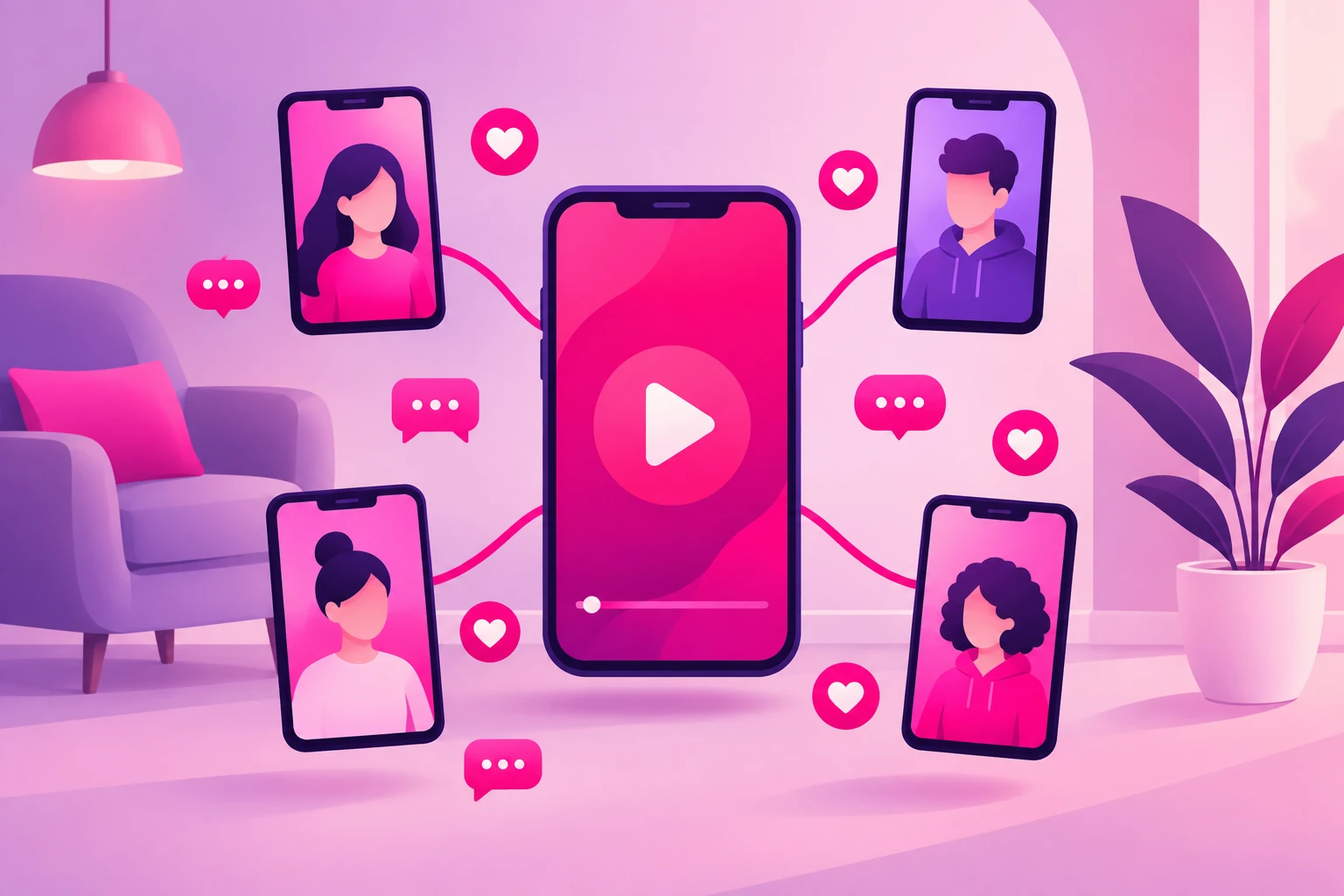
This is the first question every owner asks, and the answer is both. Think of a hub with spokes.
The practice account is the hub. It carries the practice name, the state, the consult form, and the current openings. It features several clinicians, not one. Most importantly, it keeps working when someone leaves, because no single person is the account.
Clinician accounts are the spokes. Some of your clinicians will want their own account, in their own name. Let them. A personal account belongs to the clinician and travels with them, and while they work with you its bio points to the practice form. People follow people more readily than they follow logos, so a clinician's own account often grows faster than the hub.
Owners sometimes worry that they are helping a clinician build an audience that will walk out the door. It is a fair worry, and the honest answer is that clinicians leave whether or not they have an account. A practice that supports personal accounts is a practice people want to join, and the hub still holds the practice's audience when they go.
Put it in writing before anyone films
The written agreement is short, and it prevents the argument nobody wants to have during a resignation. It should answer six questions:
- Who owns which account? The workable default: the practice account belongs to the practice, and an account in a clinician's own name belongs to the clinician, even when some of it was filmed at the office.
- What happens to old videos? Decide whether a clinician who leaves stays visible in the practice's past videos, and for how long.
- What happens to the links? A departing clinician removes the practice form from a personal bio by an agreed date, and the practice stops presenting them as available.
- Is appearing on camera optional? It should be. Being visible online is a personal and clinical decision, and a therapist who was pushed into it looks pushed.
- How is filming time treated? If you are asking for an hour a month of filming, say plainly whether that is paid time. Clinicians notice, and so will the people you are trying to recruit.
- Who approves what? Name the person who reviews content before it posts, and the person who watches the comments. More on both below.
Ask an employment attorney in your state to review the wording. The rules about employee social media accounts differ by state, and employees and contractors are treated differently.
3. The Five Formats That Fill Caseloads Across a Team
The six formats in the pillar guide all work for a practice account. These five do the work that is specific to a team, roughly in order of power:
- 1. Introduce clinicians by what they explain, not by their bio. A "meet our new therapist" video with a headshot and a list of credentials gets almost no reach. The same clinician explaining the one thing her lane gets wrong online gets reach and tells the right viewers who to ask for. The introduction is the last five seconds: "I'm Dana, I work with teens at our practice in Ohio, and I have openings after school."
- 2. The "who should I see?" explainer. Only a team can make this one. What is the difference between a psychologist, a counselor, and a social worker? When does couples therapy make more sense than individual? What is EMDR actually for? These are questions people type into a search bar before they ever book, and the answer naturally ends with "and here is how we match you."
- 3. The first session, at this practice. Film the empty waiting room, the empty office, the form they will fill out, and the clinician saying what the first ten minutes sound like. First-session fear is the biggest barrier in this profession, and a practice can show the actual room. Film it when the suite is closed, so there is no chance of a client in the frame or a voice through a wall.
- 4. The "seeing an associate" explainer. Most people have no idea what a pre-licensed clinician is. Explain it kindly and honestly: a graduate-trained therapist working toward full licensure, supervised by a senior clinician, often with a lower fee and more openings. For many viewers this is the video that makes therapy affordable, and it fills exactly the caseloads you most need to fill.
- 5. The team at work, without any clients. How your consultation group works. How you decide who a new client is matched with. Why therapists have their own therapists. What a clinician does between sessions. It shows clients that a team is thinking about their care, and it shows future colleagues what it is like to work with you.
One safety test covers all five, and it comes straight from the pillar guide: could this video exist if nobody at the practice had ever met a client? If yes, it is safe to make. If it needs a client story to work, even a disguised one, it is not.
For a deeper bench of topics, the therapist content ideas vault has more than fifty concepts. Hand each clinician the ideas in their own lane and let them choose. The setup for a quiet, confidential frame is in the therapy filming guide.
4. One Door: Intake Routed by State, Lane, and Opening
A solo clinician has one inbox to keep clean. A practice with five clinicians and a hub account has at least six, and an inquiry that lands in the wrong one gets a slow answer or none at all. The fix is a single door.
Every video, every bio, and every personal account points to the same secure consult form. Not a clinician's DMs. Not the practice's DMs. A form inside your practice management system, because a social media inbox is not a private or clinical channel.
The form asks four things, in this order:
- Which state are you located in? First, always. Your clinicians can only see people located where they are licensed, and asking first saves everyone a painful conversation later. If your team holds licenses in different states, or some clinicians practice under an interstate compact, the form is where that gets sorted out.
- What are you hoping to work on? In their own words. This is how you match by lane.
- Do you have a preference? A specific clinician, in person or telehealth, daytime or evening, and how they plan to pay.
- How should we reach you? And a line above the submit button: "This form is not monitored for emergencies. If you are in crisis, call or text 988."
One person owns the response. An intake coordinator, a practice manager, or the owner in a small practice. They keep a simple openings board that every clinician updates weekly, and they reply within one business day. Speed matters here more than almost anything else: a person who finally worked up the courage to fill out the form is often deciding that same week.
When they ask for the clinician who is full
This will happen constantly, and it is the moment a group practice either wins or loses the client. A waitlist and silence loses them. A warm, specific handoff keeps them:
"Thank you for reaching out. Dr. Lee's schedule is full right now. Based on what you shared, I think Maya would be a strong fit: she works with the same concerns, trained in the same approach, and has evening openings this month. Would you like a free fifteen-minute call with her to see how it feels? If you would rather wait for Dr. Lee, I can add you to her list and tell you honestly how long it usually takes."
The handoff works far better when the viewer has already seen Maya on the account. That is the real reason to feature every clinician: not vanity, but so the second name is a familiar face instead of a stranger.
The full inquiry path, including the three prepared replies every therapy account needs (crisis, in-state, and out-of-state), is in our guide to getting therapy clients from TikTok. For a practice, track one extra number: consult requests and booked first sessions per clinician. Counts only, never names. It tells you whose caseload the account is filling and who needs the next video.
5. The Rails: Associates, Supervisors, and a Shared Office
A practice account carries every rule a solo account does, plus a few that only exist when there is a team. The practice is responsible for what goes out under its name, so these are worth writing into a one-page social media policy.
- Every clinician uses their exact title. Licensed titles are protected, and they differ by license type and state. Associates and pre-licensed clinicians use the precise provisional title their state granted, on screen and in captions. Never a shortened version that sounds fully licensed.
- Supervisors review associate content before it posts. Make it easy: once a month, the associate brings a batch of scripts to supervision, and the supervisor signs off on the batch. Some state boards also require advertising for a pre-licensed clinician to name the supervisor or state the supervised status. Check the rules for every license type you employ.
- No client content, from anyone, in any disguise. Not de-identified, not a composite, not "someone I saw this week." With several clinicians posting, the odds that one person slips go up. Make the "could this exist if we had never met a client?" test the practice's rule, not just a suggestion.
- Check the frame in a shared office. A shared suite has more to leak than a solo office: a scheduling screen, a whiteboard, a sign-in sheet, mail on the front desk, a voice through a wall, a client walking to the restroom. Film when the suite is closed, or in one room you have checked from the camera's point of view.
- Post as if every client of the practice is watching. A solo clinician imagines their own Thursday client seeing the video. In a practice, a colleague's client may see yours. That client knows your building and your waiting room, and may pass you in the hallway next week.
- Self-disclosure belongs to the clinician. How much of their own story a therapist shares is a clinical decision. The practice can offer topics. It should never script someone's personal history for reach.
- One named person watches the comments. On a shared account, everyone assumes someone else is checking. Name the person, pin the 988 Suicide & Crisis Lifeline, turn on keyword filters, and save a crisis response that person can post quickly. Be honest with yourselves that this is a kindness, not a safety net.
- No testimonials, and no reviews read on camera. The APA, ACA, and NASW codes prohibit soliciting testimonials from current clients, and the ACA code extends it to former clients. That applies to the practice's account and to every ad. Staff talking about what it is like to work with you is fine. Clients talking about their care is not.
- "This is education, not therapy," from every face. Put it in the hub bio, and ask each clinician to say it in their own words now and then.
Before you launch, call your liability carrier and tell them what you are planning. It is a ten-minute call, and they have usually seen the mistakes already. The complete list, with the sources behind each rule, is in the pillar guide's compliance section. None of this is legal advice about your situation. Your state boards, your ethics codes, and your attorney are the authorities.
6. Recruiting Your Next Associate From the Same Footage

A job posting tells a clinician the pay range and the license required. It tells them nothing about the things they actually lose sleep over when choosing a practice:
- What is supervision really like? Is it an hour of real clinical thinking, or a rushed signature?
- How big is a full caseload here? And does anyone respect the number?
- How will I get clients? Will the practice fill my schedule, or will I be told to go network?
- Do these people like each other? You cannot fake this on camera, which is exactly why it persuades.
Each of those is a video, and none of them needs a client. "How supervision works at our practice." "What a full caseload means here, and why." "How we fill a new clinician's schedule." "Why I chose a group practice over going solo," told by the clinician who made that choice.
Notice the third one. The strongest recruiting claim a group practice can make is "we have a system for filling your caseload." A working TikTok account is the visible proof. The thing you built to find clients is also the best reason for a clinician to join you.
Two cautions. First, only show what is true. If supervision is rushed, fix supervision before you film it; a new hire who was sold a different practice than the one they joined leaves within the year. Second, keep it proportionate. One recruiting-flavored video in every eight or ten is plenty. The client education does most of the recruiting on its own, because good clinicians want to work where the clinical thinking is visible.
The hiring calendar runs ahead of the client calendar
Client demand in this vertical has two big waves: January and September. A clinician you want seeing clients in January has to be hired well before that, because onboarding and insurance credentialing can take weeks to months. Work backward:
- Spring (April to June): graduate programs finish, and new graduates are choosing their first supervised position. Pin the "how supervision works here" video and put a careers link in the bio. A hire made now is ready for the September wave.
- Late summer and early fall: the hiring window for January. This is when the "how we fill a new clinician's schedule" video earns its keep.
- December: a second, smaller graduation season, and the month to publish each new clinician's introduction video so it is already circulating when January arrives.
- Any time a clinician gets fully licensed: celebrate it on the account. It is good news for clients, it is accurate title housekeeping, and it shows future associates that people grow here.
7. The Mistakes That Stall Group Practice Accounts
Most practice accounts that go quiet after three months made one of these mistakes:
- The owner is the only face. Every request asks for the person with no openings, and the newest clinician's Tuesdays stay empty. Feature the people with room.
- The account sounds like a brochure. "Now accepting new clients" graphics, stock photos, inspirational quotes. Nobody follows a brochure. People follow a person who explained something that helped.
- Inquiries land in six inboxes. A message to one clinician's DMs sits for a week while she is on vacation. One form, one owner, one business day.
- Nobody wrote down who owns what. It feels unnecessary right up until a popular clinician gives notice. Write it while everyone is happy.
- Clinicians were told to post. Reluctance shows on camera, and resentment shows in the break room. Invite, support, and make it genuinely optional. Two willing clinicians beat six drafted ones.
- The associate sounds fully licensed. A shortened title in a caption is the kind of small thing that becomes a board complaint. Exact titles, every time.
- The audience is national and the licenses are not. A huge following spread across fifty states fills nobody's caseload. Say the state out loud, put it in the bio, and ask it first on the form. The reasoning is in the pillar guide's section on the caseload path versus the platform path.
- The openings are out of date. The bio says "openings for couples" and the couples therapist filled up a month ago. Update the bio and the pinned video when the openings board changes.
- The account stops when the caseloads fill. Caseloads turn over, clients finish, and you will hire again. Drop to two posts a week from a bank of batched videos, but do not go dark. The cadence that survives a busy season is in the therapist growth roadmap.
8. Paid Amplification: The Caseload Case and the Hiring Case
Organic reach is where you find out which videos work. Paid promotion is how a video that already works reaches more of the right people, sooner. For a group practice there are two separate cases for it.
The caseload case: run the math once per empty caseload. A client is a course of treatment, not a single visit, so one well-matched new client is worth many sessions. When a new clinician joins with fifteen open hours, every week those hours stay empty has a real cost. Putting a modest budget behind her best explainer, shown only to people in your state, is usually small next to one month of an empty schedule.
The practical rules: promote a video that has already earned strong watch time and real questions in the comments. Target the state where the featured clinician is licensed, or your metro if she only sees clients in person. Time it ahead of the January and September waves, which means December and August.
The hiring case: reach clinicians, not clients. An open position costs the practice every week it stays open, in referrals you turn away and a waitlist that gives up. The "how supervision works here" video, promoted within your state during graduation season, reaches people a job board never will: the good clinician who is not actively looking but is quietly unhappy where she is.
Both cases share the same guardrails. Every promoted video is an explainer, never a testimonial. TikTok's ad rules do not allow a promoted video to state or imply that the viewer has a condition, so "here is what a first session is like" is fine and "struggling with anxiety?" is not. And nothing gets budget that you would not be comfortable showing your licensing board.
That is what our TikTok promotion service is built for: taking a video that already earns trust, testing it across audiences, and moving budget toward the viewers who respond. For the mechanics of promoting an existing organic video, the Spark Ads guide walks through the setup step by step.
Frequently Asked Questions
Should a group practice have one TikTok account or one for each therapist?
Start with one practice account that features several clinicians, and let any clinician who wants a personal account build one alongside it. The practice account is the hub: it carries the practice name, the state, the consult form, and the list of current openings, and it keeps working when a clinician leaves. Personal accounts are the spokes: they belong to the clinician, they travel with them, and they point to the practice form while the clinician works there. What does not work is a practice account with one face on it, usually the owner, because every consult request then asks for the one person in the building with no openings.
Who owns a therapist TikTok account when the therapist leaves the practice?
Whoever the written agreement says, which is why the agreement has to exist before anyone films. The workable default is simple: the practice account and everything posted on it belong to the practice, and a personal account in the clinician's own name belongs to the clinician, even if some of it was filmed at the office. The agreement should also cover whether a departed clinician stays visible in old practice videos, how quickly the clinician removes the practice form link from a personal bio, and who answers comments on those videos afterward. Have an employment attorney in your state review the wording, because the rules on employee social media accounts differ from state to state.
Can pre-licensed associates appear in a group practice TikTok?
Yes, and they are often the clinicians with the most openings, so they are the ones the account most needs to introduce. Three rules apply. The associate uses the exact provisional title the state granted, never a shortened version that sounds fully licensed. The supervisor reviews public-facing content before it posts, which works best as a monthly batch review of scripts rather than video-by-video approval. And some state boards require advertising for a pre-licensed clinician to identify the supervisor or the supervised status, so check the board rules for each license type in the practice before the first video goes up.
How does a group practice turn TikTok views into booked clients for a specific clinician?
Through one consult form that does the routing, not through any clinician's inbox. Every video, every bio, and every personal account points to the same secure form. The form asks which state the person is located in first, then what they are hoping to work on, then whether they have a preference for a clinician or a schedule. An intake coordinator matches the request to a clinician who has both the right lane and an actual opening, and replies within one business day. When someone asks for a clinician who is full, the reply offers the closest match with openings and explains why, rather than a waitlist and silence.
Can TikTok help a group practice recruit therapists?
Yes, and many owners find it is the payoff they did not plan for. Clinicians choosing a practice want to know things a job posting never shows: what supervision is really like, how big a caseload is expected, how a new clinician gets clients, and whether the team likes each other. Videos that answer those questions honestly reach graduate students, associates, and licensed clinicians in your state from the same account that reaches clients. The strongest recruiting claim a group practice can make is that it has a system for filling a new clinician's caseload, and a working account is the visible proof of that system.
Can a group practice use client testimonials or reviews in TikTok videos or ads?
No. The APA, ACA, and NASW ethics codes all prohibit soliciting testimonials from current clients, and the ACA code extends that to former clients and anyone else vulnerable to undue influence. That covers the practice as much as the individual clinician, so no client quotes, no screenshots of kind messages, and no reading reviews on camera. A group practice grows on explanation instead: clinicians teaching clearly, the first session shown honestly, and fees and insurance explained in plain language. Staff can talk about what it is like to work at the practice, because a colleague describing a workplace is not a client testimonial.
Ready to fill the newest caseload in your practice?
You already have the video that earns trust - the clinician explaining her lane clearly, the honest walk through a first session at your office. Viryze amplifies that proven content to more of the right viewers in your state, testing audiences and moving budget toward the ones who respond, so the open hours fill sooner.
Promote your best videoRelated Reading
- TikTok for Therapists: The Complete 2026 Guide - the foundations every clinician shares, from formats to the full compliance list.
- Getting Clients from TikTok: Turn Views Into a Full, Well-Matched Caseload - the consult form, the three prepared replies, and the tracking rule.
- How Therapists Make Money on TikTok in 2026 - the economics of a capped caseload, and why a group practice removes the cap.
- How to Film Therapy Content for TikTok (Confidentiality, Office Setup & What Never to Say) - the frame check that matters even more in a shared suite.
- Therapist TikTok Content Ideas: 50+ Video Concepts That Fill a Caseload - a vault to hand each clinician, sorted by format.
- Growing a Therapist TikTok: From 0 to 100K Followers - the roadmap, the cadence, and the plateaus every account hits.

Head of Creator Success at Viryze
TikTok growth strategist helping creators reach their first 100K followers through data-driven promotion strategies.