
Every therapist knows the consult call that ends the same way. Fifteen minutes in, the person on the phone has asked whether you take their insurance, whether it is normal to not know what to talk about, and whether they are "bad enough" to be there at all. You answer the third one in forty seconds - that therapy is not a reward for suffering, that people come in for things that are not crises, that the first session is mostly you asking questions. There is a pause. Then they say nobody has ever put it that way, and they book.
That forty seconds is the most persuasive thing you say all week, and you say it to an audience of one. Somewhere in your state, a clinician with the same license films that identical answer on her phone between sessions. Three hundred thousand people watch it. A few thousand of them live in your state, have been "meaning to find someone" for two years, and just realized they are allowed to.
This guide is the complete 2026 playbook for mental health professionals - private-practice therapists and counselors, psychologists, clinical social workers, marriage and family therapists, associates working toward licensure, and the group practice owners who need every clinician's caseload full: the six video formats that grow therapist accounts fastest, the inner-sentence hook that names the pattern instead of the diagnosis, the content engine that never touches a client, the caseload-or-platform choice and the state line that divides them, the trigger calendar built around the January and September waves, the 90-day plan from an empty account to the therapist people in your state think of, the caseload ladder with a safe way to handle a crisis DM, the confidentiality and ethics rules that protect your license, and when paid promotion fills a caseload versus burns budget. Pair it with our TikTok algorithm guide for the ranking-signal frame and the TikTok growth strategy guide for the cross-niche fundamentals.
The honest summary:
- Your subject is already the platform's second language - and most of it is wrong. A licensed clinician calmly correcting the record is one of the most trusted voices on TikTok, and you never have to make anyone care about the topic.
- A client is a course of treatment, not a visit. Months of sessions, often at private-pay rates, with a specialty match that predicts whether they stay - so a small audience in your state is worth more than a large audience anywhere.
- Decide: caseload or platform - and respect the state line. Therapy videos travel nationally; your license does not. Anchor to your state on purpose, or go national on purpose - never drift.
- Use paid promotion as selective amplification on proven explainers, targeted to the state where you are licensed and timed ahead of the January and September waves - never to rescue a weak clip, and always within TikTok's ad rules, your ethics code, and your board's advertising rules.
What's Inside
- 1. Why TikTok Works So Well for Therapists in 2026
- 2. The Six Video Formats That Grow Therapist Accounts Fastest
- 3. The Inner-Sentence Hook: Name the Pattern, Never the Diagnosis
- 4. The Content Engine That Never Touches a Client
- 5. Caseload Path or Platform Path: The Choice and the State Line
- 6. The Trigger Calendar: Why You Build in December for January
- 7. A Posting Cadence That Survives a Full Caseload
- 8. The 90-Day Plan to Becoming the Therapist Your State Thinks Of
- 9. The Caseload Ladder: Turning Viewers Into Clients
- 10. When Paid Promotion Fills a Caseload vs. Burns Budget
- 11. Confidentiality, Ethics, and the Mistakes That Cap Therapist Accounts
- Frequently Asked Questions
1. Why TikTok Works So Well for Therapists in 2026
Private practices have filled the same way for decades: the insurance directory, the referral from a primary-care doctor or a school counselor, and the friend who said "my therapist is great, but she's full." That model works right up until it does not - you leave a panel, you move states, you open a group practice and suddenly have three associates with empty Tuesdays, or you realize your caseload is full of people who are not a fit and you have no way to reach the ones who are. TikTok is the most efficient answer available right now, for five specific reasons.
The first is one no other profession gets: your subject is already the platform's second language. Attachment styles, boundaries, gaslighting, trauma responses, the inner child - these words are in millions of videos a day, and the overwhelming majority are made by people with no clinical training and a loose grip on what the words mean. You do not have to make anyone care about mental health. The platform did that already. What it did not do is get any of it right, and the licensed clinician who calmly corrects the record - without mocking anyone - is one of the most trusted voices on the entire platform. Every accountant and contractor here has to manufacture interest in their subject. Yours arrives pre-installed and slightly broken.
The second is the economics of a caseload slot. A converted viewer is not an appointment; it is a course of treatment. Weekly or biweekly sessions for months, often at private-pay rates that are a multiple of what a panel reimburses, and - this is the part most guides miss - a client who chose you because of how you explained something is far more likely to be a specialty match, and specialty match is what predicts whether they stay past session three. So the question is not "how do I get a million views." It is "how do I get a few hundred people in my state, with the problem I am actually good at, to decide that therapy is for someone like them." That is a dramatically easier problem, and it is a better caseload at the end of it.
The third is the first-session fear - and the fact that content is the direct repair. Your profession's central barrier is not skepticism. It is the unknown. People delay therapy for years because they do not know what happens in the room, whether they will have to talk about their childhood, whether they will cry, whether they are "bad enough," and what it costs. Sixty seconds of a real clinician saying "here is what a first session with me actually looks like, including the awkward part" dissolves more of that than any directory listing ever written. Add the stigma that still keeps whole communities away from care, and you have a profession whose biggest marketing problem is solved by the exact thing you already do for a living: explaining, kindly, how this works.
The fourth is the state line. Telehealth turned your service area from a drive radius into an entire state - and not one mile past it. A therapist in Austin can treat someone in El Paso, which is a bigger market than any practice had a decade ago, but cannot treat someone in Albuquerque who found the same video. That makes your audience shape unlike any other profession on this platform: not local like a vet, not national like a creator, but exactly the size of a license. Section 5 is about what that means, because it is the thing therapist accounts get wrong most.
The fifth reason is a second payoff: the content recruits and steadies the profession, too. Group practices are competing for clinicians in a documented shortage, and the account that shows a practice with reasonable caseloads, real supervision, and a team that likes each other reaches the next associate from the same footage that reaches the next client. And the honest videos about what this work costs the person doing it - the ones that say "therapists have therapists" out loud - reach colleagues who needed to hear it. No other vertical gets to do that.
For context on how the algorithm treats watch-time, saves, and other ranking signals across niches, see our algorithm ranking factors breakdown.
2. The Six Video Formats That Grow Therapist Accounts Fastest
Random posting is the slowest path on TikTok. The algorithm is trying to work out who your videos should be shown to, and an account that posts a sunset quote, then a headshot, then a "we're accepting new clients" graphic gives it nothing to work with. These six formats give it a clear signal - and between them they cover essentially everything a therapy practice needs to say.
Format 1: The Therapy-Speak Correction
The highest-leverage format in the niche, because the raw material is everywhere. Take one word the platform uses constantly and say what it actually means. "Setting a boundary is something you do with your own behavior - it is not telling someone else what to do." "Disagreeing with you is not gaslighting." "Not every difficult person is a narcissist, and here is why the word matters." The power is that the viewer has heard the word a hundred times this week and never once from someone who could define it. Correct gently - half your audience used the word wrong yesterday, and you need them to stay. Every one of these is a complete video, and the platform hands you a new one daily.
Format 2: The First-Session Demystifier
"Here is what actually happens in a first session with me." The paperwork, the questions you ask, the fact that they do not have to have it figured out, that crying is allowed and so is not crying, that you will not make them talk about anything they do not want to, and roughly when they will know whether you are a fit. This format converts better than anything else you will post, because it resolves the exact fear that keeps people from booking. Film variations: the first session for couples, for someone whose partner "made them come," for someone who tried therapy once and hated it.
Format 3: The Name-the-Pattern Explainer
The highest-save format in the niche. Take one experience nearly everyone has and explain the mechanism behind it. Why you rehearse conversations in the shower. Why Sunday night feels like dread. Why avoiding the email makes the email worse. Why you apologize when someone else bumps into you. This is psychoeducation - the concepts you explain to clients every week - and it requires no client at all. The rule that keeps it safe and useful is the one section 3 is built on: name the pattern, never the diagnosis. "Why your brain does this" helps people. "Five signs you have this disorder" hands them a label they cannot un-hear and draws the wrong clients.
Format 4: The How-Therapy-Actually-Works Explainer
The most under-used format in the vertical and one of the most important, because it addresses the second thing that keeps people away: the logistics. Why many therapists do not take insurance, and what a superbill is. What a sliding scale means and how to ask for it. How to find someone licensed in your state, and why the state matters. What "specialty" means and why fit predicts whether therapy works. What the difference is between a counselor, a psychologist, a social worker, and a psychiatrist. You are resolving a real anxiety rather than pitching a service, and nothing about these videos requires a client. They describe how care works.
Format 5: The Comment-Reply Q&A
Once you are posting consistently, your comments become the best content calendar you will ever have. Reply to a real question on camera. It is the least-effort, highest-trust video format that exists: the question is pre-validated, the format is native to the platform, and it visibly demonstrates that you answer people. Keep answers general - you are explaining how something works, not treating a stranger - and say so out loud, because that sentence is both good practice and the ethics line covered in section 11.
Format 6: The Therapist-as-Human Clip
Education earns the reach. The human in the chair earns the consult request. The office tour, the plant that has survived four years of sessions, what your Tuesday looks like, the fact that you have your own therapist, the modality you practice and why you chose it, the kind of client you love working with. People do not hand the hardest parts of their lives to a credentialed stranger - they hand them to a credentialed person they feel they already know. Roughly one in five posts should be this. Keep self-disclosure a clinical decision rather than a content decision - more on that in section 11 - but do not hide.
The two formats most therapists lead with - and shouldn't: the inspirational quote over a sunset, which is not content but a calendar entry - no watch time, no saves, and it teaches the algorithm nothing about who to show you to - and its more dangerous cousin, the symptom checklist. "Five signs you have this disorder" gets views, invites self-diagnosis, and attracts people looking for a label rather than treatment. The clinicians who grow durable accounts name patterns, not disorders.
3. The Inner-Sentence Hook: Name the Pattern, Never the Diagnosis
You get about one and a half seconds. In that time a viewer decides whether this is about them. The single highest-leverage change most therapist accounts can make is to stop opening with themselves and start opening with the sentence the viewer already says inside their own head.
Weak openers introduce the speaker: "Hi, I'm Maya, I'm a licensed professional counselor, and today I want to talk about anxiety." By the time that sentence lands, the viewer is gone. Strong openers state the viewer's own experience in the viewer's own words: "If you replay a conversation from three days ago and still feel your face get hot - here is what your brain is doing." The credentials still matter enormously; they just belong at second twelve, once someone has a reason to care who is talking.
The trap unique to your profession is that the strongest hook in the genre is also the most harmful one. "If you do these five things, you might have this disorder" stops the scroll better than almost anything on the platform - and it is exactly the video that hands a nineteen-year-old a diagnosis from a stranger. The discipline that keeps your hooks both effective and ethical is simple: hook on the experience, never on the label. The experience is universal and true. The label requires an assessment you have not done.
Four hook patterns that consistently work in this niche:
- The inner sentence. "If you apologize when someone else bumps into you, this is for you." Real, specific, and the viewer feels seen before they know who you are.
- The correction. "Everyone keeps calling this gaslighting. It isn't - and the difference matters more than you think." Contradiction earns attention; the follow-through earns the follow.
- The permission. "You are allowed to go to therapy for something that is not a crisis." This one converts, because the person who needed permission has been waiting two years for someone to give it.
- The insider observation. "I've been a therapist for eleven years, and here is what I notice in the first five minutes of a first session." It promises something the viewer cannot get anywhere else, from someone positioned to know - and it demystifies the room at the same time.
One discipline holds all four together: answer the question in the video. The most common self-inflicted wound in professional content is the tease - "book a consult to find out." It reads as a sales pitch, kills completion, and completion is what decides whether the video travels. Give the explanation away. The people who need someone to sit with them through it will still come, and now they will come already trusting you.
4. The Content Engine That Never Touches a Client
Here is where your profession differs from every other one in this series. A veterinarian can mine the exam room for content. A lawyer can talk about the case in the news. You cannot mine your sessions - not the stories, not the details, not the "a client of mine once" - and the therapists who quit posting usually quit because they believed that left them nothing to say. It leaves you almost everything. Your clinical week already produces more content than you can post; it is just captured in the wrong place.
Keep one running note on your phone. Six capture points fill it, and none of them require a client:
- The intake-call question log. Everything people ask before they are your client - "do you take my insurance," "how long does this take," "what if I don't know what to talk about," "is it weird to come for something small." These are administrative, not clinical, and they are the purest content ideas you will ever get, because someone cared enough to call.
- The consult that said no. The reasons people do not proceed: the cost, the fear, the partner who disapproves, the belief that they are "not bad enough." Every one is an objection thousands of people share right now, and a video that answers it in general terms is a Format 4 explainer waiting to happen.
- The concept you explained again. The window of tolerance, the anxiety-avoidance loop, why the nervous system does not care that the threat is an email. Any time you catch yourself teaching a concept you have taught a hundred times, that is a video. The fact that it is boring to you is exactly the signal - it means the explanation is polished. The concept is the content. The person you explained it to never appears.
- The myth on your own feed. Whatever confidently wrong thing the algorithm showed you this week. Screenshot the idea, not the creator - do not stitch someone to humiliate them - and correct it kindly. Free, pre-validated, and the platform delivers a fresh one daily.
- The seasonal moment. Whatever is about to land in your inbox because of the calendar - the family dinner in November, the resolution in January, the empty house in September. Covered in full in section 6.
- The profession's own conversation. What came up in consultation group, what you learned at the last training, what your own therapist said that reframed something, why you chose your modality. This is the source for the Format 6 human clip - and, unlike every other profession, your field's inner life is itself fascinating to the people you serve.
Then batch. Pick one ninety-minute block - the cancellation on Wednesday, the hour before your first client - set up the phone once in the chair you always sit in, and film ten to fifteen answers back to back in the same cardigan. Do not change outfits or rooms; nobody notices, and the whole point is to remove every decision that could stop you. Fifteen videos is five weeks of posting from one afternoon.
The rule that keeps this safe: could this video exist if you had never met a single client? If yes, it is education and it is yours to post. If it needed a client to exist - even de-identified, even a composite, even changed in every detail - it is not, because the person watching may recognize themselves, and the moment they do, the treatment relationship is damaged in a way no disclaimer repairs. "People often ask me" is fine when the question could have come from a thousand people. "Someone I work with recently" is not. See section 11 before you film anything that started in a session.
5. Caseload Path or Platform Path: The Choice and the State Line
This is the section that matters most, and it is the one therapist accounts get wrong almost universally - not by doing something badly, but by never deciding what they are doing at all.
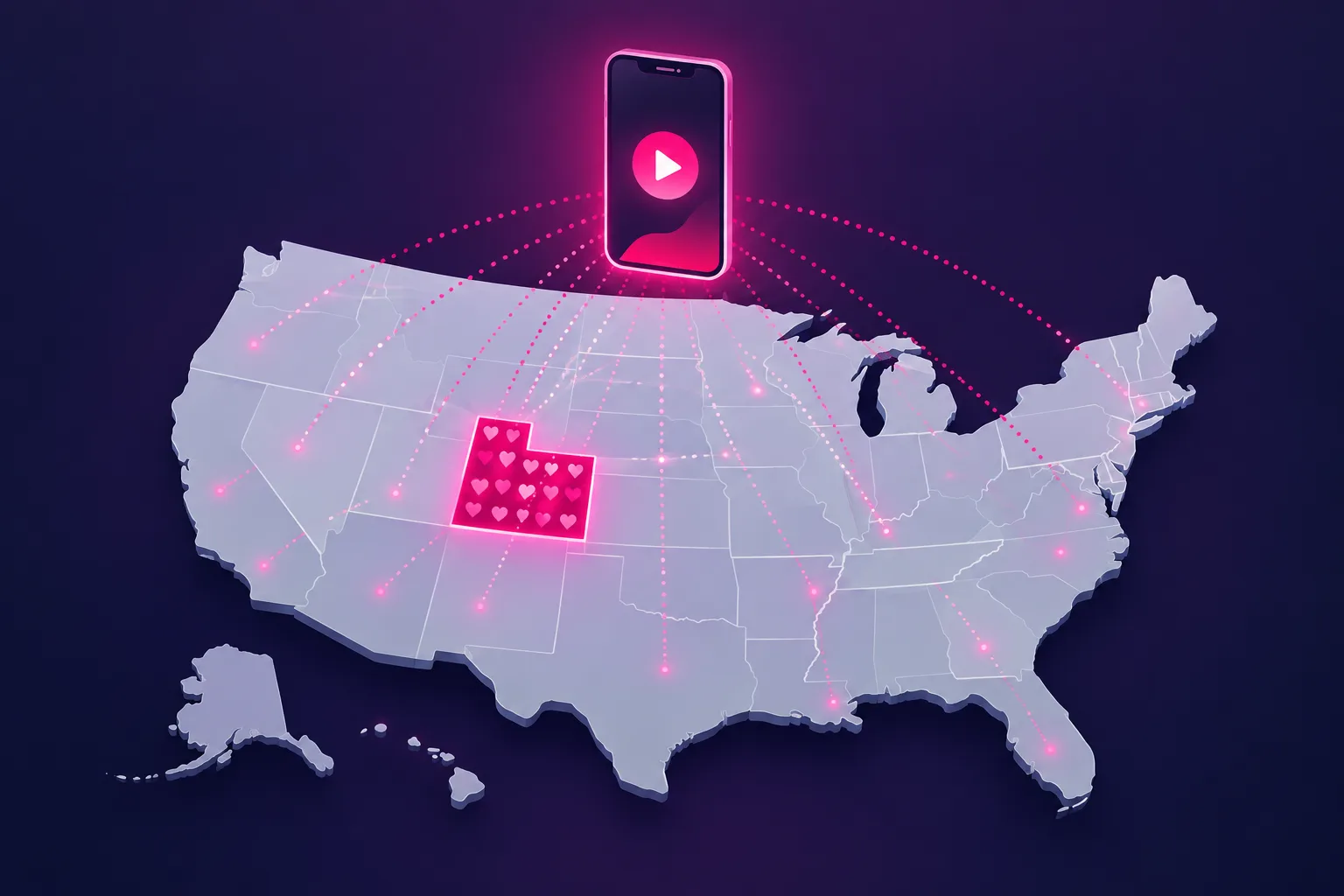
Here is the trap. The quality that makes your subject the platform's second language also makes it borderless. A video about why Sunday nights feel like dread lands in Oregon and Ohio and Ontario with equal force, and the algorithm - which does not know or care that your license stops at a state line - will happily find you two million viewers who can never legally be your client. Call it the national-therapist-account trap: a huge following, a flood of DMs from people you cannot treat, and a caseload that looks exactly like it did before. It is extremely common, and it usually ends in one of two conclusions - that TikTok "doesn't work for therapists," or that the only way to serve all these people is to stop seeing clients and sell them something instead.
The fix is to choose, on purpose, between two legitimate paths.
The caseload path: build a state-sized audience that books
The account exists to fill the caseload - yours or your practice's - with well-matched clients, and everything is anchored to the state where you are licensed: the license and the state in the bio, "seeing clients across Colorado by telehealth" said out loud in videos, references only someone in your state would catch, replies to in-state commenters, a consult request one tap away that asks "are you located in Colorado?" before anything else. The numbers are smaller - thousands of followers, not millions - but a meaningful share of them can actually become clients. Success is measured in consult requests from inside the state and how many of those match your specialty, never in views.
The platform path: build a national audience and monetize it
The account exists to reach people everywhere, and the revenue comes from courses, workbooks, books, group programs, speaking, and disclosed partnerships - not from sessions. This is a real career, and it has a logic no other profession shares: a clinical caseload is capped at however many clients one human can see in a week, so the platform is the only way a therapist's expertise scales. If this is you, our TikTok for Coaches & Consultants guide covers the program-and-course mechanics - with the caveat that you remain bound by your ethics code in a way a coach is not, especially around the line between education and treatment.
Here is the twist that makes your profession different: the hybrid is more legitimate for you than for anyone else, precisely because the caseload is capped. "Fill the caseload first, then build nationally once I am full" is a sequence, not a conflict - and many of the best therapist accounts on the platform run exactly that way. What still has to be decided is the order, and which metric wins when the two collide. The video that goes national is wonderful; the follow-up should still say your state out loud. Decide in week one, write it at the top of your running note, and let it settle every argument about what to post next. And check your board on the interstate compacts - PSYPACT for psychologists is live across most of the country, and the counseling and social work compacts are being enacted state by state - because "the state where I am licensed" may be more than one state sooner than you think.

6. The Trigger Calendar: Why You Build in December for January
Nobody starts therapy on a random Tuesday. They start at a trigger moment: a breakup, a panic attack in a parking lot, a partner's ultimatum, a new baby, a diagnosis in the family, or a friend saying "my therapist told me something" one too many times. Your content cannot create those moments. It can make sure that when one arrives, yours is the name already in their head - and that they already believe therapy is for someone like them.
The two largest predictable triggers are on the calendar: the January wave and the September wave. January is the resolution, the aftermath of the holidays with family, and a flood of people with new insurance plans looking up who is in-network. September is back-to-routine - the summer ends, the kids go back, the thing someone put off in June comes due. Which means the video that wins January is not posted in January. It is a "what a first session actually looks like, and how to find someone licensed in your state" explainer published in December, saved by people quietly deciding over the holidays, and paying off in consult requests the second week of January. The therapist who owns that explainer in a given state owns the wave.
Layered over that is a calendar of emotional seasons that gives you a reason to post every month, with an audience already primed by the date:
The therapy content year
- January - February: the wave lands. The first-session and how-to-find-a-therapist content built in December pays off now. February brings the relationship season - the couples-therapy demystifier and the "my partner wants me to go" video belong here.
- March - May: transitions and the noisiest month. Graduations, job changes, and the wedding-season family stress arrive. May is Mental Health Awareness Month, which means everyone posts - brands, influencers, the platform itself - so your differentiation is the correction format: be the licensed voice in a month full of slogans.
- June - August: the summer slump and the build. Cancellations rise, caseloads thin, and this is your batching season. Parents are home with kids and the back-to-school anxiety content for August is a gift. Underneath it, the most important job of the summer: publishing the content that wins September.
- September - October: the second wave. The routine returns and so do the consult requests. September is also Suicide Prevention Month, where safe-messaging rules matter more than reach - see section 11. October is when the days shorten and the seasonal-mood explainer becomes the most-saved video of the quarter.
- November - December: the family season and the build. "How to get through a holiday dinner with your family" is the single biggest genre in the entire vertical, and grief around the holidays is the second. And beneath it all, the year's most important job: publishing the first-session content that wins January.
The practical rule: publish thirty to sixty days ahead of the moment. A video needs runway - it gets surfaced, saved, and re-surfaced for weeks - and the person who books in the second week of January started paying attention in December. If you are reading this in late summer or autumn, you are holding the best possible timing. If it is January, post the first-session video today, reply to every comment, and put a recurring block on your calendar for August.
7. A Posting Cadence That Survives a Full Caseload
Consistency beats volume, and a cadence you abandon the first week you see twenty-eight clients is worse than a smaller one you keep. Design for your worst week, not your best one.
Three posts a week, from one batching block a month. Three is enough for the algorithm to build a clear picture of your account and enough for you to learn what your audience responds to, without becoming a second job on top of one that already asks everything of you. In a crushed week - a colleague on leave, a run of crises - drop to two from the bank and do not apologize for it.
Two additions that cost almost nothing, and one that is unique to your profession. First, reply to comments daily, even in a bad week; five minutes between sessions, and it is the highest-return activity available because it both feeds the algorithm and feeds your content queue. Second, when something happens - a public figure's death, a tragedy in the news, a therapy-speak moment going viral - break the schedule and post the same day, within the safe-messaging rules in section 11. Timeliness is worth more than polish in that window, and being the clinician who showed up first is remembered.
The third addition is moderation as part of the cadence. Your comment section will contain disclosures no other profession's will - people describing their worst week, people in crisis, people asking you to diagnose their mother. Pin a comment on every video with the 988 Suicide & Crisis Lifeline and a one-line statement that videos are education, not treatment, turn on keyword filtering, and build the five-minute reply habit around checking for anything that needs the prepared crisis response from section 9. This is not extra work on top of posting. It is the job, done in public.
For the underlying mechanics of consistency, watch-time, and how posting rhythm affects distribution, see the complete growth strategy guide.
8. The 90-Day Plan to Becoming the Therapist Your State Thinks Of
Ninety days is enough to go from an empty account to a small, genuinely valuable audience - as long as you resist the urge to talk to everyone.
Days 1-30: Pick the path and the lane
First the path, from section 5. Then the lane. "Therapist" is not a lane. "The therapist for high-achievers whose anxiety looks like productivity," "the perinatal therapist," "the therapist for adults who just found out they have ADHD," "couples after an affair," "first-generation professionals and the guilt that comes with success" - those are lanes. Narrowing feels like giving up audience, and in your profession it is the opposite twice over: it tells the algorithm precisely who to show you to, and it tells a viewer "this person already understands my problem" before you say a word - which is the specialty match that predicts whether they stay past session three. It is also how a solo practitioner competes with a platform that has a marketing department.
Then mine forty questions from your intake log and your running note, film in two batches, and post three times a week. Judge nothing yet. The first month is for building the habit and finding your camera voice, which is simply the voice you already use with someone on a consult call who is scared and embarrassed to be asking.
Days 31-60: Find the series
By now one or two videos will have clearly outperformed. Do not treat that as luck - treat it as instruction. Turn the winner into a series: "therapy-speak, corrected: part 9" or "why your brain does that, part 4" compounds in a way that nine unrelated videos never will. Viewers follow series, not accounts, and each installment pulls people back to the earlier ones.
This is also when the comment-reply habit starts in earnest, when the pinned 988 comment and the "this is education, not therapy" line go on every post, and when the consult request form gets its "are you located in this state?" question at the top. By day sixty most accounts that post consistently have their content problem permanently solved, because the audience is now generating the queue.
Days 61-90: Make it easy to reach you
Only now is it worth optimizing conversion, because only now do you have people to convert. Three things: a bio that names the lane, the license, and the state ("LPC - anxiety & burnout in high-achievers - Colorado, telehealth statewide - accepting new clients"), a pinned trio at the top of your profile, and a consult path exactly one tap away.
The pinned trio that works best for therapy practices:
- Your best-performing explainer - proof that you are worth listening to.
- Your "what a first session with me actually looks like" video - the room, the questions, the awkward part, roughly how long until they will know if you are a fit. This one reduces the fear that keeps people from booking, and it visibly cuts consult no-shows.
- Your most reassuring video - the one that says, to the person who has been avoiding this for years because they are afraid of the cost or ashamed of needing it, "you are allowed to come before it is a crisis, and here is how we handle the money." This one quietly does more converting than the other two combined.
Day ninety is also the earliest point at which paid amplification makes sense, because you now have organic performance data telling you which video deserves it. More on that in section 10.
9. The Caseload Ladder: Turning Viewers Into Clients
Views are not the product. A well-matched client who does the work for as long as it takes, and then tells two people how they found you, is the product. Here is the path between them, one rung at a time - and where each rung usually breaks.
- Viewer. Someone watches one explainer. Breaks when the video opens with your credentials instead of their inner sentence.
- Follower. They follow because you made something shameful feel ordinary. Breaks when your account has no discernible lane, so there is nothing to follow for.
- Someone who now believes therapy is for people like them. Weeks of content later, the stigma has quietly dissolved and you are the person they picture when they imagine finally going. This rung is unique to your profession, and it is where most of the real work happens. Breaks when you post three times and stop.
- Trigger moment. The breakup, the panic attack, the ultimatum, the new insurance plan. You do not cause this rung; you are simply present for it. Breaks when your bio gives them nowhere to go.
- Consult request - and the crisis moment. Most DMs say "do you have openings?" Some say "I don't want to be here anymore." You cannot provide care over DM, and no clinician can. The rung breaks when you go silent because you are unsure what you are allowed to say. What works is a warm, prepared response you keep saved: "I'm really glad you reached out. I can't provide care over messages, but you don't have to be alone with this tonight - call or text 988 right now, or go to the nearest emergency room. If you're safe and in Colorado, here is my consult link and I'll respond within a day." Say the first half publicly once as a video and it becomes one of your most-saved posts.
- First session. Breaks on response time and on friction - a consult request answered in a day is a different practice than one answered in a week - and on one thing unique to you: the client arrives with a parasocial head start. They have watched you for months; you have just met them. Name it in the first session, gently, as part of the frame. The clients who found you this way tend to stay, because they chose you for how you explain things, and that never stops being true.
- The treatment relationship that ends well. The rung that makes your profession different from every other one in this series. A veterinary client stays for the life of the animal; your client's success is that they no longer need you. That is not the end of the ladder - it is the engine of the next rung.
- Referral. The client who finished tells the friend who has been "meaning to." And - specific to you - colleagues refer: the therapist two counties over who is full, the school counselor, the primary-care doctor who watched your videos and now has a name to write down. A clinician who found you by watching you explain something describes you exactly that way.
Two practical notes. First, expect inquiries to be lumpy and event-driven rather than evenly distributed - the person who followed you in October books the week after the holidays, and that lag is normal, not failure. Second, be honest about capacity. If you are full, say "waitlist" in the bio and keep a short list of colleagues in your state to refer to; an account that helps people find someone still pays, through retention of the clients you have, through the associate who applies because she watched your team, and through the referral network that remembers who sent them good clients.
For the closest parallel to this ladder in another licensed, patient-facing profession, see our guide to getting patients from TikTok.
10. When Paid Promotion Fills a Caseload vs. Burns Budget
Paid promotion on TikTok is not advertising in the way practices usually think about it. It is not buying attention for a message nobody asked for - it is taking a video that has already earned attention and showing it to more of the right people, in the right place. That distinction decides whether the money works.
The proven-video rule: only promote videos that have already performed organically. Strong completion rate, real saves and shares, and a visible bump in profile visits and consult requests. Promotion amplifies signals the algorithm is already reading. It cannot manufacture interest in a video people scroll past - it just buys you a larger audience of people scrolling past.
The state rule, which is specific to your profession: target the state where you are licensed, not the country. Organic reach goes wherever the algorithm sends it; promoted reach goes exactly where you point it, and for a telehealth practice the right place is one state, drawn precisely. A viewer two states over who loves your videos is a fan, not a client, and every dollar that reaches them is a dollar that did not reach the person an hour away who could book on Monday. This is also the cleanest escape from the national-therapist-account trap. If you only see clients in an office, narrow further to the metro.
The timing rule: amplify ahead of the trigger, not during the scramble. Promoting the first-session explainer in December, or the back-to-routine video in August, reaches people while they are deciding. Promoting the same video in mid-January reaches people who have already found someone.
The math is unusually forgiving here, and it is worth doing explicitly. Take the client from section 1 - a course of treatment that runs for months, often at private-pay rates. Against a number like that, a modest promotion budget on a proven explainer, pointed at your own state, does not need a remarkable conversion rate to pay for itself several times over. That is the practical consequence of a caseload slot being worth a course of treatment rather than a visit: your break-even is a fraction of one client. And for a group practice with three associates and empty Tuesdays, the same math runs three times at once.
Three cautions that are stricter for you than for most professions. Promoted content is advertising, so your state board's rules on advertising and your ethics code follow you into paid placements - and the APA, ACA, and NASW codes all prohibit soliciting testimonials from current clients, which means the ad is an explainer, never "my client said." TikTok's ad rules on personal attributes mean the promoted video and its caption cannot assert or imply that the viewer has a condition - "struggling with depression?" is a policy problem, while "what a first session actually looks like" is not. And promotion multiplies what already exists, so if the video converts poorly, more views produce more of nothing - fix the bio, the state screen, and the consult path before you spend. Confirm compliance with TikTok's ad policies and your own governing rules before you spend anything.
The format worth defaulting to is Spark Ads, which promotes your existing organic post rather than a separate ad creative - so the engagement accrues to your real account and the video keeps looking like content instead of a commercial. Our Spark Ads guide walks through the setup. If you would rather not run Ads Manager yourself, a TikTok promotion service built around selective amplification handles the state targeting and the timing for you.
11. Confidentiality, Ethics, and the Mistakes That Cap Therapist Accounts
The reason most therapists never start is a specific and reasonable fear: that being a public person is incompatible with being a confidential one. That fear is worth replacing with a short, concrete list - because once you know the actual lines, the space inside them is enormous, and it is where the best accounts in your profession already live.
Confidentiality is the bright line, and the test is one question. Could this video exist if you had never met a single client? HIPAA, your state's confidentiality law, and your ethics code all point the same direction, and the ACA code's social-media provisions say it directly: take precautions so that nothing you post discloses confidential information. That means no client stories - not de-identified, not composites, not "someone I work with." The person watching may recognize themselves, and the moment they do, the treatment relationship is damaged in a way no disclaimer repairs. Concepts, patterns, myths, and the mechanics of therapy are yours to post. Your sessions are not.
Say what your videos are, and never diagnose a stranger. The APA ethics code's rule on media presentations is the template: public advice must be grounded in your training and must not suggest a professional relationship exists with the person receiving it. A short, plain statement that your content is education and not therapy, that watching does not make someone your client, and that a video cannot assess anyone costs you nothing and prevents the most likely misunderstanding. Say it out loud occasionally rather than burying it in a caption nobody reads. And retire the symptom checklist: naming a disorder someone "might have" is an assessment you have not done, delivered to a person you have not met.
The crisis protocol. Unlike any other profession, your comments and DMs will contain people in danger. Prepare for it before the first post: the 988 Suicide & Crisis Lifeline pinned on every video, keyword filters on, and the saved response from section 9 ready to send. Then follow safe-messaging guidelines in everything you post about suicide, self-harm, or eating disorders - no methods, no framing of suicide as a solution or relief, always a resource - which is also what TikTok's community guidelines require, and content that violates them is suppressed or removed regardless of intent.
Clients who find your account. They will. Do not follow clients back, do not respond to their comments as their therapist, and do not view their profiles without consent - the ACA code addresses each of these. Put a social media clause in your informed consent that explains all three, and when a client mentions a video in session, treat it as clinical material, because it is. Self-disclosure in your videos is a clinical decision, not a content decision: before you post the personal story, ask what it will mean to the client who hears it on Thursday.
Licensure, titles, and the state line. You may treat people only in the states where you hold a license or a compact privilege, and telehealth does not change that - so the consult form asks for the state first, and the bio names it. Use your title exactly as your state grants it: "psychologist," "licensed professional counselor," and "clinical social worker" are protected terms in most states, "therapist" often is not, and the difference is why you should say your license. If you are an associate or pre-licensed, your supervisor's sign-off on public-facing content and your exact provisional title are non-negotiable. Your state board's advertising rules govern everything you post, and they are stricter than the platform's.
Testimonials, sponsorships, and promises. The APA, ACA, and NASW codes all prohibit soliciting testimonials from current clients, and the ACA extends that to former clients - so your account grows on explanation, never on "my client said." If a meditation app, a therapy platform, or a supplement company pays you, that is an ad and it needs to be labeled clearly; your audience is unusually sensitive to this, because trust in your judgment is the entire product. Vet any partner's data practices before you send followers to them - the FTC's 2023 action against a major online therapy platform over sharing users' health data for advertising is the reason. And never promise an outcome. "Six sessions and you'll feel better" is a claim no clinician can make and no board will forgive.
Your own mental health. This one is on the list because it is real and because no other vertical has it. A public account means strangers describing their worst days in your comments, hostile replies that would be nothing to a contractor and are not nothing to you, and a parasocial load you did not sign up for. Consultation group, your own therapist, and a rule about when the app is closed are not optional - they are the infrastructure that lets you keep doing this.
A necessary caveat: this is a general overview for planning purposes, not legal, ethical, or clinical advice. Your specific obligations depend on your license, your state, your ethics code, your employer, and what you actually do for clients. Confirm the details against your own board's rules and code - and if you are unsure about a particular video, the fastest resolution is usually a five-minute question to your professional association's ethics line or your liability carrier before you post, not after.
The four mistakes that cap therapist accounts
- The symptom checklist. "Five signs you have this" gets views, invites self-diagnosis, and fills your inbox with people seeking a label rather than treatment. Name the pattern; leave the diagnosis to the room.
- Therapy-speak without the correction. An account that uses the platform's vocabulary loosely becomes one more voice in the noise it was supposed to fix. Your credential is only worth something if your definitions are.
- Making the caseload the content. The de-identified story, the composite, the "someone I see." It is the fastest way to grow and the fastest way to lose a client and a license. Everything you need is in section 4, and none of it is a client.
- Never naming the state. Covered at length in section 5, and it is the most expensive mistake on this list, because it produces an account with a huge following, a flood of people you cannot treat, and a caseload that never changes - and ends in concluding that the platform does not work for therapists.
Frequently Asked Questions
Is TikTok worth it for therapists in 2026?
For most therapists who want a fuller or better-matched caseload, yes - and for a reason no other profession shares. The language of therapy is already the platform's second language: attachment styles, boundaries, gaslighting, and trauma are discussed in millions of videos a day, mostly by people with no training, and a licensed clinician calmly correcting the record is one of the most trusted voices on the platform. The economics are strong too: a single client is not one appointment but a course of treatment that can run for months, and the biggest barrier to starting therapy - not knowing what actually happens in a first session - is exactly the thing a short video dissolves. You do not need a large audience. You need a few hundred people in the state where you hold a license to decide that therapy is for someone like them, and that you are the person they would call.
What should therapists post on TikTok?
Six formats grow therapist accounts fastest in 2026: the therapy-speak correction (what a boundary actually is, why disagreement is not gaslighting), the first-session demystifier (what really happens in the room, including the awkward parts), the name-the-pattern explainer (why you rehearse conversations in the shower, why Sunday nights feel like dread - psychoeducation about an experience, never a diagnosis), the how-therapy-actually-works explainer (cost, insurance, sliding scales, superbills, how to find someone licensed in your state), the comment-reply Q&A (answering real questions in general terms, with a clear statement that a video is not treatment), and the therapist-as-human clip (the office, the plant, the fact that you have your own therapist). The formats to avoid are the inspirational quote graphic, which nobody saves, and the symptom checklist that invites viewers to diagnose themselves, which harms people and draws the wrong clients.
Can therapists post on TikTok without violating confidentiality or their ethics code?
Yes, as long as the content is education about how minds and relationships work rather than anything drawn from a client. The safe test for every video is simple: could this exist if you had never met a single client? Concepts, patterns, myths, and the mechanics of therapy pass. Client stories fail - even de-identified, even composites, even "a client of mine once" - because the person watching may recognize themselves and the treatment relationship is damaged the moment they do. Beyond confidentiality, say plainly that your videos are not therapy and that watching does not make someone your client, never diagnose a stranger, keep a prepared crisis response ready with the 988 Suicide & Crisis Lifeline, do not follow or engage clients who find your account, and know that the APA, ACA, and NASW codes all prohibit soliciting testimonials from current clients. Your state board's advertising rules and your license's exact title complete the list. The space inside those lines is enormous.
How does a therapist get clients from TikTok instead of just views?
By deciding on purpose which of two paths the account is on, and by respecting the state line that divides them. Therapy content travels nationally, but you can only treat people in the states where you are licensed - so a therapist account can reach two million people and gain zero clients, the national-therapist-account trap. The caseload path anchors the account to your state: the license and state in the bio, "seeing clients statewide via telehealth" said out loud, a consult request one tap away with an "are you located in this state?" screen, and success measured in in-state consult requests and how well those clients match your specialty. The platform path goes national and monetizes as a creator. Because a clinical caseload is capped, the honest sequence for many therapists is to fill the caseload first and then build nationally - but decide the order. When you amplify, target the state where you are licensed, because a fan two states away is a fan, not a client.
Should therapists pay to promote their TikTok videos?
Only videos that have already proven themselves organically - strong completion, real saves and shares, and a visible bump in profile visits and consult requests. Paid promotion amplifies signals the algorithm is already reading; it cannot rescue a video nobody finishes. For therapists the case is unusually strong: a client is a course of treatment rather than a single visit, so one new client repays a modest budget many times over; the service area is a single state, so targeting is clean; and demand has a calendar - amplifying a "what a first session is actually like" explainer in December, ahead of the January wave, or in August ahead of September, reaches people while they are deciding. Three rules follow you into paid placements: TikTok's ad rules on personal attributes mean your ad cannot imply the viewer has a condition, your ethics code means the ad is never a client testimonial, and your state board's advertising rules apply to promoted content just as they do to a website. Services like Viryze are built around this kind of selective amplification, promoting a proven video to the right audience instead of boosting every upload.
Ready to turn your best explainer into a full caseload?
The therapy practices growing fastest in 2026 pair a simple client-free content system with selective paid amplification on their best videos - pointed at the state where they are licensed and timed ahead of the January and September waves rather than during the scramble. Viryze is built for exactly that: we only promote videos that have already cleared the organic signal threshold, so your budget compounds your best work instead of rescuing your weakest. And because a client is a course of treatment rather than a single visit, every well-matched person you reach is a relationship that can pay back for months, not once.
See how selective amplification worksRelated Reading
- The Complete TikTok Algorithm Guide - the ranking signals that decide which explainers travel.
- The Complete TikTok Growth Strategy Guide - cross-niche fundamentals that apply to any professional account.
- TikTok for Healthcare Professionals - the closest parallel playbook: licensed, patient-facing, and compliance-bound.
- Getting Patients from TikTok - the appointment-conversion mechanics for any clinical practice.
- TikTok Spark Ads Guide - the format worth defaulting to for amplifying a proven post.
- TikTok for Coaches & Consultants - the program-and-course mechanics for the platform path.
- Local Business TikTok Marketing - the local-discovery mechanics for office-based practices where the drive radius still matters.

Head of Creator Success at Viryze
TikTok growth strategist helping creators reach their first 100K followers through data-driven promotion strategies.