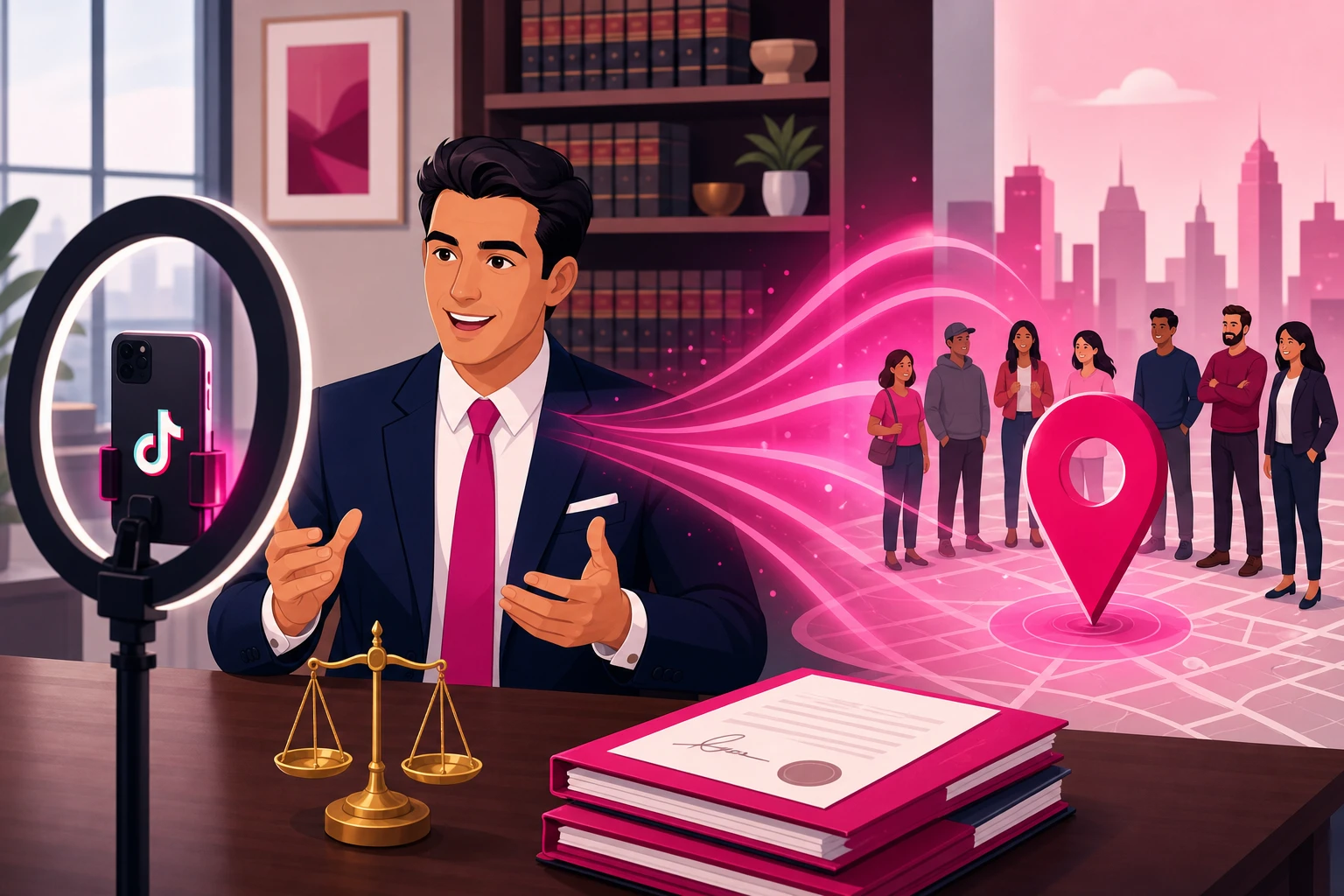
Somewhere in your account there is a video that outperformed everything else you have posted. Probably a rights explainer. It got twelve thousand views, a pile of saves, and a comment thread of strangers describing their own situation in unsettling detail. Then the algorithm moved on, and the video stopped being seen.
Meanwhile, your firm is paying somewhere between twenty and two hundred dollars for a single search click from someone who has never heard your name. That is the whole opportunity in one sentence: you own a proven piece of trust that has stopped reaching people, and you are buying cold attention at the highest prices in local marketing.
This guide is the advertising finale of our legal series. It covers when TikTok ads for law firms actually make sense, how to choose what to promote, how to target only the people you can legally represent, what to spend and when, the bar advertising rules that bind paid placements more tightly than organic posts, the only numbers worth judging a campaign by, and when a done-for-you service beats wrestling with Ads Manager yourself. It builds on the foundations in our complete TikTok guide for lawyers, so if you have not started posting yet, begin there.
The short version:
- Legal has the widest cost gap in local advertising. You are competing for the most expensive clicks in search while a proven video can reach thousands of nearby adults for the price of a few of them.
- Amplify proven videos, never guess. Only put budget behind a video your own analytics already show works. Paid reach multiplies what a video does; it cannot rescue a weak one.
- Target your jurisdiction, nothing else. An out-of-state view is not just wasted - it produces inquiries you cannot ethically accept.
- Bar rules apply to promoted videos, and more strictly. Disclaimers, no guarantees, testimonial limits, record retention - a promoted video is an advertisement in every sense your state cares about.
What's Inside
- 1. Why Law Firms Have the Widest Cost Gap in Local Advertising
- 2. Boosting Is Not Advertising: What TikTok Ads Actually Do
- 3. The Proven-Video Rule (and What Never to Promote)
- 4. Jurisdiction-Match Targeting: The Only Audience You Can Serve
- 5. Budgets and Payback Math by Practice Area
- 6. The Legal Demand Calendar: When to Spend
- 7. Bar Advertising Rules in Paid Placements
- 8. Cost Per Signed Case: The Only Number That Settles the Argument
- 9. Ads Manager vs. a Done-For-You Promotion Service
- Frequently Asked Questions
1. Why Law Firms Have the Widest Cost Gap in Local Advertising
Most businesses advertising on TikTok are selling something with a thin margin - a $30 product, a $12 subscription. They need a lot of conversions before paid reach makes sense. Law firms play a completely different game, and understanding the difference is the entire reason this channel works.
Call it the Case-Value Multiplier: the amount of amplified attention a single signed matter can pay for. A retained client is not a $50 transaction. A straightforward estate plan is worth four figures. A contested custody matter or a defense engagement runs into five. A serious injury case can be worth more than a year's marketing budget on its own. When one client is worth that much, the money needed to reach thousands of nearby adults is small by comparison - so a campaign does not need a high conversion rate to be profitable. It needs one of the right people.
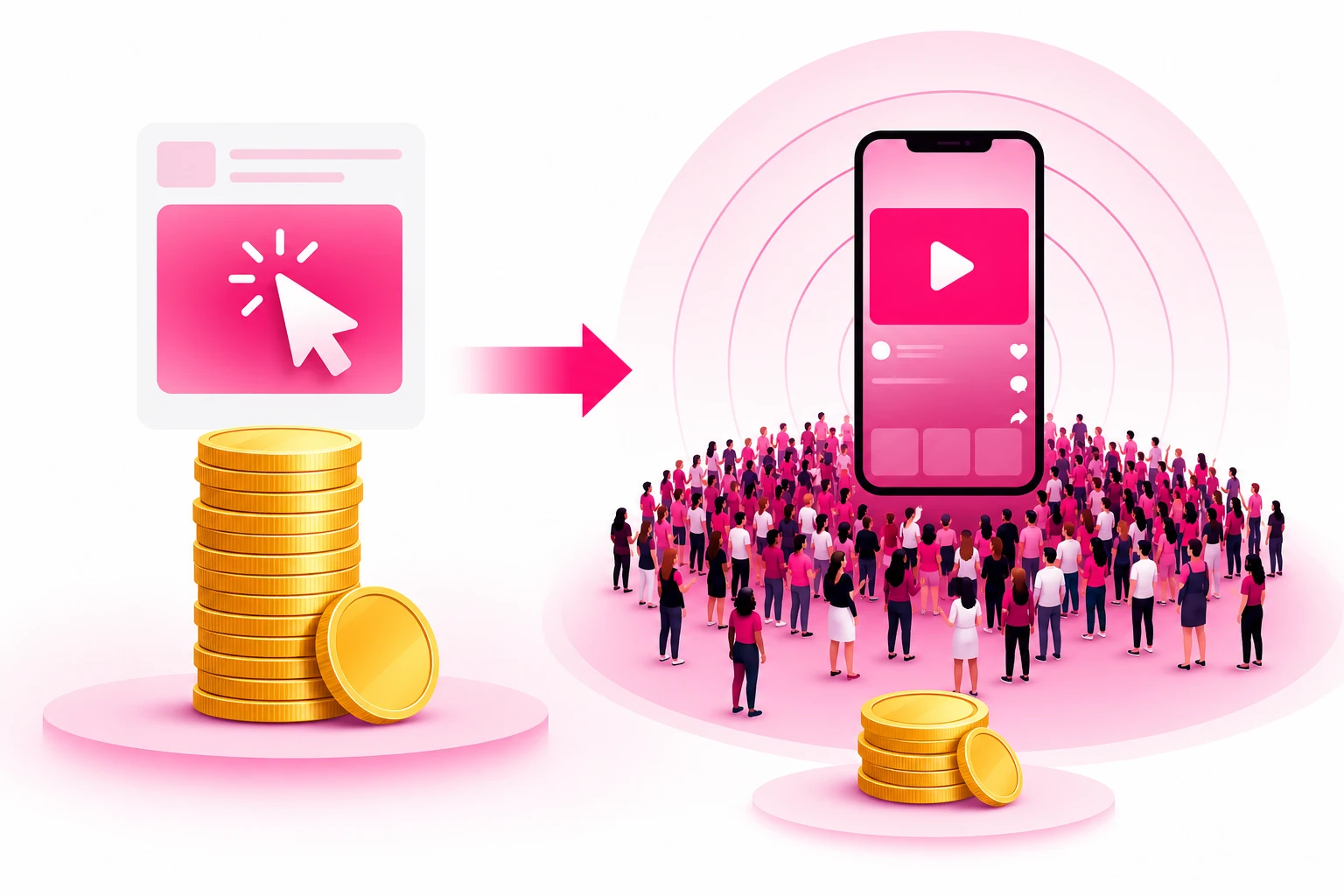
Now hold that against how firms normally buy clients. Legal keywords are famously the most expensive real estate in all of paid search - the competitive personal injury and DUI terms have been trading in the triple digits per click for years, and even routine family and estate terms cost more than most industries pay. And a click buys you nothing but a page visit from someone who does not know you, trust you, or like you. They are comparing four firms in four tabs, and the only thing separating you is who wrote a better landing page.
Amplified TikTok reach inverts that. The thing you are paying to show is a video where a stranger watches you explain their problem clearly, in your own voice, for forty seconds. You are not buying a click. You are buying more of the moment someone decides you are the lawyer who makes sense to them - and you are buying it at a fraction of the price per person that search charges for a tab.
There is a second advantage that firms consistently undervalue: timing. Search only reaches someone after the emergency - after the arrest, after the crash, after the papers were served - when they are frantically comparing strangers. Amplified education reaches them before, when nothing is wrong and they are just learning something interesting about their rights. Then the emergency happens and they do not open a search tab, because they already know who to call. That is a fundamentally cheaper way to be chosen, and it is the strategic core of the personal injury playbook where the click prices are most brutal.
2. Boosting Is Not Advertising: What TikTok Ads Actually Do
Here is the trap almost every firm falls into on day one: they tap the "Promote" button on whatever their newest video is, spend $50, watch the view counter climb, get nothing, and conclude that TikTok ads do not work for lawyers. They are half right. That kind of boosting rarely works - but boosting is not advertising.
Real amplification is a system with three moving parts, not a button. First, you pick a video that has already proven it earns trust. Second, you point it at a precisely defined audience inside the jurisdiction where you can actually take the case. Third, you let budget flow toward whichever slices of that audience respond and away from the ones that do not. Skip any of the three and you are paying TikTok to show a random video to random people.
The goal is almost never raw views, either. It is one specific chain that ends in a signed matter:
- A local person watches the whole video and comes away thinking you explained something better than anyone had before - including the three firms whose billboards they pass every day.
- They tap your profile and find a bio naming your practice area and city, a pinned video that tells them exactly who you help, and a consult link one tap away.
- They follow, or save, or reach out. Even a follow is a win, because the day something goes wrong, you are already in their feed instead of on page two of a search result.
That chain is the whole game, and the machinery of it - the profile as a front desk, the calls to action that work in legal, the response window that turns an inquiry into a consult - is covered rung by rung in our guide to getting clients from TikTok. Advertising only accelerates a funnel that already works. If tapping your profile does not lead a stranger to a clear next step, fix that before you spend a dollar.
3. The Proven-Video Rule (and What Never to Promote)
This is the single most important rule in the guide, and the one firms break most often: only ever amplify a video your own analytics have already validated. Paid reach multiplies whatever a video already does organically. Promote a weak video and you are paying to spread a weak result faster.
So what counts as proven? Open your analytics and look for a video that beats your own account averages on the signals that actually predict inquiries:
- A high save rate for your account. Saves are the strongest signal in legal. When someone saves a rights explainer, they are filing you away for a day they hope never comes - which is exactly the behavior worth paying to multiply.
- Shares, not just likes. Legal content gets sent to a friend in trouble. A share is a personal referral happening without you, and it is the closest organic equivalent to word of mouth.
- Strong completion and rewatches. A video people finish is one that holds a cold stranger's attention, which is precisely the job a promoted view has to do.
- Above-average profile visits. If a video already pushes an unusual share of viewers to your profile, amplification is just scaling something that works.
In practice the videos that clear this bar are almost always the plain educational ones: the rights explainer, the myth-bust, the what-actually-happens-next walkthrough, the honest answer to a question you field in free consults every week. If you are not sure which formats earn saves in the first place, the LawTok content ideas vault is a full library of them - build a few, see which perform, then promote the winners.
The two-week rule
Give a video at least two weeks organically before deciding it is proven. Legal explainers are slow burners - they get saved, resurface, and pick up a second wave of shares when someone's situation suddenly makes them relevant. Judging at forty-eight hours means you will promote the flashy video and ignore the one that actually builds trust.
What never to promote
Every other vertical gets to skip this section. Law firms do not, because the videos most tempting to put money behind are the exact ones that create risk:
- Case results and settlement figures. The seven-figure verdict graphic feels like the obvious thing to advertise. It is the single most regulated claim in legal marketing, it invites unjustified-expectations problems in most states, and with cold audiences it converts worse than a plain explainer anyway.
- Client testimonials. Many states restrict them outright, most require disclaimers, and a promoted testimonial is exactly the kind of paid communication bar counsel looks at closely.
- Anything involving a real matter. Even anonymized, a promoted video about a live case is a confidentiality question you do not want to answer under a paid spotlight.
- Superlatives and specialist claims. "Best," "top," "expert," and "specialist" are governed language in most states unless you hold a recognized certification.
The happy accident is that the safest content and the highest-converting content are the same content. A clear explanation of what happens after a car accident builds more trust with a cold local viewer than any verdict graphic ever will - and it does not require a single disclaimer about past results. Section 7 covers the rules in full.
4. Jurisdiction-Match Targeting: The Only Audience You Can Serve

For most businesses, a view from another state is merely wasted money. For a law firm it is worse than that: it generates inquiries you are not licensed to accept. You cannot practice where you are not admitted, and answering a stranger's specific question about their Arizona matter when you are barred in Ohio drifts toward unauthorized practice. National reach is not a bonus for you. It is an inbox full of conversations that end in an apology.
So the targeting rule is simple and strict: promote only to the geography you can actually serve. In practice that means:
- Your metro, not your state, unless you serve the state. If your clients realistically drive to your office or your courthouse, target that radius. A firm in Tampa that takes cases across Florida can go statewide; a solo practitioner handling county-level matters should not.
- Adults only, and skewed to the ages that hire you. Estate planning skews older, criminal defense and employment skew younger, family law clusters in between.
- Broad interests, not narrow ones. Resist the urge to build a hyper-specific audience. TikTok's delivery works best when you give it room, and "adults in my metro" plus a genuinely good video outperforms a clever twelve-interest stack almost every time.
- Multiple audience slices, tested against each other. Run the same proven video against three or four different local segments and let the results, not your instincts, decide where budget goes. This is the part firms skip, and it is where most of the waste lives.
That last point deserves emphasis, because it is the actual work of running ads well. You do not know in advance whether your DUI explainer resonates more with 25-34 year olds downtown or 35-44 year olds in the suburbs. Nobody does. You find out by testing, then move money toward the winner and cut the losers - repeatedly, every few days, for as long as the campaign runs.
One nuance worth naming: if a genuinely good out-of-state inquiry does arrive, you are not obligated to waste it. Referring it to a licensed attorney in that state is standard practice, and in many jurisdictions a properly disclosed referral arrangement is permissible - a monetization angle covered in our guide to how lawyers make money on TikTok. But that is salvage, not strategy. Do not pay to create those inquiries.
5. Budgets and Payback Math by Practice Area
The right budget is not a number someone else picks for you. It falls out of one question: what is one signed case worth to this firm? Work backward from that and the decision makes itself.
Here is how the payback math tends to look across practice areas. Case values vary enormously by market and matter, so treat these as illustrative shapes rather than quotes:
| Practice Area | Typical Matter Value | Cases Needed to Justify $1,000/mo |
|---|---|---|
| Estate planning | Low four figures | One every month or two |
| Criminal defense / DUI | Mid four to five figures | One per quarter |
| Family law | Four to five figures | One per quarter |
| Employment | Contingency, highly variable | One or two a year |
| Immigration | Four figures, often repeat | One per month |
| Personal injury | Five to six figures | One a year covers everything |
Look at that last column again. For most practice areas, the entire annual promotion budget is justified by a handful of matters - and in personal injury, by one. That is not a marketing pitch, it is just what happens when client value is measured in thousands and attention is measured in fractions of a cent.
A practical ramp for a firm starting out:
- Weeks 1-4: a $200-$400 test. One proven video, your metro, three or four audience slices. You are not buying cases yet. You are learning whether cold local viewers respond to your best video the way your existing followers did.
- Months 2-3: $500-$1,000 a month. Keep the winning audience, promote your next proven video alongside the first. Now you are building a local following that compounds between campaigns.
- Ongoing: $1,000-$2,000 a month, seasonally weighted. Spend heavier in your demand windows (section 6) and lighter outside them, always behind videos that have earned it.
For perspective, $1,000 a month is a rounding error against what competitive legal search costs - in the most expensive practice areas it is a handful of clicks. Firms are rarely wrong about the size of the budget. They are wrong about what they put behind it.
6. The Legal Demand Calendar: When to Spend
Legal demand is not evenly distributed across the year. It arrives in predictable waves, and a firm that amplifies its best explainer two weeks before the wave gets to be the familiar face when the search volume finally spikes. Everyone else buys clicks at peak prices during it.
- January - family law. Divorce filings cluster hard in the new year. Start promoting custody and separation explainers in mid-December, when nobody else is advertising and the decision is already being made quietly.
- Tax season - business and estate. The months around filing deadlines send people looking at their finances, their entities, and their unfinished estate plans.
- Holiday weekends - criminal defense and DUI. Enforcement campaigns around major holidays are announced in advance. Amplify your "what to do if you are pulled over" explainer the week before, not the morning after.
- Storm and disaster seasons - property and insurance. Regional and predictable. Claim-denial explainers land differently when the damage is recent.
- Layoff waves - employment. Less calendared, more reactive. When a major local employer announces cuts, a severance-review explainer aimed at that metro is the most useful thing you can put in front of people that week.
- Back-to-school - custody modifications. Schedules change, disputes surface, and August brings a reliable bump in modification questions.
The tactic that makes this work is having the video ready in advance. You cannot film, publish, wait two weeks for organic proof, and then promote - all inside a demand window. Build the seasonal explainers in your slow months so they are proven and waiting when the window opens. That production rhythm is exactly what the legal filming workflow is built to produce.
7. Bar Advertising Rules in Paid Placements
Here is the part most industries' ad guides get to skip. The moment you put money behind a video, it stops being a post and becomes a lawyer advertisement - and every rule your state applies to your website, your billboard, and your mailers applies to it, sometimes with requirements that organic posting never triggered.
Rules vary meaningfully by state, so what follows is a checklist of what to go look up in yours, not a substitute for doing it:
- Advertisement labeling and disclaimers. Some states require communications to be identified as advertising material, and many expect a clear "general information, not legal advice, no attorney-client relationship" disclaimer. Put it in the video, the caption, or both - not buried in a link.
- No guarantees or unjustified expectations. The core of the model rules. Avoid anything implying an outcome, and if you reference past results at all, expect a required disclaimer that results depend on the facts of each case.
- Named responsible attorney and office location. Several states require an advertisement to identify a responsible lawyer and a physical office. Your profile can often carry this, but check whether the ad itself must.
- Specialization language. "Specialist," "expert," and "certified" are restricted terms in most states without the corresponding certification.
- Testimonials and endorsements. Restricted or disclaimer-bound almost everywhere. Assume you cannot promote them without checking.
- Record retention. Many states require you to keep a copy of every advertisement for one to three years. For a promoted video that means saving the video file, the caption, the targeting settings, and the run dates. Make a folder the day you launch - reconstructing it later is miserable.
- Pre-filing requirements. A handful of states require certain advertisements to be filed with the bar before or shortly after they run. If you practice in one, build that into your launch checklist.
The line between advertising and solicitation
Promoting a video to a broad local audience is advertising, which is permitted. Directing a communication to a specific person you know needs legal services for a specific matter is solicitation, which is heavily restricted. Geographic and demographic targeting stays comfortably on the advertising side. Building an audience from people you know to be involved in a particular incident does not. When targeting gets clever enough to feel like it is reaching one identifiable situation, that is the signal to stop and read the rule.
Two more layers sit on top of the bar rules. TikTok runs its own advertising policies, and legal services is a category it reviews more carefully - expect occasional rejections and keep the claims plain. And the FTC's disclosure expectations apply to any paid endorsement, so if another creator is featured in promoted content, that relationship has to be disclosed.
None of this is legal advice, and I am not your bar counsel. The practical takeaway is simply that the compliant path and the effective path point the same direction: promote plain educational content, in your own voice, with a clear disclaimer, to your own metro. The full organic-side rules are covered in the pillar guide.
8. Cost Per Signed Case: The Only Number That Settles the Argument
Firms judge TikTok campaigns by view counts and then wonder why the numbers feel meaningless. Here is what to actually watch, roughly in order of how soon you will see it move:
- Cost per local follower and per profile visit. Your leading indicators. A follower in your metro is a future client sitting in your feed; that is the number amplification exists to move, and you will see it within days.
- Saves and shares on the promoted video. If a video that looked proven organically holds its save rate under cold paid reach, you have a winner worth scaling. If saves collapse when strangers see it, pull budget and pick another video.
- Consult requests you can trace back. Add a "how did you hear about us" field to your intake form with a social option, and train whoever answers the phone to ask. TikTok-sourced clients rarely announce themselves - they just call already knowing your name and half your positions.
- Cost per signed case. The number that ends every internal debate. Total promotion spend divided by matters signed that trace back to social. Compare it honestly against your cost per signed case from search ads and from lead-gen vendors - including the leads those vendors sold to three other firms at the same time.
And the vanity metrics to consciously ignore: raw views, likes from other states, and follower spikes made of people who will never be able to hire you. A hundred thousand national views is a nice screenshot and an empty consult calendar. Judge every campaign by local movement toward a signed matter, nothing else.
One patience note, because legal is different here: the lag between a promoted view and a signed case is long. Someone who watches your custody explainer in February may not need you until September. That is not the campaign failing - it is the campaign working exactly as intended, buying you a place in someone's memory before the emergency. Measure leading indicators weekly and case attribution quarterly, and you will see the shape of it. The organic-side signals that predict the same outcome are broken down in our law firm growth roadmap.
9. Ads Manager vs. a Done-For-You Promotion Service
There are two ways to actually run this. Both use TikTok's official advertising infrastructure; they differ entirely in who does the work.
TikTok Ads Manager gives you full control. It was also built for professional media buyers - campaign objectives, pixel setup, placement options, and the manual audience testing from section 4 that takes real hours every single week to run properly. The mechanics of promoting an existing organic video are walked through step by step in the Spark Ads guide, and the platform more broadly in our TikTok advertising guide. If you have the appetite to learn it, it genuinely works.
But be honest about your week. You are in court, in consults, or billing - and every hour spent inside an ad dashboard is an hour not spent on a matter that pays considerably better than media buying. The ad account is the first thing that gets neglected, and a neglected campaign does not pause itself. It quietly keeps spending on the audience slices that were never going to respond.
That is exactly the gap a professional TikTok promotion service fills. Viryze runs the same official TikTok ads infrastructure, but takes the video you have already proven converts, tests it against multiple local audience slices, and automatically shifts budget toward whichever ones respond - the manual work of section 4, done for you. You keep control of what gets promoted and where, which keeps the compliance decisions in section 7 firmly in your hands; the tedious optimization happens in the background. For a working attorney, that is usually the right trade: the same amplification math, without the second job.
Frequently Asked Questions
Do TikTok ads work for law firms?
They work unusually well, because legal has the widest gap in local marketing between what attention costs and what a client is worth. Competitive legal keywords are the most expensive clicks in all of search - often tens to hundreds of dollars for a single visit from someone who does not know you - while amplifying a TikTok video costs a small fraction of that per person reached, and those people watch you explain something helpfully rather than landing on a page. A single signed case can be worth thousands, so a campaign only needs to produce one to pay for itself many times over. The catch is that broad, generic ads waste the advantage. What works is amplifying an educational video that already performs organically toward adults in the jurisdiction where you are actually licensed to practice.
How much should a law firm spend on TikTok ads?
Start with a $200-$400 test over two to four weeks on a single proven video, targeted only to your metro. That is enough to learn whether the video converts cold local viewers into followers and profile visits. From there, $500-$2,000 a month is a realistic working range for most solo attorneys and small firms - which is still less than many firms spend on a single day of search ads. Anchor the number to one case: if your average signed matter is worth $5,000, a whole month of promotion is a rounding error against one client. The mistake is almost never spending too little - it is spreading a small budget across untested videos and audiences outside the jurisdiction you can serve.
What videos should a law firm promote on TikTok?
Follow the Proven-Video Rule: only put budget behind videos your own analytics have already validated - a top-of-your-account save rate, strong completion, and above-average profile visits. For law firms that is almost always a rights explainer or a what-actually-happens walkthrough: the answer to a question people ask in free consults every week. Those earn saves and shares, and a save means a local person filed you away for the day they need a lawyer. Never promote case-results content, settlement figures, or anything that implies an outcome - it converts worse with cold audiences and it is the fastest way to collide with your state bar advertising rules.
Do bar advertising rules apply to TikTok ads?
Yes. A promoted video is legal advertising, and every state bar rule that governs your website and billboards governs it too - often with requirements that organic posting never triggers. Depending on your state that can include an advertisement label or disclaimer, a named responsible attorney and office location, no guarantees or claims creating unjustified expectations, restrictions on testimonials and past results, limits on calling yourself a specialist or expert without certification, retention of ad copies for a set number of years, and in a few states pre-filing the advertisement with the bar. Paid targeting also brings solicitation rules closer to the surface: advertising to a general local audience is fine, but targeting people you know to have a specific pending legal matter is a different rule entirely. Read your own state rules or ask your bar counsel - this article is general information, not legal advice.
Should a law firm use TikTok Ads Manager or a promotion service?
Ads Manager gives full control, but it was built for professional media buyers: campaign objectives, pixel events, placement options, and manual audience testing that takes real hours every week to run well. Most attorneys are in court, in consults, or billing - the ad account is the first thing that gets neglected, and a neglected campaign does not pause itself, it quietly keeps spending on the audience slices that never respond. A follower-growth promotion service like Viryze runs the same official TikTok ads infrastructure but handles the audience testing and budget shifting automatically, which is usually the right trade when an hour of your time is billable and the alternative is a second job you will not do consistently.
Ready to turn your best explainer into signed cases?
You already have the video that earned the saves and filled your comments with people describing their situation. Viryze takes that proven video and puts it in front of thousands more adults in your metro, shifting budget toward the audiences that actually respond - the trust you have already earned, in front of the people who can actually hire you.
Promote your best videoRelated Reading
- TikTok for Lawyers: The Complete 2026 Guide to LawTok - the foundations every attorney shares, from hooks to ethics.
- Getting Clients from TikTok: Turn Views Into Signed Cases - the retainer ladder your paid funnel accelerates.
- TikTok for Personal Injury Lawyers: Beat the $200 Click - the practice area where the arbitrage is most extreme.
- Growing a Law Firm TikTok: From 0 to 100K Followers - the organic growth that produces videos worth promoting.
- TikTok Spark Ads Guide - the step-by-step mechanics of promoting an existing organic video.

Head of Creator Success at Viryze
TikTok growth strategist helping creators reach their first 100K followers through data-driven promotion strategies.