Somewhere right now, a personal injury firm is paying several hundred dollars for a single click. Not a case. Not a consult. A click - from someone who is simultaneously comparing four other firms, and who has never heard of any of them.
That is the strange economics of PI marketing: the most expensive keywords in all of paid search, bought at the one moment when the client has zero existing trust in anyone. Every firm crowds into the same auction for the same tiny window - the days after an accident - and the bidding war never ends because the cases are worth so much.
TikTok attacks that problem from the other side of the timeline. Instead of renting attention after the crash, you build recognition before it - with the thousands of people in your metro who will eventually be rear-ended, slip on an unmarked wet floor, or get a call about a loved one. When it happens, they do not start comparing strangers. They call the lawyer they already feel like they know.
This guide covers the PI-specific playbook: the formats that sign cases, the solicitation and advertising rules that keep your license safe, the profile setup that captures the crisis-moment inquiry, and when paid amplification beats the $200 click at its own game. It is the practice-area companion to our complete TikTok guide for lawyers, which covers the foundations every attorney shares.
The short version:
- PI has the clearest arbitrage in legal marketing. Search charges you hundreds per click for zero trust. TikTok builds trust with thousands of locals for the cost of talking to your phone.
- Trust must be built before the accident. Nobody researches PI lawyers for fun - so the winner is whoever locals already recognize when the bad day comes.
- Confusion removal signs cases. What happens after a crash, what the adjuster wants, how contingency fees work - calm answers to scary questions beat every billboard.
- The ethics rails are stricter here. No outcome promises, no settlement-check flexing, no case-specific advice in comments - and the rules are your competitive moat, not your cage.
What's Inside
- 1. The $200 Click: Why PI Marketing Math Is Broken
- 2. What Makes PI Content Different From the Rest of LawTok
- 3. The Five Formats That Sign Cases
- 4. The Ethics Rails: Stricter for PI, and Worth Knowing Cold
- 5. Being Findable at the Moment of Crisis
- 6. The PI Demand Calendar
- 7. The Mistakes That Keep PI Accounts Small
- 8. Paid Amplification: Beating the Click at Its Own Game
- Frequently Asked Questions
1. The $200 Click: Why PI Marketing Math Is Broken
Personal injury keywords - "car accident lawyer," "truck accident attorney," "slip and fall lawyer near me" - are the most expensive real estate in paid search, routinely running into the hundreds of dollars per click in competitive metros. Three forces keep the price up, and none of them are going away:
- The cases justify almost any bid. When a signed case can be worth tens or hundreds of thousands of dollars in fees, a firm can rationally pay enormous amounts per click - so everyone does, and the auction only climbs.
- The buying window is brutally short. Most injury victims choose a lawyer within days of the accident. Every firm is fighting over the same few searches in the same few days, which concentrates all that budget onto a handful of keywords.
- The click buys zero trust. This is the part the industry quietly accepts: the person clicking has no idea who you are. They are comparing landing pages from strangers while stressed, in pain, and fielding calls from an insurance adjuster. You paid hundreds of dollars to enter a beauty contest.
Now run the alternative math. A PI firm that spends a year posting clear, calm accident education builds an audience of thousands of local people - commuters, parents, workers - none of whom need a lawyer today. A modest fraction of any metro-sized audience will be in an accident within a few years; that is what frequency data on crashes and injuries implies about any large group of drivers. When it happens to one of your followers, there is no auction. There is a person who already knows your name, your face, and how you explain things - and one signed case pays for the entire channel many times over.
This is why we called PI the strongest arbitrage case in the entire legal vertical: the more your competitors pay per click, the more every minute of pre-built trust is worth.
2. What Makes PI Content Different From the Rest of LawTok
The LawTok foundations - education first, the client-question hook, zero client information - all apply here. But personal injury has its own physics, and accounts that treat it like generic legal content miss what makes the practice area special.
Your audience is future clients, not current ones. A person searching "divorce lawyer" is in the market today. Almost nobody watching your TikTok needs a PI lawyer right now - and that is the point. You are doing retention marketing for a need that has not happened yet. This changes the job of every video: it is not "hire me," it is "remember me, and know a little more than you did yesterday." Accounts that grasp this post useful education; accounts that miss it post billboards, and billboards get scrolled.
Your real opponent is the insurance industry's head start. The adjuster calls the victim within days, sounding friendly, offering to "get this resolved quickly." Most people do not know that call is designed to close the claim cheaply before they understand what it is worth. Every video you post explaining how that process actually works is both a public service and the single most persuasive case for why injured people should talk to a lawyer before signing anything. No other practice area has such a clear, honest villain-shaped information gap to fill.
Emotion runs higher, so calm is your brand. Accident victims are scared, hurting, and often being blamed by the other driver's insurer. The PI lawyer who shows up on camera as the calm adult - measured, plain-spoken, never hype - is doing exactly what clients hire PI lawyers to be. Your tone on TikTok is a free sample of what you are like to have in your corner.
And skepticism about your profession is the elephant in the room. Everyone has heard "ambulance chaser." The way past it is not to protest - it is to be visibly, repeatedly useful without asking for anything. Explaining rights, debunking settlement myths, telling people when they do not need a lawyer: nothing dismantles the stereotype faster, and nothing makes a firm more recommendable to a friend.
3. The Five Formats That Sign Cases
You could post endlessly. These five formats do the actual work, roughly in order of power:
- 1. The what-happens-next explainer. "You just got rear-ended. Here is what happens in the next 30 days." Walk through the tow, the police report, the medical visit, the adjuster's call, the paperwork - in plain words, in order. This is the video people save without knowing why, and the one they replay from the passenger seat of a tow truck. Make one for every accident type you handle: car, truck, motorcycle, slip-and-fall, dog bite, workplace injury.
- 2. The insurance-tactics explainer. What the recorded statement is really for. Why the first offer comes fast. What "we just need you to sign this authorization" actually authorizes. You are not attacking anyone - you are describing a process most people have never seen from the inside, and the information asymmetry is so large that simply describing it feels like a revelation. These earn the most shares of any PI format, because everyone knows someone dealing with a claim.
- 3. The contingency-fee explainer. Most people do not know they can afford a PI lawyer at all - they assume lawyers cost hundreds per hour, so they never call. A calm explanation of no-win-no-fee, what percentage means, who pays costs, and what happens if the case loses removes the single biggest barrier between an injured person and your intake desk. Unglamorous, wildly effective.
- 4. The case-value reality check. "Why did your coworker get a big settlement and you might not?" Explain what actually drives value - liability, damages, insurance limits, treatment records - without promising anything about anyone's case. This format corrects the myths that make clients distrust honest advice later, and it quietly demonstrates that you know exactly how this works.
- 5. The comment-reply Q&A. Answer real questions from your comments on camera, in general educational terms - never advice about the asker's specific situation. Every question is a pre-validated topic in the exact words your market uses, and the section below on ethics covers the line to hold while doing it.
Notice what is missing: settlement-check reveals, courtroom-warrior montages, and content about your firm's anniversary. If you need a deeper bench of topics, the LawTok content ideas vault has fifty-plus concepts that adapt cleanly to PI, and the filming system that fits between depositions is in our legal filming guide.
4. The Ethics Rails: Stricter for PI, and Worth Knowing Cold
Every lawyer on TikTok lives under the bar's advertising rules. PI lawyers live under them with the regulators watching most closely, because injury advertising is where the rules came from in the first place. Four rails matter most:
- No unjustified expectations. Rules modeled on ABA Model Rule 7.1 prohibit communications that create unjustified expectations about results. Flashing settlement checks, "we win millions," and highlight reels of verdicts are precisely the content those rules target. Many states require disclaimers on any past-results mention, and some restrict it heavily. Education about how value is determined is safer and more persuasive anyway.
- Solicitation rules exist because of PI. The line of cases behind restrictions on direct solicitation - the reason "ambulance chasing" is not just rude but regulated - is injury work. Posting education to a general audience is fine. Sliding into the DMs of someone who just posted about their crash is not. If a victim contacts you first, you can respond; the distinction between answering an inquiry and initiating one is the entire game.
- No case-specific advice in public. Comment sections will beg for it: "this happened to me, do I have a case?" The answer is always general education plus an invitation to a real consultation - never an evaluation in a comment. Your disclaimer ("general information, not legal advice, no attorney-client relationship") belongs in your bio and on repeat in your content.
- Know your state's labeling and filing quirks. Some states require "advertising material" labels, some require ads to be filed with the bar, and comparative claims like "the best PI firm in the city" are restricted nearly everywhere. One afternoon with your state's advertising rules - or a call to bar counsel - buys you years of confident posting while competitors stay frozen.
Here is the reframe worth internalizing: these rules are a moat. The firms that learn them post freely and compound for years. The firms that do not either stay silent or post recklessly - and neither is competition. None of this is legal advice about your jurisdiction; your bar's rules and opinions are the authority.
5. Being Findable at the Moment of Crisis
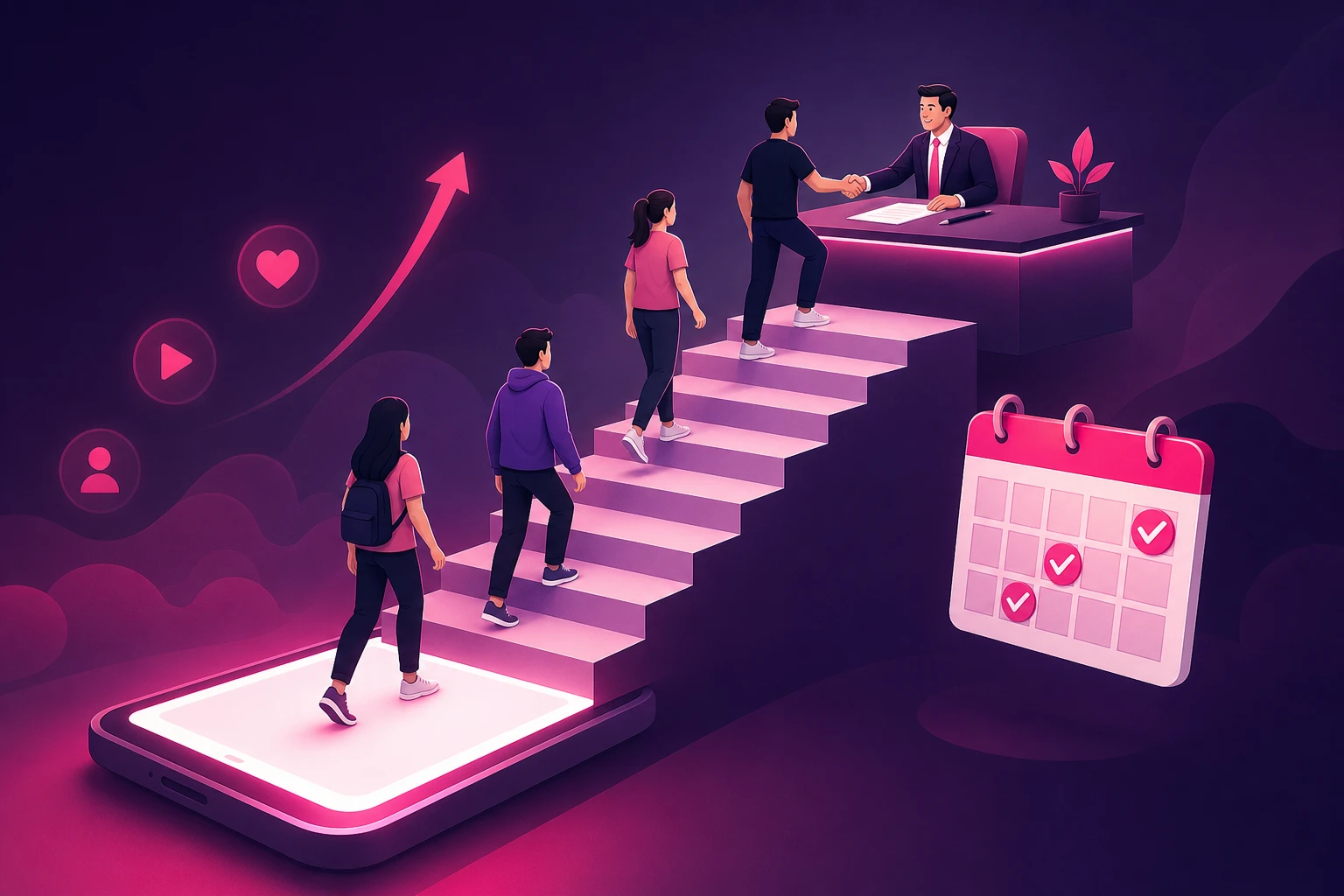
PI conversion has a shape no other practice area has: months of quiet trust-building, then a single urgent moment. Your entire funnel exists for a day you cannot predict - so everything must be pre-positioned for it.
- The bio reads like a road sign. "Injury lawyer in Phoenix. Free consults. No fee unless we win." A panicked person deciding who to call at 9pm should be able to place you, price you, and reach you in five seconds.
- Pin the crisis trio. Your best what-to-do-after-an-accident video, your contingency-fee explainer, and a short who-we-are introduction. The night someone finally needs you, those three pinned videos are your intake interview, already recorded.
- The link goes to one action. A free case evaluation - not your homepage, not a linktree buffet. One tap, one form or number, done.
- Answer fast, because the window is hours. An injury inquiry is the most time-sensitive lead in law: the adjuster is already calling them, and so are the firms they found on Google. Somebody owns the inbox, responds within hours, and moves the conversation to a consult - while respecting the prospective-client rules that apply the moment someone shares case details.
- Expect the referral path, not just the direct one. Much of your TikTok caseload will arrive sideways: a follower tags you under a friend's crash story, or tells their brother-in-law "I follow a lawyer who talks about exactly this." That is trust doing the advertising for you - and it only happens if your content is worth mentioning.
The full conversion system - the six-rung retainer ladder, intake response windows, and tracking which videos actually produce clients - is in our guide to getting clients from TikTok. Everything there applies; PI just compresses the last three rungs into a single urgent day.
6. The PI Demand Calendar
Injuries are not evenly distributed across the year, and your content calendar should know it:
- Holiday enforcement seasons. Impaired-driving crashes and enforcement campaigns cluster around major holidays. Know-your-rights and what-happens-after-a-DUI-hit content lands hardest in the weeks around them.
- Winter weather. The first ice storm of the year produces pileups and slip-and-falls in the same week. Prepare the "who is liable when you fall on ice" and multi-car-crash explainers in November; post them with the forecast.
- Summer road-trip and construction season. More miles, more motorcycles, more work zones. Motorcycle-bias myths and work-zone liability explainers fit June through August.
- Storm and disaster season. In hurricane and severe-weather markets, property damage and injury claims spike together - and so does adjuster activity. Claim-process education in those windows reaches people mid-decision.
The point is not to chase tragedy - it is that when your metro suddenly has thousands of people confused about a claim process, the calm explainer you posted that week is a public service that also happens to be excellent marketing. Map your market's version of this calendar once; the amplification strategy in section 8 uses it too.
7. The Mistakes That Keep PI Accounts Small
Most stalled PI accounts are making one of these errors, usually with expensive consistency:
- Billboard energy. The firm name in the first three seconds, the slogan, the "one call, that's all" cadence. TikTok users have spent their whole lives skipping that ad; they will skip it here in under a second. Lead with the viewer's question, never your brand.
- Settlement flexing. Check reveals and verdict bragging read as tone-deaf to viewers, create unjustified-expectation problems with the bar, and attract exactly the wrong inquiries. The case-value reality check from section 3 does the same persuasion job without any of the liability.
- Chasing national virality. Two million views from other states sign zero cases in yours. Say your city out loud, reference local roads and courts, and accept smaller numbers from the only audience that can hire you - the mechanics are in the 90-day law firm growth roadmap.
- Vanishing between crises. The trust-before-the-accident model only works if you are consistently present. Two videos a week, indefinitely, beats a burst of ten and a three-month silence - batch filming exists precisely so trial weeks do not empty the feed.
- Playing lawyer in the comments. Evaluating specific cases in public is an ethics problem and a malpractice invitation. General education, plus "that deserves a real consultation - link in bio," every single time.
8. Paid Amplification: Beating the Click at Its Own Game
Here is where the arbitrage gets explicit. Your competitors are paying hundreds of dollars per click to reach one stressed stranger for one comparison-shopping moment. For a similar total spend, promoting a proven educational video on TikTok puts your face, your voice, and your explanation in front of thousands of adults in your metro - months before any of them needs a lawyer, with no auction against every other firm in town for the same three seconds of intent.
The playbook mirrors everything above. Promote education, not ads: your what-happens-after-a-crash explainer, your adjuster-tactics video, your contingency-fee explainer - content that has already proven itself organically with strong watch time, saves, and local comments. Target your practice metro, because a viewer three states away is a vanity metric. Time it to the demand calendar: enforcement weeks, the first winter storm, road-trip season. And keep every promoted video inside the same bar rules as organic content, including any labeling or filing your state requires for paid placements.
What you are buying is not clicks - it is the thing PI marketing has always struggled to buy at any price: name recognition attached to genuine helpfulness, at scale, in the exact geography where your future clients drive to work every day. When one of them gets hurt next spring, the $200 click auction happens without you, because the client never searched.
That is exactly what our TikTok promotion service is built for: taking the educational video that already earns trust and putting it in front of thousands more people in your market, with budget flowing to the audiences that respond. For the mechanics of promoting an existing organic video, the Spark Ads guide walks through the setup step by step.
Frequently Asked Questions
Does TikTok actually work for personal injury lawyers?
Yes, and the economics are stronger than in almost any other vertical. Personal injury keywords are the most expensive clicks in all of paid search - often hundreds of dollars each - because every firm is bidding on the same tiny moment after an accident. TikTok flips that: you build trust with thousands of local people before anything happens to them, so when they or someone they love gets hurt, you are already the lawyer they feel like they know. One signed case typically covers years of content effort.
What should a personal injury lawyer post on TikTok?
Lead with what-happens-next explainers for the days after an accident, insurance-tactics education about what the adjuster's first call is really for, honest contingency-fee explainers, case-value reality checks that correct settlement myths, and comment Q&A answering real questions in general terms. These formats work because accident victims are confused and scared, and the lawyer who calmly removes that confusion earns the call.
Can personal injury lawyers talk about settlements and results on TikTok?
Carefully, and in some states barely at all. Most bars prohibit statements that create unjustified expectations - flashing settlement checks and promising big paydays is exactly what those rules target. Many states require disclaimers on past results, some require advertising-material labeling, and comparative claims like "the best PI firm in town" are restricted almost everywhere. Education about how case value is actually determined is both safer and more persuasive than bragging about outcomes.
How do accident victims actually find a lawyer on TikTok?
Mostly through trust built earlier. Few people search TikTok the day of a crash - instead, the person who has watched your explainers for months remembers you when the accident happens, or a follower tags you under someone's story, or a family member says they follow a lawyer who talks about this. That is why your profile must work like an intake desk: practice area and city in the bio, a pinned what-to-do-after-an-accident video, and a one-tap way to reach the firm.
When should a personal injury firm put paid budget behind TikTok videos?
Once a video has proven itself organically - strong watch time, saves, comments from locals - and always within bar advertising rules. Amplifying a proven educational explainer to adults in your metro costs a fraction of what PI search clicks cost, and it builds name recognition with thousands of future claimants instead of renting one click from someone comparing five firms. Timed to seasonal demand like holiday enforcement periods and winter weather, it becomes the cheapest trust a PI firm can buy.
Ready to stop renting $200 clicks?
You already have the video that earns trust - the accident explainer people save, the adjuster video locals keep sharing. Viryze amplifies that proven content to thousands more people in your metro, building the name recognition that signs cases before the search auction ever starts.
Promote your best videoRelated Reading
- TikTok for Lawyers: The Complete 2026 Guide to LawTok - the foundations every attorney shares, from formats to ethics.
- Getting Clients from TikTok: Turn Views Into Signed Cases - the full six-rung retainer ladder your intake funnel runs on.
- LawTok Content Ideas: 50+ Video Concepts That Build Client Trust - a deeper vault of formats that adapt cleanly to injury work.
- Growing a Law Firm TikTok: From 0 to 100K Followers - the 90-day roadmap and the plateaus every legal account hits.
- How to Film Legal Content for TikTok - the batch filming system that survives trial weeks.

Head of Creator Success at Viryze
TikTok growth strategist helping creators reach their first 100K followers through data-driven promotion strategies.