Most articles about making money on TikTok open with the Creator Rewards Program. This one opens by telling you to ignore it.
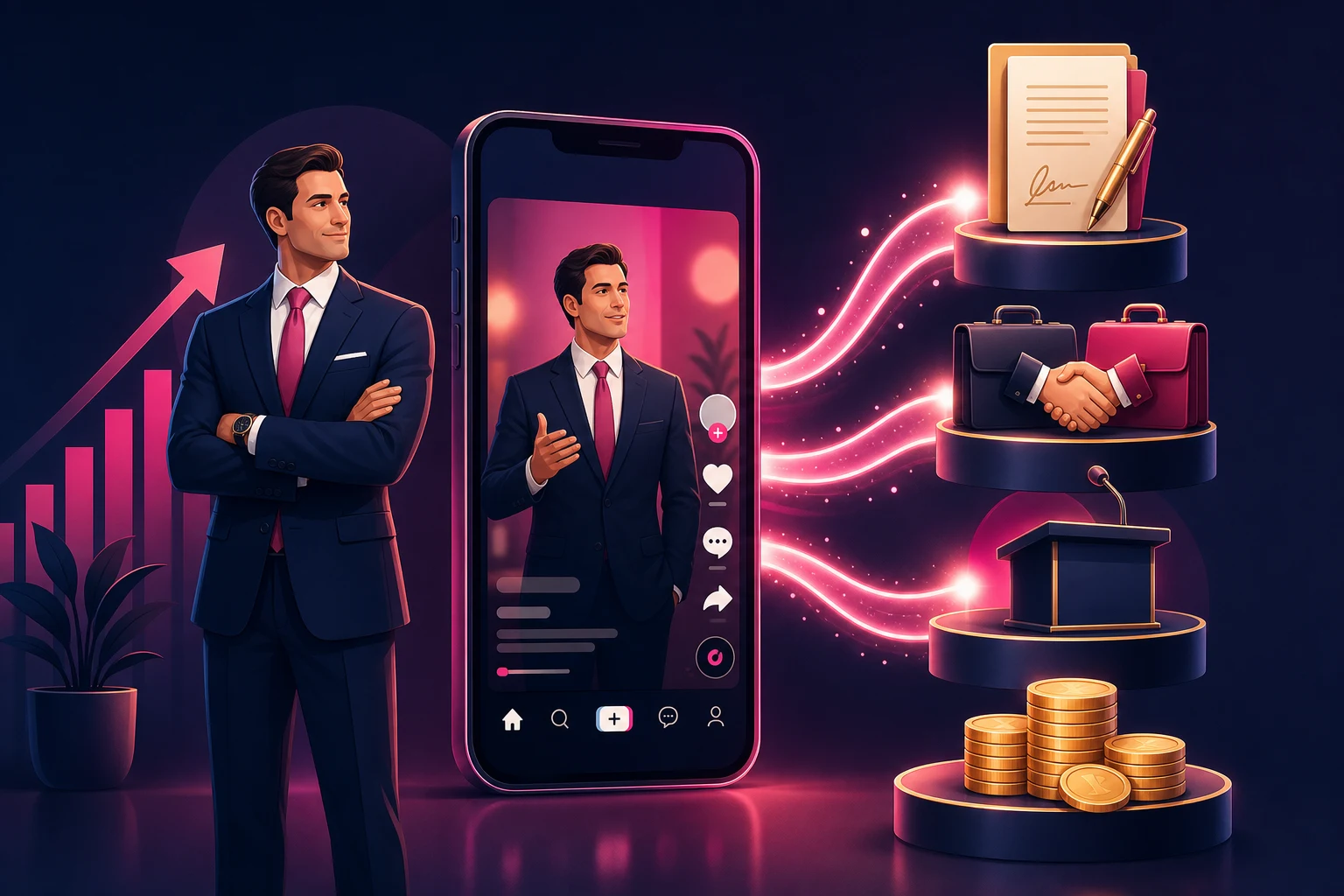
The Creator Rewards Program pays roughly $0.40 to $1.00 per 1,000 qualified views, so a video seen a million times earns a few hundred dollars. A single retained client is routinely worth thousands, and in personal injury, complex family law, or business litigation, it can be worth six figures. The gap between those two numbers isn't a gap - it's a different universe. For an attorney, TikTok is not a place that pays you. It is a place where the people who will pay you decide whether they trust you.
That said, "just get clients" is incomplete advice. Attorneys with real audiences earn from five distinct streams, each with its own threshold, its own effort cost, and its own ethics rules. This guide covers all five in the order they actually turn on - what each one is worth, when it becomes available, what your state bar has to say about it, and where the wasted effort is. It builds on our complete TikTok guide for lawyers and the 0 to 100K growth roadmap. If you haven't built the account yet, start there - this is what the account is for.
The honest summary:
- Retained cases are the business. Every other stream on this page combined is usually a rounding error next to the case revenue a modest local following produces.
- Your out-of-state viewers are worth money too. A vetted referral network turns the 90% of your audience you can't represent into fees and reciprocal referrals.
- Speaking, CLE, and media come to you. They arrive as inbound requests once you're visibly the clearest explainer in your practice area - no pitching required.
- Platform payouts come last, if ever. Chasing Rewards pulls you toward national entertainment topics and away from the local content that signs cases.
- Every stream here is governed by your state's advertising and fee-division rules. Read them before you turn anything on.
What's Inside
- 1. The Math That Changes Everything
- 2. Stream One: Retained Cases (90% of the Money)
- 3. Stream Two: Referral Fees From the Audience You Can't Represent
- 4. Stream Three: CLE, Speaking & Media Commentary
- 5. Stream Four: Legal Digital Products (Carefully)
- 6. Stream Five: Creator Monetization & Brand Deals
- 7. The Ethics Layer: Getting Paid Without Getting Disciplined
- 8. The Sequence: What to Turn On, and When
- 9. Tracking It: The Only Three Numbers That Matter
- 10. The Monetization Mistakes That Cost Lawyers Money
- 11. Accelerating: Put Budget Behind the Videos That Produce Inquiries
- Frequently Asked Questions
1. The Math That Changes Everything

Run the comparison honestly and the strategy writes itself.
A comedy creator with a million followers might see a five-figure year from platform payouts, plus brand deals if they hustle. To get there they need enormous, constant, nationwide reach, and the money stops the moment the posting stops.
An employment attorney with 4,000 followers in her metro signs two consultations a month from the account. Say one in three becomes a client, at an average matter value of $6,000. That is roughly $48,000 a year from an account that would look like a failure on any creator analytics dashboard - and the client relationships outlast the videos.
This is the inversion at the heart of legal monetization: you are not selling attention to advertisers, you are converting a very small number of the right people into very high-value clients. Which means every monetization decision gets tested against one question: does this bring me closer to people who can hire me, or does it trade them for strangers?
Almost every bad monetization decision an attorney makes on TikTok fails that test. Chasing national virality on a celebrity trial gets views from people in 49 states where you can't practice. Optimizing for watch-time payouts pushes you toward long, broad, entertainment-shaped videos. Selling a $29 template distracts from a consult worth two hundred times that. None of those are crimes - they're just poor trades for someone whose product costs thousands of dollars and is bought entirely on trust.
2. Stream One: Retained Cases (90% of the Money)
Everything else on this page is a supplement. This is the business.
The mechanism is simple and slow: a person watches you explain something they were anxious about, feels calmer, follows you, watches eight more videos over three months, and then - when the thing actually happens to them - calls you instead of searching. You were not competing on price or ad spend at that moment. You had already won.
What makes this stream work is the path from video to intake being short and obvious:
- Your bio names the practice area and the city. "Family law attorney in Charlotte" converts strangers into local prospects. "Fighting for justice" converts nobody.
- The intake link is one tap from any video. A consultation request page, not a homepage with a phone number buried in a footer. People who found you on their phone at 11pm will not navigate a desktop site.
- The response window is hours, not days. Legal inquiries are emotional and urgent; the firm that answers first frequently signs the case. This is the single most common leak, and it has nothing to do with content.
- The pinned videos do the closing. A best rights explainer, a who-I-help intro, and a reassuring what-happens-next walkthrough. Someone deciding whether to call you watches those three.
- Every video keeps the ethics frame. "General information, not legal advice - no attorney-client relationship" protects you and, counterintuitively, makes you look more credible, not less.
The content that produces cases is not the content that produces views. Your most-watched video will often be a fun myth-bust with national appeal. Your most valuable video will be a calm, unglamorous walkthrough of what actually happens at a first hearing in your county - 20,000 views, and three of those viewers are terrified people in your city who now know exactly who to call. The LawTok content ideas vault is organized around exactly this kind of high-intent explainer.
3. Stream Two: Referral Fees From the Audience You Can't Represent
Here is the problem every attorney with reach runs into: 90% or more of your audience lives somewhere you are not licensed. Most lawyers treat those inquiries as noise and reply with "sorry, I can't help you." That is money walking out the door in both directions - the viewer stays stuck, and a firm that could have helped never hears from them.
The fix is a referral network you build deliberately, before you need it:
- Map where your inquiries actually come from. After a few months, your out-of-jurisdiction messages will cluster around a handful of states and one or two practice areas. Build for those first rather than trying to cover the country.
- Vet before you refer, not after. Your reputation travels with the referral. A viewer who trusted you enough to reach out will blame you if the attorney you named handles them badly - so refer only to lawyers whose work you have some real basis to vouch for.
- Paper the fee arrangement properly. Division of fees between lawyers at different firms is governed by your state's rules - usually some version of ABA Model Rule 1.5(e), which typically requires the client's informed consent in writing and either a proportional split of the work or joint responsibility for the matter. Bare "finder's fees" for a warm name are prohibited in most jurisdictions. Get this right on paper before the first referral, not during it.
- Count the reciprocal value. Even where a fee isn't permitted or isn't appropriate, a lawyer you sent a good case to remembers. Attorneys with visible audiences become referral hubs, and inbound referrals from other firms often end up worth more than the fees themselves.
Practically, this turns a dead-end DM into a two-line reply: "I'm only licensed in Ohio, but this is exactly what [attorney] in your state handles - here's how to reach them." The viewer gets help, you keep the trust, and the economics work out.
4. Stream Three: CLE, Speaking & Media Commentary
This stream is unusual because you don't build it - it finds you. Once you are visibly the person who explains your practice area most clearly, the requests start arriving on their own:
- CLE and bar association presentations. Ironically, the most common one: other lawyers want to know how you did it. "Social media for attorneys, ethically" is a CLE topic in demand in nearly every state, and you now have a case study nobody else in the room has.
- Conference and industry speaking. Legal marketing conferences, practice area summits, and the trade conferences of the industry you serve - employment attorneys speak to HR groups, construction attorneys to contractor associations. Those rooms are also full of prospective clients.
- Media commentary. Producers and reporters search for the attorneys who already explain things clearly on camera, because that is the hard part to source on deadline. A local news segment is not directly paid, but it is authority that flows back into every other stream.
- Corporate training and workshops. The highest-paying version of this. Employment attorneys running manager training, business counsel running contract workshops - a single engagement can be worth more than a month of content work.
The realistic threshold is around 10,000 to 25,000 followers, though a single strong video in a well-timed news cycle can trigger it far earlier. Make it easy: a professional email address in your bio, and a simple speaking page on the firm site that a producer or event organizer can find in one search.
5. Stream Four: Legal Digital Products (Carefully)
Digital products get pitched hard to lawyers, and they're the stream that most deserves skepticism. Not because they don't sell - some do - but because the effort is real and the revenue is small next to a single retained matter. There is also a genuine hazard: selling a document that a buyer relies on as legal advice can create exposure that a $49 price tag does not remotely justify.
What works, when it works:
- Educational guides, not legal documents. "What to expect in a custody case in Texas" is information. A fill-in-the-blank custody agreement is legal work being sold without representation, and the two carry very different risk.
- Checklists and preparation tools. What to gather before a consultation, what to document after an accident, what questions to ask a prospective attorney. These are genuinely useful and often become lead magnets that feed Stream One.
- Templates only with real guardrails. If you do sell documents, do it with jurisdiction limits stated plainly, clear language that no attorney-client relationship is created, and a strong recommendation to have it reviewed. Some state bars are stricter about this than others - it's worth a specific check rather than an assumption.
- Products for other lawyers. Often the better market. Intake scripts, content systems, practice management resources - your peers can buy from you without any unauthorized practice or advice-reliance concern at all.
The most reliable use of a digital product is as a free lead magnet rather than a revenue line. A free "what to do in the first 48 hours after a car accident" PDF that collects an email address is worth more to a personal injury practice than the same document sold twenty times at $19.
6. Stream Five: Creator Monetization & Brand Deals
Last, and last for a reason. Platform and sponsorship income is real at scale, but it is the stream most likely to quietly damage the other four.
The Creator Rewards Program pays on qualified views of longer videos, with rates that reward broad watch time. Enable it if you want - it costs nothing. Just refuse to let it steer you. The content that maximizes Rewards is long, broad, and nationally interesting; the content that maximizes case revenue is short, specific, and local. When those conflict, the payout loses every time. If a video you were going to make anyway runs long and earns, that's a bonus, not a strategy.
Brand partnerships generally become available in the six-figure follower range, and the natural fits for attorneys are narrower than most creators': legal tech, document services, insurance-adjacent products, business software, financial tools. Three rules make them safe:
- Disclose properly. #ad or #sponsored, clearly and up front - that's the FTC's requirement and your bar will hold you to at least that standard.
- Never endorse anything that substitutes for representation in a way you wouldn't actually recommend to a client. Your credibility is the asset generating every other stream, and one bad partnership spends it.
- Avoid outcome implications. A sponsored message that suggests a product will win someone's case runs straight into the no-guarantee rules that govern legal advertising.
Attorney-educators who genuinely want the creator path - the ones building toward 100K and a media presence rather than a bigger caseload - can build a real second income here. For everyone else, treat it as found money and keep your attention on the intake line. The same priority ordering shows up in how healthcare professionals monetize - in regulated professions, the practice almost always out-earns the platform.
7. The Ethics Layer: Getting Paid Without Getting Disciplined
Every stream above intersects with rules that vary by state. This is a map of where to look, not legal advice - your own jurisdiction's rules control, and your bar's ethics hotline is free.
- Content that generates clients is advertising. Which means the truthfulness and no-guarantee rules apply (the Model Rule 7.1 family and its state analogues). No promised outcomes, no misleading comparisons, and in some states specific labeling or record-retention requirements for advertising material.
- Disclaimers do real work. "General information, not legal advice. No attorney-client relationship." Say it in the video or the caption, consistently. It prevents the reliance problem that makes legal content risky in the first place.
- Jurisdiction limits matter more than they feel like they do. Answering a specific question for a specific person in a state where you aren't licensed edges toward unauthorized practice. Keep public answers general and route specifics through referrals.
- Testimonials and case results are restricted in many states. Before posting a happy client or a settlement figure, check what your state requires - some demand specific disclaimers, and a few restrict the practice heavily.
- Fee division has its own rulebook. Referral revenue is the stream most likely to go wrong quietly. Written client consent and proportional-work-or-joint- responsibility are the usual requirements; assume nothing.
- Paid promotion is advertising too. Putting budget behind a video does not change what it is. If the organic video complies, the promoted version generally does - but confirm your state doesn't add labeling or filing requirements for paid ads.
None of this is a reason to stay off the platform. It is the reason your competitors are still frozen - and the attorneys who spend one afternoon reading their state's advertising rules get to build confidently for years while everyone else waits for permission. Our ethics-safe filming guide covers the production side of the same discipline.
8. The Sequence: What to Turn On, and When

Turning everything on at once is how attorneys end up with a content habit that feels like a second job and pays like a hobby. Do it in this order instead:
0 - 2,000 followers: intake only
One job: make it trivially easy for a local viewer to contact you. Bio, link, pinned trio, fast response. Ignore every other stream completely. The first case can and often does arrive here.
2,000 - 10,000: intake + referral network
Out-of-state inquiries are now steady enough to be worth systematizing. Build the vetted list, paper the fee agreements, and write the two-line reply template.
10,000 - 50,000: add speaking and media
Requests start arriving unprompted. Add a professional contact email and a speaking page so the people looking for you can actually book you. This is also where a lead magnet earns its keep.
50,000+: consider products and partnerships
Only now is the audience large enough that a product or sponsorship generates real money - and only if it doesn't cost you the local trust density that pays the bills.
Notice what stays constant across every tier: the intake path. Firms lose more money to a slow response and a broken contact link than to any strategic choice on this page.
9. Tracking It: The Only Three Numbers That Matter
Views, followers, and likes tell you almost nothing about whether this is working. Track these instead:
- Inquiries attributed to TikTok. Add one question to your intake form - "how did you hear about us?" - and count. This is the number that turns "social media stuff" into a line item your partners can't argue with.
- Consult-to-signed rate for those inquiries. TikTok-sourced prospects usually convert better than search-sourced ones, because they arrive having watched you for months. If yours convert worse, the problem is usually targeting - your audience isn't local enough or your content isn't matched to your practice area.
- Revenue per hour of content work. Total case value attributed to the account, divided by the hours you and your team put in. Attorneys who do this calculation honestly at the six-month mark are usually surprised at how favorably it compares to their search advertising - and it's the number that justifies scaling up.
Give it two full quarters before judging. Trust-based revenue lags content by months by definition: the person who watched you in March calls you in July, when the thing they were worried about finally happens.
10. The Monetization Mistakes That Cost Lawyers Money
- Chasing views instead of neighbors. A national audience feels like success and pays like a hobby. Ten thousand followers in your metro beat a million spread across the country.
- Treating the account as a billboard. Verdict graphics, office tours, and firm announcements get no reach and build no trust. The questions your clients actually ask are the entire content strategy.
- A broken or slow intake path. The most expensive mistake on this list. Every hour a legal inquiry waits, the probability it becomes your case falls.
- Building a product before an audience. Attorneys routinely spend forty hours on a course for an audience of 900 people. Those forty hours spent on videos would have produced consultations.
- Ignoring the out-of-state audience entirely. "Sorry, wrong state" deletes value that a referral list would have captured.
- Letting the payout program pick your topics. The clearest sign this has happened: you're posting about a trial in another state instead of the questions people in your county keep asking.
- Giving up at month three. Legal content compounds slowly and then all at once, because the buying decision is triggered by an event you can't schedule. The 90-day growth roadmap exists precisely because most firms quit right before the curve turns.
11. Accelerating: Put Budget Behind the Videos That Produce Inquiries
After a few months you'll be able to point at two or three videos and say: these are the ones people mention when they call. That is not a guess - that is a proven asset, and it's the only kind of video worth putting money behind.
The arithmetic here is the most lopsided in any profession we cover. Firms routinely pay triple-digit costs per click on search for "car accident lawyer" or "DUI attorney" - one anonymous name in a row of near-identical ads, competing at the exact moment a dozen other firms are bidding. Amplifying an explainer that has already earned trust, targeted to the metro where you practice, buys minutes of a prospective client actually watching you - before the emergency, before anyone else is bidding for their attention, and for a rounding error against what one retained case is worth.
That's the model behind our TikTok promotion service: take the educational videos that already proved themselves with real viewers and put them in front of thousands more people in your area, so the trust converts into followers, inquiries, and signed cases. Promoted legal content still has to follow your state's advertising rules - the same disclaimer and no-guarantee requirements as any ad - so amplify the education, never the pitch. For the mechanics of promoting through TikTok's own tools, see the Spark Ads guide.
Frequently Asked Questions
How much money do lawyers make on TikTok?
Almost none of it comes from TikTok itself. The Creator Rewards Program pays roughly $0.40 to $1.00 per 1,000 qualified views on longer videos, so a million views is a few hundred dollars - real money only at enormous scale. A single retained case, by contrast, is routinely worth thousands and in some practice areas hundreds of thousands of dollars. That is why an attorney with 4,000 local followers and two signed cases a month out-earns a 400,000-follower creator living on platform payouts. Track your TikTok income the way you track any referral source: signed cases attributed to the account, plus referral fees, speaking, and product revenue on top.
Can lawyers get paid for TikTok content under bar rules?
Yes, with conditions that vary by state. Educational content that generates client inquiries is simply advertising, which every state permits within its rules on truthfulness, disclaimers, no-guarantee language, and in some states an "advertising material" label. Referral fees between lawyers are permitted in most states only under specific division-of-fee rules - typically requiring client consent in writing and either proportional work or joint responsibility. Brand deals require FTC #ad disclosure plus care that the endorsement does not imply a legal outcome. Read your own state bar advertising rules before switching any stream on, and treat anything ambiguous as a question for your ethics counsel rather than a judgment call.
Should lawyers join the TikTok Creator Rewards Program?
It is fine to enable, but it should never shape your content. Rewards favors longer videos with strong watch time from broad audiences, which pulls attorneys toward national entertainment topics and away from the local, practice-area-specific explainers that produce clients. If your best-performing legal content happens to run over a minute anyway, take the payout. If chasing it would make you post about celebrity trials in states where you cannot practice, the payout is costing you far more than it pays.
How do lawyers monetize followers outside their state?
Referral relationships are the main answer. Most attorneys with any reach get inquiries from viewers in states where they are not licensed, and those inquiries have real value to a firm that is. Build a small vetted network of attorneys in the states and practice areas you hear from most, and refer with a documented process. Fee-sharing between firms is governed by your state rules on division of fees - usually requiring written client consent and either proportional services or joint responsibility - so paper the arrangement properly. Even where a fee is not permitted or not appropriate, a reliable referral network generates reciprocal referrals, which is often worth more over time.
How many followers does a lawyer need to make money on TikTok?
Fewer than in any other niche. Attorneys commonly report their first "I found you on TikTok" consultation somewhere between 2,000 and 5,000 followers, provided the content is practice-area-focused and the audience is concentrated where they practice. There is no follower threshold to clear before a case is worth signing - the account can pay for itself before it looks impressive to anyone. The thresholds that matter are for secondary streams: speaking and media requests tend to start in the tens of thousands, and brand partnerships typically want six figures.
Know which video brings in the calls?
Then you already know where the budget belongs. Viryze amplifies the educational videos that have proven themselves, putting your best explainer in front of thousands more people in the metro where you practice - so the trust you built converts into inquiries and signed cases instead of views from states you can't serve.
Promote your best legal explainerRelated Reading
- TikTok for Lawyers: The Complete 2026 Guide to LawTok - the full strategy and ethics framework behind every stream on this page.
- Growing a Law Firm TikTok: From 0 to 100K Followers - the 90-day roadmap that builds the audience this monetization depends on.
- LawTok Content Ideas: 50+ Video Concepts That Build Client Trust - the explainers that turn viewers into consultations.
- How to Film Legal Content for TikTok - the ethics-safe production system, with no client information required.
- How Healthcare Professionals Make Money on TikTok - the same practice-first revenue logic in the other regulated profession.

Head of Creator Success at Viryze
TikTok growth strategist helping creators reach their first 100K followers through data-driven promotion strategies.