There is a very particular kind of frustration that hits attorneys about four months into posting. The videos are landing. One of them did 800,000 views. The comments are full of "why did nobody explain it like this in law school" and "where were you when this happened to me."
And the intake log looks exactly the same as it did in March.
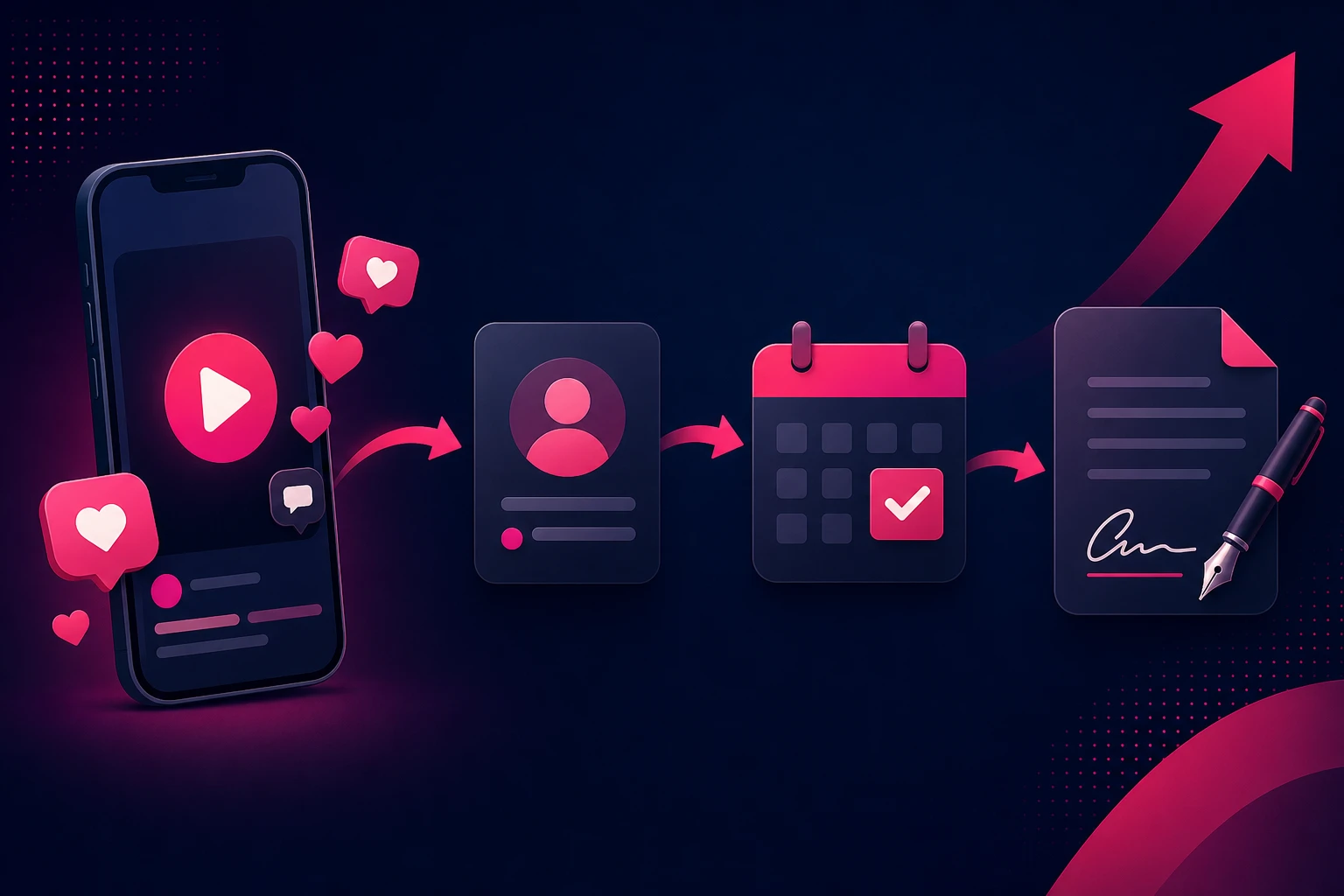
That gap is almost never a content problem. It is a handoff problem. Views become clients through a series of small, separate decisions, and most firms have quietly built four of the six - so the trust they earned leaks out somewhere between "this lawyer actually knows what she is talking about" and "I have a consult Thursday at 2."
This guide is about sealing those leaks. It picks up where the 90-day growth roadmap leaves off and plugs into the broader strategy in our complete TikTok guide for lawyers. If people are already watching you, everything below is about making sure the ones who need a lawyer can find their way to your calendar.
The short version:
- Views are not the product - jurisdiction is. A thousand viewers in your metro beat a million nationwide, because only one group can actually hire you.
- Your profile is the intake desk. Practice area plus city in the bio, a pinned trio of your best videos, and a way to reach a human one tap away.
- Speed decides more than eloquence. An inquiry answered in an hour books at a dramatically higher rate than the same inquiry answered Monday morning.
- Your DMs are an ethics surface. Facts from a prospective client can create duties - and conflicts - before you have agreed to anything.
- Track it or you will undercount it. Clients from social rarely mention it unprompted. They just arrive already sold.
What's Inside
- 1. Why Views Don't Sign Cases
- 2. The Retainer Ladder: Six Rungs From Viewer to Signed Case
- 3. Rungs 1-2: Turning National Views Into Local Followers
- 4. Rung 3: Your Profile Is the Intake Desk
- 5. Rung 4: Earning the Inquiry (CTAs That Work Under Bar Rules)
- 6. Rung 5: The Response Window That Books the Consult
- 7. Rung 6: The Consult That Signs Itself
- 8. High-Intent Content: The Videos That Actually Produce Inquiries
- 9. Ethics at the Inquiry Stage (The Part Nobody Warns You About)
- 10. Tracking Which Videos Are Actually Signing Cases
- 11. Amplify the Videos That Already Sign Cases
- Frequently Asked Questions
1. Why Views Don't Sign Cases
A view is a stranger watching you for fourteen seconds. A signed client is a person handing you their custody arrangement, their criminal exposure, or their family's money. Nothing about the first automatically produces the second.
In practice, legal accounts leak clients in five predictable places. See how many of these describe your account right now:
- The audience is national and your license is not. A video about what police can and cannot ask during a traffic stop travels to all fifty states, which feels incredible and signs nobody. If 96% of your viewers live somewhere you cannot practice, your view count is measuring entertainment, not demand.
- The next step is invisible. The video ends, the viewer thinks "I should probably talk to someone about this," and there is nothing on screen telling them what that would even look like. Four seconds later they are watching a dog video and the thought is gone.
- The profile makes them work. They tap your name, and the bio says "Attorney | Advocate | Fighter" without naming a practice area or a city, and the link goes to a firm homepage with a rotating hero image and a contact form below the fold. Every extra tap costs you a slice of the people who were ready.
- The inquiry goes cold. Someone DMs on Friday night - which is exactly when legal problems tend to happen. Nobody opens the account until Monday. By then they have called the firm whose billboard they passed on the way home.
- The consult never gets booked because nobody knows what it costs. An enormous share of people who need a lawyer never contact one because they assume the first conversation will cost hundreds of dollars. If your videos never address that, your audience quietly self-disqualifies.
Here is the encouraging part: every one of those is fixable in an afternoon, and none of them require you to make better videos. You need the path between the video and the engagement letter to be short, obvious, and staffed.
2. The Retainer Ladder: Six Rungs From Viewer to Signed Case
We call the path the Retainer Ladder. Each rung is a separate decision the person makes, and each one has its own failure mode:
- Viewer - they watched one video to the end. They know nothing about you. The only job here is to be worth another fourteen seconds.
- Follower - they decided they want more of this. The job is to make it obvious that there is more, and that it is reliably useful rather than promotional.
- Trusting local - they have seen you several times and they know you practice where they live. This is where the compounding happens, and it takes weeks.
- Inquiry - they raised their hand: a DM, a comment, a link tap, a call. This is the fragile rung, and it is the first one you can directly measure.
- Consult - they are on your calendar. This rung belongs to your intake process, not your camera.
- Signed case - the engagement letter is executed. If the first five rungs were built properly, this one is mostly confirmation.
Two things follow from this shape. First, you cannot skip rungs. Videos that ask first-time viewers to call the firm convert badly, because you are demanding rung five behavior from rung one people. Second, your worst rung caps everything above it. A firm with brilliant content and an unanswered inbox signs fewer cases than a firm with mediocre content and a paralegal who replies in ten minutes.
Before you make another video, walk the ladder yourself. Open your account in a private browser window as if you were a scared 29-year-old who got arrested last night and has never spoken to a lawyer. Where exactly do you get stuck?
3. Rungs 1-2: Turning National Views Into Local Followers
Reach is not the goal. Reach inside your jurisdiction is the goal. Three thousand followers in your metro is a genuine book of future business. Three hundred thousand spread across the country is a hobby with a good ego return.
You cannot force TikTok to show your videos only to people who live near you, but you can make local relevance unmistakable - to the algorithm and to the humans watching:
- Say your state out loud, in the video. Not as a pitch - as necessary context, which for a lawyer it genuinely is. "In Georgia, you have thirty days to do this. Other states are different, so check yours." That single sentence does three jobs: it is accurate, it signals location, and it protects you from giving advice to someone in a state where you are not licensed.
- Make content that only makes sense locally. Your county's diversion program. What actually happens at your local courthouse on a first appearance. The specific way your state handles a common dispute. National accounts cannot make these videos, and everyone who needs one lives near you.
- Show the room, and the route. Filming outside the courthouse people would actually be summoned to, or in your real office rather than a rented studio, turns you from a person on a screen into a place they can drive to.
- End with a reason to follow, not a reason to hire. "I answer one of these every Friday" moves rung one to rung two. "Call for a free consultation" does not, because they do not know you yet - and in some states that phrasing carries its own advertising requirements.
This is also the one place paid amplification changes the math outright, because promotion lets you choose geography directly instead of hoping for it - more on that in section 11. The local business TikTok playbook covers the wider geography tactics that apply to any practice with a physical address.
4. Rung 3: Your Profile Is the Intake Desk
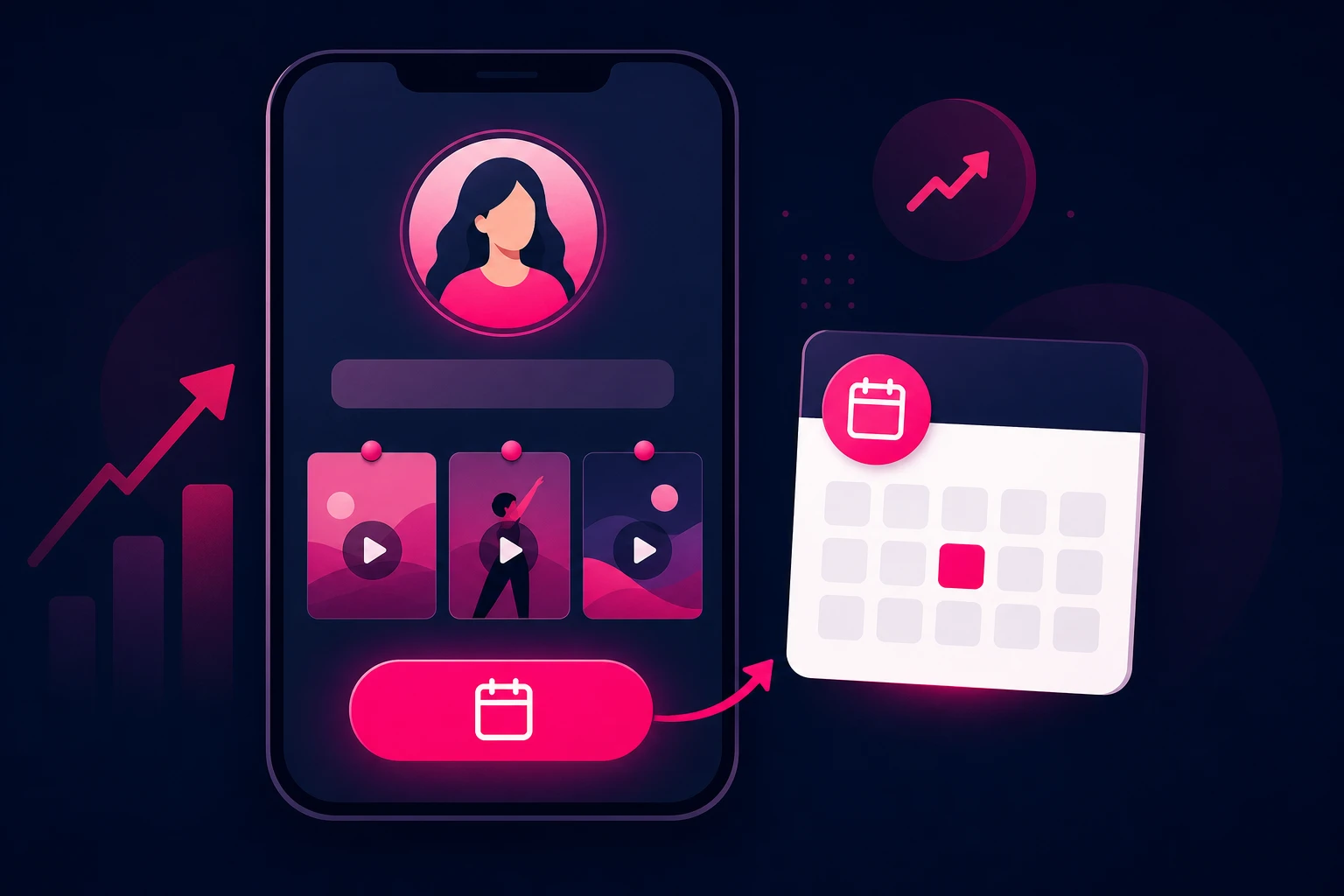
When someone finishes a video that hits close to home, they tap your name. What happens in the next six seconds decides whether they become a client or a scroll. Treat that screen the way you treat your actual reception area.
The bio: practice area plus city, in plain English. Not "zealous advocate for the injured." Something a frightened person can act on: "Criminal defense in Sacramento. Explaining what actually happens after an arrest." If a stranger cannot tell what you handle and where you practice in one line, the bio is not doing its job.
The pinned trio. You get three pinned slots, and they are the only part of your feed whose order you control. Use them deliberately:
- Your best rights explainer - the video that most clearly proves you know this area cold and can explain it to a normal human being.
- A short who-I-help video - your name, your firm, who you represent and who you do not, in thirty seconds. This is the video that turns an account into a person.
- Your most reassuring what-happens-next video - what the first meeting is actually like, what it costs, and what you will need from them. This is the one that removes the fear keeping people from calling anybody at all.
The link, and what sits behind it. One tap, and it should land on something that takes thirty seconds to complete - not your firm homepage. Match the destination to the urgency of your practice area:
- Urgent practice areas (criminal defense, DUI, emergency custody, restraining orders): a tappable phone number that a human answers, plus a form as backup. Somebody in crisis at 11pm is not filling out a fourteen-field intake questionnaire.
- Deliberate practice areas (estate planning, business formation, employment review): a scheduler showing real available times. Letting someone pick a slot themselves converts far better than "we will call you back."
- Either way, keep the first form tiny - name, phone, one sentence about the situation, and nothing else. Every additional required field costs you people who were about to become clients.
If your firm requires a longer intake, collect it after the first human contact. The form's only job is to get a conversation started.
5. Rung 4: Earning the Inquiry (CTAs That Work Under Bar Rules)
This is the rung where most legal accounts either get shy or get pushy, and both cost cases. The shy version never mentions that hiring a lawyer is an option. The pushy version sounds like a late-night billboard and gets ignored by the exact people who are most cautious about lawyers.
What works is a call to action that names the moment the viewer is in and offers a small next step:
- Criminal defense: "If this is happening to you right now, stop answering questions and talk to a lawyer before you say anything else. My number is in the bio."
- Employment: "If you are reading a severance agreement this week, do not sign it today. There is usually more room in these than people think."
- Family law: "If you are in the deciding stage rather than the doing stage, that is exactly when a consult is most useful - the link in my bio has this week's times."
- Estate planning: "Most people do this after something happens to someone they know. You do not have to wait for that."
- The universal one: "Ask the general version of your question in the comments and I will answer it in a video." This is the highest-converting legal CTA there is, because it costs the viewer nothing, gives you your next video, and produces a public answer that earns saves.
Three things to keep off your videos, regardless of practice area. First, anything that sounds like a promise - "we win," "we will get this dismissed," specific dollar figures presented as what a viewer can expect. Most state bars restrict outcome language, several require disclaimers alongside past results, and viewers discount it anyway. Second, manufactured urgency - countdowns and "only three consults left this week" read as predatory in a field people already approach warily. Third, comparative superlatives like "the best lawyer in the city," which several jurisdictions treat as an unverifiable claim.
Your state's rules are the ones that govern, and they vary more than attorneys expect - some jurisdictions require specific labeling on advertising communications, some restrict client testimonials outright, and some require your firm name and office location to appear. Read your own rules once, write yourself a one-page checklist, and then stop worrying about it. The lawyers who lose here are not the ones who got the rules wrong; they are the ones who stayed silent for two years because they never looked them up.
6. Rung 5: The Response Window That Books the Consult
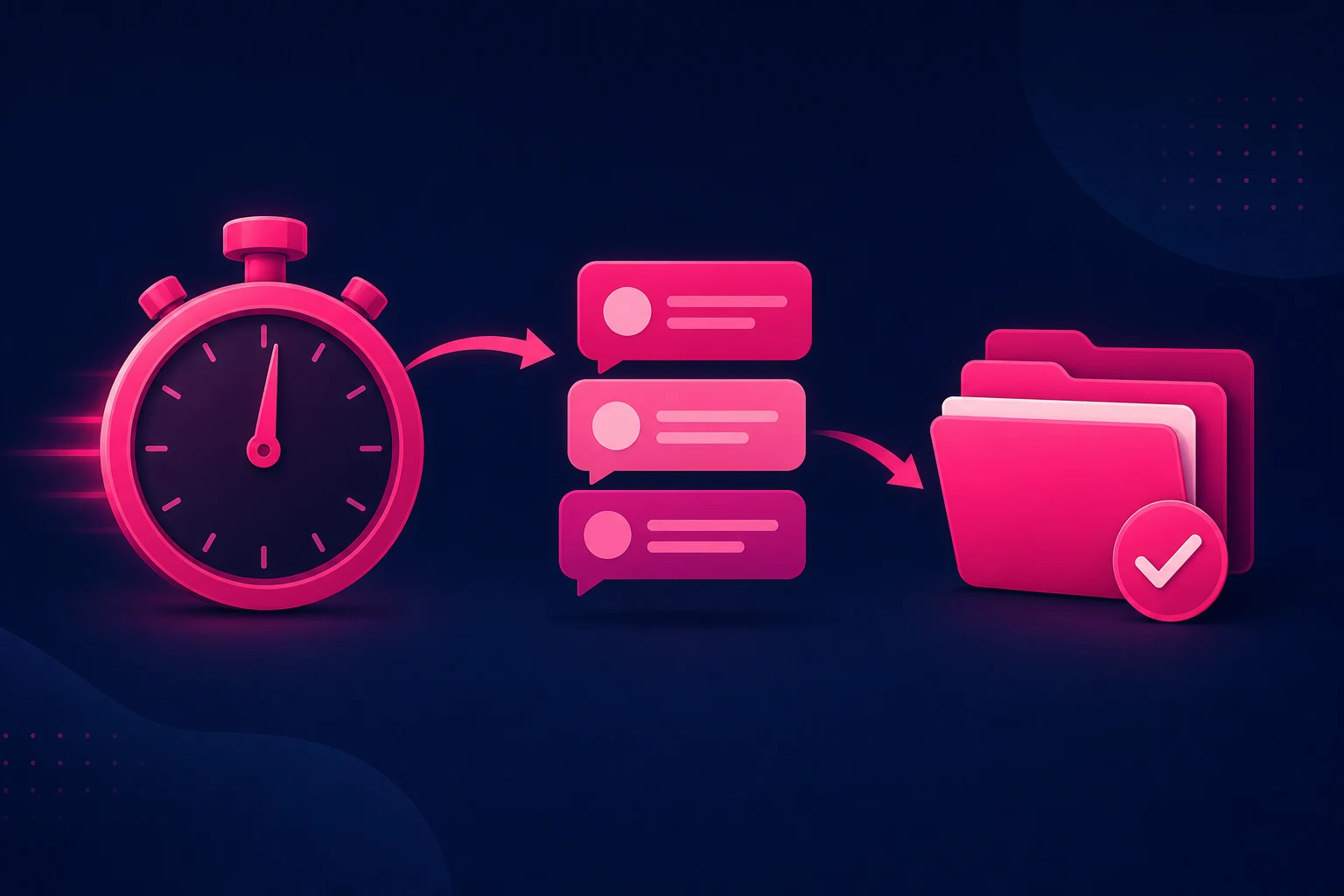
If you fix exactly one thing from this article, fix this one. Legal intake is unusually time-sensitive, and it is more time-sensitive from social than from anywhere else. Someone who found you through a search engine is deliberately shopping for a lawyer. Someone who found you through TikTok was watching videos on their couch and had a sudden, uncomfortable realization about their own situation. That feeling has a short half-life.
Three practical rules make the difference:
- Somebody owns the inbox. Not "the firm." A named person who checks DMs and social-sourced form submissions at least twice a day, and who knows what to do with them. If you are a solo practitioner, that person is you, and it is a fifteen minute calendar block, not a vibe.
- Cover the nights and weekends you are actually generating inquiries. TikTok inquiries skew heavily toward evenings, and legal emergencies do not respect business hours. Even an honest auto-reply - "Got it. Someone from our office will call you before 10am tomorrow. If this is an emergency, here is the number." - holds the relationship overnight.
- Move to a phone call fast. Long DM threads are bad for conversion and bad for ethics (see the next section). The reply that works is short and redirects: "Thanks for reaching out - I do not want you putting details about your situation in a DM. What is the best number to reach you, and when are you free today?"
Then measure it. Pick a week, log the timestamp of every social inquiry and every first response, and look at the median gap. Most firms who do this for the first time discover a number that horrifies them - and fixing it is free.
7. Rung 6: The Consult That Signs Itself
Here is the quiet advantage of clients who come from content: they arrive different. A person who found you through a paid search ad is comparing three firms and has no idea who any of you are. A person who has watched twenty of your videos already knows how you think, how you explain things, and whether they like you.
Attorneys who build a real audience report the same three things about these consults:
- They are shorter. Half the consult is normally spent establishing that you are competent and explaining how the process works. Your videos did that weeks ago.
- They are less price-sensitive. Not because content lets you charge more, but because the person is not choosing between interchangeable strangers. They came for you specifically.
- They show up better prepared. People who have absorbed your explainers arrive with the right documents and the right questions, because you already told them what would matter.
Which means the job in the consult is not to persuade. It is to confirm - and to make the mechanics of hiring you as frictionless as everything before it. Send the engagement agreement the same day while the conversation is fresh, use e-signature, and be explicit about fees and what happens next. The single most common reason a warm consult never converts is not doubt about the lawyer; it is a signing process that took eleven days and required a printer.
And when the caller is outside your jurisdiction or outside your practice area - which will happen constantly once your videos travel - refer them out properly. Those referrals are a real revenue stream in their own right, covered in the lawyer monetization guide, and a good referral earns you a reputation that comes back around.
8. High-Intent Content: The Videos That Actually Produce Inquiries
Not all legal content converts equally. The videos that go furthest are usually entertainment - the outrageous case, the wild courtroom story, the "police cannot actually do this" myth-bust. Those build the audience, and you should keep making them.
But the videos that produce inquiries are a different, quieter category. They tend to be watched by far fewer people, most of whom are currently in the exact situation you are describing:
- "What happens next" timelines. Walk through the actual sequence - the arraignment, the filing, the mediation, the probate step - with realistic timing. People in the middle of a legal process are starved for this and cannot find it anywhere.
- The cost video. What a consult costs, how fees usually work in your practice area, what a contingency arrangement actually means. This is the single most underused video in legal content, and it removes the barrier that silently disqualifies the largest share of your audience.
- "Do I even need a lawyer for this?" Answer it honestly, including the cases where the answer is no. Saying "for this one, you are fine on your own" buys more credibility than any testimonial, and the people you send away come back when it is serious.
- The mistake video. The three things people do in the first week that make your job harder. High save rate, high share rate, and everyone who is currently making those mistakes recognizes themselves.
- The deadline video. Statutes of limitation, filing windows, notice requirements. Nothing produces same-day inquiries like a viewer realizing a clock is running.
- The reassurance video. What the first meeting is like, what you will ask, why they should not be embarrassed. Aimed squarely at the person who has been putting off calling anyone for six months.
A useful ratio is roughly four audience-building videos to one high-intent video. The reach content keeps the account healthy; the high-intent content converts the trust it built. For fifty more formats to pull from, the LawTok content ideas library breaks them down by practice area, and the filming guide covers shooting them without exposing anything confidential.
9. Ethics at the Inquiry Stage (The Part Nobody Warns You About)
Most legal social media advice covers ethics at the content stage - do not disclose client information, do not give legal advice. That is the easy half. The harder half happens after someone reaches out, and it is where attorneys who are otherwise careful get into trouble.
The prospective-client problem. Under the rules modeled on ABA Model Rule 1.18, a person who consults you about the possibility of representation is a prospective client - and you owe them duties of confidentiality even if you never take the case, even if you never respond. Worse, learning significantly harmful information from them can disqualify you (and potentially your whole firm) from representing the other side.
That is not theoretical when you have a public inbox. A spouse in a contested divorce, an employee suing a company you represent, the other driver in a collision - any of them can send you three paragraphs of facts at midnight. The protection is process, not luck: keep DMs short, do not invite facts, and route everything into intake where a conflicts check runs before anyone reads the details.
The rest of the checklist:
- Disclaim clearly and consistently. "General information, not legal advice. Watching this does not create an attorney-client relationship." In your bio, in your video descriptions, and verbally in videos that get close to specific advice.
- Never answer a specific person's specific facts. Answer the general version publicly, and move the specific one to intake. This is both an ethics rule and, conveniently, the better conversion path.
- Watch the jurisdiction line. Advising a viewer in a state where you are not licensed risks unauthorized practice. "This is how it works in Ohio; if you are somewhere else, the answer may be completely different" belongs in your vocabulary.
- Do not repeat a commenter's details back to them publicly. If someone posts identifying facts in your comments, answer the general principle and do not quote their situation.
- Know your state's advertising rules before you write CTAs. Labeling requirements, testimonial restrictions, required disclaimers on past results, and rules about firm name and office location vary meaningfully by jurisdiction.
- Supervise anyone posting for you. If a marketing agency or a paralegal runs your account, the professional responsibility for what they post is still yours.
None of this is a reason to stay off the platform. It is a reason to spend one hour with your state's rules and build the guardrails once, so that everything after that is just posting.
10. Tracking Which Videos Are Actually Signing Cases
Firms consistently underestimate what social is producing, for a simple reason: a client who watched forty of your videos over three months does not describe themselves as a "TikTok lead." They say a friend recommended you, or that they found you online, or nothing at all. Meanwhile the source that gets credit is whatever they typed into a search bar on the day they finally called.
You do not need attribution software. You need four habits:
- Ask on the intake form. "How did you hear about us?" with social media as an explicit named option, not a text box people leave blank.
- Train whoever answers the phone to ask and log it. One question, every call, written down in the same field every time. This is where most of your real data comes from.
- Give your TikTok profile its own intake link. A dedicated URL or landing page means link taps are separated from the rest of your web traffic and you can see volume without guessing.
- Track backwards from signed cases, not forwards from views. Once a month, take every case you signed and ask which video started it. That list - usually short, usually surprising - tells you what to make more of and what to amplify.
Then look at the number that actually matters in a law practice: cost per signed case. Compare it to what your firm pays for search ads or lead vendors in the same practice area. Most attorneys who run this comparison honestly find the content channel is not close - a single case from an organic video costs a fraction of a case from a channel where the click alone runs into triple digits. The monetization guide works through those economics in detail.
11. Amplify the Videos That Already Sign Cases
Once the ladder is intact, you have something most firms never build: a video you can prove converts. Not a video that got views - a video that produced inquiries, and inquiries that became signed cases.
That changes what paid promotion is for. You are no longer gambling on whether the content works; you already know it does. You are buying more of the right people seeing the thing that already works - and in a law practice, "the right people" means something very specific: adults who live inside the jurisdiction where you are licensed.
The economics here are more favorable than in almost any other field. Legal keywords are the most expensive real estate in paid search - the click alone, from an anonymous stranger who has never heard your voice, routinely costs more than most small businesses spend on a month of marketing. Putting a trust-building explainer in front of a few thousand people in your metro compares extraordinarily well against that, and it builds something a click never does.
That is what our TikTok promotion service is built to do: take the educational video that has already proven it brings in cases and put it in front of thousands more people in your area. The rule is the same one that governs the whole growth roadmap: amplify proof, not hope. For the mechanics of promoting an existing organic video, the Spark Ads guide walks through the setup step by step - and whatever you promote still has to satisfy both TikTok's ad policies and your state's advertising rules.
Frequently Asked Questions
How do lawyers actually get clients from TikTok?
Through a six-step path, not a single viral video. Someone watches an explainer, follows because they want more, watches you enough times to trust you, sends an inquiry or taps your intake link, books a consult, and signs. Most firms build four of those six rungs. They earn real trust and then lose it in the handoff - the bio does not say what city they practice in, the intake link is three clicks deep, or an inquiry sits unanswered over a weekend. Fixing the handoffs usually signs more cases than posting more videos.
How many followers does a lawyer need before TikTok brings in cases?
Far fewer than most attorneys expect, because the number that matters is engaged followers inside your jurisdiction, not total followers. Firms commonly report their first TikTok-attributed inquiries somewhere between 1,000 and 5,000 followers, and some see them much earlier when the content is specific to one practice area in one metro. Legal has the friendliest math of any vertical here: one signed case can be worth more than an entire year of content effort, so a few hundred local people who trust you is a serious asset.
What call to action works best for legal TikTok videos?
Soft, specific, and matched to the urgency of the practice area. "If this is happening to you right now, do not answer any more questions until you have talked to a lawyer - our number is in the bio" works for criminal defense because it names the moment. "Most people wait until it is an emergency; the link in my bio has our next consult times" works for estate planning. Avoid urgency gimmicks, countdowns, and anything that sounds like a promise of results - several state bars treat outcome language as a rules violation, and viewers read it as untrustworthy anyway. The highest-converting legal CTA is often just an invitation to ask the general version of your question in the comments.
Can lawyers answer legal questions in TikTok comments or DMs?
You can answer general educational questions publicly, but you should not give individualized advice in a comment or DM, and you should be careful about inviting facts into your inbox at all. Under the prospective-client rules modeled on ABA Model Rule 1.18, confidential information someone shares while seeking representation can create duties to them - including a conflict that disqualifies your firm from representing the other side. The safe pattern is to answer the general version of the question publicly with a plain "this is general information, not legal advice, and no attorney-client relationship is created," and route anything specific into your firm intake process where a conflicts check happens first.
How do I know whether TikTok is actually signing cases for my firm?
Put "How did you hear about us?" on your intake form with social media as an explicit option, train whoever answers the phone to ask and log it, and give your TikTok profile its own intake link so taps are separated from the rest of your web traffic. Then track backwards from signed cases to the video that started it - most firms find the channel is producing more than they thought, because clients arriving from social rarely volunteer it. They just show up already convinced you are the right lawyer.
Ready to put your best video in front of your whole metro?
Once you know which video brings in cases, the only thing between you and a fuller docket is how many local people see it. Viryze amplifies your proven educational content to thousands more people in the area where you actually practice - so the trust you have already built turns into consults.
Start reaching your jurisdictionRelated Reading
- TikTok for Lawyers: The Complete 2026 Guide to LawTok - the full strategy this client-acquisition path plugs into.
- Growing a Law Firm TikTok: From 0 to 100K Followers - the 90-day roadmap that builds the local audience you convert here.
- How Lawyers Make Money on TikTok in 2026 - every income stream a signed case sits on top of, ranked.
- LawTok Content Ideas: 50+ Video Concepts That Build Client Trust - the high-intent formats that fill the top of this ladder.
- Getting Patients from TikTok - the parallel conversion playbook for another trust-driven, regulated profession.

Head of Creator Success at Viryze
TikTok growth strategist helping creators reach their first 100K followers through data-driven promotion strategies.