
Coffee Shops12 min read
How Coffee Shops Make Money From TikTok: Regulars, Gift Cards, Beans by Mail and Office Orders
An honest guide to how an independent coffee shop or cafe makes money from TikTok, in order from the least new work to the most: more regulars at the counter, gift cards in December, bags of coffee on the shelf and by mail, mugs, office and catering orders, wholesale and classes. It includes example prices and simple math for each one, the video that sells it, what TikTok itself pays a shop, how to disclose free products from suppliers, six rules to check and six mistakes to avoid.
By Ryan MitchellHead of Creator Success at Viryze
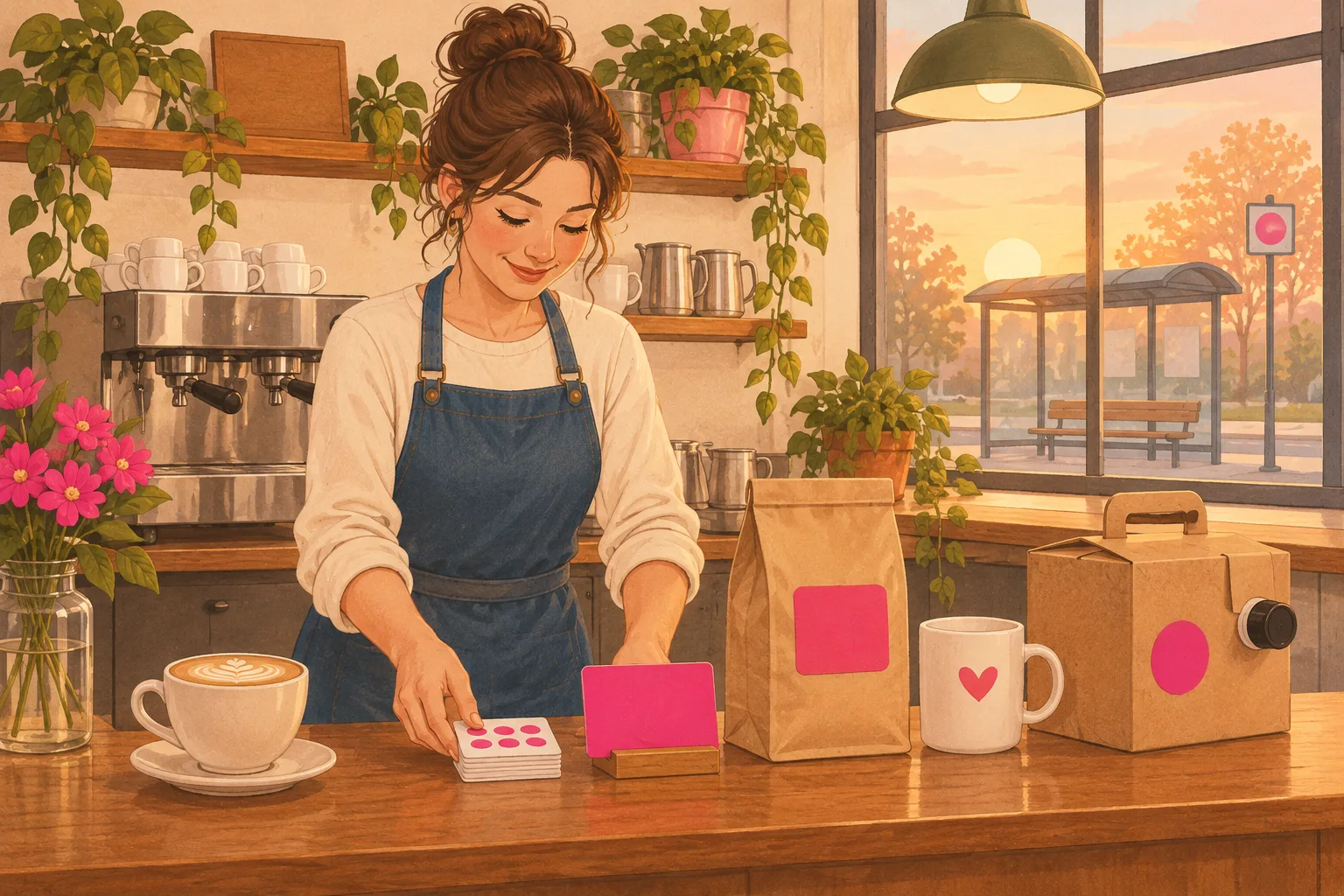
Most guides about making money on TikTok are written for creators. They talk about view payments and brand deals. A coffee shop is not a creator. A coffee shop already has a register, and that is where the money from TikTok shows up.
This guide lists the ways a shop can earn from its videos. It starts with the one that matters most, and it is honest about the ones that matter least. Each section has an example price, simple math, and the one video that sells it.
It is one part of our complete TikTok guide for coffee shops and cafes. You do not need any marketing background to follow it.
The short version:
- The main money is still the regular at the counter.
- Gift cards, bags of coffee, mugs, office orders and classes are extras. Add one at a time.
- Viewers far away are only worth money if you post coffee to them.
- TikTok itself pays a shop little or nothing, and that is fine.
What This Guide Covers
- 1. Where the Money Really Comes From
- 2. The Regular: The Main Money
- 3. Gift Cards in December
- 4. Bags of Coffee: The Shelf First, Then the Mail
- 5. Mugs and Other Merchandise
- 6. Office and Catering Orders
- 7. Wholesale
- 8. Classes and Events
- 9. What TikTok Pays, and Free Products From Suppliers
- 10. A Year of Extras in the Example Shop
- 11. Which One to Add First
- 12. Six Rules to Check
- 13. Six Mistakes to Avoid
- 14. When a Selling Video Has Earned a Budget
- Frequently Asked Questions
1. Where the Money Really Comes From
A coffee shop sells a habit. Our main guide does the math. A regular who comes in three times a week and spends about $6 each time is worth $18 a week, or about $900 a year.
Nothing else in this guide comes close to that. So the first job of every video is still to bring a nearby person through the door, and then bring her back.
The other ways to earn are extras. They are worth having, because they sell more to people who already like you. They are listed here from the least new work to the most:
- More regulars. No new work at all.
- Gift cards. You may already sell them.
- Bags of coffee, first from the shelf and then by mail.
- Mugs and other merchandise. These need money up front.
- Office and catering orders. These need a new morning routine.
- Wholesale. This is a second business.
- Classes and events. These need evenings.
Two audiences, two shelves
A coffee shop has two audiences on TikTok. The neighborhood audience can walk in. The national audience enjoys the pour and lives far away.
Almost everything on the list above is sold to the neighborhood. Only one thing can be sold to the far-away audience, and that is whatever fits in a mailing box. If you do not post anything, viewers in another state are applause and nothing more. That is not a problem. It just means you should not plan your income around them.
The example shop in this guide
This guide uses the same made-up shop as the rest of the series. It sits on a corner across from a bus stop, opens at 6:30 and closes at 4. It has twelve seats. A latte costs $5.50, and a barista named Sam works the morning bar. The shop does not roast its own coffee. It buys from a roaster in its region.
Every price and number about that shop is an example. Yours will be different. The math works the same way.
2. The Regular: The Main Money
In our 90-day growth plan, the example shop counted fourteen first-time customers who said they came because of a video. If only four of them become regulars, that is about $3,600 a year. And they come back the year after.
Here is another way to see it. The example shop sells about 190 drinks on an ordinary weekday morning. At about $5 a drink, that is $950 before lunch. Keep that number in mind while you read the rest of this guide. It shows how small the extras are next to the counter.
The videos that do this
- The first visit video, pinned to the top of your profile. It shows the door, where to order, three prices, the seats and the wait.
- The question answered. Oat milk, decaf, dogs, parking, laptops.
- The new thing this week. This is the one people send to a friend.
None of these videos sells anything in the video. They sell the first visit. The loyalty card sells the second one. In the example shop, a first-timer gets a card with the first punch already made, and the tenth drink is free.
If you only have time for one section of this guide, stop here and work on this one. Every extra below depends on it, because regulars are the people who buy the extras.
3. Gift Cards in December
A gift card is the easiest extra to sell. It costs you almost nothing to offer. Your regulars need small gifts in December, and they already trust you.
It also does something a discount cannot do. It sends a new person into your shop with her first visits already paid for. Who is more likely to become a regular than the friend of a regular?
The example
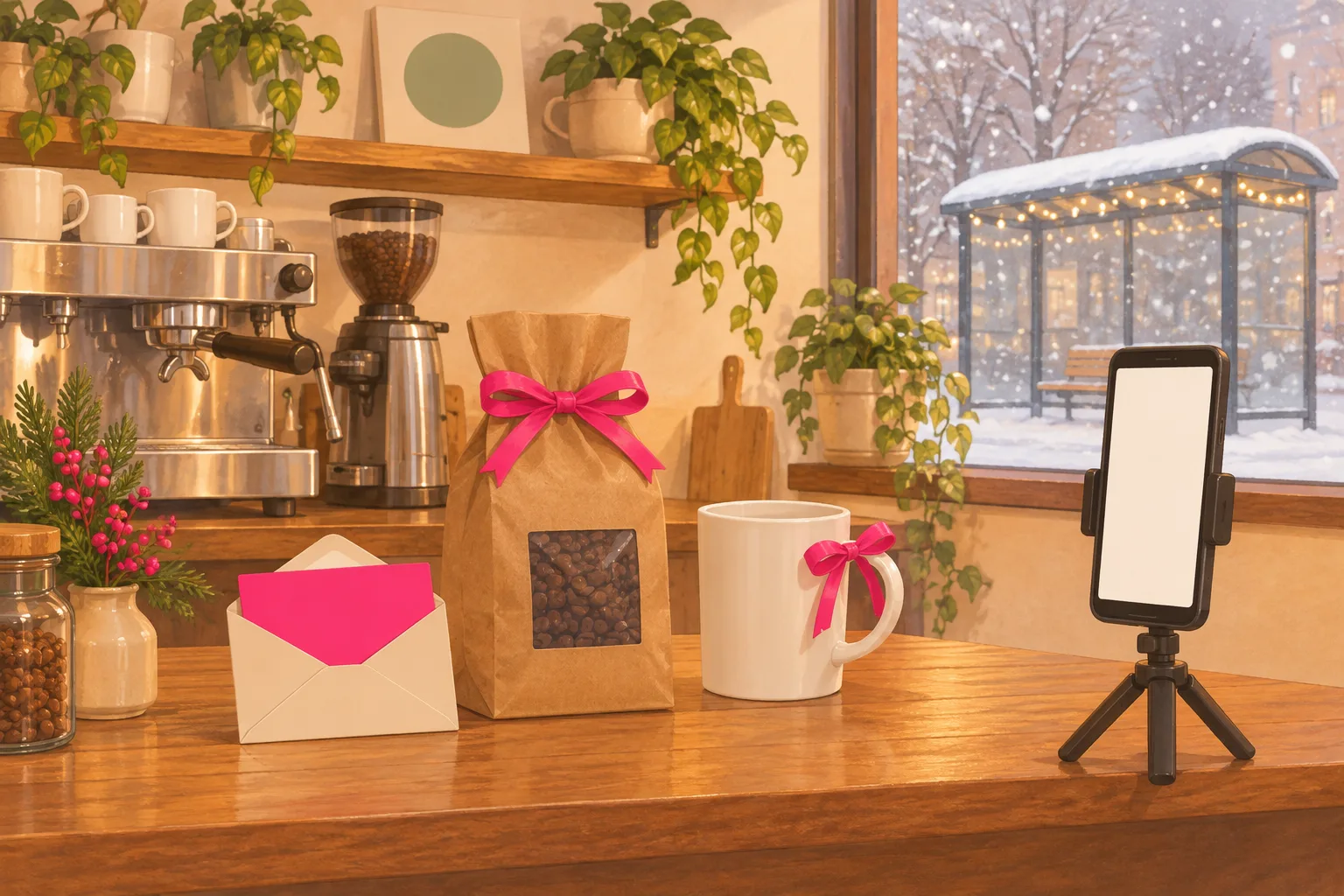
The example shop sells a $25 gift card. That is about four lattes. If it sells 40 cards in December, that is $1,000 in the register before the holidays.
The shop also sets three gifts side by side on the counter: the $25 card, an $18 bag of coffee and a $16 mug. Together they come to $59. Some people buy one, and some buy all three.
The video
Post it in the first two weeks of December. Film the three gifts on the counter before opening. Say the price of each one out loud. Then say the one thing a busy person needs to know:
"We are open until 4 on the 24th. You can pick one up on your way home, and we will put it in an envelope for you."
Post one more in the last few days before the holiday. Last-minute buyers are looking for exactly this.
One honest note
Money from a gift card is not earned yet. Until the card is used, you owe somebody that coffee. Keep a simple count of what has been sold and what has been used, so a busy January of free-looking drinks does not surprise you.
When a gift card comes back in January, treat that person as a first-timer. Hand over a loyalty card with the first punch made. The gift card paid for the first visit. The loyalty card is there for the second.
4. Bags of Coffee: The Shelf First, Then the Mail
Many of your regulars also make coffee at home, especially at weekends. A bag of your coffee by the register lets them buy it from you.
Start with the shelf
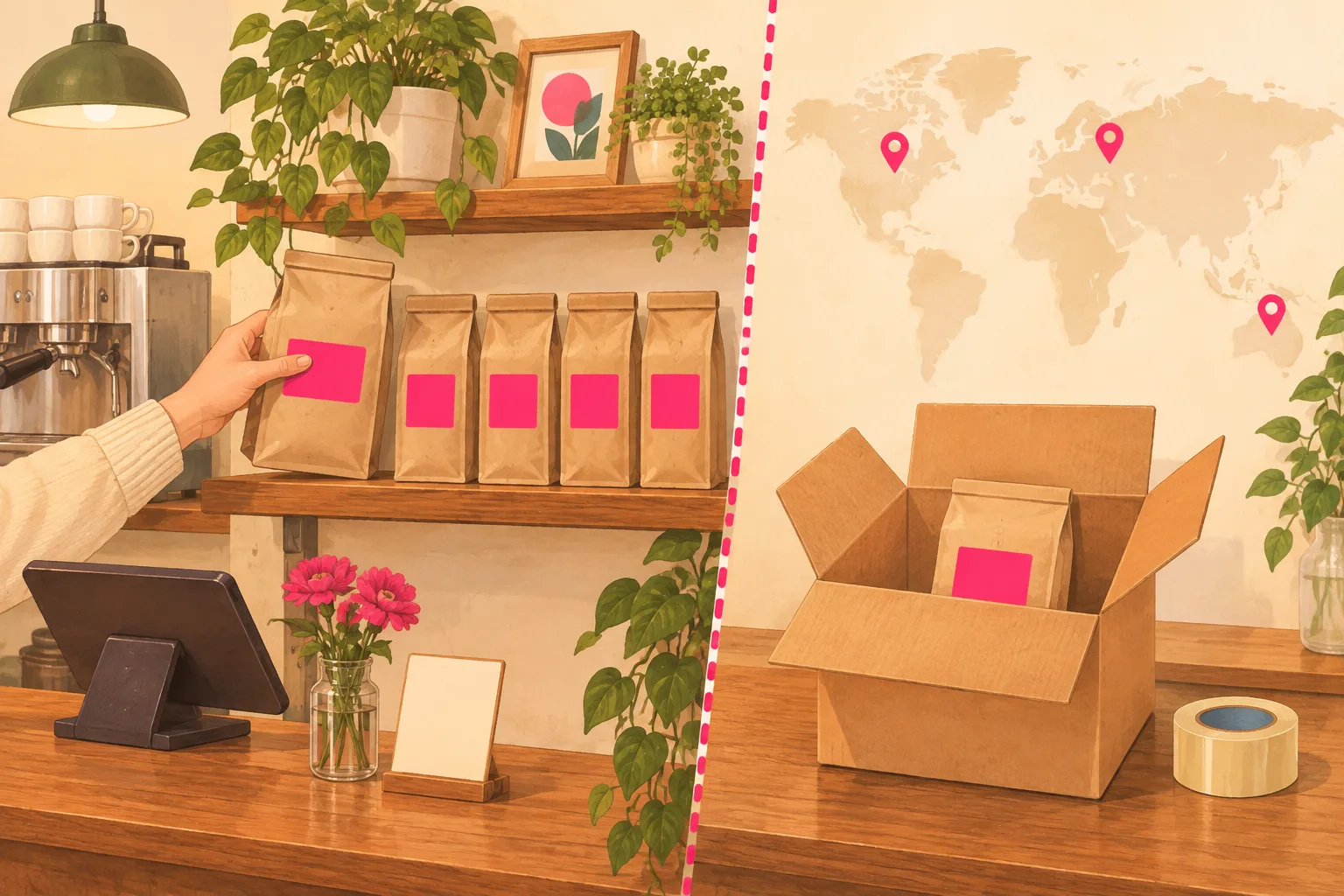
In the example shop, a 12-ounce bag costs $18. The shop pays its roaster $10 for it, so it keeps $8 a bag. If the shelf sells four bags a week, that is $72 a week, or about $3,700 a year in sales.
The video is idea 24 in our list of 55 coffee shop content ideas. Hold up a bag from the shelf. Say the price. Say that a bag makes about twenty cups, which is about two weeks of mornings for one person. Say you will grind it for the way they make coffee at home.
Give the shelf two or three months. If bags do not sell to people who are standing in your shop, do not go any further. The mail will not fix that.
Then the mail
Coffee by mail is the one thing you can sell to viewers who live far away. It is also real work. Somebody has to pack the boxes, buy the postage and answer the message when a box goes missing.
Before you start, do three things:
- Ask your roaster. If you do not roast, the coffee carries your roaster's name too. Some roasters are glad for you to post their bags. Others sell online themselves and would rather you did not. Ask first.
- Price the postage honestly. In our example, a mailing box and postage come to about $6 for one bag. The shop charges exactly that and says so.
- Pick one posting day. The example shop packs boxes on Tuesday, in the lull after the rush. Orders that come in after Monday night wait a week. Say this on the order page.
The subscription
A subscription is a habit by mail. The example shop offers one bag every two weeks. That is 26 bags a year, or $468 in coffee from one subscriber. After paying the roaster, the shop keeps about $208.
Now put that next to the regular. A regular at the counter spends about $900 a year. A subscriber spends about half of that, and you have to pack a box every time. Five subscribers bring about $2,300 a year in sales. It is real money, and it is modest.
So a subscription is worth offering if far-away viewers keep asking "do you ship?" in the comments. It is not worth making your videos for them. Keep making videos for the neighborhood, and let the pour videos carry the link.
Where the order page lives
Add the order page to the one link on your profile, next to the menu and the hours. That is the simplest way to begin.
TikTok also has its own shop feature, where viewers can buy without leaving the app. It takes a share of each sale and has its own rules about what can be sold. Our guide to TikTok Shop for small business explains how it works. For a coffee shop, it can wait until the simple order page is busy.
5. Mugs and Other Merchandise
A mug with your shop on it does two things. It brings in a little money, and it sits on a desk where coworkers see it every morning.
This is the first extra on the list where you pay before you earn. So do the math before you order.
The example
The example shop orders 48 mugs at $7 each. That is $336 up front. It sells them for $16.
- After 21 mugs, the shop has its $336 back.
- If all 48 sell, that is $768 in sales, and the shop keeps $432.
Remember the weekday morning from section 2? A whole year of mugs brings in less than one Tuesday morning at the counter. That is the honest size of merchandise for a small shop.
How to keep it safe
- Order the smallest batch your supplier allows. Selling out of 48 is a good video. Storing 250 is a problem.
- Make one thing well. One mug is easier to sell than a mug, a tote bag, a hat and a sticker.
- Time it for December. Most merchandise is bought as a gift.
- Ask before you order. Post a video of the sample on the counter and ask, "Would you buy this?" The comments will tell you more than a guess.
The video
Film the box being opened before the shop opens. Pour a latte into the first mug. Say the price and how many you have. "We have 48 of these. When they are gone, they are gone." Only say that if it is true.
6. Office and Catering Orders
This is the largest extra for many shops, and the one owners most often forget to film. An office that orders coffee for its Tuesday meeting is a regular that buys ten cups at once.
The example
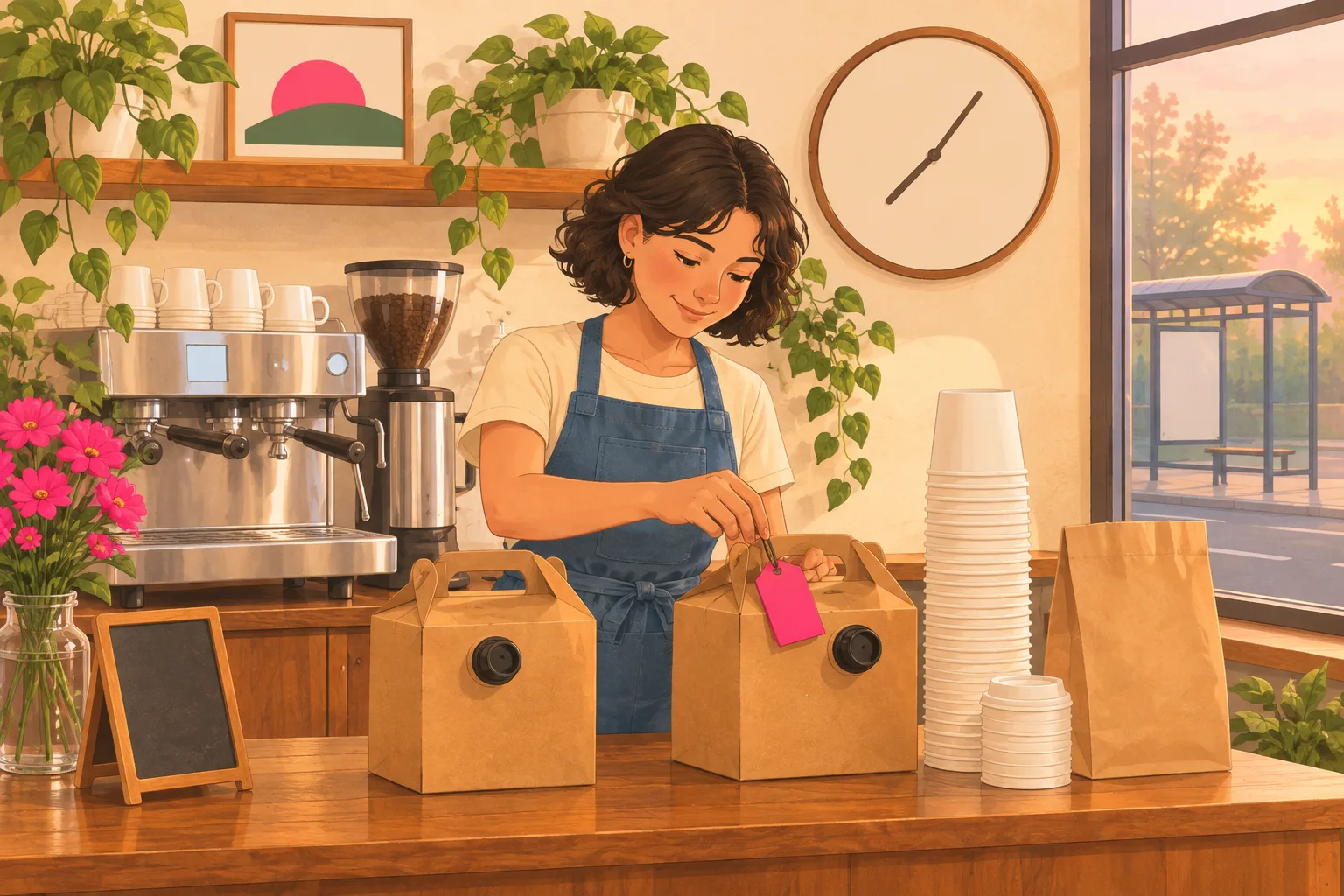
The example shop sells a coffee box for $28. It holds about ten cups and comes with cups, lids, milk and sugar. Orders are placed by 2 in the afternoon the day before. Pick-up is from 6:30, when the shop opens.
One office orders two boxes every Tuesday. That is $56 a week. Over 50 weeks it comes to $2,800 a year, which is about the same as three regulars. And it is filled before the rush begins.
Keep it small at first
Offer pick-up only. Delivery means someone leaves the bar, and the bar is where your main money is made. Set a limit too. The example shop takes four boxes a morning and no more, because the fifth would slow down the 7:40 line.
The video
Film a box being filled before opening. Show the cups and the lids going into the bag. Then say four things: the price, how many cups, when to order and when to pick it up.
"This is our coffee box. It is $28 and it pours about ten cups. Order by 2 the day before, and it will be ready when we open at 6:30. We are on the corner across from the bus stop."
Who to ask
An office order almost always starts with one person who already knows your shop. You know who she is. She is the regular who carries four cups out in a tray every Friday.
Tell her about the box. Then put the price and the order time on your menu page, so she has something to send to whoever places the order.
7. Wholesale
Wholesale means selling what you make to another business. It might be a restaurant that serves your coffee, or a grocery that stocks your bags.
It only applies if you make something. If you roast, you can sell coffee. If you bake, you can sell pastries. The example shop does neither, so it has nothing to wholesale. Most small shops are in the same position, and they can skip this section.
If you do roast or bake, be honest about what TikTok does here. A restaurant owner will not choose a coffee supplier from a video. What happens is simpler. Before a buyer calls you back, she looks you up. A profile full of careful, steady videos tells her you are a real business that takes its coffee seriously.
So make one or two videos a year about how you roast or bake, and leave them on your profile. Then sell wholesale the usual way, with samples and a visit. It is a second business, with its own prices and its own delivery days. Do not start it for the sake of a video.
8. Classes and Events
Your shop is empty after closing, and the machine is still warm. A small class uses both.
The example
Once a month, the example shop runs a class on making better coffee at home. It starts at 4:30 on a Saturday, after the shop closes, and lasts ninety minutes. Six people stand at the bar. A seat costs $40.
That is $240 a class. Allowing for holidays, ten classes a year come to $2,400. Sam teaches it and is paid for two and a half hours each time, which covers setting up and cleaning. The coffee and milk cost a little more.
There is a second benefit, and it may be the bigger one. People who learn to make better coffee at home buy their bags from the shop that taught them.
The video
Film the bar set up for the class before anyone arrives: six cups, six small jugs and the grinder. Say the date, the price and how many seats are left. Small numbers help here. "Six seats, two left" is an honest reason to book today.
The people in the class are customers, so the usual rule applies. Film hands and cups, not faces, unless someone has given a written yes. Our guide on how to film coffee shop videos explains how to ask.
Renting the room
Some shops also rent the room after closing for a book club or a small birthday. If you do, one answered-question video is enough: "Yes, you can hire the shop after 4. Here is what it costs and what is included." Then put the same answer on your menu page.
9. What TikTok Pays, and Free Products From Suppliers
Creators earn from TikTok in ways that mostly do not fit a shop. It helps to know why, so nobody talks you into chasing them.
Payments for views
TikTok has a program that pays creators for views on longer videos. At the time of writing, it is for personal accounts with at least 10,000 followers and 100,000 views in the last 30 days. A shop should be on a business account, and business accounts are not eligible. The rules change, so check them in the app.
Even if you could join, it would not be worth changing your videos for. One new regular is worth about $900 a year. It takes a very large number of views to match that.
Free products and paid posts
Once your account has some followers, companies may write to you. A syrup maker offers a free case. A grinder company offers a grinder. Someone offers money to show a product that has nothing to do with coffee.
Ask three questions before you say yes:
- Would we have bought this anyway?
- Would a regular be glad we showed it to her?
- Is it worth giving up one of our three videos this week?
If any answer is no, say no politely. Your viewers follow a coffee shop. They did not follow a shopping channel.
If you say yes, say so
When a company gives you something for free or pays you, viewers have a right to know. In the United States, the Federal Trade Commission expects that connection to be made clear. Do two things:
- Say it out loud, early in the video. "They sent us this grinder for free. Here is what we think after a month." Do not hide it at the end of the caption.
- Switch on TikTok's disclosure setting when you post. It has one choice for promoting your own business and another for promoting someone else's brand. Pick the second one for a supplier's product. The label names change from time to time, so read the current choices.
Then give your honest opinion. If the free grinder is not as good as the one you use, say that, or do not post at all. A shop that is trusted about small things is trusted about its coffee.
10. A Year of Extras in the Example Shop
Here are the examples from this guide in one table. These are made-up numbers for a made-up shop. They are small on purpose.
| Extra | The example | Sales in a year |
|---|---|---|
| Gift cards | 40 cards at $25 in December | $1,000 |
| Bags from the shelf | 4 bags a week at $18 | $3,744 |
| Bags by mail | 5 subscribers, a bag every two weeks | $2,340 |
| Mugs | 48 mugs at $16 | $768 |
| Office orders | One office, two $28 boxes every Tuesday | $2,800 |
| Classes | 10 classes, six seats at $40 | $2,400 |
| All six | About $13,000 |
These are sales, not profit. The shop pays its roaster for every bag, pays for the mugs, and pays Sam to teach. A dollar from a mug is not the same as a dollar from a latte.
Two things to notice
First, look at the size. All six extras together, for a whole year, come to about $13,000. At $950 a morning, the counter takes that much in about fourteen ordinary weekday mornings. The extras help. The counter is still the business.
Second, look at who buys. The gift cards are bought by regulars. So are most of the bags and the mugs. The office order began with a regular, and regulars fill the classes. Only the five subscribers came from far away.
So the order in this guide is also the order of cause. Videos bring regulars, and regulars buy everything else.
11. Which One to Add First
Do not add all six at once. Each one needs a little stock, a line on your menu page and a video. Add one each season, and keep it only if it sells.
| When | Add this | Why then |
|---|---|---|
| Late November | Gift cards | People buy small gifts in December. |
| January | Bags on the shelf | New routines start, and gift cards come back in. |
| Spring | The coffee box for offices | The January changes have settled, and you know how many boxes a morning can take. |
| Summer | A monthly class | The shop is quieter, and the evenings are light. |
| Early autumn | Order the mugs | They need to arrive well before December. |
| Only when asked | Bags by mail | Wait until the shelf sells and viewers keep asking if you ship. |
How to tell if it worked
The growth plan uses a tally sheet by the register and a count every Friday. Add one short list to that count. Under the week's tally marks, write how many gift cards, bags, boxes, mugs and class seats were sold.
Then compare the weeks. Did bags sell faster in the week after the bag video? Did anyone say "I saw the box on your page" when they ordered? Three weeks of counts will tell you more than any number in the app.
If an extra has not sold after one season and two videos, stop offering it. Stopping costs nothing, and the bar gets your attention back.
12. Six Rules to Check
Selling new things brings a few new rules. This is general information and not legal or tax advice. Rules differ by state and by country, so check what applies where you are.
- Gift cards. In the United States, federal rules say the money on a gift card cannot expire for at least five years, and they limit fees for not using it. Many states are stricter. Check your state before you print an expiry date on anything.
- Coffee by mail. A bag you post is packaged food. Keep the label from your roaster on it, with the weight and the roast date. Rules for selling packaged food differ by place, so ask your local licensing office what applies to you.
- Sales tax. Tax on a bag of beans, a mug and a class can each be treated differently, and posting things to other states adds more rules. Ask whoever does your books before the first order goes out.
- Things suppliers give you. If a company gives you something for free, or pays you, and you show it in a video, say so in the video. Section 9 explains how.
- Reviews. Never offer a free drink, a discount or a punch on a card in exchange for a good review. You can ask customers for honest reviews. You cannot reward them for kind ones.
- Music. A video that sells something is a business video. Use the sounds that TikTok clears for business accounts, and keep the shop speakers off while you film.
The main guide has a longer list in its section on rules for coffee shop videos.
13. Six Mistakes to Avoid
- Discounting the latte to get attention. A cheaper drink brings people who came for the price. A regular comes for the habit. Sell more things to the people who already like you, at the full price.
- Ordering three hundred mugs. Start with the smallest order your supplier allows. A box of unsold mugs in the office is money you cannot spend on anything else.
- Posting beans before the shelf sells. If people standing in your shop do not buy the bag, strangers on a phone will not either. Get the shelf moving first.
- Counting gift card money as earned. Until the card is used, you owe somebody that coffee. Keep the count separate so January does not surprise you.
- Saying yes to every free product. Each one costs you a video that could have brought in a regular. Take only what you would have paid for.
- Making videos for viewers you cannot serve. A large audience far away is only worth money if you post coffee to them. If you do not, keep making videos for the neighborhood.
14. When a Selling Video Has Earned a Budget
Paying to promote a video means paying to show it to more people. It helps a good video travel further. It does not make a weak one sell.
So wait for proof. A selling video has earned a small budget when it has already sold something on its own, and you can see that in your Friday count.
Match the video to the map
This matters more here than anywhere else in the series, because the extras have different buyers.
- Gift cards, the coffee box, mugs and classes are bought in person. Only nearby viewers can act on those videos. Start with the free steps: pin the video, post it again a week later, and tell your regulars. Our guide to local business TikTok marketing has more ways to reach people close to your door.
- Bags by mail can be bought from anywhere you post to. A pour video with the order link is the one selling video that can travel.
If you do spend
Keep the budget small and aim for followers, not a one-day rush. A follower sees your next videos for free and can order when she is ready.
You can do this yourself in the TikTok app. If you would rather spend the time behind the bar, Viryze can run it for you. You pick the video. Viryze shows it to several different audiences, sees which one follows for the least money, and moves the budget there. The promotion runs on your real post, as our Spark Ads guide explains.
One caution applies to every tool and service, ours included. Check the location choices before you pay. If a service cannot keep a campaign close to your shop, do not use it for the gift card video or the coffee box video. Use it only for a video meant for a wider audience, and check that the countries it reaches are ones you post coffee to.
Then judge the spending the way you judge everything else. Did the Friday count change? If the followers went up and the orders did not, stop and look at where the promotion ran.
Frequently Asked Questions
Can a coffee shop make money from TikTok?
Yes, but almost none of it comes from TikTok itself. The money comes through your own register. Videos bring in nearby people who become regulars, and regulars are the main income of any coffee shop. After that, videos can help you sell gift cards, bags of coffee, mugs, coffee boxes for offices and seats in a class. In our example, one regular spends about $900 a year, so a handful of new regulars is worth more than most of the extras.
Can a coffee shop join the TikTok Creator Rewards Program?
Usually not. At the time of writing, the program is for personal accounts with at least 10,000 followers and 100,000 views in the last 30 days, and it pays for videos longer than one minute. A shop should use a business account, and business accounts are not eligible. Check the current rules in the app, because they change. Either way, a shop earns far more from one new regular than from view payments.
Should a coffee shop sell coffee beans online?
Only after bags sell well from the shelf in the shop. Start with a few bags by the register and one video about them. If you buy your coffee from a roaster, ask them before you post bags to customers, because some roasters sell online themselves. Then begin with a simple order page and a small number of subscribers. In our example, a subscriber who gets a bag every two weeks spends about $468 a year on coffee, which is about half of what a regular spends at the counter.
Is coffee shop merchandise worth it?
It can be, if you keep the first order small. In our example, 48 mugs cost $336 to have made and sell for $16 each, so the shop gets its money back after 21 mugs. Merchandise sells slowly, mostly to regulars and mostly in December. Treat it as a small extra and as something that keeps your shop in view on a desk, not as a main source of income.
Does a coffee shop have to say when a supplier gave it something for free?
Yes. If a company gives you a product for free or pays you, and you show that product in a video, tell viewers plainly, for example "they sent us this grinder for free." TikTok also has a disclosure setting to switch on when you post, with one choice for promoting your own business and another for promoting a brand that is not yours. The label names change from time to time, so check the current choices in the app.
How does a coffee shop get office and catering orders from TikTok?
Make it easy to see and easy to order. Film a coffee box being filled before opening. Say the price, how many cups it holds, when to order and when to pick it up. Put the same details on your menu page. Then ask the regulars who already carry four cups back to work, because an office order usually starts with one person who knows your shop. In our example, one office that orders two boxes every Tuesday is worth about $2,800 a year.
Start with the regular, then add one extra
The first visit video, the loyalty card and a gift card by the register cost almost nothing. Begin there. Later, when one video has shown up in your Friday count and you want more people to see it, Viryze can put it in front of several audiences, find the one that follows for the least money, and shift the budget there. You stay behind the bar.
Related Reading
- TikTok for Coffee Shops and Cafes: The Complete 2026 Guide - the full plan this guide belongs to.
- Coffee Shop Marketing on TikTok: A 90-Day Plan for Growing Regulars - how to find the regulars who buy everything in this guide.
- Coffee Shop TikTok Content Ideas: 55 Videos That Bring In Regulars - including the bag of coffee and the December gift video.
- How to Film Coffee Shop Videos for TikTok (Quiet Hours, the Pour Shot and Customers Out of Frame) - how to film each selling video in the quiet hours.
- TikTok Shop for Small Business: Complete Setup Guide - for when the simple order page gets busy.
- How Salons Make Money on TikTok: Retail, Education, and the Booking Link - how another neighborhood business adds extras.
- Local Business TikTok Marketing: Get Customers in Your Area - how to reach people close to your door.
- Spark Ads on TikTok: Creator's Complete Guide - how to promote a post that is already on your account.