
Coffee Shops14 min read
TikTok for Coffee Shops and Cafes: The Complete 2026 Guide
A plain 2026 TikTok guide for independent coffee shops and cafes: why a coffee shop sells a habit and not a drink, the six kinds of video that work, how to open a video, how to film in the quiet hours without putting customers on camera, the choice between a neighborhood audience and a national one, the coffee shop calendar, a 90-day plan, the steps from a first view to a regular, when paid promotion is worth it, and the rules on customers, music, claims and giveaways.
By Ryan MitchellHead of Creator Success at Viryze
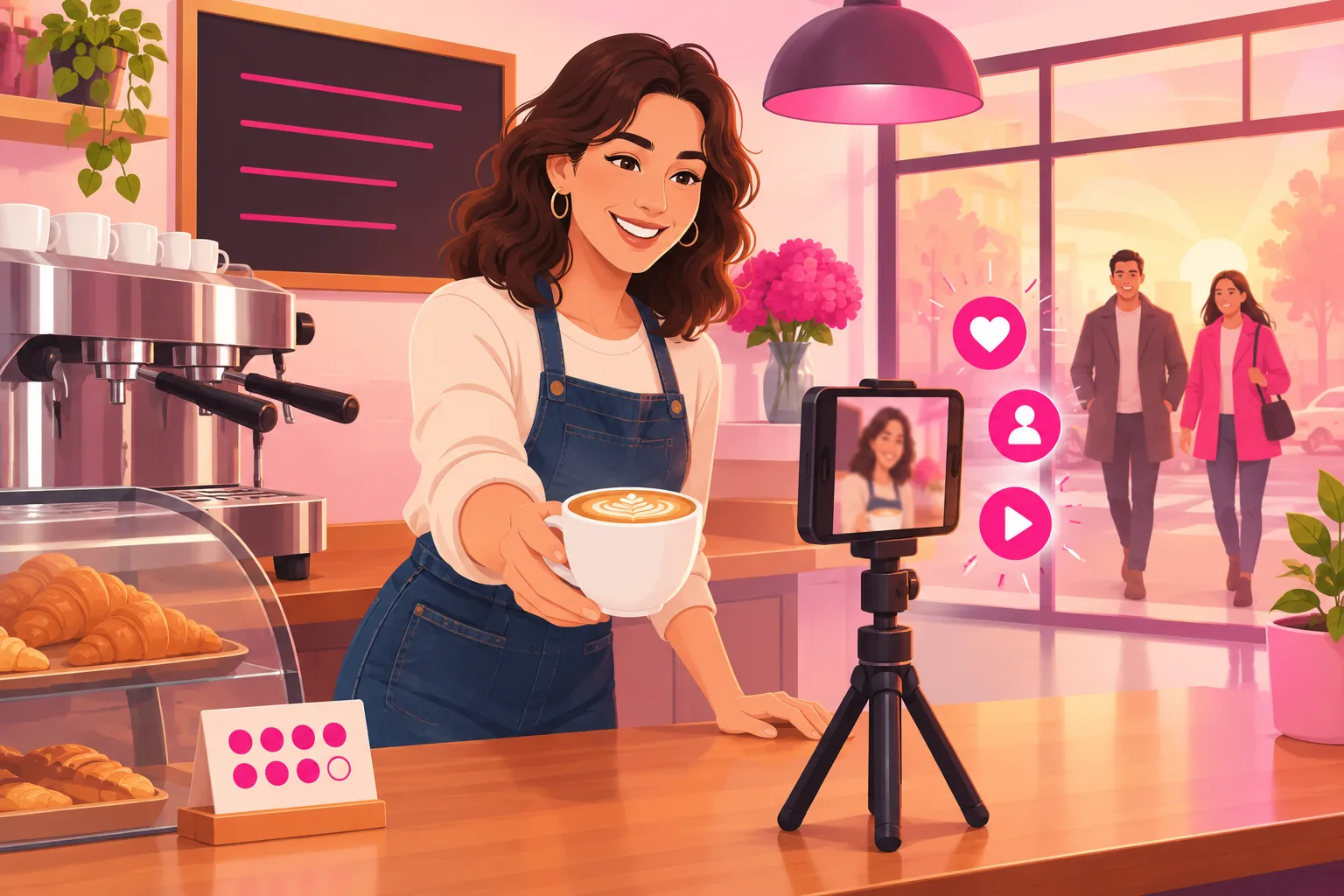
Think about someone who walks past your shop every morning and has never come in. She is not avoiding you. She just does not know a few small things, and nobody likes to find them out in front of a line.
What does a latte cost here? Do I order at the counter or sit down? Is it the kind of place where I can open a laptop, or will I be in the way? How long is the wait at 7:40, when I have a train to catch? So she keeps walking to the place she already knows, or makes coffee at home.
A one-minute video can answer every one of those questions. This guide shows how an independent coffee shop or cafe can use TikTok to turn people nearby into regulars. It is written for the owner, the manager, or the barista who was handed the shop phone.
You do not need to know anything about marketing to follow it. If you want the background on how TikTok decides who sees a video, our TikTok algorithm guide explains it, and the TikTok growth guide covers the basics that apply to every kind of account.
The honest summary:
- You sell a habit, not a drink. One new regular is worth far more than a hundred one-time visitors.
- Regulars live or work nearby. A video only helps the morning line if people close to the shop see it.
- Make the first visit video first. Show the door, the menu, how to order, the price and where to sit.
- Film in the quiet hours. Point the camera at the bar and your hands, and keep customers out of the frame.
- Pay only to push a video that already works. The best weeks are early September and early January, when people set new routines.
What's Inside
- 1. Why TikTok Fits a Coffee Shop
- 2. The Six Kinds of Video That Work
- 3. How to Open a Video
- 4. Filming Without Slowing the Line
- 5. The Neighborhood or the Whole Country
- 6. The Coffee Shop Calendar
- 7. How Often to Post, and Who Does It
- 8. A 90-Day Plan
- 9. From a View to a Regular
- 10. When Paid Promotion Is Worth It
- 11. The Rules: Customers, Music, Claims and Giveaways
- Frequently Asked Questions
1. Why TikTok Fits a Coffee Shop
Most people already drink coffee. In the National Coffee Association's spring 2026 survey, about two-thirds of American adults said they had coffee the day before. Your job is not to convince anyone to like coffee.
Your job is to become part of someone's routine, and that is harder than it sounds. The same survey found that most of those coffee drinkers had their coffee at home. Chains are also growing. Industry figures reported by the Associated Press in January 2026 counted more than 34,500 chain coffee stores in the United States, up about 19 percent in six years.
A chain has one advantage over you: people know what to expect before they walk in. They know the menu, the price and how ordering works. An independent shop is a small unknown, and many people pick the place they know over the place that might be better.
Video removes the unknown. It lets someone stand inside your shop for a minute before they ever open the door. That is the real reason TikTok fits a coffee shop.
The math of one regular customer
Here is a simple example. Say a customer comes in three mornings a week and spends about six dollars each time. That is $18 a week, or roughly $900 over a year.
Now compare that with a visitor who comes once because a drink looked good in a video. She spends six dollars and you never see her again. You would need 150 visitors like her to equal one regular.
So the number that matters is not views, and it is not even first visits. It is how many new people come back. Everything in this guide is built around that.
Regulars come from nearby
People rarely go far out of their way for a daily coffee. As a rule of thumb, a regular lives, works or passes within a few minutes of your door. Your own numbers may differ, but the idea holds almost everywhere.
This changes how you should judge a video. A video seen by 2,000 people in your part of town can do more for the shop than one seen by 200,000 people spread across the country. Section 5 comes back to this, because it is the choice most coffee shops get wrong.
2. The Six Kinds of Video That Work
You do not need new ideas every day. Six kinds of video cover almost everything a coffee shop needs to say. The examples use one made-up shop: a corner shop that opens at 6:30, with an owner behind the bar and a barista named Sam.
1. The first visit
This is the most important video you will make. It walks a new customer through the shop in the order she would see it. Film it once, pin it to the top of your profile, and film it again when something changes.
A good first visit video shows, in order:
- The front door from the street, so people recognize it.
- Where the line starts and where you order.
- The menu, with two or three prices said out loud.
- Where to wait and where drinks come out.
- The seats, the outlets and whether laptops are welcome.
- How long the wait usually is at the busiest time.
A script can be this short: "This is the door, on the corner across from the bus stop. You order here. A latte is five-fifty and a drip coffee is three and a quarter. Drinks come out at the end of the bar. There are twelve seats, outlets along the window, and you are welcome to stay and work. At 7:40 the line takes about six minutes."
2. The drink being made
This is the easiest video to film and the one strangers enjoy most. Show one drink from start to finish in 15 to 25 seconds: the grind, the shot, the milk, the pour. The sound of the machine is enough. You do not have to talk.
These videos bring views, but on their own they do not bring customers. Add one line of text with the name of the drink, the price, and where you are. That turns a nice video into something useful for a person nearby.
3. What it costs and why
People wonder why a latte costs what it does, and they almost never ask. Answer before they do. Stand at the bar and explain it simply: the coffee, the milk, the cup, the person making it, and the rent on the corner.
Keep the tone friendly and never defensive. You are not arguing with anyone. You are showing what goes into the cup, and people respect a shop that says its price out loud.
4. The question answered
Every shop hears the same questions each week. Can I bring my dog? Do you have decaf? Is there oat milk? Can I order ahead? Is there parking? What do you have for kids?
Each question is one short video. Say the question, then answer it honestly in two or three sentences. If the answer is no, say so kindly. "We do not have parking, but the street behind us usually has room before nine" is a helpful answer.
5. The new thing this week
A new seasonal drink, a pastry that only comes on Saturdays, a new coffee on the shelf. This is the video people send to a friend with one word: "Saturday?"
That send matters more than it looks. A coffee shop is a place where people meet. When someone shares your video, she is often inviting another person to your shop. Say what the new thing is, what it costs, and how long it will be around.
6. The honest week
Sometimes the grinder breaks on a Saturday. Sometimes the croissants sell out by nine. Sometimes January is slow. A short, calm video about it makes the shop feel like it is run by real people.
Use this one sparingly, and follow two rules. Talk about what happened and what you did about it. Never blame a customer, a staff member or a supplier by name.
| Kind of video | What it is for | How often |
|---|---|---|
| The first visit | Turns a viewer into a visitor | Once, then pinned |
| The drink being made | Brings views and new followers | Weekly |
| What it costs and why | Builds trust in the price | Once a month |
| The question answered | Removes a reason not to come | Weekly |
| The new thing this week | Gets shared with a friend | When there is one |
| The honest week | Shows real people run the shop | A few times a year |
If your shop also serves a full food menu, the restaurant TikTok marketing guide has more ideas for filming plates and a kitchen.
3. How to Open a Video
People decide in the first two seconds whether to keep watching. So the opening line and the opening picture matter more than anything that follows. Here are five openings that suit a coffee shop.
- The price first. "A latte here is five-fifty. Here is what you get."
- The clock. "It is 7:40 and the line is at the door. Watch how long it takes."
- The honest answer. "No, we do not have parking. Here is what people do."
- The person. "This is Sam. Sam has made about forty thousand of these."
- The permission. "Yes, you can sit here for two hours with one coffee."
The last one works especially well. Many people stay away from a small shop because they are not sure of the unwritten rules. Telling them what is allowed is a kind of welcome.
Three openings to avoid
Making fun of customers. Skits about complicated orders or people who cannot pronounce a drink are popular with other baristas. But a nervous first-timer sees them and learns that she might be the next joke.
Putting down other shops. Chains and other local shops serve plenty of happy customers. You gain nothing by criticizing them, and it makes your own shop look unsure of itself. Show what you do well and leave it there.
Complaints. Rent, tips, the price of milk, people who stay all day. These may all be fair points. They still give a stranger no reason to visit.
4. Filming Without Slowing the Line
The biggest worry owners have is time. A morning rush leaves no room for a camera. The answer is simple: never film during the rush.
When to film
Most shops have two calm windows. One is the half hour before the doors open, when the machine is warm and the pastry case is full. The other is the lull after the morning rush, often somewhere between 9:30 and 11.
Twenty minutes in one of those windows, twice a week, is enough. Film three or four short clips each time. That gives you a week of videos without touching the busy hours.
Where to point the camera
Put the phone on a small tripod at the end of the bar. Point it at the machine and at your hands. Do not point it at the line or the tables.
This keeps customers out of your videos, which matters for their privacy and for your peace of mind. It also happens to be the best view in the shop. Section 11 covers the permission rules in more detail.
Two small habits
Keep a question log. Tape a sheet of paper next to the register. Every time a customer asks something you have heard before, add a tally mark. The questions with the most marks are your next videos.
Keep a short capture list. Write down five things to film each week, such as one drink, one question, the pastry delivery, the first pour of the day and anything new. A list saves you from standing at the bar wondering what to film.
One more practical note. Turn the shop music off while you film. Section 11 explains why the songs on your playlist can cause problems in a video.
5. The Neighborhood or the Whole Country
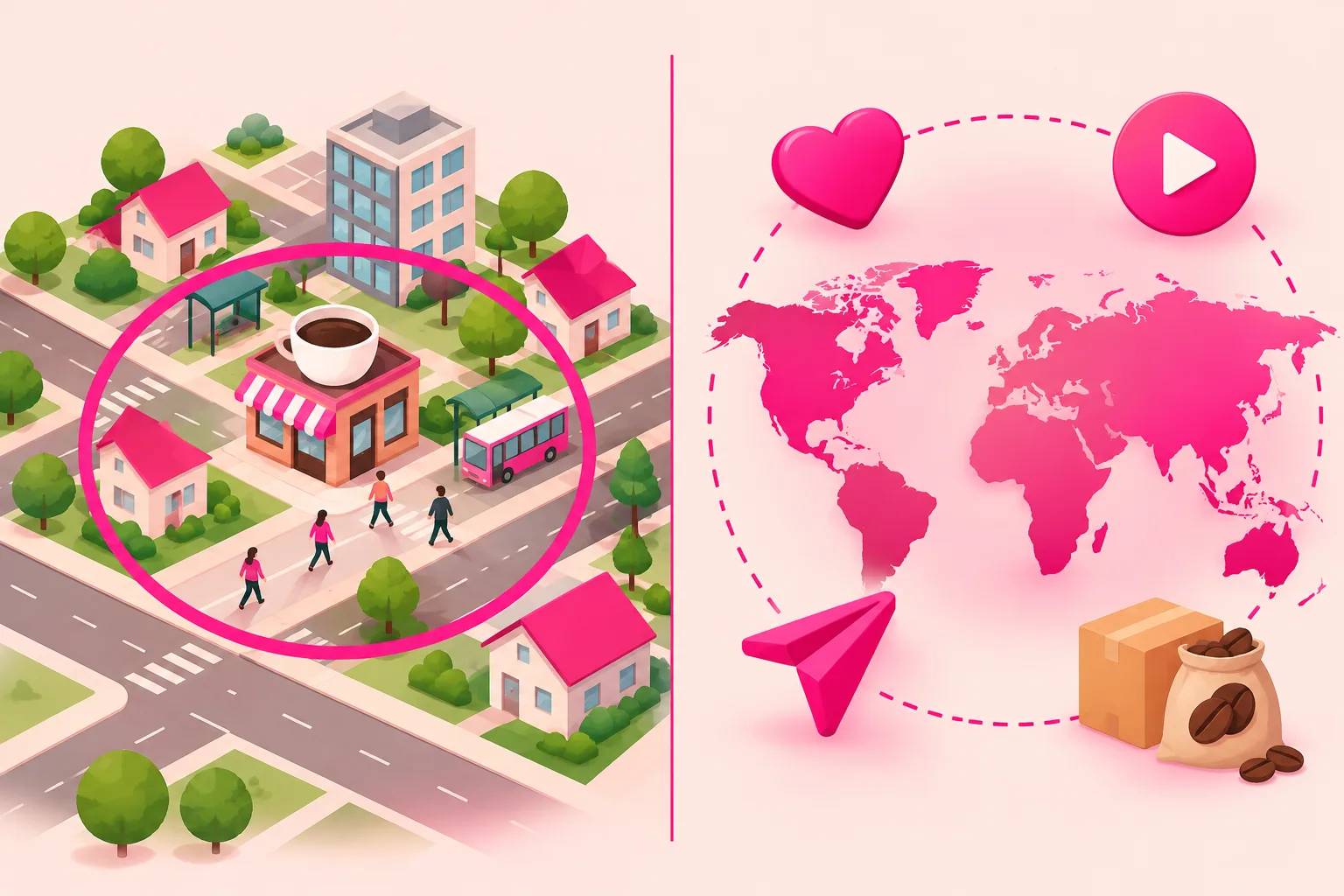
A coffee shop has two possible audiences on TikTok. They want different things, and they are worth very different amounts to you.
The neighborhood audience
These are the people who live, work or commute close to your door. They can become regulars. They care about practical things: hours, prices, seats, the wait and what is new this week.
To reach them, be specific about where you are. Say your cross streets and your neighborhood out loud, and put them in the caption. Unlike many businesses, you want your address everywhere.
The national audience
These are people anywhere who simply enjoy coffee videos. They love the pour and the sound of the machine. They will follow, like and comment, and almost none of them will ever stand at your counter.
They can only buy what you can ship. If you roast your own coffee and sell bags online, or you sell mugs or a subscription, this audience has real value. If you do not, it is mostly applause.
The trap: famous online, same line in the morning
It is easy to chase the bigger number. A pouring video reaches half a million people, the follower count jumps, and it feels like success. Then Monday comes and the shop sells the same number of drinks as last Monday.
A viral drink can even cause trouble. It may bring a long Saturday line of visitors who come once for a photo. Your regulars see the line, go somewhere else, and some of them do not come back.
For most shops the right order is the neighborhood first. Build the national audience second and only if you have something to mail. For a wider look at reaching people close to you, see the local business TikTok marketing guide.
6. The Coffee Shop Calendar
Coffee habits do not form evenly through the year. They form when routines change. For most people that happens twice: in early September, when school and work schedules restart, and in early January.
Those weeks are when someone is most likely to try a new morning stop and keep it. Plan your best videos for the weeks just before them.
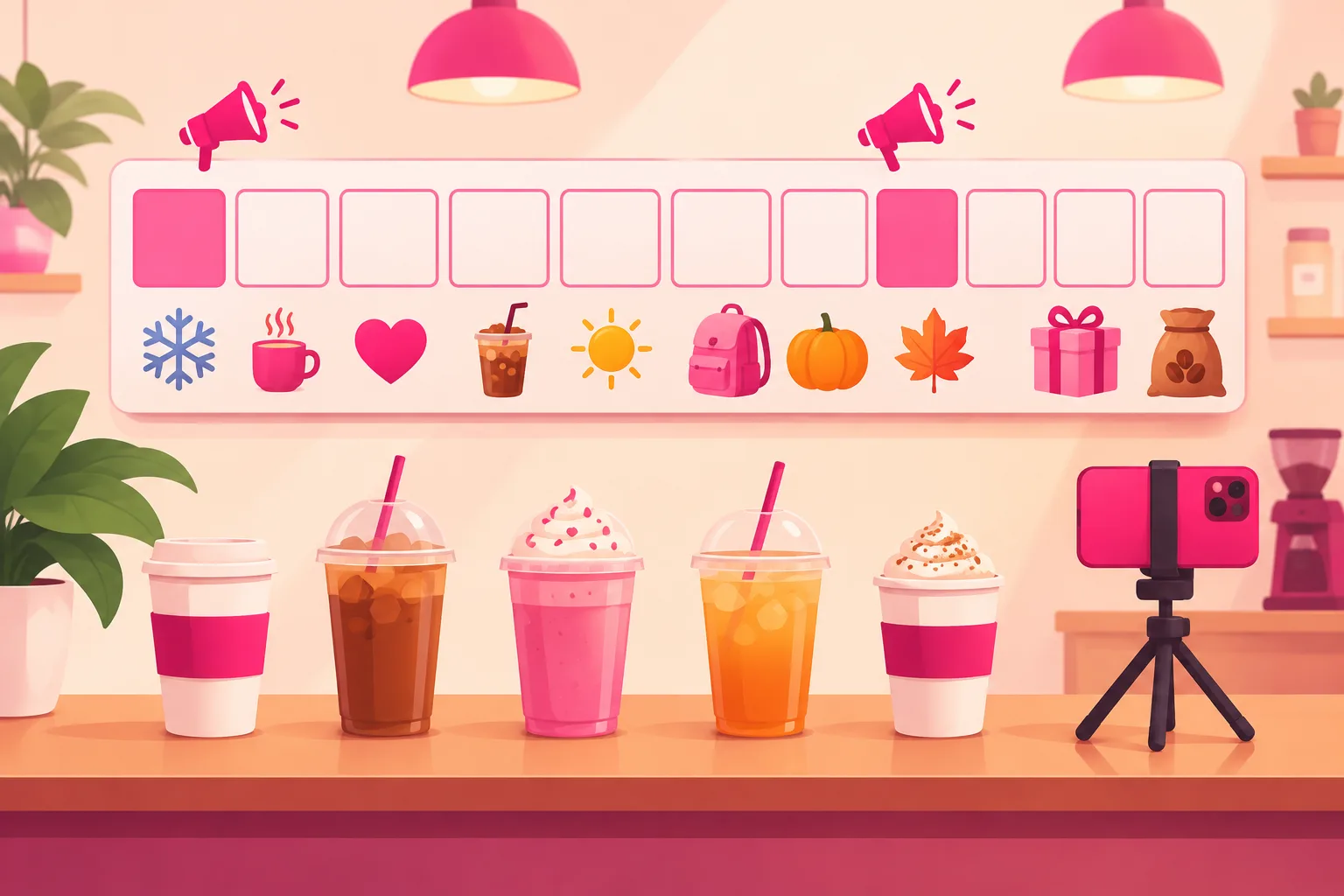
- January. New routines. Re-post the first visit video and talk about your loyalty card. This is a good month to promote.
- February to April. A quieter stretch. Answer questions, show the people behind the bar, and introduce cold drinks as the weather turns.
- May to August. Iced drink season. Mornings may be slower if you are near a school or a campus, so show the afternoon side of the shop.
- Late August and September. The biggest routine change of the year. Film the fall menu early and pin the first visit video again. This is the other good time to promote.
- October and November. Seasonal drinks carry themselves. Post the new thing each week and say how long it will last.
- December. Gift cards and bags of coffee. A short video on "a gift for the coffee drinker you know" does well in the first two weeks of the month.
Your town may have its own dates that matter more, such as a farmers market season, a college term or a summer tourist rush. Put those on the calendar too.
7. How Often to Post, and Who Does It
Three videos a week is plenty for a coffee shop. A steady three is better than seven one week and none the next. Pick the days and keep them, such as Monday, Wednesday and Friday.
Post early. People who are thinking about coffee are on their phones before work. A video that goes up the evening before, or first thing in the morning, has the best chance of being seen at the right moment.
One person owns the phone
Decide who is responsible. It can be the owner or a barista who enjoys it. If it is a staff member, it is work, so it should happen on paid time.
The account itself should belong to the shop. Use a shop email address and keep the password where the owner can find it. Baristas move on, and the account should not leave with them.
Answer the comments
Set aside ten minutes a day to reply. When someone asks "where is this?" or "how much?", give the actual answer, with the cross streets or the price. A comment left without a reply is a customer who asked a question at the counter and was ignored.
8. A 90-Day Plan
Here is a plan for the first three months. It assumes you are starting from an empty account. The follower numbers will vary a lot from shop to shop, so the plan focuses on what you do, not on a target.
Days 1 to 30: set up
- Write a profile that says what you are, where you are and when you are open. For example: "Coffee and pastries on the corner of [your streets]. Open 6:30 to 4. Laptops welcome."
- Link to one page with your menu and prices, your hours, a map, and ordering ahead if you offer it.
- Film the first visit video and pin it.
- Post one video of each of the other five kinds.
- Start the question log by the register.
Days 31 to 60: find a rhythm
- Post three times a week on the same days.
- Turn the top questions from the log into videos.
- Reply to every comment that asks a question.
- Start asking first-time customers how they found you, and keep a tally of the ones who mention a video.
Days 61 to 90: look at results
- Look at which videos led people to your profile and your menu page.
- Make more of the two kinds that did best.
- Count the tally sheet. Even five or ten "I saw your video" is a real start.
- Decide whether one video has earned a small promotion budget (see section 10).
The real sign of progress is not a follower count. It is a new face you see on Tuesday and then again on Thursday.
9. From a View to a Regular
A stranger does not become a regular in one step. It helps to see the steps in order, so you can tell where people drop off.
- She sees a video. Usually a drink being made or the new thing this week.
- She follows, or sends it to a friend. A send is often an invitation to meet at your shop.
- She looks at your profile. The pinned first visit video and your hours do the work here.
- She opens your menu page. She checks the price and where you are.
- She comes in once. The visit should match the video.
- She comes back within a week or two. This is the step that matters most.
- It becomes a habit. She has a usual order and a usual time.
- She brings someone. A coworker, a friend, a study group.
Make the second visit easy
The gap between the first visit and the second is where most new customers are lost. A simple loyalty card helps close it. Give a first-timer a card with the first punch already made, and tell her the tenth drink is free.
Learning a name helps even more. "See you Thursday" costs nothing, and it is something a chain cannot easily copy.
Three replies to keep ready
- "How much is it?" Give the price. "A 12-ounce latte is $5.50. The full menu is at the link in our profile."
- "Where is this?" Give the cross streets, the neighborhood and today's hours.
- "Do you have oat milk, decaf, or anything without gluten?" Give an honest yes or no, and say what you do have.
Four numbers to keep
Once a month, write down:
- Taps on the link to your menu page.
- First-time customers who said they saw a video.
- Loyalty cards that reached a second punch.
- Drinks sold on an ordinary weekday morning.
These four tell you more than views do. If the first two rise and the last two do not, your videos are working and the visit itself needs attention.
10. When Paid Promotion Is Worth It
Paying to promote a video means paying TikTok to show it to more people. It can help. It can also waste money, so a few rules are worth following.
Rule 1: Promote a video that already works
Money makes a good video travel further. It does not fix a weak one. Choose a video that people already watched to the end, shared, and followed you from. The first visit video is often the best choice.
Rule 2: Aim for followers nearby
A person who follows you sees your next videos for free. She can watch the shop for a few weeks and come in when she is ready. That is a better result than a single rushed visit.
Where the promotion runs matters a great deal. Before you pay for any tool or service, ours included, look at the location choices it offers and ask how closely they match your area. A follower three states away will never buy a latte from you.
Rule 3: Spend when routines change
The best weeks are late August into September, and the first weeks of January. A small budget in those weeks does more than a large one in a month when everyone's habits are settled.
Rule 4: Do not advertise a line you cannot serve
If your morning line already reaches the door, more people at 7:40 will only make the wait longer for your regulars. Promote the quiet hours instead. "It is two in the afternoon and every window seat is open" is a good video to put money behind.
A simple way to judge it
Go back to the math from section 1. In our example, one regular is worth about $900 a year. If a small promotion brings even a few new regulars, it has paid for itself several times over.
If it brings followers from far away and no new faces, stop and check where the promotion ran. Your tally sheet by the register is the honest test.
Doing it yourself, or using a service
You can promote a video from inside the TikTok app, or set up a campaign in TikTok Ads Manager, which gives more control and takes more time to learn. Our comparison of TikTok Ads and Promote explains the difference, and the Spark Ads guide shows how to promote a post that is already on your account.
If you would rather spend that time behind the bar, a service can run it for you. That is what Viryze does. You pick a video that has already worked. Viryze shows it to several different audiences, sees which one follows for the least money, and moves the budget there. The promotion runs on your real post, so the followers land on your real account.
The same caution applies to us as to anyone. Check the location choices before you start. If a service cannot keep a campaign close to your shop, use it for videos meant for a wider audience, such as selling coffee by mail, and promote the neighborhood videos another way.
11. The Rules: Customers, Music, Claims and Giveaways
A few rules protect your customers, your staff and your shop. This section is general guidance and not legal advice. Laws differ from place to place, so check the ones that apply to you.
Customers and staff
- Keep customers out of the frame unless they have clearly said yes. People come to a coffee shop to work, to meet a friend, or to be left alone.
- Never film children, laptop screens, or the name written on a cup.
- Ask staff to agree in writing before they appear, and let them say no without any consequence.
- If you want to pay to promote a video with a person in it, ask that person again. Being in a post and being in an ad are different things.
- If a customer posts her own video of your shop, thank her, and ask before you re-post it.
Music
The license that lets you play music in your shop does not cover using those songs in a video. A song playing in the background can get a video muted or removed. Turn the speakers off when you film.
If you want music, business accounts on TikTok have a Commercial Music Library of tracks cleared for business use. The sounds of the shop itself are often better anyway.
What you say about the menu
- Allergens. Be careful with phrases like "gluten-free" or "dairy-free" if items are made on shared equipment. "Made without gluten ingredients, in a kitchen that also uses flour" is more accurate.
- Health. Do not say a drink treats, cures or prevents anything. Describe what is in it and how it tastes.
- Labels. Words like "organic" and "fair trade" have specific meanings. Use them only when your supplier can back them up.
- Prices. If you say a price in a pinned video, update the video when the price changes.
Giveaways, reviews and free products
Giveaways. A "follow and comment to win free coffee for a month" post is a contest, and contests have rules. Many places do not allow you to require a purchase to enter. Write down who can enter, when it ends and how the winner is chosen, and check your local rules first.
Reviews. Do not offer a free drink in exchange for a five-star review. In the United States, a Federal Trade Commission rule that took effect in October 2024 prohibits paying for reviews that must be positive. You can ask happy customers for an honest review. You cannot buy a good one.
Free products. If a supplier gives you free equipment, syrup or coffee and you feature it in a video, say so in the video.
Two notes on paid videos
Ads have stricter rules than ordinary posts. A promoted video about a job opening is treated as an employment ad, and TikTok limits how those can be aimed at people. A promoted video that features alcohol, such as a coffee cocktail, also faces extra limits and may not be allowed where you are. Read TikTok's current ad policies before you promote either kind.
Seven common mistakes
- Never making the first visit video.
- Leaving out the price and the location.
- Judging success by views and not by new regulars.
- Filming during the rush, with customers in the frame.
- Making jokes about customers or other shops.
- Leaving comments unanswered.
- Paying to promote a video that reaches people who live far away.
Other local businesses face the same choices in different forms. The TikTok guide for salons and barbershops covers a business built on repeat appointments, and the TikTok guide for small business covers the basics for any owner.
Frequently Asked Questions
Is TikTok worth it for a small coffee shop in 2026?
For most independent shops, yes, as long as you measure the right thing. You do not need a viral video. You need people who live or work a few minutes away to know what your shop is like, what a drink costs, and whether they can sit down. A short video can show all of that before they walk in. The goal is more regulars, and a few hundred nearby followers can be enough to see a difference at the register.
What should a coffee shop post on TikTok?
Six kinds of video cover almost everything: the first visit (the door, the menu, how to order, the price and where to sit), the drink being made, what a drink costs and why, a customer question answered, the new thing this week, and the honest week when something went wrong. Start with the first visit video and pin it. Skip videos that make fun of customers or of other coffee shops. They attract other baristas, not new customers.
Can a coffee shop really get customers from TikTok?
Yes, but mostly from nearby viewers. A coffee shop has two audiences on TikTok. People close by can become regulars. People far away can only like the video, unless you ship beans or sell other things by mail. A video with a million views from across the country can leave the morning line exactly the same. Ask first-time customers how they found you, and count the ones who mention a video.
Can I film customers in my coffee shop for TikTok?
Only with their clear permission, and it is simpler to keep them out of the frame. Point the camera at the bar, the machine and your own hands, and film before opening or in the quiet hours. Do not show faces at tables, children, laptop screens or the name written on a cup. Staff should agree in writing to be filmed, and they should be able to say no. This is general guidance and not legal advice, so check the rules where you operate.
Should a coffee shop pay to promote TikTok videos?
Sometimes. Promote only a video that has already done well on its own, and aim for nearby followers and not a one-time rush. The best times are the weeks when people set new routines, in early September and early January. Before you pay for any tool or service, check how closely it can keep the promotion to your area. If your morning line is already out the door, promote your quiet hours or wait.
Have a video that is already bringing people in?
Start with the first visit video and the question log. They cost nothing. Later, if one of your videos has brought new faces to the counter and you want more people to see it, Viryze can put it in front of several audiences, find the one that follows for the least money, and shift the budget there. You stay behind the bar.
Related Reading
- Restaurant TikTok Marketing: Fill Your Tables With Viral Content - for cafes with a full kitchen and a food menu.
- Local Business TikTok Marketing: Get Customers in Your Area - how to reach people close to your door.
- TikTok for Salons and Barbershops: The Complete 2026 Guide - another business that lives on repeat customers.
- TikTok for Food Creators: Complete 2025 Guide - filming food and drink so it looks as good as it tastes.
- TikTok for Small Business: Complete 2025 Guide - the basics for any owner starting an account.
- Spark Ads on TikTok: Creator's Complete Guide - how to promote a post that is already on your account.
- Understanding TikTok's Algorithm: What Really Matters - how TikTok decides who sees a video.