Most advice about TikTok ads is written for businesses spending their own money on a sale. A nonprofit is spending someone else's gift on a relationship. That changes what an ad is for, who it should reach, and how you know whether it worked.
It also puts you under rules that a retailer never meets. TikTok does not allow political or issue-based ads at all, it approves nonprofit advertisers through its own process, and the person in your most-watched video may have agreed to appear on your feed but never agreed to appear in an ad. Meanwhile your board will, correctly, ask why a donor's twenty dollars went to a social media company.
Here is the good news. Those constraints make nonprofit advertising on TikTok unusually disciplined, and discipline is what makes it work. You already know which videos earn trust, because the receipt and the shift have been doing it organically. You know exactly who should see each one, because money travels and hands do not. And the biggest wave of the year is printed on the calendar months in advance.
This is the paid-promotion companion to our complete TikTok guide for nonprofits, and the last piece of the series. The pillar covers the rules of promotion in a section. This guide covers the rest: what each TikTok ad tool can target and how nonprofit approval works, how to run the hands path and the dollars path as two campaigns, which videos deserve budget, how much to spend and when to stop, the October window, the compliance list that tightens the moment money is involved, the numbers the board should see, and when to hand the work off.
The short version:
- Promote for followers, never for one-time gifts. A follower can be thanked, shown the receipt, and asked again for free. A gift from an ad is the viral spike with an invoice attached.
- Two maps, two campaigns. Your metro gets the shift video. The wider country gets the receipt. Never blend them.
- Promote the receipt, never the plea. Where the money went gets budget. The suffering close-up and the ballot-measure video never do.
- Build in October, run before Thanksgiving. Late October to mid-November is the best ad window of the nonprofit year. January is the second.
- Report cost per retained supporter. Next to the gala and the mailing, in the same spreadsheet, every quarter.
What's Inside
- 1. The Math: A Retained Donor vs. a One-Time Gift
- 2. Promote, Spark Ads, and Ads Manager: What Each Can Target, and How Nonprofit Approval Works
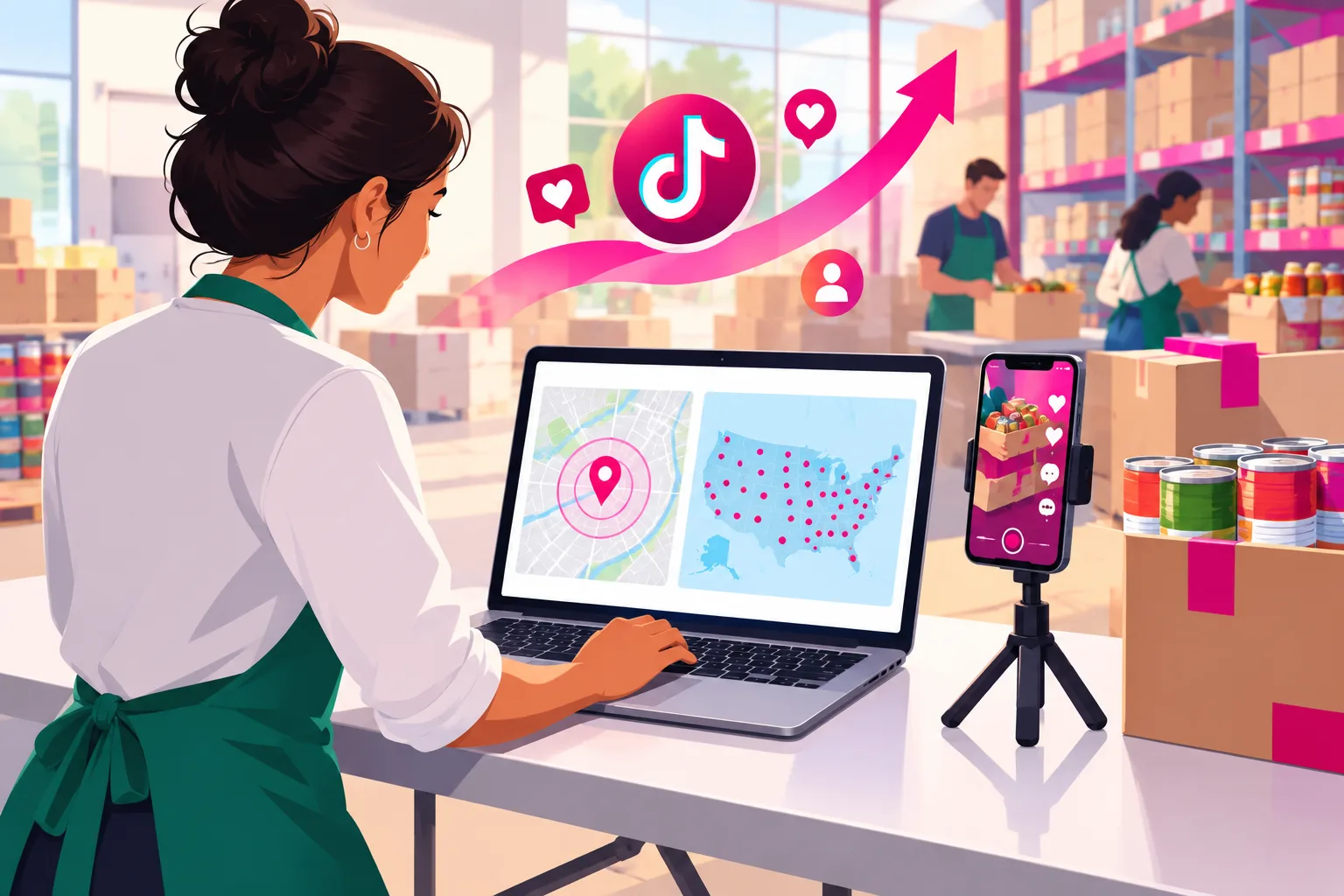
- 3. Two Maps, Two Campaigns: Your Metro for Hands, the Country for Dollars
- 4. The Receipt-Not-Plea Rule: Four Videos Worth Budget, Four That Never Are
- 5. The Donor-Dollar Budget: How Much to Spend, and the Capacity Rule
- 6. Timing: Late October to Mid-November Is the Best Ad Window of the Year
- 7. Compliance in Paid Placements: TikTok, the IRS, Your State, and Consent
- 8. The Numbers the Board Should See, and the Ones to Ignore
- 9. Ads Manager Yourself vs. a Done-For-You Promotion Service
- Frequently Asked Questions
1. The Math: A Retained Donor vs. a One-Time Gift
Every decision in this guide comes back to two numbers. What a supporter who stays is worth to your organization, and what a supporter who gives once and disappears actually cost you.
What a retained supporter is worth. A monthly donor at twenty dollars is $240 a year, and one who stays three years is about $720, before a single upgrade, a birthday fundraiser, or a bequest. A volunteer who takes one four-hour shift a month contributes work that Independent Sector valued at $36.14 an hour for 2025, which is more than $1,700 a year, plus the friend they bring in March. Our fundraising guide runs the full version of this math, and it is the reason a promoted video that produces one monthly donor who stays has paid for a great deal of promotion.
What a one-time gift costs. The other side of the ledger is the donor who gave five dollars from a video, was never thanked, and never heard from you again. The sector loses most of these people: the Fundraising Effectiveness Project's report for the fourth quarter of 2025 put new-donor retention at 18.9 percent, against 59.3 percent for donors who had already given twice. A one-time gift is not free money. It is a relationship you paid to start and then dropped, and if an ad produced it, you paid twice.

Why this makes advertising a follower purchase, not a gift purchase. The pillar guide's promotion section puts it in one line: you are not buying a gift, you are buying the chance to show someone the work for a year. A stranger asked to give nine seconds after meeting you mostly will not. A stranger who follows sees the receipt in October, the story in November, and the ask on GivingTuesday, and can be thanked within 48 hours of giving, which is the rung of the ladder where the sector loses four people in five. So the objective of every campaign in this guide is followers and email sign-ups. The gifts come later, and they come twice.
This also changes what a good result looks like. A campaign that produces three thousand five-dollar gifts and no followers is not better than one that produces four hundred followers and sixty email sign-ups, if forty of those sixty give in December and twenty of them give again in March. The scoreboard for ads is the same one the supporter acquisition guide uses: second gifts and second shifts, never views.
2. Promote, Spark Ads, and Ads Manager: What Each Can Target, and How Nonprofit Approval Works
TikTok gives you three ways to put money behind a video. For a nonprofit, the difference between them comes down to two questions: how precisely can each one choose a map, and does it let you run as the organization you are?
The Promote button (inside the app)
Promote is the button under any of your videos. It is quick, it needs no separate account, and it is fine for a cheap test of whether a video holds up in front of strangers. Its weakness is the map. The controls are coarse, and you cannot reliably keep spend inside the twenty-minute drive your volunteers come from, or point a receipt at the wider audience that shares your cause. Test with it if you like. Do not run the organization's advertising on it.
Spark Ads (the format)
A Spark Ad promotes a video that already lives on your account instead of a separate ad creative. It keeps your handle, its comments, and the follow button, so every bit of engagement lands on your real profile, which for a campaign whose whole goal is followers is the point. For a nonprofit it is the only sensible format. The viewer should meet a real person showing real work, follow, watch a few more videos, and then give or sign up. A video that looks like a commercial breaks that chain at step one. Our Spark Ads guide walks through the authorization code and setup.
Ads Manager (the control panel)
Ads Manager is where Spark Ads get real targeting. In the United States you can pick locations by state, designated market area, county, city, and zip code, set an age floor, and run the same video against several audiences to see which one responds. It is also where the learning curve lives: objectives, ad groups, bids, and a dashboard designed for media buyers rather than development directors. Section 9 covers the alternative. The practical point for now is that map targeting, the feature you need most, lives here.
Nonprofit approval: the step businesses skip
This is the part of the setup that is specific to you. TikTok does not allow paid political advertising, and it handles non-governmental and nonprofit organizations through its own approval process rather than letting them run like a shoe store. Its help documentation says eligibility varies by market and that approval generally means working with a TikTok sales representative, and the requirements by country are listed separately. Expect to document your status, expect a slower review than a retailer gets, and build that time into the calendar in section 6. An organization that discovers the approval step on October 25 has missed the window.
Two related points. First, TikTok's in-app donation tools (the donation sticker and profile fundraiser, run through a fundraising partner and open only to approved organizations) are not advertising and do not come with ad budget; the fundraising guide covers who qualifies. Second, TikTok has run ad-credit programs for social-good campaigns in some markets under its TikTok for Good banner, but they are juried, market-specific, and built for agency campaigns. Apply if one is open where you are. Plan as though you will pay for every impression.
On objectives: the goal is not website conversions, and it is certainly not donations on the day. It is followers, profile visits, and the email sign-ups that follow, because the gift comes from the bio link after a viewer has watched a few videos, and because (as section 7 explains) you do not want conversion tracking anywhere near the page where someone asks for help. Choose an objective built around reach, community interaction, or profile visits, and judge the campaign by who follows and what the donor database and the volunteer roster tell you afterward.
3. Two Maps, Two Campaigns: Your Metro for Hands, the Country for Dollars
The pillar guide's central idea is that a nonprofit has two maps. Money travels: a gift can come from anywhere. Hands do not: a volunteer shift, a donated couch, an adoption, and a person who needs the pantry can only come from the drive radius. Organic reach blurs those two maps together. Paid reach is where you finally get to separate them.

The hands campaign: the inner circle. Target the zip codes, the city, or the metro area your current volunteers actually come from. Pull the list from your volunteer roster (counts by zip code, never names) and draw the circle around where the sign-ups already are. A viewer ninety minutes away who loves your videos is a fan, not a volunteer. Every dollar that reaches them with a Saturday ask is a dollar that did not reach the person ten minutes away who could be there. This campaign promotes the come-with-me shift, the first-shift walk-through, and the in-kind need, and it is judged by sign-ups with a local zip code who showed up.
The dollars campaign: the wider ring. If you have chosen the dollars path on purpose, run it as its own campaign with its own budget and a deliberately wider map: your state, your region, or the country, depending on where you are registered to ask (section 7). This campaign promotes the receipt and the kind cause correction, sends viewers to the donation page with the monthly option visible that the fundraising guide describes, and is judged by followers, email sign-ups, and eventually second gifts, not by filled shifts.
Why never blend them. Put one budget behind one wide audience and TikTok will spend it wherever views are cheapest, which is almost never your metro. You end up with the awareness trap in paid form: a large bill, a pile of "how can I help from Oregon?" comments on a video about Saturday's pantry shift, and a volunteer roster that looks the same as last month. Two campaigns keep two scoreboards honest. And if you are still deciding which path comes first, the answer the pillar gives holds for ads too: decide on purpose, say it in the bio, and let each video make one ask.
The twist your sector gets. For a dentist, a follower four states away is waste. For you, that follower is the dollars path working. The receipt that travels can fund the work it cannot staff, so on the wider campaign, national followers are not a leak. Just make sure the ask they see ends with "the link has a monthly option," never with "come by Saturday."
More than one site. A food bank with four pantries, a shelter with two campuses, or a chapter-based organization runs one ad group per site radius, not one campaign for the brand. Each location gets its own circle, its own budget, and its own dial, because the pantry with a volunteer waitlist and the pantry that cannot cover Tuesday need opposite things from the same week.
Age, and the third audience. Set the age floor at eighteen. Youth programs still target adults, because the person who signs the permission slip, writes the check, or volunteers is a parent. And remember who else is inside your inner circle: the people who need you. A promoted get-help walk-through for the metro is a legitimate program-access campaign, but it needs the care section 7 describes, because the person it reaches should never be tracked.
Interests, and when they help. On the hands campaign, skip interest targeting. It shrinks an already metro-sized audience to a sliver, and the shift video finds the neighbor who wants to help inside any zip code without your help. On the dollars campaign, a broad cause interest (animals, hunger, education) can reasonably narrow a national audience, but let it stay broad. Narrow targeting built around someone's personal circumstances, such as people who may be struggling with the problem you solve, edges toward TikTok's personal attributes rule and is beneath your mission anyway. Let geography do the narrowing and let the video do the sorting.
4. The Receipt-Not-Plea Rule: Four Videos Worth Budget, Four That Never Are
Promotion multiplies what already exists. A video people scroll past organically will be scrolled past by a bigger, more expensive audience. So the first filter is proof: the video has already earned strong completion, saves, and real questions in the comments, and ideally you can trace at least one sign-up or first gift back to it. The second filter is specific to your sector: it has to hook on the fix, never the pity, because ad policy and donor psychology both punish the plea. Four kinds pass both filters reliably.
- The receipt. "Here is exactly what last month's donations did, line by line." This is the video that answers the question under every gift not given (how much goes to overhead?), and it is the single best use of a nonprofit promotion budget. It converts cold viewers because it proves the money does what you say before you have asked for any. The content ideas guide has a dozen versions of it.
- The come-with-me shift, or the first-shift walk-through. What a Saturday morning at the pantry actually looks like, who greets you, what you will do, and when you leave. It does not go viral. It converts inside your metro, because the person watching already wanted to help and was only afraid of not knowing what to do. See the shift ideas.
- The kind cause correction. Why the people who use the pantry mostly have jobs, what a shelter dog's intake photo does not tell you, what the money for the van actually buys. It is your expertise in action, and it is the video most likely to be sent to the exact relative who needs it. Keep it kind: correct the myth, never mock the person who believed it.
- The January thank-and-report. "Here is what December did." Promoted to your followers and the wider cause audience in the first weeks of the year, when nobody else is asking, it is the video that converts one-time December donors into monthly ones. It is the receipt with a thank-you in front of it.
Four kinds of video should never get budget, however well they seem to perform.
- The suffering close-up and the emergency plea. The sad face over sad music, the intake photo, "we need $10,000 by Friday." It is the strongest hook in the sector and the worst ad. It raises one-time money once, strips dignity from the person in it, trains the audience to scroll past your cause, and runs straight into TikTok's limits on shocking and distressing imagery in paid placements. The pillar's hook rule applies twice over here: hook on the fix, never the pity.
- The advocacy video. Support the bill, oppose the measure, show up at the hearing. Your 501(c)(3) status may allow a limited amount of this organically, but TikTok does not allow paid political or issue-based advertising at all. A promoted advocacy video is a rejected ad at best and a suspended ad account at worst. Promote the receipt and the walk-through, not the campaign.
- The event flyer and the gala graphic. A logo, a date, and a sponsor wall is the genre's least-watched format organically, and promotion does not change that. If the event matters, promote the one-minute video of what last year's event funded, and let the flyer live in the caption.
- The story starring someone you serve. The consented story with two million views is a national audience by nature, so promoting it to your metro buys attention, not supporters. It also puts a person who depends on you in an ad, which section 7 explains is a different consent from the one they signed.
If you do not yet have a proven receipt or shift video, you do not yet have anything to promote. A month of posting from the ideas guide and the filming guide comes before the first dollar.
5. The Donor-Dollar Budget: How Much to Spend, and the Capacity Rule
"How much should we spend?" has a better answer than a flat number. Spend against what the organization can absorb, start small enough to learn cheaply, and stop when the number you are buying stops moving.
The test phase. Roughly $200 to $400 over two to four weeks, behind one proven video, shown only to the map it was made for. You are not trying to fund the year from a test. You are buying an answer to one question: do cold viewers become followers, email sign-ups, and, within a few weeks, first gifts or volunteer sign-ups with a zip code you serve? If yes, you have a campaign. If the video earns views and nothing else, the problem is usually the bio, the missing city, or a donation page with no monthly option and no email field. Fix those first; the supporter acquisition guide covers each one.
The working range. Once a video proves it converts on its map, about $300 to $1,000 a month in the late-October-to-mid-November window, and a smaller run in January, is realistic for a small organization. The hands campaign runs on its own, smaller budget, in the weeks before the shifts it needs to fill, and is measured against filled shifts rather than gifts.
An illustration of the break-even (your numbers will differ)
- •Budget: $600 in late October behind a proven receipt, promoted to the wider cause audience for followers and email sign-ups.
- •Supporter value: a monthly donor at $20 is $240 a year and about $720 over three years. A volunteer on one shift a month is more than $1,700 a year of work at the 2025 volunteer-hour value.
- •Break-even: one monthly donor who stays, or three first-time donors who give a second time, or a handful of filled shifts. Every supporter after that is margin the program keeps.
- •The real risk: not overspending. It is spending on an unproven video, on the wrong map, or on a plea that buys gifts nobody thanks and nobody repeats.
The capacity rule. This is the nonprofit version of a stop rule, and it has two halves. On the hands campaign, watch one number every Monday: are the shifts you are promoting full? When Saturday is covered three weeks out and new volunteers are being waitlisted, turn the campaign off. A volunteer who signs up and is told there is nothing to do for a month is the volunteer most likely never to come back, so ads that overfill the roster are buying no-shows. On the dollars campaign, watch cost per follower and cost per email sign-up week over week; when either climbs sharply from the test, the audience is saturated or the auction has filled with retailers, and the money does more good in January.
The restart rule. Turn the dial back up before the need, not after the shortage. Kitten season, the summer slump when student volunteers leave, the back-to-school drive, and a new program site are all visible in advance. Restart the hands campaign two to four weeks ahead, so sign-ups arrive as the openings do. Opening a second pantry day is, in advertising terms, the moment to spend more.
The board conversation. Every dollar here was given by someone, so present it the way you present the gala: a cost, a result, and a comparison. "We spent $600, gained 410 followers and 58 email sign-ups, and 31 of them gave in December; cost per new donor was $19, against $42 for the mailing." A board that hears that sentence approves the next one. A board that hears "the video got 200,000 views" is right to ask what that bought.
6. Timing: Late October to Mid-November Is the Best Ad Window of the Year
Your sector has something almost no other has: a giving season the whole country observes. A large share of annual giving lands between GivingTuesday, which is December 1 in 2026, and December 31, with a spike in the last three days. That makes the fourth quarter the biggest predictable wave of the nonprofit year, and it makes timing the most powerful lever in this guide.

Build in October, run from late October to mid-November. A receipt promoted in the last week of October reaches people while they are still deciding where this year's gift goes, and gives them five weeks to follow, watch the story, and see the GivingTuesday ask from someone they already trust. There is a second reason to go early. From late November, retailers flood TikTok with holiday campaigns, and ad auctions get more crowded and more expensive. The same budget buys less reach in December than in October, and reaches people who have mostly given somewhere or tuned out two hundred asks. Amplify before the wave, not during it.
GivingTuesday itself and the last week of December, organic only. Those are the days to ask, not to buy. Your followers, your list, and the people who saw the receipt in October are the audience, and they are free. Spending on December 30 is paying the most expensive rate of the year to reach people at the moment they are least persuadable.
January, for the second gift. New Year's resolutions start, the inbox quiets, and nobody else is asking. The thank-and-report promoted in the first three weeks of January reaches December's donors with proof, and it is the cheapest month of the year to buy attention. The monthly-giving section of the fundraising guide explains why this is where retention is decided.
The hands calendar runs separately. Volunteer and in-kind campaigns follow the program, not the giving season. Animal shelters recruit fosters in February and March, before kitten season, as our shelter guide describes. National Volunteer Week in April, the summer slump when student volunteers leave, back-to-school drives in August, and holiday meal shifts in November each get a short metro-only run two to four weeks ahead.
The unplannable moment, never promoted. When a disaster or a news event puts your cause in the feed, your organic same-day plan does the work. Do not put budget behind the emergency plea. It fails every rule in section 4, the auction is flooded with every organization in the category that week, and the donors it finds are the least likely to stay. Promote the receipt a month later instead, when you can show what the surge actually did.
Between waves, the dial decides. If the Tuesday shift is uncovered in May, run the hands campaign in May. The waves are when a campaign works hardest, not the only time it works. The pillar's giving calendar maps the full year.
7. Compliance in Paid Placements: TikTok, the IRS, Your State, and Consent
Everything in the pillar's compliance list still applies. Paid placements add a layer on top, because a promoted video is advertising in the eyes of three rule-makers at once, and a solicitation in the eyes of a fourth. Then there is a fifth issue most organizations have never thought about, and it is the one most likely to harm someone you serve.
TikTok's ad rules
- No political or issue ads. TikTok bans paid political advertising, including ads that advocate for or against a candidate, a party, a ballot measure, or a position on an issue of public importance. This is broader than the IRS rule: speech your tax status permits organically may still be unpromotable. The receipt and the walk-through clear; the hearing-day video does not.
- Nonprofit approval. Non-governmental and nonprofit advertisers go through TikTok's approval process, which varies by market and may require working with a sales representative. Start it in September, not October.
- Shocking and distressing imagery. Ad policy restricts graphic, gruesome, and shocking content far more tightly than your organic feed is policed. The intake photo and the crisis footage that earned views organically are rejected ads, and they are the wrong videos anyway.
- Personal attributes. A promoted video, its caption, and its targeting cannot assert or imply something about the viewer's own circumstances. "Can't feed your kids this month?" is a violation. "What happens the first time you come to the pantry" is not.
- Music. An organization account uses TikTok's Commercial Music Library, and a promoted video has to be cleared for commercial use. A trending pop sound on your receipt is a rejected ad.
The IRS and your state
- The campaign-intervention ban. A 501(c)(3) cannot support or oppose candidates for public office, and spending the organization's money to promote a video that does is the clearest possible version of the violation. With an election weeks away as this is published, the ad account should have a one-line rule: nothing about a candidate, ever, paid or organic.
- Solicitation registration follows the map. Roughly forty states require charities to register before soliciting their residents, and a promoted receipt that ends in "the link has a monthly option," deliberately targeted at residents of other states, is about as deliberate as an online solicitation gets. Ask your accountant or attorney where you are registered before the dollars campaign goes wider than your state, and draw the map to match the answer.
- True numbers, honored asks. If the promoted video says the money is for the van, the money is for the van. Every figure on screen has to be true on the day it runs, and a video that ran for six weeks has to still be true in week six. Gifts of $250 or more need the written acknowledgment the donor's tax return will require.
- Raffles and giveaways. "Donate to enter" is regulated in most states and restricted by the platform. Keep it out of any promoted video.
- Keep a copy. Save the video, the caption, the targeting, the dates, and the spend for every campaign. Your auditor, your largest funder, and your state regulator may each ask, and the board report in section 8 is built from the same file.
Consent to post is not consent to promote
Anyone you serve who appears in a video needs the informed, specific, revocable release the filming guide describes, asked separately from the service and never as a condition of it. Paid promotion adds one step most organizations miss. A release that covers posting on your feed does not automatically cover a paid campaign that puts the same face in front of their neighbors, their landlord, their employer, or a hundred thousand strangers for six weeks. If you ever want to promote a video with a person you serve in it, the release has to name paid promotion in its own checkbox, the person has to understand that is what they are signing, and they have to be able to withdraw it with the campaign stopped the same day.
Some people should never be in an ad regardless of what they sign: minors, survivors whose location is confidential, foster youth, and anyone whose immigration, health, or recovery status the video would reveal. The simpler path is the one this whole guide points toward. The videos most worth promoting (the receipt, the shift, the staff member answering the question every donor asks) have no one you serve in them at all, which is why the high-intent list in the supporter guide is built that way.
The pixel line: measurement without tracking the people who need you
Every ad platform will encourage you to install its tracking pixel so it can count conversions. For a direct-service organization, the get-help page, the intake form, and any page where someone tells you what they need are the places it must never go.
The reason is not a regulation. It is the person. Someone who taps "I need help" from a promoted walk-through is telling you something about their life that should never become a data point in an ad platform's profile of them, or the seed of a retargeting audience. Clinics, recovery programs, and survivor services may also have health-privacy and confidentiality rules that make this a legal line as well as an ethical one. It is not a risk worth taking to count conversions you can count another way.
The safe pattern:
- Measure inside TikTok. Followers, profile visits, completion rate, and comments are all in the ad dashboard with no pixel at all.
- Keep the get-help page clean. The page that serves the third audience carries no third-party tracking of any kind, no email capture, and no source line. Check it yourself, because website templates and form plugins add trackers quietly.
- The donation and volunteer pages are different. A source line ("how did you hear about us?") and an email field on the give and volunteer forms are gathered with consent and are how you connect spend to supporters. If you do use a pixel there, keep it off every other page.
- Be careful with in-app lead forms. TikTok can collect a sign-up inside the app. If you use one for volunteers, ask only for contact details and a zip code. Never use one for people seeking help.
None of this is a reason not to advertise. It is the reason to advertise the way this guide describes: measure in the platform, and let the donor database and the volunteer roster tell you the rest.
8. The Numbers the Board Should See, and the Ones to Ignore
Ads Manager will show you dozens of metrics. For a nonprofit, five matter, in this order. The first two are visible inside TikTok while the campaign runs; the last three come from your donor database and your volunteer roster, and they lag the spend by weeks.
- Followers gained on the right map, and what each one cost. The leading indicator. For the hands campaign, that means followers inside your metro. For the dollars campaign, any follower who shares the cause counts, because money travels.
- Completion rate on the promoted video. If cold viewers finish the receipt, the video is doing its job. If completion drops sharply from the organic run, the audience is wrong, not the video.
- Email sign-ups per receipt shown, and in-radius volunteer sign-ups who showed. Tallied weekly from the two forms with a source line. These are the first numbers that link spend to the organization, and they are the ones the fundraising guide's tracking section builds the spreadsheet around.
- First gifts and first shifts from TikTok, by quarter. The number that tells you the bio, the page, and the 48-hour thank-you are working, not just the ad.
- Cost per retained supporter. The number that matters most: ad spend divided by the supporters from TikTok who gave a second time or came back for a second shift. That is the person you were paying for. Compare it, in the same spreadsheet, with the cost per retained donor from the mailing, the gala, and the peer-to-peer campaign.
The numbers to ignore are the ones that look best. Total views, total reach, comment volume, and gifts on the day of the ad are vanity metrics for this work. A flood of "how can I help from out of state?" on a shift video usually means the hands campaign drifted national. A campaign that earns 300,000 views and three thousand five-dollar gifts from people who never followed has produced the viral spike with an invoice attached. One that earns 15,000 views, 400 followers, and 60 email sign-ups, 30 of whom give in December and half of whom give again, has succeeded, even though the first one looks better in a board deck.
Keep the tally the way the supporter acquisition guide describes it: a source tag in the donor database and on the roster, counts never names on the get-help side, and a quarterly line for second gifts, second shifts, and monthly donors started. Then put cost per retained supporter from TikTok next to the same number for every other channel you fund. That comparison is the whole case for or against the channel, and it is the only version of the board conversation you should ever have.
9. Ads Manager Yourself vs. a Done-For-You Promotion Service
There are two honest ways to run what this guide describes. The right one depends on how much of a half-time communications person's week you want spent inside a media-buying dashboard.
Running Ads Manager yourself makes sense if someone on staff or the board enjoys the tooling, or if you run several sites and want to watch each radius as its own ad group. The cost is time and a learning curve: the nonprofit approval process, objectives, ad group structure, bids, ad review, and the discipline to move budget away from an audience that is not responding. Most small organizations that try it run one campaign in November, get an unclear result, and conclude that TikTok does not work for nonprofits.
A done-for-you promotion service makes sense if you would rather spend that time on the program. That is what Viryze is built for. You choose the receipt or the shift video that has already proven itself. Viryze promotes it as a Spark Ad, so the engagement lands on your real account, tests it across several audience combinations on the map you chose, and moves budget toward the viewers who follow and keep watching, not the ones who just scroll. It is built around follower growth, not raw views, which for an organization whose entire economics is the second gift is the right thing to optimize. And because measurement happens inside TikTok, nothing about anyone who needs you ever leaves your get-help page.
Whichever path you take, the rules stay the same. Promote proof, and only the receipt, the shift, the correction, and the report. Run hands and dollars as two campaigns on two maps. Spend donor dollars in late October and January, turn the hands campaign off when the shifts fill, and never put budget behind a plea or a ballot measure. Keep the pixel off the get-help page. And check every campaign against TikTok's current ad policies and nonprofit requirements, your state's solicitation rules, and the consent of anyone who appears in it before it goes live. If you want the closest parallel from another sector, our dental practice advertising guide makes the same two-campaign argument with a schedule instead of a donor file, and the local business guide covers the metro-targeting side of the hands path.
Frequently Asked Questions
Can nonprofits advertise on TikTok?
Yes, with two conditions most businesses never meet. TikTok bans paid political advertising outright, including ads that take a position on an issue of public importance, a ballot measure, or legislation, so a nonprofit's advocacy video cannot be promoted whatever its tax status allows it to say organically. And TikTok routes non-governmental and nonprofit advertisers through its own approval process, which varies by market and in many cases means working with a TikTok sales representative and documenting your status before the first campaign runs. Inside those lines, the strongest format is a Spark Ad that promotes a video already on your account, usually the receipt or the come-with-me volunteer shift, promoted for followers and email sign-ups rather than for one-time gifts.
How much should a nonprofit spend on TikTok ads?
Anchor the budget to what the organization can absorb, not to a flat number. A test of roughly $200 to $400 over two to four weeks, behind one video that has already performed organically, shown to the map it was made for, tells you whether cold viewers become followers, email sign-ups, and, within a few weeks, first gifts or volunteer sign-ups with a zip code you serve. If it does, about $300 to $1,000 a month in the late-October-to-mid-November window and a smaller January run is realistic for a small organization, with the hands campaign turned down the moment shifts fill. Judge it against one monthly donor at $20 a month, worth $240 a year and about $720 over three years, and against the value of a volunteer hour, which Independent Sector put at $36.14 for 2025. Break-even is one monthly donor who stays, or a handful of filled shifts, not a fundraising miracle.
Should a nonprofit promote a TikTok video for donations or for followers?
Followers and email sign-ups, almost always. A stranger asked to give nine seconds after meeting you mostly will not, and the few who do become one-and-done donors, the group the sector loses four times out of five: the Fundraising Effectiveness Project's Q4 2025 report put new-donor retention at 18.9 percent. A follower can be thanked, shown the receipt in October, and asked on GivingTuesday for free, and a one-time gift from an ad is the viral spike with an invoice attached. So choose an objective built around reach, community interaction, or profile visits, point the ad at a bio link that leads to a page with a visible monthly option and an email field, and measure the campaign in retained supporters rather than in gifts on the day.
How do I target TikTok ads to volunteers near my nonprofit?
Use TikTok Ads Manager rather than the Promote button, and draw the audience to match the drive radius people actually volunteer from. In the United States Ads Manager can target by state, designated market area, county, city, and zip code, so a pantry can show its come-with-me shift video only to the neighborhoods its current volunteers come from, with the age floor at eighteen. Run that as its own campaign with its own budget, separate from any donor campaign, because a volunteer sign-up from three states away is a polite reply, not a filled shift. Keep in mind that a very small set of zip codes shrinks delivery and raises the cost per result, so start with the whole metro and tighten only if the sign-ups say to. Let geography do the narrowing and let the video do the sorting.
What kind of TikTok video should a nonprofit promote?
A video that has already earned strong completion, saves, and real questions in the comments, and that passes the hook-on-the-fix test. The four that convert most reliably are the receipt (where last month's gifts went, line by line), the come-with-me volunteer shift or first-shift walk-through, the kind cause correction (the myth about your cause, corrected without mocking anyone), and the January thank-and-report. Never put budget behind a suffering close-up or an emergency plea, a video that advocates for a bill, ballot measure, or candidate, an event flyer or gala graphic, or a story featuring someone you serve who only consented to organic posting.
Can we promote a video that shows someone we serve?
Only if their written release names paid promotion specifically, and even then it is rarely the best choice. Consent to post is not consent to promote: someone who agreed to appear on your feed did not agree to a paid placement shown to their neighbors, their employer, or a hundred thousand strangers for weeks. Minors, survivors whose location must stay confidential, foster youth, and anyone whose immigration, health, or recovery status is involved should not appear in an ad at all. The videos most worth promoting have no one you serve in them: the receipt, the shift, the staff member answering the question every donor asks.
When is the best time of year for a nonprofit to run TikTok ads?
Late October through mid-November, then January. A large share of annual giving lands between GivingTuesday (December 1 in 2026) and December 31, so a receipt promoted in late October reaches people while they are still deciding where this year's gift goes, and before retailers crowd the auction from late November and make every impression more expensive. January is the second window: the thank-and-report video that turns December's one-time donors into monthly donors runs when almost nobody else is buying attention. Hands-path campaigns follow their own calendar, such as February for foster recruitment before kitten season, April for National Volunteer Week, and August for back-to-school drives.
Does TikTok give nonprofits free ad credits?
Not as a standing discount. TikTok has run ad-credit programs for social-good campaigns in some markets through TikTok for Good, including juried launchpad programs that award credits to selected campaigns, but they are competitive, market-specific, and aimed at campaigns built with agencies rather than at a small organization's weekly posting. Apply if one is open where you are, and plan as though you will pay for every impression, because that is the standard a donor-funded budget should meet anyway.
A receipt that already works, and GivingTuesday eight weeks out?
Viryze takes the video that has already proven itself, promotes it as a Spark Ad to the map you chose (your metro for hands, the country for dollars), tests audiences, and moves budget toward the viewers who follow and keep watching. Time it for late October and you reach people while they are still deciding. Measurement stays inside TikTok, and nothing about anyone who needs you ever leaves your get-help page.
Promote your receipt before the waveRelated Reading
- TikTok for Nonprofits: The Complete 2026 Guide - the two maps, the giving calendar, and the full compliance list.
- Getting Donors and Volunteers from TikTok: Turn Views Into Monthly Supporters - the three-button page, the inbox replies, and the tracking habits ads depend on.
- TikTok Fundraising for Nonprofits: How to Raise Money in 2026 - why the second gift, not the first, is the number an organization grows.
- TikTok for Animal Shelters and Rescues: Adoptions, Fosters, and Donors - filling the foster list before kitten season with a metro-only campaign.
- Nonprofit TikTok Content Ideas: 50+ Video Concepts That Win Donors and Volunteers - where the receipts and shift videos worth promoting come from.
- TikTok Spark Ads Guide - the mechanics of promoting a video that already lives on your account.

Head of Creator Success at Viryze
TikTok growth strategist helping creators reach their first 100K followers through data-driven promotion strategies.