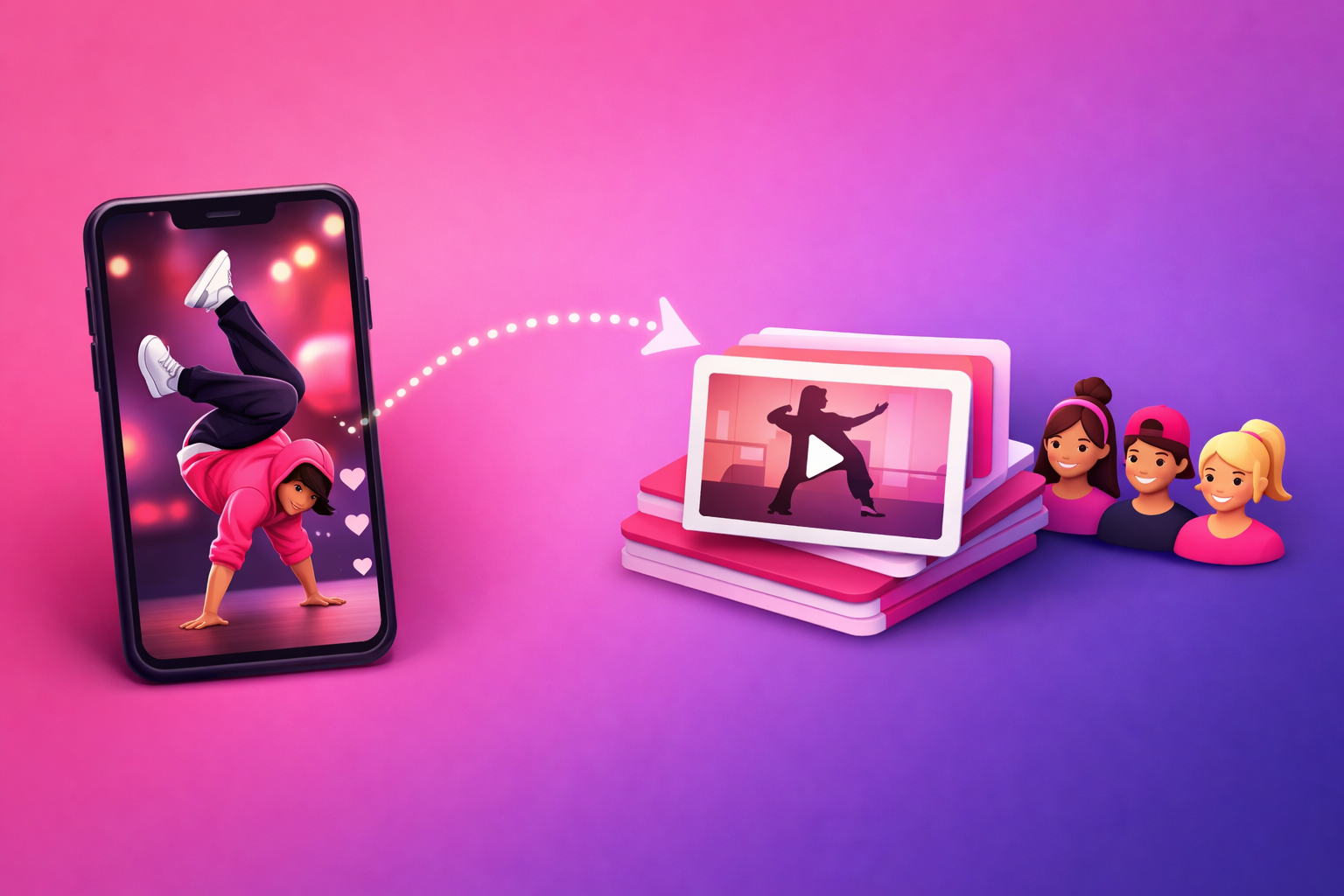
You posted a routine, and the comments rolled in: "tutorial please?", "how do you do that?", "teach us!" Most dancers read those comments, feel flattered, and scroll on. The ones who build real income read the same comments and hear something different - the sound of people asking to give you money.
Selling a dance course or choreography online is the single highest-leverage move a dancer with an engaged audience can make. Unlike brand deals or LIVE gifts, a course is an asset you build once and sell forever, and it turns the thing you already do for free - teaching through your clips - into a product people happily pay for.
This guide is the practical playbook for turning followers into students: what you can actually sell, how to choose your first product, the free-to-paid bridge that converts viewers without feeling salesy, how to price without underselling, and how to launch with the audience you already have. If you want the bigger monetization picture first, our guide to how dancers make money on TikTok covers all seven revenue streams - this article goes deep on the most scalable one.
The short version:
- Demand comes before the product. If people already ask for tutorials, you have enough audience to sell. Start small and validate.
- Teach free, sell deep. Free clips prove you can teach; the paid course is the organized, sequenced path to a real result.
- Price the transformation, not the minutes. A structured course that gets a student to confident is worth far more than scattered free videos.
- Promote your proven winners. Once a clip sends buyers to your course, paid amplification multiplies sales far faster than posting more.
What's Inside
- 1. Why Your Followers Are Already Students Waiting to Enroll
- 2. The Dance Product Ladder: What You Can Sell
- 3. Choosing Your First Product
- 4. The Free-to-Paid Bridge
- 5. Pricing Without Underselling
- 6. Turning One Routine Into a Course Funnel
- 7. Where to Host and Sell Your Course
- 8. Mistakes That Kill Dance Course Sales
- 9. Amplify Your Best-Selling Clip
- Frequently Asked Questions
1. Why Your Followers Are Already Students Waiting to Enroll
Most online course creators have to spend months building an audience from scratch and even longer convincing strangers they can teach. As a dancer with a TikTok following, you've already done both - often without realizing it. Every time someone watches your routine to the end, saves your tutorial, or asks how you nailed a move, they're telling you they want to learn what you know.
That's the magic of selling a course to a dance audience: demand reveals itself before you build anything. Your clips are a free, public demonstration of two things buyers desperately need to see - that the result is real, and that you can break it down. A prospective student doesn't have to take a leap of faith on a faceless instructor; they've already watched you teach for free and decided they like your style.
It also scales in a way no other dance income does. A class fills fifteen seats; a brand deal pays once; a LIVE depends on you being live. A course is built once and sells while you sleep, to as many students as want it, anywhere in the world. That's why, for a dancer who already teaches through their content, a course isn't a side hustle - it's the most natural and most profitable product you can build.
2. The Dance Product Ladder: What You Can Sell
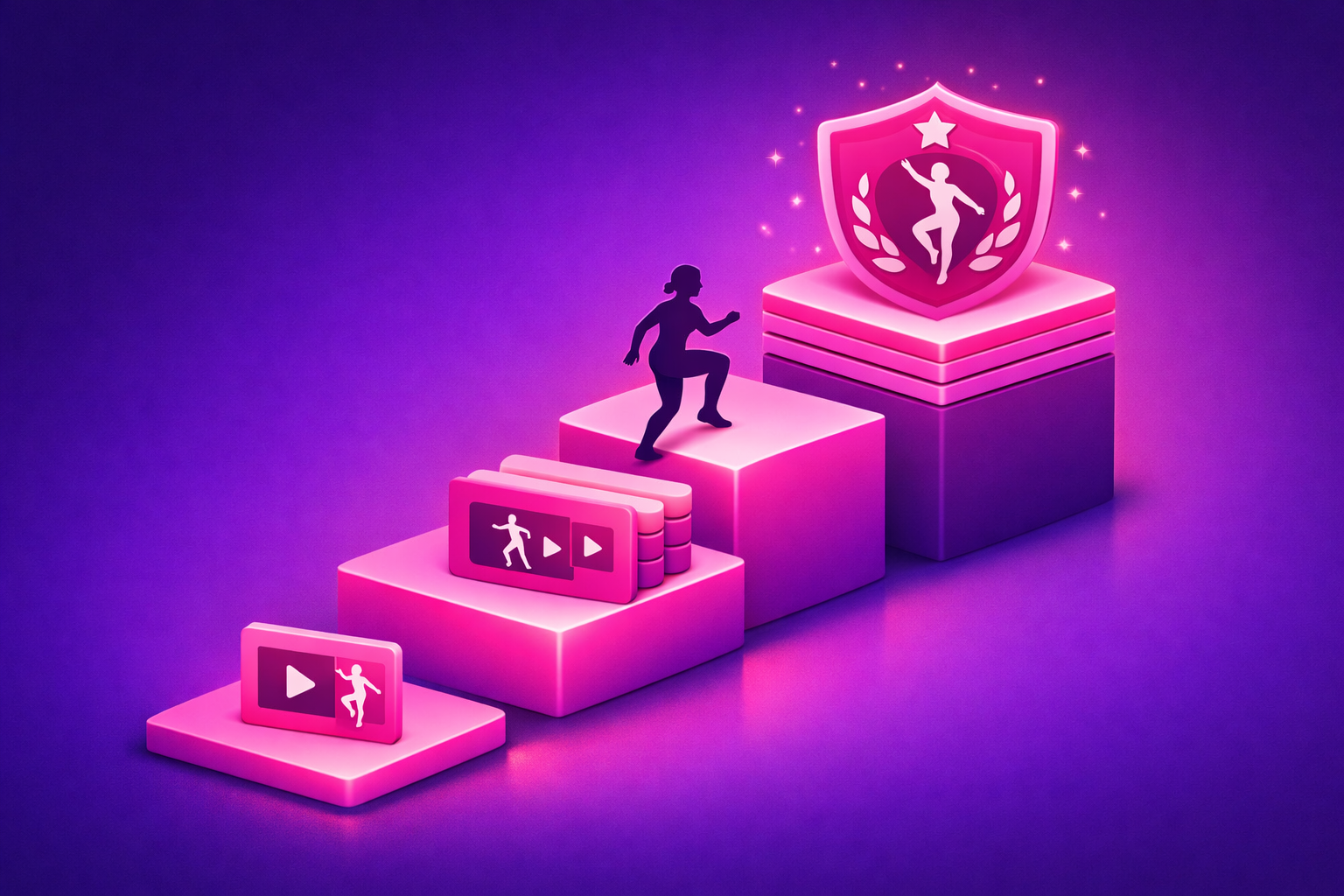
"Course" isn't one thing - it's a ladder of products at different prices and levels of effort. The smartest dancers don't start at the top with a giant program; they enter low, prove demand, and climb. Here's the ladder, from easiest to build to most valuable:
- Single choreography breakdown. One routine taught step by step, slowed down, with counts and mirrored angles. The lowest-effort, fastest-to-sell product - and the perfect first rung.
- Tutorial or choreography pack. A bundle of several breakdowns around a theme (a style, a difficulty level, a song set). More value, a higher price, still quick to assemble from clips you may already have.
- Full online course or program. A sequenced path that takes a student from A to B - "beginner hip-hop in 30 days," "your first heels routine," "intro to choreography." Structure and progression are what justify a real price.
- Membership or subscription. New choreography, classes, or breakdowns every month for a recurring fee. The most valuable rung because it turns one-time buyers into predictable monthly income.
- Choreography commissions & files. Custom routines or downloadable choreography sold to other dancers, teams, studios, or competition groups - a premium, higher-ticket lane.
You don't climb every rung at once. Most dancers launch a single breakdown or a small pack, learn what their audience wants, then build a full course or open a membership once they have paying students telling them what to make next.
3. Choosing Your First Product
The biggest reason dancers never sell anything is that they try to build the perfect, comprehensive course before they've sold a single dollar. That's backwards. Your first product's only job is to prove people will pay - so make it small, specific, and fast to create.
Let your comments choose it for you. Look back through your most-saved and most-requested videos and find the pattern: is it a specific move, a particular routine, a style, a level? The clip people beg for is the product people will buy. If three different videos all get "tutorial please" on the same move, that move's breakdown is your first product - the market has already voted.
A simple validation test before you build
- Name the exact result. "Learn this 30-second routine" beats "improve your dancing." Specific promises sell; vague ones don't.
- Pick one audience. Beginners who've never danced, or intermediates who want sharper technique - not both. A product for everyone converts no one.
- Pre-test the demand. Post a clip and say "Comment if you'd want the full breakdown" or open a waitlist link. Real interest before you spend a weekend filming.
- Keep version one small. A single tight breakdown you can film this week beats a 40-lesson course you'll never finish. Ship, learn, expand.
Starting small isn't playing it safe - it's how you find out what your audience actually wants before you over-invest. Your second product will be far better because your first one taught you who's buying and why. For dozens of teachable concepts you can turn into breakdowns, our 50+ dance content ideas is a useful starting bank.
4. The Free-to-Paid Bridge
The fear that stops most dancers from selling is this: "If I give away tutorials for free, why would anyone pay?" It feels logical, and it's completely wrong. Free content is the engine of course sales, not the enemy of them. The trick is knowing what to give away and what to charge for.
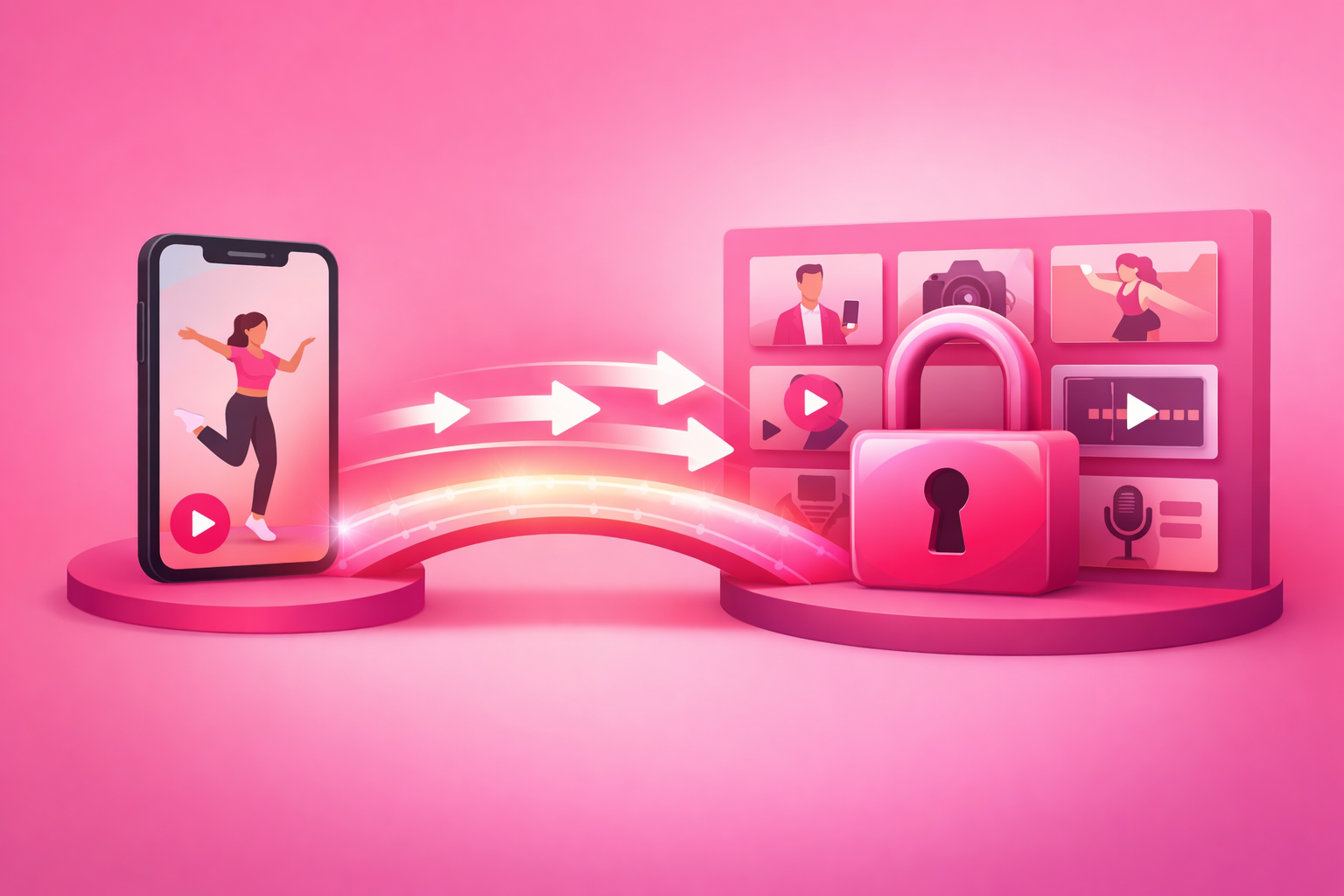
Think of it as a bridge. On the free side, you teach single moves, quick tips, and a taste of your style - enough to prove you're a great teacher and leave people wanting the whole thing. On the paid side, you sell the full, sequenced, easy-to- follow system that actually gets a student to a result: the warm-ups, the progressions, the slow-downs, the mistakes to avoid, the order to learn things in.
People don't pay for information - they can find individual moves free everywhere. They pay for structure, progression, and your guidance: the organized path that saves them the time and frustration of piecing it together alone. A free clip says "here is one move." A course says "here is the complete path to dancing the way you saw in my videos, with me guiding every step." That difference is worth real money, and it's why generous free teaching makes your paid offer more attractive, not less.
The free-vs-paid line
A good rule of thumb: free content teaches what to do and inspires; paid content teaches how to actually do it, in the right order, with your coaching. If a clip could stand alone as a complete result, it's probably too much for free. If it leaves someone thinking "I want the full version from this person," it's doing its job.
5. Pricing Without Underselling
Dancers chronically underprice. The instinct is to compare your course to the free tutorials already out there and conclude you can barely charge anything. But you're not selling minutes of video - you're selling a transformation: taking someone from "I could never do that" to "I just learned a whole routine." Price that, and the numbers look very different.
Here are realistic starting ranges to anchor against. Adjust to your niche, depth, and audience - these are a map, not a rule:
- Single choreography breakdown: roughly $10-25. Low-risk impulse buy, easy first yes.
- Tutorial / choreography pack: roughly $30-80. Bundled value at a price that still feels easy.
- Full course or program: roughly $100-300. Structure and a real result justify the jump.
- Membership: roughly $15-40 per month. Recurring income that compounds as members stay.
Start at the higher end of what feels comfortable, not the lower. It's far easier to run a launch discount or lower a price than to raise one after people are used to it - and a too-low price can actually signal low quality. If you're nervous, anchor with a small founding-student discount for your first buyers; you get early sales and testimonials, and they get a deal for taking a chance on you. For a deeper framework on packaging and pricing knowledge as a product, our guide to marketing online courses on TikTok translates directly to dance.
6. Turning One Routine Into a Course Funnel
Here's how it all fits together in practice. A single routine can become a complete sales funnel - the free clip pulls people in, and a clear path carries the interested ones to your paid course. The flow looks like this:
- Post the hook clip. Lead with the hardest, most eye-catching moment of the routine - the beat-drop move that stops the scroll and makes people want to learn it.
- Tease the teaching. Show a quick taste of the breakdown - one count, one tip - so viewers see you can teach it, then say where to get the full version.
- Call out the next step. "Full step-by-step breakdown is in my bio" - spoken and on-screen. Never assume people will hunt for it.
- Point the link at the offer. Your bio link goes straight to the course or breakdown that matches the clip - not a generic homepage that makes buyers search.
- Convert in the comments. Reply to "how?" and "tutorial?" with a warm nudge to the link. Those commenters are your warmest buyers.
Notice that the same routine you'd post anyway becomes the top of your funnel - no extra shoot required. The dancers who sell consistently aren't making separate "marketing" content; they're adding a clear next step to the clips they already create. A clean, well-framed shot makes every one of these clips convert better, which is why our guide to filming dance videos pairs perfectly with this funnel.
7. Where to Host and Sell Your Course
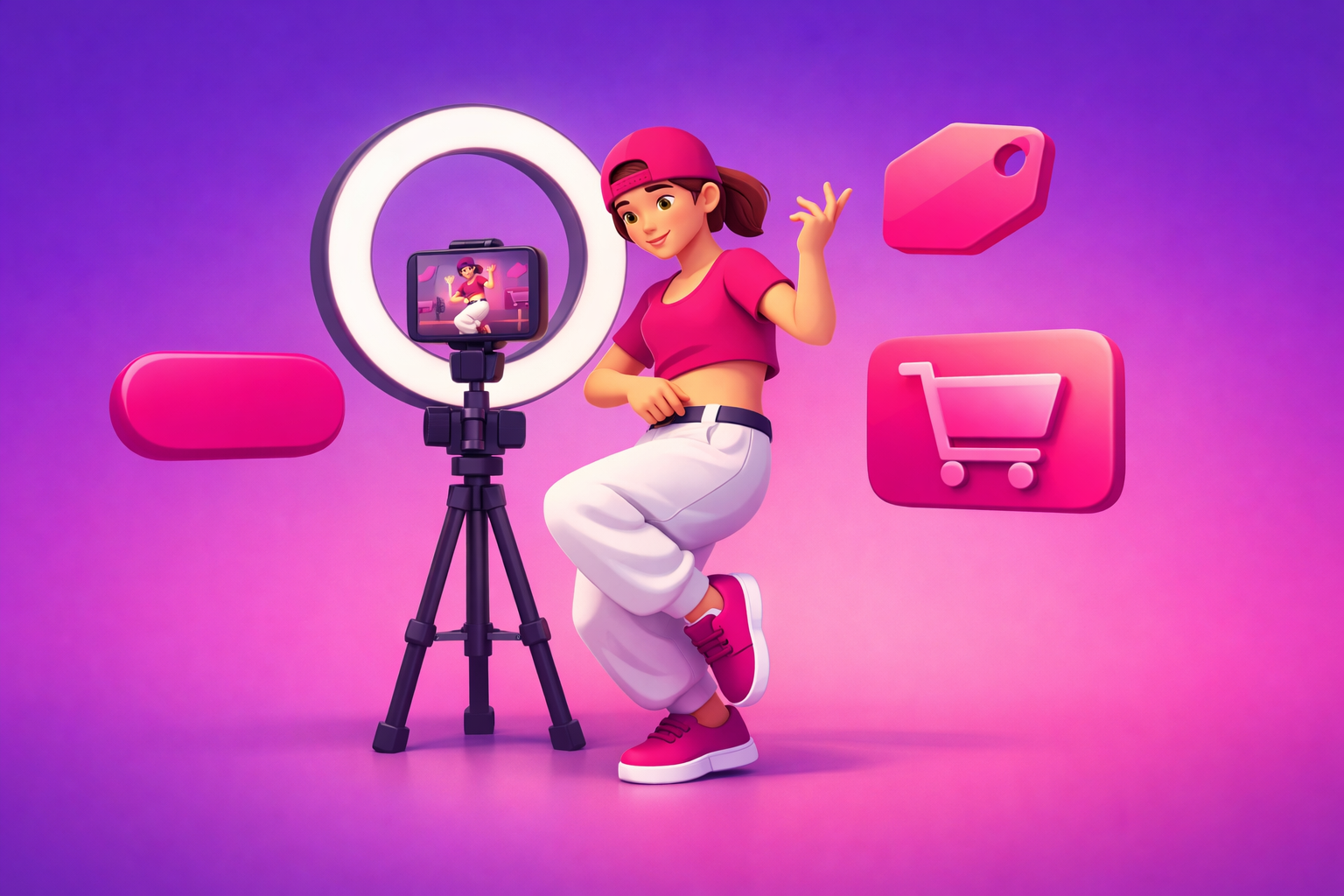
Don't let the technical side stall you. For your first product, the goal is to launch in days, not build a platform for months. Pick the simplest setup that handles three things: hosting your videos, taking payment, and giving students access. A dedicated course platform or a creator storefront does all three out of the box.
- Course platforms. Purpose-built for selling video lessons - upload, price, and you have a checkout and a student login. Ideal for full courses and memberships.
- Creator storefronts & digital-product tools. Great for single breakdowns and packs - sell a downloadable or hosted video with a one-link checkout in minutes.
- A link-in-bio page. If you sell more than one thing, route your single bio link to a simple page that lists your offers, so every video can point to the right one.
Resist building a custom website or app before you have buyers. Every hour spent on tech you don't need yet is an hour not spent proving people will pay. Launch lean, get your first students, and reinvest in a more polished home only once the demand is real. The simplest version that takes money today beats the perfect version that ships in six months.
8. Mistakes That Kill Dance Course Sales
Most failed dance-course launches die from the same handful of avoidable errors. Steer around these and you're ahead of the majority of creators:
- Building before validating. Spending months on a huge course no one asked for. Sell a small version first; let buyers fund and shape the big one.
- Hiding the offer. Great clips, but no call to action and a bio link that points nowhere useful. If viewers can't find how to buy, they won't.
- Underpricing out of fear. Charging $9 for a program worth $99 because free tutorials exist. You're selling structure and results, not raw footage.
- Being vague. "Get better at dance" sells nothing. "Learn this exact routine in a weekend" sells. Name the specific result.
- Launching once and quitting. One post mentioning your course isn't a launch. Talk about it across many clips - most buyers need several touches before they act.
- Going silent after the sale. Happy students are your best marketing. Share their wins (with permission) and they'll sell your next course for you.
The thread connecting all of these is confidence and clarity. Believe your teaching is worth paying for, make the path to buy obvious, and keep showing up. The dancers who earn from courses aren't the most famous - they're the ones who treat selling as a normal, repeatable part of creating. If you're still building the audience to sell to, our dancer growth roadmap shows how to compound followers who actually want to learn from you.
9. Amplify Your Best-Selling Clip
Once your funnel works - a clip that reliably sends viewers to your course and turns some of them into buyers - you've found something rare and valuable: a piece of content with a proven dollar value. And the smartest thing you can do with proven content is put more of the right people in front of it.
This is where being selective matters. You don't promote every upload - you wait for the clip that's already converting viewers into students organically, then amplify that specific winner. Because a course sells for real money and costs you nothing to deliver again, even a handful of extra sales from a promoted clip can return many times what you spend - and unlike a class with fifteen seats, a course has no cap on how many students can enroll. Promotion multiplies a signal that already exists; it can't manufacture one. Dance content is especially well-suited to this because rewatchable routines build exactly the organic momentum paid reach loves to scale, as our TikTok algorithm guide explains.
That's the whole idea behind our TikTok promotion service: instead of spreading budget across everything you post, we amplify the clips that have already cleared the organic bar - the ones earning saves, profile visits, and link taps. For a dancer selling a course, that targeted reach turns straight into enrollments, which is exactly why a single amplified clip can pay for itself many times over. For the mechanics, our Spark Ads guide and the complete TikTok advertising guide walk through every step.
Frequently Asked Questions
Can you really sell dance courses through TikTok?
Yes - TikTok is one of the best places to sell dance courses because the people watching your routines are already showing you exactly what they want to learn. Every comment asking "tutorial please?" or "how do you do that?" is a buying signal. Your free clips prove you can teach and build trust, and a paid course is simply the deeper, organized version of what viewers already enjoy for free. Creators sell courses to audiences in the low thousands, not the millions, because what matters is how badly your followers want to learn the specific thing you teach - not your raw follower count. The sale happens when your free content makes someone think "I wish I could learn the whole thing from this person," and you give them a clear way to do exactly that.
How many followers do I need to sell a dance course?
There is no follower threshold - what matters is engagement and intent, not size. A creator with 3,000 highly engaged followers who constantly ask for tutorials can out-earn one with 100,000 passive viewers. The right time to launch your first product is when you see repeated demand: people commenting that they want to learn a move, saving your tutorials, or asking if you teach. If that is happening, you have enough of an audience to sell a small first product - a single choreography breakdown or a tutorial pack - and grow from there. Start small, validate that people will pay, then build bigger offers as your audience and confidence grow.
How much should I charge for a dance course?
Price by the transformation and depth you deliver, not by the number of minutes of video. A single choreography breakdown might sell for $10-25, a focused tutorial pack or short course for $30-80, a comprehensive multi-week program for $100-300, and a monthly membership for $15-40 per month. Beginners chronically underprice because they compare themselves to free YouTube tutorials, but a structured, sequenced course that takes a student from confused to confident is worth far more than scattered free clips. Start at the higher end of what feels comfortable, watch how it sells, and adjust. It is far easier to lower a price or run a launch discount than to raise one later.
Where should I host and sell my dance course?
For your first product, keep it simple - a dedicated course platform or a creator storefront that handles hosting, payment, and student access in one place lets you launch in days instead of months. Put a single link in your TikTok bio that points to your offer (or a link-in-bio page if you sell more than one thing), and drive every relevant video toward it. Avoid the temptation to build a custom website or app before you have proven anyone will buy; the goal of your first launch is to validate demand with the least possible setup. Once you have paying students and know what they want, you can invest in a more polished home for your courses.
Will giving away free tutorials hurt my course sales?
No - free tutorials are what create course sales, not what cannibalizes them. Your free clips do the most important job of all: they prove you can teach, build trust, and attract the exact people who want to learn from you. The key is the difference between free and paid. Free content teaches a single move, a quick tip, or a taste of your style; paid content delivers the full, sequenced, easy-to-follow system that gets a student to a real result. People happily pay for structure, progression, and your guidance even when individual moves are available free elsewhere, because a course saves them the time and frustration of piecing it together alone. Teach generously in public, and sell the organized path in private.
Turn your best clip into enrollments
Once you know which clip actually sends viewers to your course and turns them into students, the fastest way to grow sales isn't posting more - it's putting your proven winner in front of more of the right people. Viryze amplifies the dance clips that have already earned their reach organically, so your spend compounds the content that's already selling instead of rescuing the content that isn't. For dancers with a course, that targeted reach turns straight into enrollments through selective amplification.
See how selective amplification worksRelated Reading
- TikTok for Dancers: The Complete 2026 Guide - the full playbook for growing and monetizing a dance audience.
- How Dancers Make Money on TikTok in 2026 - the seven revenue streams, including courses and memberships.
- TikTok for Dance Studios & Teachers - turning local reach into booked classes and recurring memberships.
- Marketing Online Courses on TikTok - packaging and selling knowledge as a product, applied to any niche.
- The Complete TikTok Advertising Guide - how paid promotion multiplies the clips that already sell.

Head of Creator Success at Viryze
TikTok growth strategist helping creators reach their first 100K followers through data-driven promotion strategies.