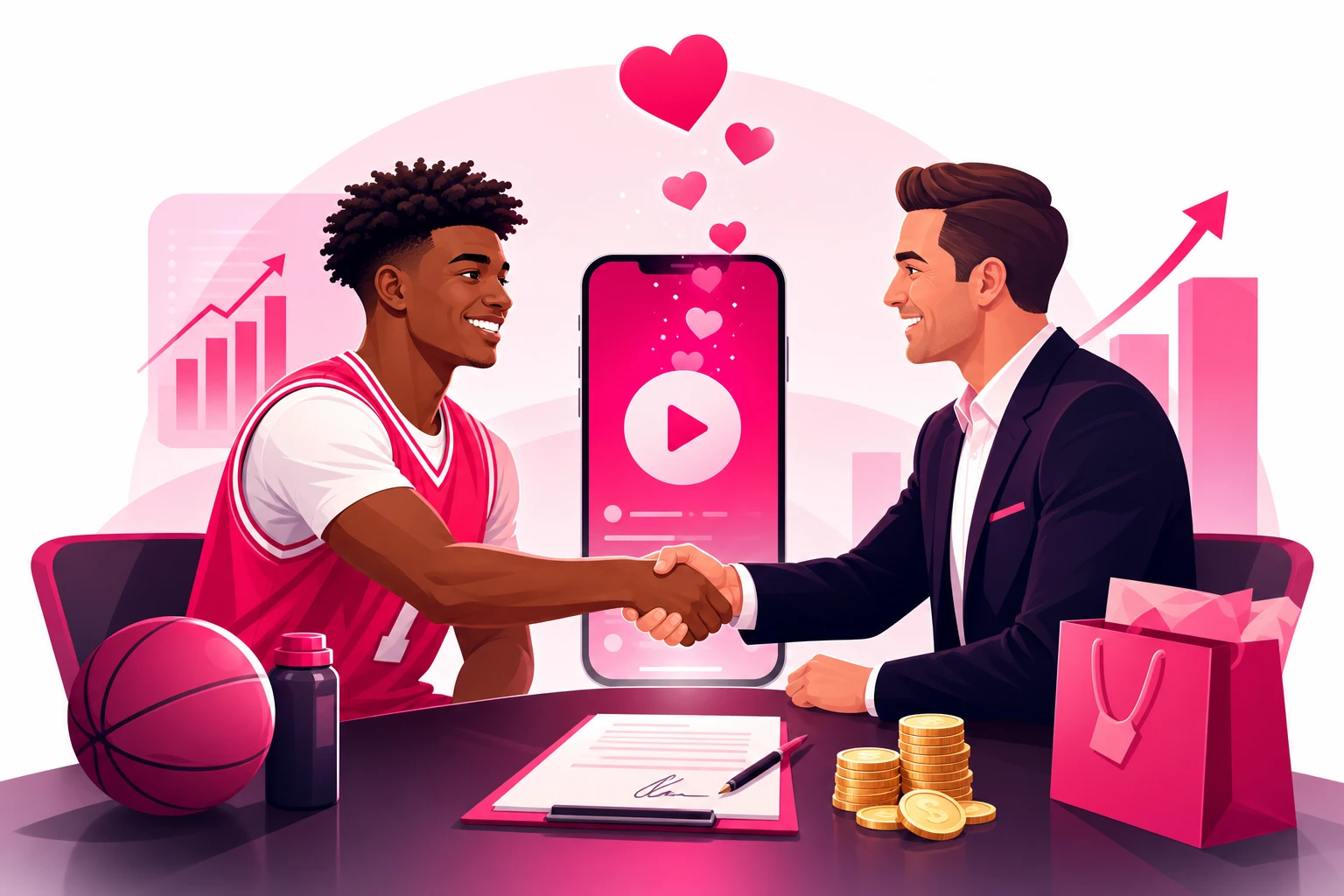
Somewhere right now, a collective staffer or a local business owner is scrolling TikTok with a budget to spend on an athlete exactly like you. The question isn't whether NIL money is flowing through the app - it demonstrably is - it's whether your account is set up to be found, evaluated, and offered a deal when they land on it.
Most athlete accounts fail that evaluation in under ten seconds. Not because the athlete isn't good enough, but because the profile answers none of the questions a sponsor is silently asking: who is this, where do they play, who's watching them, and how do I reach them?
This guide is the full NIL-from-TikTok playbook: the three places deals actually come from, the five numbers sponsors scout before they offer, the content that attracts deals instead of just views, the inbound and outbound paths to your first offer, what to put in writing, and the compliance steps that protect your eligibility. It's the NIL chapter of our complete TikTok guide for athletes, and it goes deeper than the overview in our athlete monetization guide.
The short version:
- Deals come from three sources - direct brands, collectives, and local businesses - and each scouts TikTok differently.
- Your profile is your scouting report. Sponsors evaluate five numbers in minutes; most athletes have never checked their own.
- First deals are usually local and start around 5,000-25,000 engaged followers - engagement and market beat raw reach.
- Nothing is worth your eligibility. Clear deals with compliance, get terms in writing, and disclose every paid post.
What's Inside
- 1. NIL in 2026: Why TikTok Became the Scouting Ground
- 2. The Three Deal Sources (and How Each One Finds You)
- 3. The NIL Scouting Report: Five Numbers Sponsors Check
- 4. Content That Attracts Deals (Not Just Views)
- 5. The Follower-to-Deal Pipeline
- 6. Inbound vs. Outbound: Two Paths to the First Offer
- 7. Valuing the Deal: Negotiation, Terms & Red Flags
- 8. Compliance: Protecting the Eligibility That Makes It All Possible
- 9. Raising Your NIL Value: Growth as a Rate Strategy
- Frequently Asked Questions
1. NIL in 2026: Why TikTok Became the Scouting Ground
When athletes gained the right to profit from their name, image, and likeness, the first wave of money chased stars whose names already filled stadiums. The market that emerged since is far more interesting: the bulk of deal volume now happens at the micro level - thousands of small and mid-sized agreements between athletes with engaged followings and businesses that want exactly those audiences.
TikTok became the scouting ground for that market for a simple reason: it's where the evidence lives. A sponsor can watch your content, count your real engagement, read your comments, and gauge your personality in five minutes - no agent, no media package, no introduction. From our experience helping creators grow, accounts that treat their profile as a scouting report field their first inbound inquiry at roughly a third of the follower count of accounts that treat it as a highlight reel.
One mindset shift before the tactics: an NIL deal is not a reward for going viral. It's a business transaction where you sell access to an audience. Which means everything in this guide reduces to two jobs - build an audience a sponsor wants, and make it effortless to evaluate and buy.
2. The Three Deal Sources (and How Each One Finds You)
"NIL deal" covers three very different buyers. Knowing which one you're realistically next in line for tells you exactly what to optimize:
Direct brand deals
Companies - from national sportswear to regional supplement shops - pay you to create content or endorse products. They scout hashtags in your sport, browse athlete marketplaces, and increasingly just search TikTok itself.
What they weigh most: engagement rate, audience demographics, content quality, and whether your lane fits their product.
Collectives
Donor-backed organizations around your school compensate athletes for appearances, content, and community work. They already know who you are on the roster - what your TikTok changes is where you rank when they compare athletes side by side.
What they weigh most: visible fan pull. An athlete whose comments are full of local fans is an easy case to fund.
Local businesses
The restaurant, gym, dealership, or physio clinic in your college town. These are the earliest and most winnable deals - and the ones most athletes never think to pursue. They rarely scout; they respond to pitches and word of mouth.
What they weigh most: local recognition. They're buying the athlete their customers already talk about, at whatever follower count that happens.
Notice the pattern: only one of the three buyers cares much about raw follower count. That's why the athletes winning NIL from TikTok aren't necessarily the biggest accounts - they're the ones whose audience quality matches a buyer's market. It's the same dynamic that makes TikTok work for small businesses: proximity plus trust beats reach.
3. The NIL Scouting Report: Five Numbers Sponsors Check
Before any offer, someone evaluates your account the way a recruiter evaluates film. We call the result the NIL Scouting Report - five numbers a sponsor can pull from your profile in minutes. Know yours before they do:
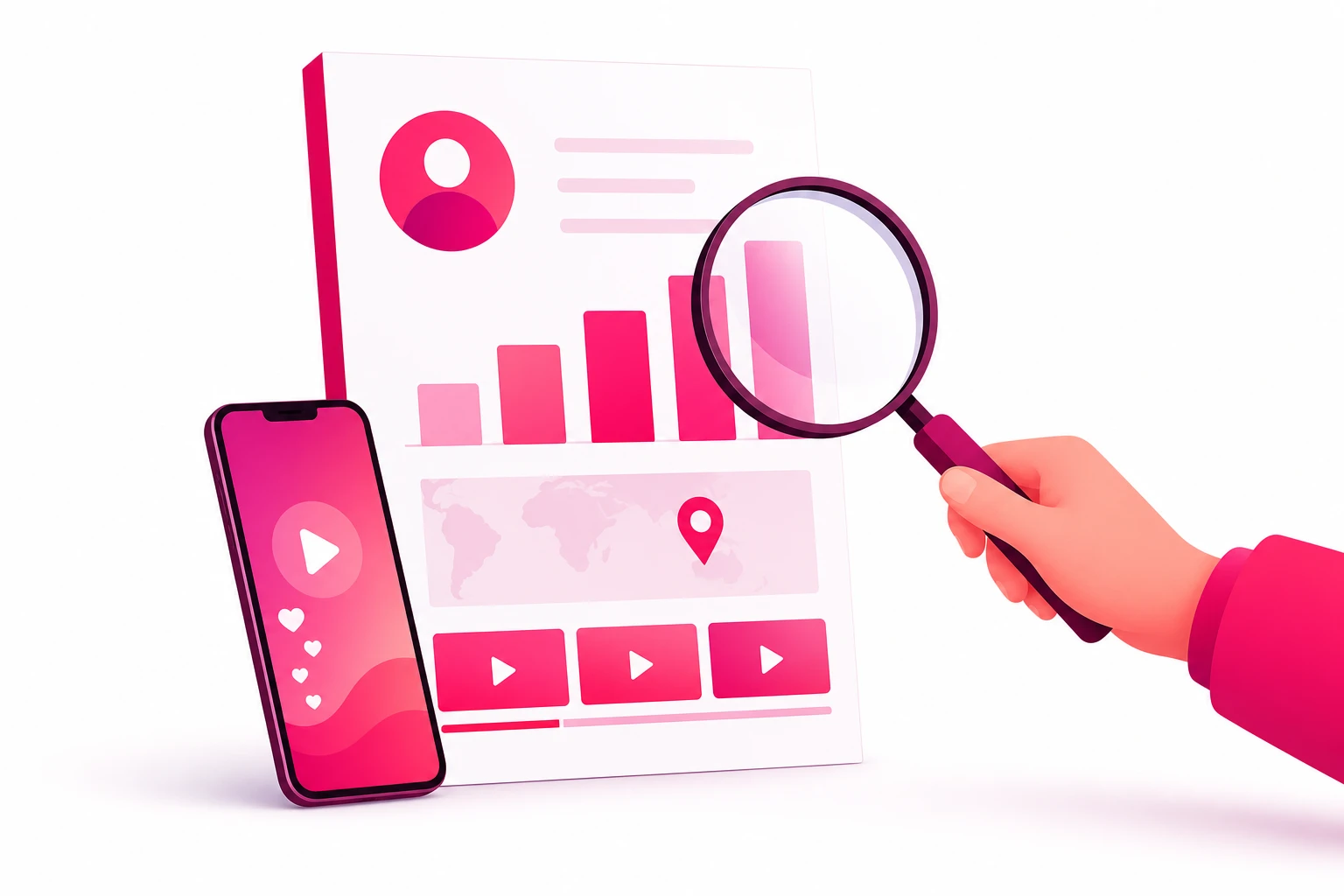
- 1. Engagement rate (last 10 posts). Likes plus comments plus shares, divided by views. Above ~5% is a premium signal; below 2% raises questions no follower count answers. This is the first number every serious buyer computes.
- 2. Audience location. In your analytics under follower insights. A collective or local sponsor wants to see your market - 60%+ concentration where the buyer operates is a rate multiplier most athletes never mention.
- 3. Follower trajectory. Flat for six months reads very differently from +2,000 a month. Sponsors buy momentum, because your next 90 days of growth are part of what they're paying for.
- 4. Comment quality. Are the comments real fans of your sport using your name, or drive-by emojis? Buyers read your last 20 comment sections as a proxy for influence - it's the hardest number to fake.
- 5. Lane consistency. Can they tell in three videos what they'd be sponsoring? A consistent lane (training BTS, skill breakdowns, game-day POV) makes the brand-fit case for them.
Then make the report findable: a bio that reads sport + position + school or market, a pinned highlight, a pinned 30-second "who I am" intro, and a business email one tap away. That five-minute setup is the difference between being scouted and being scrolled past - and it's the exact profile structure our athlete growth roadmap builds toward from day one.
4. Content That Attracts Deals (Not Just Views)
Here's the uncomfortable truth about highlight montages: they collect views from people who will never buy anything, sponsor anything, or remember your name. Deal-flow content is different - it builds the specific signals the scouting report measures:
- Journey and comeback series create fans who root for you by name - the comment quality buyers read for.
- Training BTS and skill breakdowns define a sponsorable lane and attract followers inside your sport, not random scrollers.
- Local and team-adjacent content (game-day in your town, community appearances, hometown storylines) concentrates your audience in the market a local buyer wants.
- Personality clips answer the question every brand asks before writing a check: "is this someone we want representing us?"
The full menu - 50+ concepts organized by lane - is in our athlete content ideas vault, and the capture system that films it all from training you're already doing is in the athlete filming guide. One rule ties them together: post for the audience you want to sell, not the algorithm you want to impress. A thousand engaged fans of your sport in your market are worth more on a rate card than fifty thousand strangers.
5. The Follower-to-Deal Pipeline
Deals don't leap from a viral video to a signed contract. They move through a pipeline - viewer → follower → fan → contact → deal - and each stage has one conversion job. Most athlete accounts don't lose deals at the top of the pipeline; they lose them in the middle, where interested fans and curious sponsors find no next step.

- Viewer → follower: hooks and a journey worth following. This is the growth engine, and it's built on the fundamentals in our TikTok algorithm guide.
- Follower → fan: series content and replies that turn an audience into people who comment by name. Fans are what collectives fund and what comment-reading sponsors verify.
- Fan → contact: the scouting-report profile from section 3. When a buyer decides to reach out, the path must be one tap long.
- Contact → deal: a fast reply, a one-page media kit, and terms in writing. Speed matters - local budgets get spent by whoever answers first.
Run the audit from the buyer's side once a month: watch your latest video, tap your profile, and count the taps until a stranger with a budget could email you. Every extra tap is a deal leaking out of the pipeline.
6. Inbound vs. Outbound: Two Paths to the First Offer
Inbound: engineering discoverability
Inbound deals feel like luck, but they're mostly search optimization. Buyers find athletes through sport and school hashtags, TikTok's own search, athlete marketplaces, and - more than anything - through videos that travel locally. Use your sport, position, school, and city in captions and on-screen text where natural; register on the NIL marketplaces your school supports; and keep the scouting report current so that when the visit happens, it converts.
Outbound: the 15-pitch local sprint
Outbound is faster and almost nobody does it. List 15 local businesses that already touch your sport's ecosystem - the smoothie bar near the gym, the sporting goods store, the physio clinic, the pizza place every team visits after games. Send each a three-sentence pitch: who you are, who your audience is (with the two numbers that matter - engagement rate and local concentration), and one concrete package with one price.
Attach a one-page media kit: followers, engagement rate over your last 10 posts, audience location split, three best videos, and your rate ranges. From our experience, a 15-pitch sprint by an athlete with 8,000+ engaged local followers typically lands two to four responses and at least one deal - usually within two weeks.
Timing multiplies both paths. Pitch six weeks before your season starts, when sponsor calendars are open, and expect inbound spikes after big performances and during signing windows - which is exactly when your profile needs to be deal-ready in advance.
7. Valuing the Deal: Negotiation, Terms & Red Flags
Anchor before you negotiate. The working baseline for a dedicated in-feed video is $10-$25 per 1,000 followers, adjusted up for the three athlete premiums: engagement above ~5%, audience concentration in the buyer's market, and in-season timing. Full ranges by follower level are in our athlete monetization guide; what matters here is how deals are structured:
- Sell packages, not posts. Three videos plus a LIVE mention plus a month of visibility is worth more to both sides than one video priced three times.
- Price usage rights separately. If the brand wants to run your video as an ad, that's a second purchase - typically 30-100% of the content fee for 90 days of paid usage.
- Cap exclusivity. Locking out a whole category ("no other supplement brands") has a price and an end date. Never give it away inside a single-video deal.
- Get every term in writing: deliverables, deadlines, payment timing, usage, exclusivity, termination. A two-page agreement prevents 90% of first-deal disputes.
And the red flags that should end a conversation: pay-in-exposure offers once you're past your first collabs, perpetual usage rights, exclusivity that outlasts the payment, anyone pressuring you to skip compliance, and any deal requiring school marks or uniforms without written permission. A buyer who balks at putting terms on paper is telling you how the payment stage will go.
8. Compliance: Protecting the Eligibility That Makes It All Possible
Every dollar in this guide depends on staying eligible. The rules are navigable - thousands of athletes do this cleanly every season - but they are rules, and they differ by level:
- College athletes: know your school, conference, and state policies; use your school's NIL disclosure portal for every deal, every time; and route agreements through the compliance office before you post. The five-minute form is cheap insurance on your season.
- High school athletes: state athletic associations differ sharply - a growing majority allow NIL in some form, several still prohibit it, and most restrict referencing your school or team. Check the current policy before accepting anything, and get a parent or guardian across every agreement.
- Everyone: disclose paid partnerships with TikTok's branded-content toggle and #ad - it's FTC law, not a platform preference. Keep school marks, uniforms, and facilities out of paid content unless explicitly permitted, and ask before filming teammates.
The consistent theme: building the audience is always allowed, even where deals must wait. A high school athlete in a no-NIL state who builds 20,000 engaged followers arrives at college with a priced asset on day one - and collectives notice exactly that.
9. Raising Your NIL Value: Growth as a Rate Strategy
Every number on the scouting report improves the same way: more real fans of your sport, in your market, engaging with your lane. Which makes audience growth the only NIL strategy that raises every deal's value at once - the direct brand rate, the collective ranking, and the local pitch response rate together.
The efficient version of paid growth is selective amplification: take the video your analytics already prove out - best completion rate, follows per view, profile visits - and put budget behind showing it to thousands more fans of your sport in your market. A TikTok promotion service built for follower growth, like Viryze, tests multiple audience combinations against your proven video and shifts budget automatically toward the segments that follow at the lowest cost - which for an athlete means concentrating spend on exactly the local, on-niche audience the scouting report measures.
The payback math is unusually direct here. If growing from 8,000 to 20,000 engaged followers moves your dedicated-video rate from $150 to $400 and opens two collective conversations, the promotion budget isn't marketing spend - it's an investment in your quoted price that a single deal can repay several times over.
Pro Tip
Amplify into your deal windows. Running selective amplification for the 2-3 weeks before your season opener, a signing period, or a planned pitch sprint means every scouting-report number peaks exactly when buyers look. The format keeps its organic look because it runs through TikTok's own ad system - our Spark Ads guide explains how.
One adjacent lane worth borrowing from: trainers and fitness creators have run the engaged-local-audience playbook for years - the crossover tactics in our fitness creators guide map almost one-to-one onto athlete training content.
Ready to Give Sponsors a Scouting Report Worth Funding?
Viryze grows the exact numbers NIL deals are quoted against: real, engaged fans of your sport in your market. AI-powered audience testing, automatic budget optimization, and follower growth through TikTok's official ads platform - timed to the windows when buyers are looking.
Grow Your NIL Value with ViryzeFrequently Asked Questions
How do athletes get NIL deals from TikTok?
Two paths, and the best accounts run both. Inbound: brands, collectives, and local businesses scout TikTok directly, so a sport-plus-position-plus-market bio, a pinned intro video, visible engagement from real fans, and a business email one tap away turn views into offers. Outbound: a short pitch to 10-15 local businesses that already serve your sport, backed by a one-page media kit showing followers, engagement rate, audience location, and your three best videos. Most first deals are local and land in the 5,000-25,000 follower range - engagement and market fit matter more than raw reach.
How many followers do you need to get an NIL deal on TikTok?
Less than most athletes think. Local business NIL deals routinely start around 5,000 engaged followers, collectives compare athletes on engagement and community pull rather than raw count, and direct brand deals open up meaningfully between 10,000 and 25,000. What sponsors actually scout is the combination: engagement rate above roughly 5%, an audience concentrated in their market, and content in a consistent lane. A locally beloved athlete at 8,000 followers regularly out-earns a generic highlight account at 80,000.
How much are TikTok NIL deals worth?
The distribution is wide, but the working ranges are: local business deals from $100 to $1,000 per campaign (often product plus cash) at nano and micro sizes; collective compensation varying hugely by school and sport, from a few hundred dollars a month to five figures for revenue-sport starters; and direct brand deals roughly $10-$25 per 1,000 followers per dedicated video, adjusted up for engagement above 5%, local audience concentration, and season timing. Multi-video packages with usage rights and exclusivity priced as separate line items are where the real money accumulates.
Can any athlete do NIL deals, or only college athletes?
NIL as a legal category applies to student-athletes - college athletes everywhere in the US, and high school athletes only in states whose athletic associations allow it. But the underlying trade - a business paying an athlete for content and endorsement - is open to everyone: semi-pro, amateur, combat sports, endurance, and post-college athletes simply sign standard influencer or sponsorship agreements without the student-athlete rulebook. On TikTok the content looks identical; what changes is the paperwork and whether a compliance office needs to clear it first.
What should be in an NIL deal agreement?
Every NIL agreement should spell out six things in writing: deliverables (exactly how many videos, LIVE mentions, or appearances), deadlines, payment amount and timing, usage rights (whether the brand can re-run your content as ads, and for how long), exclusivity (which competitors you can't work with, and for how long), and termination terms. Watch for red flags: perpetual usage rights, exclusivity that outlasts the payment, pay-for-exposure offers, and any clause requiring school marks or uniforms without written permission. If you're a student-athlete, run the agreement through your school's compliance process before you post - and if you're under 18, a parent or guardian should be across every line.
Continue Reading
How Athletes Make Money on TikTok in 2026
The full Athlete Income Stack: NIL, sponsorships, camps and clinics, affiliate, merch, and TikTok's own programs - ranked by how early each one pays.
Read More →TikTok for Athletes: The Complete 2026 Guide
The full playbook: the six video formats that grow athlete accounts, the highlight-first hook, and the deal ladder that turns followers into NIL income.
Read More →Athlete Growth on TikTok: From 0 to 100K Followers
The NIL-Milestone Map, the Breakout Series that carries you to 10K, and the compounding systems that raise your quoted rate at every stage.
Read More →
Head of Creator Success at Viryze
TikTok growth strategist helping creators reach their first 100K followers through data-driven promotion strategies.