You can run the best TikTok ads in the world, but nothing sells a product like a real person genuinely recommending it. That's the power of influencer marketing on TikTok—and it's why e-commerce brands are pouring money into creator partnerships.
The numbers back it up. TikTok influencer marketing delivers an average ROI of $5.20 for every dollar spent, and 78% of TikTok users have purchased a product after seeing a creator talk about it. When someone you follow and trust says "I love this product," it carries more weight than any ad ever could.
But here's where most e-commerce brands go wrong: they throw products at random creators, hope for viral moments, and call it a strategy. Real influencer marketing is systematic. It's about finding the right creators, structuring partnerships that benefit both sides, and building a content machine that drives consistent sales.
This guide builds on our complete e-commerce guide and affiliate marketing strategies to show you exactly how to find, evaluate, and partner with TikTok creators who will actually move product.
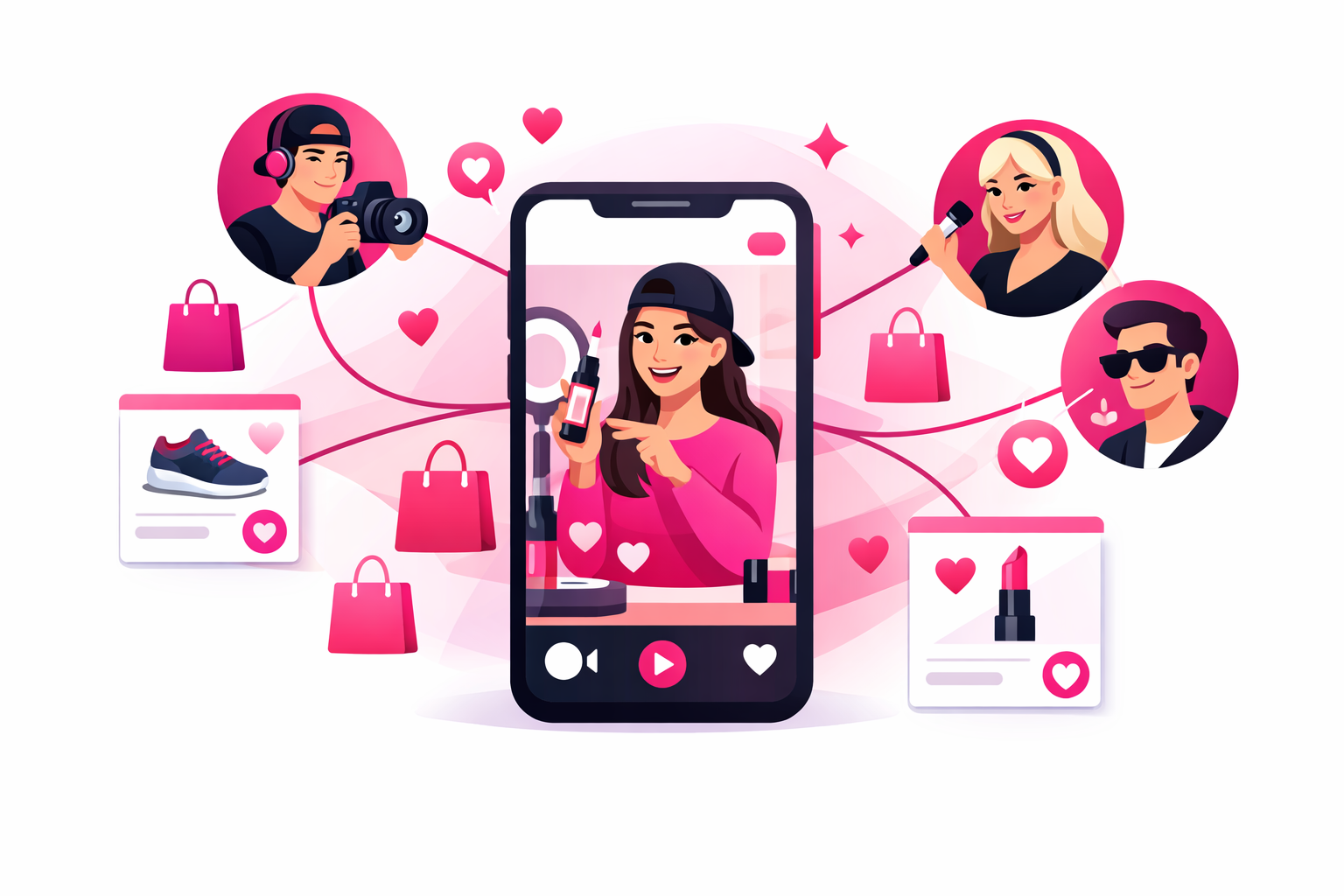
Why Influencer Marketing Works for E-commerce on TikTok
TikTok is fundamentally different from Instagram or YouTube when it comes to influencer marketing. The platform's algorithm doesn't just show content to a creator's followers—it distributes it to anyone who might be interested. This means a creator with 50,000 followers can reach millions if the content resonates.
For e-commerce brands, this changes the math entirely. On Instagram, you're essentially paying for access to a creator's follower base. On TikTok, you're paying for content that the algorithm can amplify far beyond that base.
- Trust transfer. When a creator recommends your product, their audience's trust transfers to your brand. This is especially powerful for newer brands that haven't built recognition yet.
- Content at scale. One partnership produces content you can repurpose—as Spark Ads, on your website, in email campaigns, and across other social platforms.
- Discovery-driven shopping. 67% of TikTok users say the platform inspires them to shop even when they weren't planning to. Creator content is the primary driver of that discovery.
- Social proof at scale. Multiple creators talking about your product creates a "everyone's using this" effect that paid ads alone can't replicate.
The Compound Effect
The real power of influencer marketing isn't one viral video—it's the compound effect of 20, 50, or 100 creators all talking about your product over weeks and months. Each piece of content becomes a permanent touchpoint that the algorithm can surface to new audiences indefinitely.
Understanding Creator Tiers and When to Use Each
Not all influencers are created equal, and bigger isn't always better. Each tier serves a different purpose in your marketing strategy.
Nano-Influencers (1K-10K Followers)
Cost: Free product or $50-100 per post
Highest engagement rates (8-12%) and most authentic recommendations. Their audiences are small but deeply loyal. Perfect for product seeding campaigns where you send free products to dozens of creators and let the content happen organically. Many won't produce polished content, but the authenticity often outperforms professional production.
Micro-Influencers (10K-100K Followers)
Cost: $100-500 per post
The sweet spot for most e-commerce brands. Strong engagement (4-8%), established content style, and audiences that trust their recommendations. Micro-influencers are professional enough to deliver quality content but still feel authentic. Best ROI for direct sales.
Mid-Tier Creators (100K-500K Followers)
Cost: $500-5,000 per post
Combine reach with relatability. They're established enough to deliver consistent quality and have proven audiences. Use mid-tier creators for product launches or when you need higher production value. Their content often performs well as Spark Ads because it balances polish with authenticity.
Macro-Influencers (500K-1M+ Followers)
Cost: $5,000-50,000+ per post
Maximum reach and brand awareness. Best for established brands with larger budgets who want to make a splash—think product launches, seasonal campaigns, or entering new markets. The per-sale ROI is typically lower than smaller creators, but the awareness impact is significant.
The 80/20 Rule
Most successful e-commerce brands allocate about 80% of their influencer budget to micro-influencers and 20% to larger creators. The volume of authentic micro-content drives consistent daily sales, while occasional bigger partnerships create awareness spikes.
How to Find the Right Creators for Your Brand
Finding creators isn't hard. Finding the right creators—the ones whose audience actually buys—takes a more strategic approach.
TikTok Creator Marketplace
TikTok's built-in Creator Marketplace is your starting point. It gives you verified data on reach, engagement, audience demographics, and past campaign performance. You can filter creators by category, location, follower count, and average views.
The biggest advantage is transparency. Unlike reaching out cold, the Marketplace shows you exactly what a creator's real metrics are—no inflated numbers or bought followers.
Hashtag and Keyword Research
Search hashtags related to your product niche. If you sell skincare, search #skincareroutine, #skincareproducts, #glowup, and similar terms. Look for creators who consistently make content in your space—not just ones who occasionally post about it.
Pay attention to creators who are already reviewing products similar to yours. These creators have an audience primed for product recommendations in your category.
Competitor Analysis
Look at who's creating content for brands similar to yours. Check competitors' tagged posts, search their brand hashtags, and identify creators who promote products in your space. These creators already understand how to sell to your target audience.
TikTok Shop Affiliate Network
If you sell through TikTok Shop, the affiliate network lets creators find and promote your products on a commission basis. This is a low-risk way to identify creators who can actually drive sales—you only pay when they deliver results.
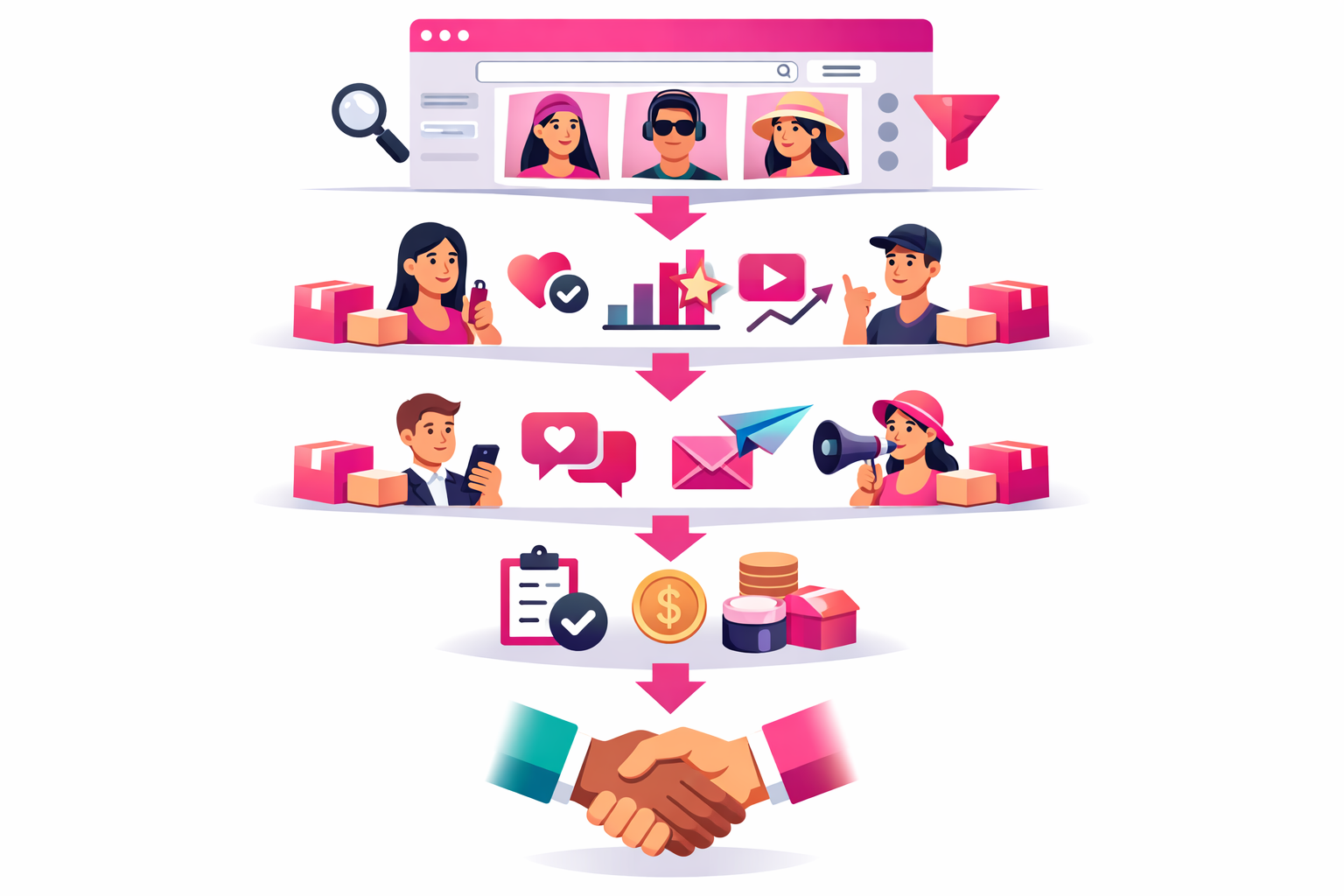
Evaluating Creators Before You Reach Out
Before you send a single DM, evaluate each creator against these criteria. A beautiful feed means nothing if their audience doesn't convert.
Engagement Rate Over Follower Count
A creator with 20K followers and a 7% engagement rate will almost always outperform a creator with 200K followers and a 1% engagement rate—especially for driving purchases. Calculate engagement rate by dividing average likes + comments by follower count.
Strong engagement rates by tier:
- Nano (1K-10K): 8%+ is strong
- Micro (10K-100K): 4-8% is strong
- Mid-tier (100K-500K): 2-4% is strong
- Macro (500K+): 1-3% is strong
Audience Demographics
A beauty creator might have 80% female followers aged 18-34—perfect if you sell skincare. But a comedy creator who occasionally reviews products might have a much broader audience with less purchase intent. Always check if the creator's audience matches your target customer.
Content Quality and Style
Watch at least 10-15 of their recent videos. Ask yourself:
- Does their content style match your brand's vibe?
- Do they naturally integrate products, or does it feel forced?
- Do their viewers engage with product-related content specifically?
- Are the comments genuine, or filled with spam and bots?
- How do they handle brand partnerships—authentically or like an infomercial?
Past Brand Collaboration Performance
Look at their previous sponsored content. Did it get similar engagement to their organic posts? If branded content consistently underperforms their regular content, their audience doesn't respond well to recommendations—that's a red flag.
Red Flags to Watch For
- Sudden follower spikes (purchased followers)
- High follower count but very low views per video
- Comments that feel generic or bot-like
- Promotes a different brand every other day (audience fatigue)
- Refuses to share analytics or past campaign results
Outreach and Partnership Structures
How you approach creators matters as much as who you approach. A well-crafted outreach message and clear partnership structure sets the foundation for a productive collaboration.
Crafting Your Outreach Message
Keep it short, specific, and creator-focused. The worst outreach message is a generic template that screams "I sent this to 500 people." The best messages show you actually watch and appreciate their content.
Include these elements:
- Reference specific content. Mention a video you liked and why. This proves you're not mass-messaging.
- Explain the fit. Tell them why your product aligns with their content and audience.
- State the offer clearly. Free product? Commission? Flat fee? Don't make them guess.
- Keep creative freedom front and center. Creators know their audience better than you do. Promise them creative control.
Partnership Models That Work
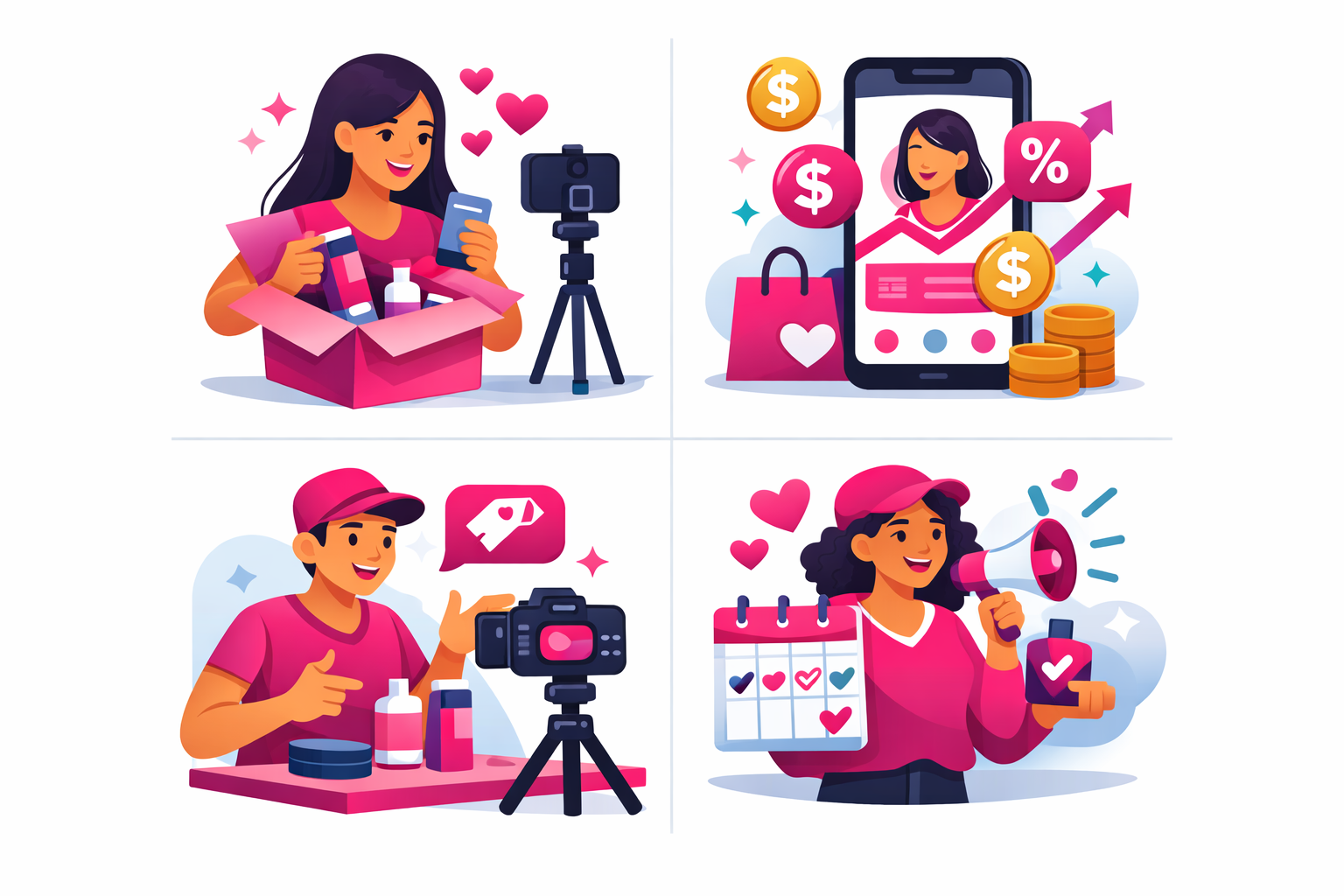
Product Seeding
Send free products to creators with no obligation to post. Most will create content anyway because they genuinely like what you sent. This is the most authentic form of influencer marketing—and it scales beautifully. Send 50 products per month and you might get 30+ pieces of organic content.
Affiliate Commission
Pay creators a percentage of each sale they drive. Standard commissions range from 10-30% depending on your margins. This aligns incentives perfectly—creators earn more when they sell more. Works especially well through TikTok Shop's built-in affiliate system.
Flat Fee + Performance Bonus
Pay a base fee for creating content, plus a bonus for hitting performance targets (views, clicks, or sales). This gives creators financial security while still incentivizing strong results. It's the model most professional creators prefer.
Brand Ambassador Program
Long-term partnerships (3-12 months) where a creator regularly features your products. This builds deep association between the creator and your brand. Audiences start connecting the creator's identity with your products—which is the ultimate goal of influencer marketing.
Pro Tip: Start Small, Scale Winners
Begin every new creator relationship with a single paid post or product seed. If the content performs well and drives sales, upgrade to a monthly retainer or ambassador deal. This protects your budget while letting you identify top performers through real data.
Content Strategy for Creator Partnerships
The biggest mistake brands make with influencer content is being too controlling. Your job is to provide the product and the key talking points. The creator's job is to translate that into content their audience actually wants to watch.
The Brief: Less Is More
Your creative brief should include:
- Key product benefits (2-3 max, not a feature list)
- Any required disclosures (FTC compliance)
- Must-include elements (product name, CTA, link)
- What NOT to say (competitor mentions, false claims)
What it should not include: word-for-word scripts, strict shot lists, or rigid format requirements. The moment content feels scripted, TikTok audiences tune out.
Content Formats That Drive Sales
Based on data from thousands of e-commerce influencer campaigns, these formats convert best:
- Honest review with demo. Creator shows the product, explains what they like (and what could be better), and demonstrates it in use. The honesty builds trust and the demo shows value.
- Get-ready-with-me (GRWM). Creator integrates your product into their routine content. Works perfectly for beauty, fashion, and lifestyle products.
- Unboxing + first impression. The excitement of opening a package is universally compelling. First impressions feel more honest than polished reviews because viewers see the genuine reaction.
- Day-in-my-life featuring product. Creator naturally includes your product in their daily routine content. This is the most subtle integration and often the most effective for brand association.
- Before/after transformation. Especially powerful for skincare, fitness, home organization, and any product with visible results. The visual proof is more convincing than any sales pitch.
Repurposing Creator Content
Every piece of influencer content should work harder than a single TikTok post. Always negotiate usage rights in your partnership agreement so you can:
- Boost it as a Spark Ad to reach a much larger audience
- Feature it on your product pages as social proof
- Include it in email marketing campaigns
- Repost on your own TikTok, Instagram, and YouTube Shorts
- Use clips in your paid advertising
Amplify What Works
When a creator's content performs well organically, amplify it immediately with paid promotion. Viryze can help you boost top-performing creator content to targeted audiences, testing multiple audience segments and automatically shifting budget to the combinations that drive the most sales.
Measuring and Scaling Your Influencer Program
You can't scale what you can't measure. Track every partnership with the right metrics so you know exactly which creators, content types, and partnership models drive real revenue.
Key Metrics to Track
| Metric | What It Tells You | Good Benchmark |
|---|---|---|
| Revenue per Creator | Direct sales attributed to each creator | 3-5x creator cost |
| Cost per Acquisition | What you paid the creator divided by sales | Less than 30% of AOV |
| Engagement Rate | How well the branded content resonated | Within 70% of their organic average |
| Content Reuse Value | Performance when used as Spark Ads or on other channels | Positive ROAS as a paid ad |
| Repeat Purchase Rate | Whether influencer-acquired customers come back | 15-25% within 90 days |
Attribution Methods
Use multiple attribution methods to get a complete picture:
- Unique discount codes — Give each creator a unique code (e.g., SARAH15). This is the simplest and most reliable attribution method.
- UTM tracking links — Create unique URLs for each creator that track clicks and conversions through Google Analytics.
- TikTok Shop analytics — If selling through TikTok Shop, the built-in affiliate dashboard tracks sales per creator automatically.
- Post-purchase surveys — Ask customers "How did you hear about us?" to capture influence that discount codes miss.
Scaling Your Program
Once you've identified what works, scale systematically:
- Double down on top performers. Upgrade your best-performing creators to ambassador deals with higher pay and longer commitments.
- Find lookalike creators. Study what makes your top creators successful—audience size, content style, niche—and find more creators who match that profile.
- Increase product seeding volume. If product seeding works, go from 20 packages per month to 50, then 100. The math scales linearly.
- Build a content library. Every piece of creator content becomes an asset. Use your best-performing creator videos as Spark Ads to multiply their reach.
- Automate where possible. Use tools to manage outreach, track deliverables, and measure performance across dozens or hundreds of creators simultaneously.
The Flywheel Effect
As you build your creator network, something powerful happens: creators start coming to you. When other influencers see multiple peers promoting your product, they reach out because they want to be part of it. This organic inbound pipeline reduces your outreach costs and attracts creators who are genuinely excited about your brand.
Frequently Asked Questions
How much does TikTok influencer marketing cost for e-commerce?
Costs vary by creator tier. Nano-influencers (1K-10K followers) often accept free products. Micro-influencers (10K-100K) charge $100-500 per post. Mid-tier creators (100K-500K) charge $500-5,000, and macro-influencers (500K+) charge $5,000-50,000+. Most e-commerce brands see the best ROI from micro-influencers due to higher engagement rates and more authentic audience connections.
How do I find the right TikTok influencers for my product?
Start with TikTok Creator Marketplace for verified data. Search relevant hashtags in your niche to find active creators. Check that their followers match your target demographic, review past brand collaborations, and prioritize engagement rate (3%+ is strong) over raw follower count. Also analyze what creators are already promoting products similar to yours.
What type of TikTok influencer content drives the most sales?
Authentic product reviews and demonstrations consistently drive the most sales. Formats like honest reviews, get-ready-with-me content, and problem-solution demonstrations outperform scripted promotional content. The key is letting creators integrate your product naturally into their existing content style.
Should I use TikTok Shop affiliates or direct partnerships?
Both have advantages. TikTok Shop affiliates are lower risk—you only pay on sales, making it ideal for testing new creators. Direct partnerships give more creative control and higher-quality content. The best strategy combines both: use affiliates to identify top performers, then convert the best into paid ambassadors.
How many influencers should an e-commerce brand work with?
Start with 5-10 micro-influencers per month to test different styles and audiences. As you find what works, scale to 20-50 per month. Successful e-commerce brands maintain an always-on influencer program rather than one-off campaigns, because consistent creator content compounds over time.
Ready to Amplify Your Creator Partnerships?
Great influencer content deserves a great audience. Viryze helps you boost your best-performing creator videos to targeted audiences, automatically testing multiple segments and optimizing your budget for maximum sales.
Start Promoting Your ContentContinue Learning
TikTok Affiliate Marketing
Set up commission-based creator partnerships that drive sales with zero upfront cost.
Spark Ads Guide
Boost creator content as ads to reach targeted audiences beyond their organic reach.
E-commerce Guide
The complete foundation for selling products on TikTok—organic and paid strategies.

Head of Creator Success at Viryze
TikTok growth strategist helping creators reach their first 100K followers through data-driven promotion strategies.