
Every coach hits the same wall: your calendar is full, your rates have already gone up, and the only way to earn more is to work more. The escape isn't another 1:1 client - it's a group program or a course. And TikTok is quietly the best launch platform a coach has ever had.
But most coaches launch backwards. They spend three months building a course nobody asked for, post one "doors are open!" video, and sell two seats - one to a friend. Programs don't fail at the launch. They fail in the weeks before it, when the audience was never prepared to buy.
This guide fixes the sequence end to end: the four-rung Product Ladder that tells you what to sell at each stage of your practice, the Waitlist Test that validates a program before you build a single module, the Belief Bridge content series that pre-sells your launch, the Seed-Open-Close launch week itself, and the evergreen system that keeps a course selling long after cart close. It builds on the income-stream order from our guide to how coaches make money on TikTok - that covers what to sell; this covers how to actually sell it.
The honest summary:
- Climb the ladder in order. Free content → 1:1 clients → group program → course. Each rung funds and validates the next.
- Validate before you build. A waitlist that fills is a green light; a waitlist that doesn't just saved you three months.
- The launch is won in the seeding. Two to three weeks of belief-shifting content sells more seats than any open-cart video.
- When a launch video proves it converts, selective amplification puts it in front of thousands more people who match your ideal student.
What's Inside
- 1. Why TikTok Sells Programs Better Than Any Funnel
- 2. The Coach's Product Ladder: What to Sell at Each Stage
- 3. The Waitlist Test: Validate Before You Build
- 4. The Belief Bridge: Content That Pre-Sells Your Program
- 5. Seed-Open-Close: The 7-Day Launch Playbook
- 6. Selling Group Programs & Cohorts: The Live Rung
- 7. Selling Courses: From Launch Spikes to Evergreen
- 8. Pricing the Ladder: Anchor High, Stack Down
- 9. Seven Launch Mistakes That Empty Your Cart
- 10. Scaling Launches with Selective Amplification
- Frequently Asked Questions
1. Why TikTok Sells Programs Better Than Any Funnel
A group program or course is a trust purchase, just like 1:1 coaching - the buyer is betting that your way of solving their problem works. Traditional funnels manufacture that trust with webinars and email sequences. TikTok manufactures it every single day, in 60-second increments, with people who chose to follow you.
That's the structural edge: by launch day, your followers have watched you coach for months. The webinar already happened - thirty videos at a time. From our experience analyzing creator campaigns, coaches launching to a warm TikTok audience report conversion rates on launch content that cold-traffic funnels rarely touch: illustratively, 2-5% of engaged followers joining a waitlist, versus well under 1% for cold-funnel opt-ins.
The other edge is cost. A traditional course launch buys attention with ad spend; a TikTok launch earns it with the same advice content that grows your account - the engine covered in our complete TikTok guide for coaches and consultants. Paid promotion still has a role, but it comes after a video proves it converts - not before. More on that in section 10.
2. The Coach's Product Ladder: What to Sell at Each Stage
The Product Ladder is the order in which a coaching business adds offers - and the reason the order matters is that each rung is built from the one below it:
- Rung 1: Free advice content. Your TikTok videos. They build the audience, surface the questions, and prove you can coach.
- Rung 2: 1:1 coaching. The proof engine. Every client teaches you what the market actually struggles with - and produces the results your programs will be sold on.
- Rung 3: Group program or cohort. The leverage rung. Your 1:1 method, packaged live for 10-20 people at a fraction of the 1:1 price.
- Rung 4: Course or digital product. The scale rung. The group program's tested curriculum, recorded once and sold indefinitely.
Skipping rungs is the expensive mistake. A course filmed before any 1:1 clients is a guess about what people need; a group program launched to strangers has no results to point to. Illustratively, coaches who climb in order report first-cohort fill rates around 70-90% of seats, while rung-skippers launching courses cold typically convert under 1% of followers - the audience never saw the proof ladder get built.
If you're still on rung 2 and your calendar isn't full yet, start with our guide to getting coaching clients from TikTok - the Trust Ladder there fills the 1:1 practice that this ladder is built on. The signal you're ready for rung 3: demand exceeds your calendar even after raising prices.
3. The Waitlist Test: Validate Before You Build
Before you outline a single module, run the Waitlist Test: announce the program before it exists, point people to a simple waitlist form, and let the response tell you whether to build.
The test takes one video and one link:
- The announcement video. "I'm putting together a small group version of what I do 1:1 - same method, 8 weeks, a fraction of the price. If you'd want a seat, the waitlist is in my bio." No curriculum, no price, no promises - just the shape of the offer.
- The waitlist form. Name, contact, and one question: "What would you want this program to fix for you?" That single answer field becomes your curriculum research and your launch copy, written in your market's own words.
Then read the result honestly. A useful illustrative benchmark: you want roughly 3x your seat count on the waitlist before you build - about 30 names for a 10-seat cohort - because waitlists convert to purchases at around 25-40% when the launch is warm. Hit the number and you build with confidence. Miss it badly and TikTok just saved you three months of building something your audience didn't want - reposition and test again.
Here's the part coaches miss: the Waitlist Test isn't just validation - it's the start of the sale. Everyone on that list raised their hand before seeing a price, which makes them the warmest launch audience you will ever have.
4. The Belief Bridge: Content That Pre-Sells Your Program
Between validation and launch sits the phase that decides everything: seeding. For two to three weeks before the cart opens, your content walks viewers across what we call the Belief Bridge - the set of things someone must believe before buying your program is the obvious next step.
For most coaching programs, the bridge has four planks:
- "My problem is solvable." Client transformation stories (with permission) - where they started, what changed, where they are now.
- "This method is why it works." Teach your framework openly, one piece at a time. Naming and teaching the method doesn't give away the program - it advertises it.
- "Doing it alone is the slow path." Myth-flip videos about why information alone hasn't fixed it - accountability, feedback, and structure are what the program adds.
- "Now is the time." Cost-of-waiting content: what six more months of the problem actually costs in money, energy, or momentum.
Mechanically, this is still just great advice content - the same specific-answer formats from our 50+ coach content ideas vault, now aimed at the beliefs behind one offer. Viewers experience two weeks of unusually focused value; the algorithm sees your normal posting rhythm. Nothing reads as a launch yet.
The payoff shows up on open day. Illustratively, coaches who seed for two-plus weeks report open-cart conversion running two to three times higher than launches announced cold - because by the time you say "doors are open," the audience has already sold itself.
5. Seed-Open-Close: The 7-Day Launch Playbook
The launch itself is a short, honest window - we call the full arc Seed-Open-Close. Seeding you've done. Now the cart opens for five to seven days, with one job per day:
The open-cart week, day by day
- •Day 1 - The Story Open. Why this program exists: the client pattern you kept seeing, and who it's for. Waitlist gets first access (and any early pricing) the same morning.
- •Day 2 - The Walkthrough. Screen-share or talk through exactly what's inside: the weeks, the calls, the outcomes. Fear of the unknown kills more enrollments than price does.
- •Day 3 - The Proof Day. Results and testimonials - screenshots, a former client's clip, or the transformation story told in numbers.
- •Day 4 - The Objection Video. Answer the real hesitations out loud: "What if I'm too busy?" "What if I'm behind everyone else?" Pull them straight from your DMs.
- •Days 5-6 - Teach Through the Cart. Normal advice videos with a one-line permission CTA. The account should never turn into a week-long infomercial.
- •Day 7 - The Final Call. A calm, honest close: doors shut tonight, here's who the program is for, here's the link. Deadlines work because they're real - never manufactured.
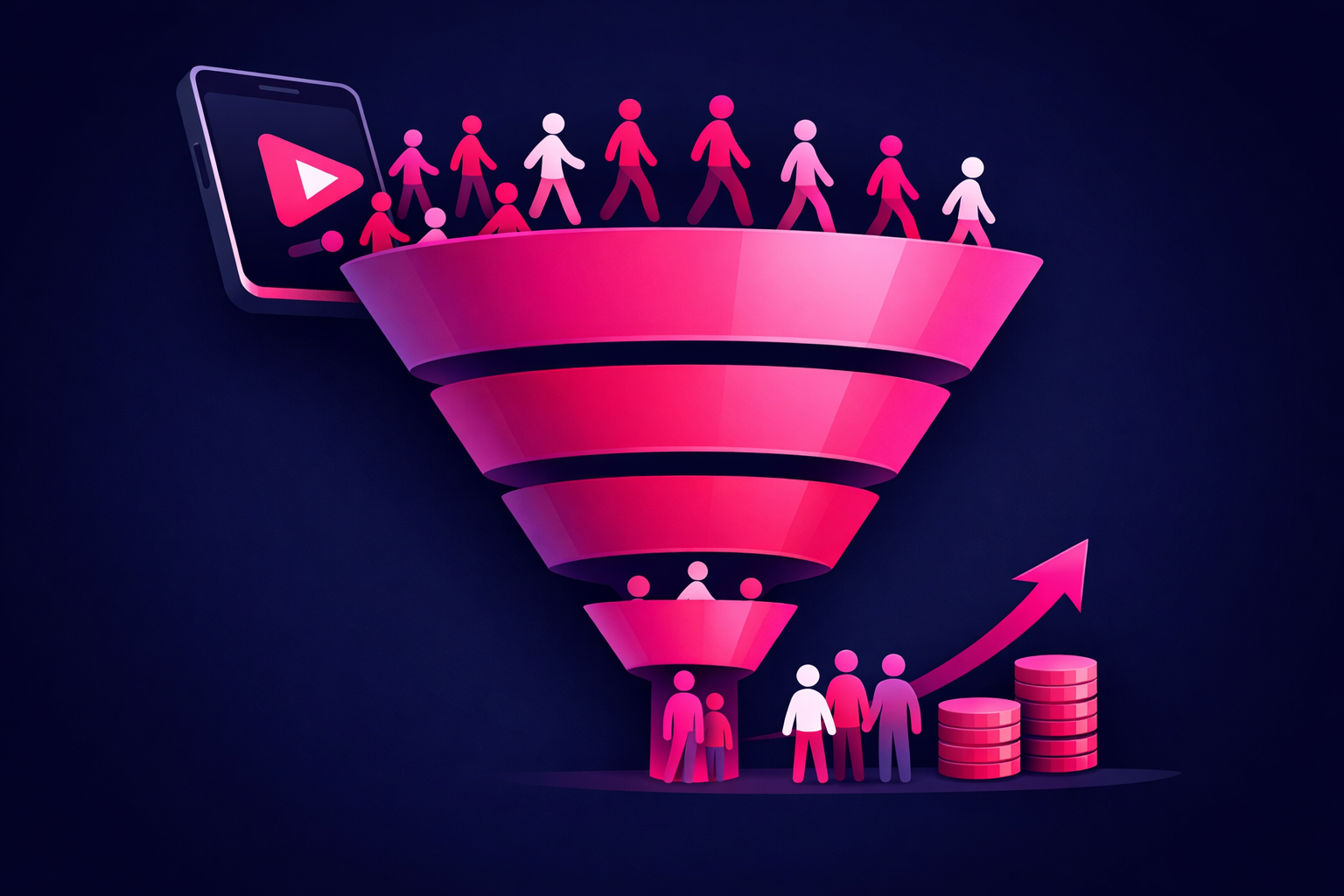
Two mechanics carry the week. First, the One-Tap Rule applies double during a launch: checkout or application must be one tap from your bio, and your pinned video should be the Day 2 walkthrough for the duration of the cart. Second, comments and DMs are where seats actually close - a thoughtful question about the program is a buyer deciding, and one helpful, pressure-free reply typically decides them.
A useful illustrative pattern from creator launches: enrollment clusters at the two ends - roughly 40% of seats in the first 48 hours and another 40% in the final 24, with a quiet middle. Don't panic on Day 4. The middle is where the Objection Video and comment conversations do their slow work.
6. Selling Group Programs & Cohorts: The Live Rung
The group program deserves its own treatment because it's the rung where most coaches first escape the hours-for-dollars trap - and the rung TikTok sells best, because the thing being bought is you, live, which your videos have been demonstrating all along.
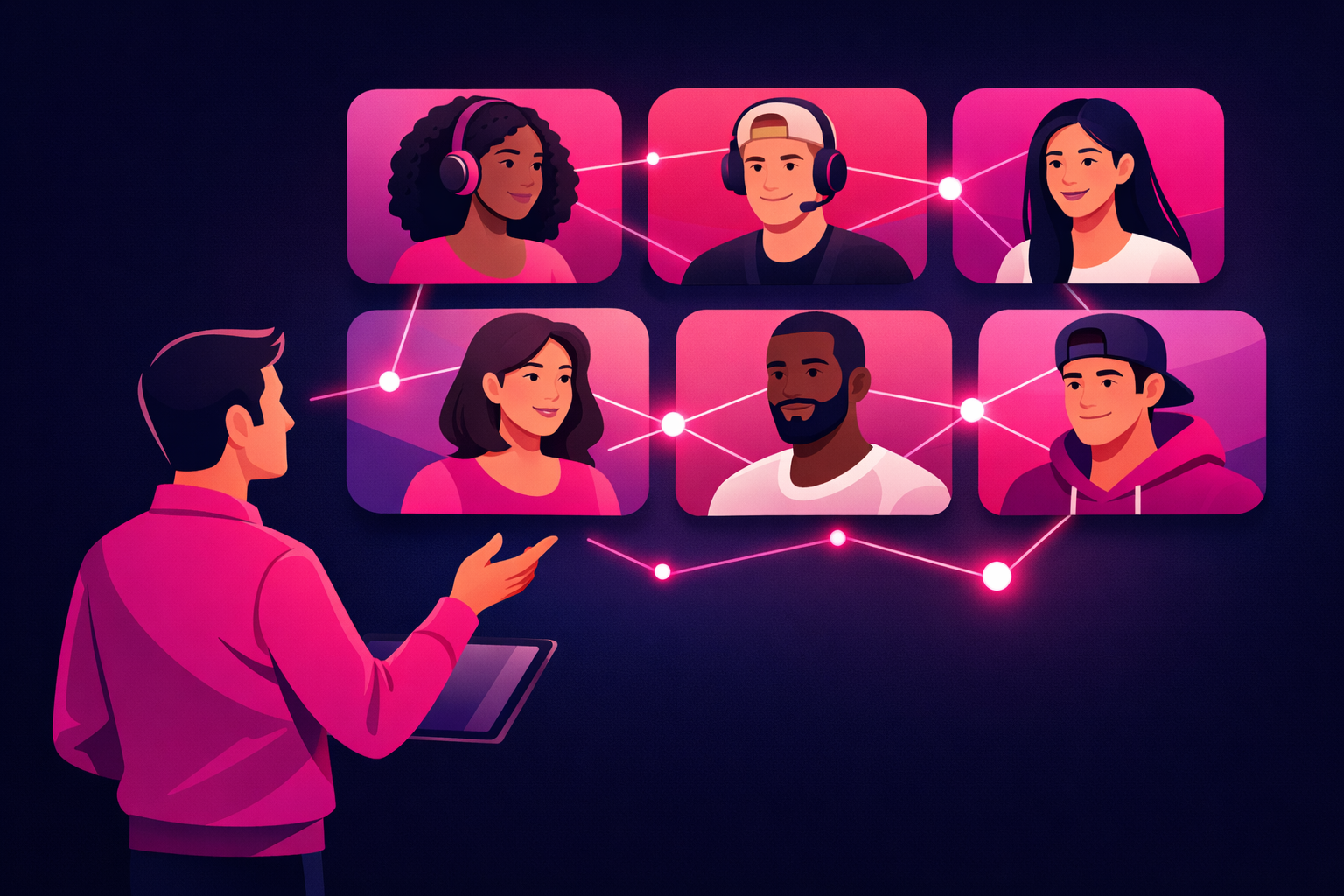
What makes a cohort sell - and deliver:
- Keep the first one small and short. 8-12 seats, 6-8 weeks. Small enough that every member gets coached on calls (which produces testimonials), short enough that completion rates stay high.
- Sell the container, not just the content. The curriculum plank of the Belief Bridge already taught the method free. What the program sells is the live layer: coaching calls, feedback on their situation, the cohort, the accountability.
- Use an application when demand allows. A short application ("What are you working on? What have you tried?") filters fit, raises perceived value, and hands you launch content for the next cohort.
- Harvest the cohort for the next rung. Every question asked on a group call is a course module, a future video, and proof the curriculum works. Cohort one is course research someone paid you to do.
The economics explain the enthusiasm. Illustratively: ten seats at $1,000 for an eight-week cohort with one group call a week is $10,000 for roughly 16-20 delivery hours - three to five times the effective hourly rate of most 1:1 practices - while costing each member a third of what 1:1 would. Everyone gets a better deal. That margin math sits inside the larger income-stream picture in our coach monetization guide.
7. Selling Courses: From Launch Spikes to Evergreen
After one or two cohorts, you have what a course requires: a curriculum tested on real people, testimonials, and a backlog of every question students actually asked. Record that - not the outline you would have guessed at six months earlier.
Courses launch the same way (Seed-Open-Close works at every price point), but their real superpower is what happens after: the evergreen shelf. Three pieces keep a course selling between launches:
- The pinned walkthrough. One pinned video that tours the course and who it's for, permanently one tap from every video you ever post.
- The teach-then-invite CTA. In roughly one of every four advice videos, a single line: "this is one piece of the full system - link in bio if you want all of it." The other three videos stay pure value.
- The student-result loop. Every student win becomes a video, every video sells more seats, every new student produces more wins. This loop compounds exactly like the follower flywheel in our coach growth roadmap.
Expect the shape, not the spike: launches produce revenue cliffs; evergreen produces a floor. Illustratively, a course that sells 60 seats in launch week might settle into 8-15 evergreen sales a month from the shelf system - and creators in the education space run this exact pattern at scale, as covered in our guide to marketing online courses on TikTok.
8. Pricing the Ladder: Anchor High, Stack Down
Pricing a program in isolation is how coaches end up at $97 and resentful. Price the ladder instead - each rung anchored to the one above it:
Stacked this way, every follower has a rung they can reach, and every rung advertises the one above it: the course student who wants feedback upgrades to the cohort; the cohort member who wants depth upgrades to 1:1. Coaches with a full ladder routinely find 20-30% of program revenue comes from these upgrades - customers you already earned.
One warning: never let the ladder run backwards. If the course quietly contains everything the cohort does, or the cohort undercuts 1:1, the anchor collapses and everything reprices down. Each rung up must add something the rung below genuinely lacks - access, feedback, and proximity to you.
9. Seven Launch Mistakes That Empty Your Cart
- Building before validating. Three months of course production before one waitlist video. Run the Waitlist Test first - always.
- Launching cold. A "doors open" video with zero seeding is an announcement to people who weren't warmed to hear it.
- Turning the account into an infomercial. Seven straight days of pitch content tanks watch time and trust at once. Teach through the cart; sell in one line.
- Hiding the price and the contents. Mystery creates hesitation, not intrigue. The Walkthrough video exists to kill fear of the unknown.
- Fake scarcity. "Only 2 seats left!" with 15 open is a trust-sensitive audience's last straw. Real deadlines and real caps only.
- Ignoring launch-week comments and DMs. Every detailed question during open cart is a buyer on the fence. Slow replies hand them to hesitation.
- Judging the program by launch one. First cohorts fill partially all the time. Deliver it brilliantly anyway - the testimonials from eight students sell out cohort two.
Pro Tip
Save every launch video's numbers - views, saves, profile taps, and (via a "what made you join?" question at checkout) which video closed each sale. Your next launch starts with proof of which content converts, which is exactly what a TikTok promotion service needs to amplify the right video instead of a guess.
10. Scaling Launches with Selective Amplification
Your first launch runs on organic reach. Your second one doesn't have to - because now you know things no cold advertiser knows: which seeding video filled the waitlist, which launch video drove checkouts, and exactly who enrolled.
Selective amplification means taking those proven videos - usually the best Belief Bridge piece and the Walkthrough - and running them through Spark Ads so they reach thousands more people who match your ideal student, as native videos rather than ads. Grow the warm audience between launches; amplify the converters during them.
The math is friendlier for program sellers than almost anyone else on the platform. If a $1,000-seat cohort fills at even modest rates from matched followers, a few hundred dollars of professional TikTok promotion pays for itself with a single enrollment. Viryze's AI-powered audience testing runs multiple audience combinations against your proven video and automatically shifts budget to the segments that actually follow and buy - so each launch inherits a bigger, better-matched audience than the last.
The sequence never changes: validate with the waitlist, pre-sell with the Belief Bridge, launch with Seed-Open-Close, then amplify what the launch proved. Organic proves; paid scales.
Ready to Fill Your Next Cohort?
You bring the launch video that's already converting - Viryze puts it in front of thousands of people who match your ideal student. AI-powered audience testing, automatic budget optimization, and real follower growth through TikTok's official ads platform.
Launch Bigger with ViryzeFrequently Asked Questions
How do I sell a coaching program on TikTok?
In sequence, not in one video: prove the transformation with 1:1 clients first, validate demand with a waitlist before you build anything, then pre-sell the launch with two to three weeks of seeding content that teaches the beliefs behind your method. When you open enrollment, run a short open-cart window (5-7 days) with one launch video per day - the story, the curriculum walkthrough, student results, objections, and a final-call video. Coaches who launch to a warm waitlist routinely fill first cohorts of 10-20 seats from audiences under 10,000 followers, because the audience was pre-sold before the cart ever opened.
How many followers do I need to sell a group coaching program?
Fewer than almost anyone expects. A first cohort of 10 seats at $500-$1,500 typically fills from 3,000-10,000 right-fit followers, because group programs convert warm followers rather than cold traffic. The real requirements are proof and fit, not audience size: a handful of 1:1 client results to reference, a waitlist that validated demand, and followers who match the person your program serves. A coach with 5,000 followers in a tight niche will out-sell a coach with 100,000 general followers on launch day.
Should I sell a group program or a course first?
Group program first, almost always. A live group program forgives an imperfect curriculum because you're in the room adjusting it - and it pays you to develop the material a course will later need. It also produces the testimonials, questions, and refinements that make a self-paced course actually good. The proven ladder is: 1:1 clients prove the transformation, a group program packages it live, and only then does a course scale the tested version. Coaches who film a course first usually record the wrong curriculum for an audience they haven't listened to yet.
How do I price a group coaching program sold on TikTok?
Anchor to your 1:1 rate, not to what feels safe. A group program is typically priced at 25-40% of the equivalent 1:1 package - close enough to feel like real coaching, far enough to be the accessible option. If your three-month 1:1 package is $3,000, a group cohort at $900-$1,200 reads as a genuine deal while tripling or quintupling your revenue per delivery hour. Courses then sit below the group program (often $100-$500), completing a ladder where every follower has a rung they can afford - and each rung pre-sells the one above it.
Can you sell courses directly in TikTok videos?
You sell the outcome in the video and complete the sale at the link in your bio. Direct hard-pitches underperform on TikTok because the platform rewards watch time and saves, not ad-style content. What works is the teach-then-invite pattern: deliver a complete, specific answer, then add a permission-based line like "the full system is in my program - link in bio if you want the whole thing." Keep your checkout one tap from your profile, pin a video that walks through what's inside the program, and let your everyday advice content do the persuading.
Continue Reading
How Coaches Make Money on TikTok in 2026
The seven income streams stacked in the right order - 1:1 clients, the Capacity Flip, group programs, courses, and beyond.
Read More →Getting Coaching Clients from TikTok
The five-rung Trust Ladder from viewer to signed client - the 1:1 pipeline your product ladder is built on.
Read More →TikTok for Coaches & Consultants: The Complete 2026 Guide
The full playbook: the six advice formats that build trust fastest, the client-question content engine, and the 90-day plan.
Read More →
Head of Creator Success at Viryze
TikTok growth strategist helping creators reach their first 100K followers through data-driven promotion strategies.