
Every coach hits the same wall: you sit down to film, open the camera, and your mind goes blank. So you post another motivational quote - and the algorithm shrugs, because vague inspiration is the most oversupplied content on TikTok. Meanwhile the coach who answered one narrow, specific question this morning just booked two discovery calls from a video that took eight minutes to make.
The difference isn't creativity. It's having a vault of proven idea patterns to pull from - concepts pre-validated by what real clients ask and what real viewers save. Once you have the vault, the blank-camera problem disappears and filming becomes assembly, not invention.
This guide is that vault: 50+ coach TikTok content ideas organized into the six categories that book clients - specific-answer clips, myth-flips, client transformation stories, framework videos, behind-the-practice content, and client-booking content - plus the hook patterns that make advice stop the scroll and the capture system that means you never run dry again. It works for life coaches, business coaches, career coaches, health coaches, and independent consultants alike. New to the platform? Start with our complete TikTok guide for coaches and consultants for the full strategy, then come back here for the ideas.
The honest summary:
- Your clients already wrote your content. Every session question, reframe, and milestone is a pre-validated video idea.
- Specific beats motivational, every time. One narrow question answered completely out-earns ten inspiration posts.
- Proof books the calls. Transformation stories and live coaching moments convert viewers into discovery calls at the highest rate of any format.
- When one idea takes off, use selective amplification to push the proven video to more people who match your ideal client profile.
What's Inside
- 1. The Client-Question Idea Machine: Never Run Out Again
- 2. Hooks That Make Advice Videos Stop the Scroll
- 3. Specific-Answer Clips (Ideas 1-12)
- 4. Myth-Flips & Contrarian Takes (Ideas 13-22)
- 5. Client Transformation Stories (Ideas 23-30)
- 6. Framework & Teaching Videos (Ideas 31-38)
- 7. Behind-the-Practice Content (Ideas 39-45)
- 8. Client-Booking Content (Ideas 46-52)
- 9. Turning the Vault Into a Weekly System
- 10. When One Idea Takes Off: Amplifying Your Winners
- Frequently Asked Questions
1. The Client-Question Idea Machine: Never Run Out Again
Before the list, the system - because a list of 52 ideas runs out, and a machine that generates them doesn't. The coaches who post consistently for years aren't more creative than you. They've simply stopped inventing content and started capturing it from work they were doing anyway.
Four capture points feed the machine, and each takes under a minute:
- The question log. After each session, write down the one question your client asked - in their exact words. Their phrasing is your hook, because prospects search and scroll in the same language they ask in. Ten sessions a week is ten pre-validated topics.
- The reframe that landed. The sentence that made your client's face change is a myth-flip or framework video waiting to happen. Log it before your next session starts.
- The milestone. When a client wins - the raise, the launch, the breakthrough - ask permission to share the story without their name. One milestone is one transformation video, and transformation videos are your highest-converting assets.
- The pattern of the month. Three clients hitting the same wall in the same month is your niche telling you what it needs. Pattern videos feel eerily well-timed to viewers because they are.
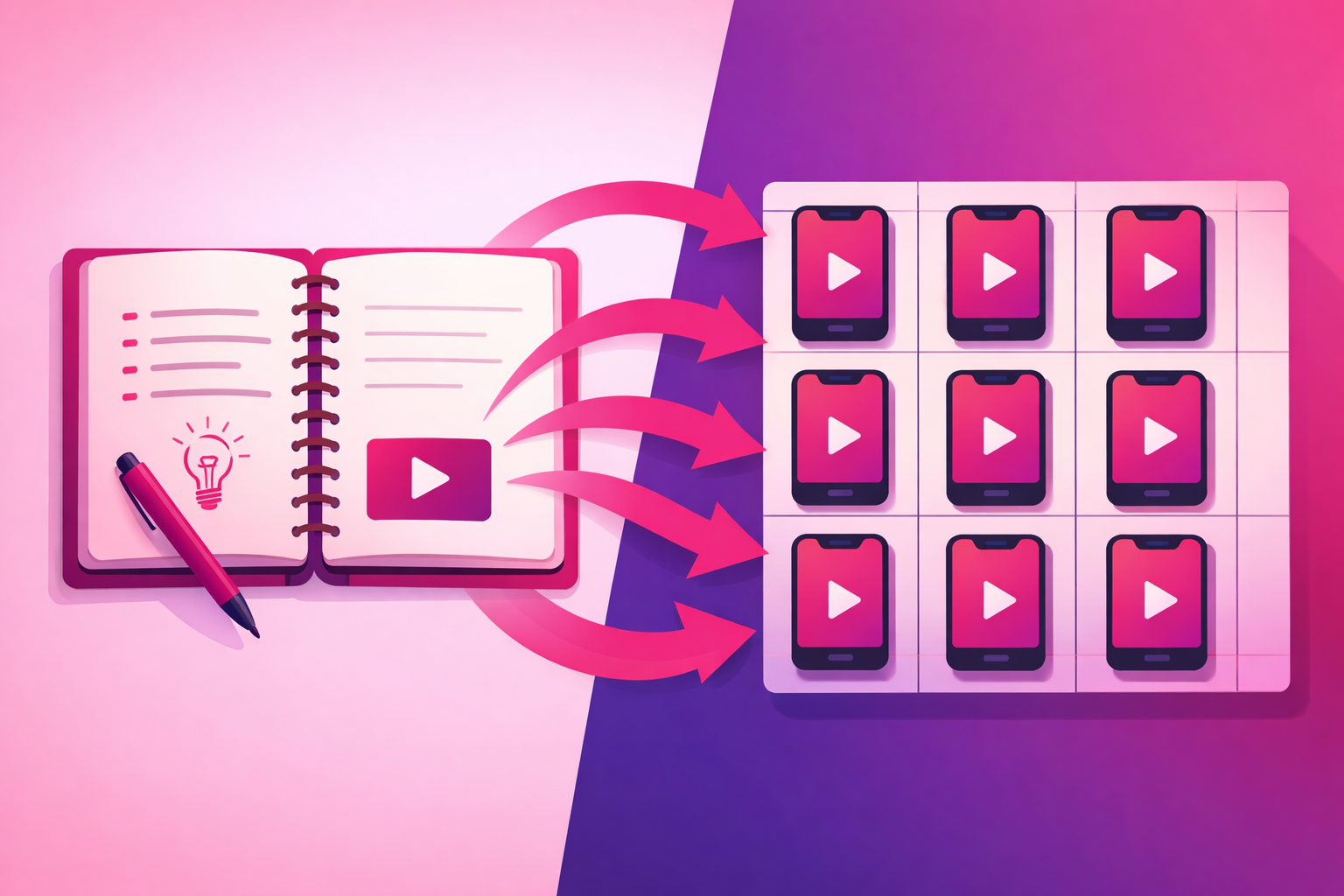
Your second source is the audience itself. Every question in your comments and DMs is a video the platform has already proven demand for - someone cared enough to ask. From our experience helping creators grow, comment-sourced videos average roughly 40% higher engagement than invented topics, because the algorithm routes them back to the exact conversation that spawned them.
The 52 ideas below are the patterns that capture system feeds. Treat each one as a template: plug in this week's question, reframe, milestone, or pattern, and the video writes itself.
2. Hooks That Make Advice Videos Stop the Scroll
An idea only works if people stop for it, and on TikTok the stop happens - or doesn't - in the first second. Watch-through rate is the dominant ranking signal, so before you film any idea in this vault, decide its hook. The rule from our coaches pillar guide applies to every single idea below: lead with the proof, not the preamble.
- The result-first open. "My client just negotiated a $40K raise - here's the script." Outcome first, method second.
- The mistake open. "If your discovery calls start with your backstory, you're losing clients." The right viewer feels personally seen.
- The contrarian claim. "Morning routines are overrated - here's what actually moves the needle." Defensible controversy earns comments.
- The number hook. "I raised my rates 60% and lost zero clients." Specific numbers signal specific advice.
- The caption hook. A bold on-screen line before a word is spoken - most viewers watch on mute, so the caption often does more work than the audio.
For the deeper mechanics of why these openings out-rank slow intros, our TikTok algorithm guide breaks down the ranking signals frame by frame.
3. Specific-Answer Clips (Ideas 1-12)
The king of coaching content: one narrow question, one complete answer, 25 to 45 seconds. Specific-answer clips earn the highest save rates of any coaching format - and saves are one of the strongest ranking signals on the platform, made by exactly the people who eventually hire help.
- Idea 1 - The exact-words answer. Take this week's question from your log, put the client's phrasing on screen as the caption, and answer it completely. The simplest video in this vault and the most reliable.
- Idea 2 - The script video. "What do you actually say when..." - give the word-for-word script for a hard conversation: asking for a raise, firing a client, setting a boundary with family. Script videos get screenshot, saved, and shared.
- Idea 3 - The say-this-not-that. One weak phrase, one strong replacement, side by side. Relationship and communication coaches own this format, but it works for negotiation, sales, and leadership too.
- Idea 4 - The decision rule. Give viewers a one-line test for a decision they agonize over: "If the job offer doesn't clear these three bars, walk."
- Idea 5 - The first-step video. Your niche's scariest goal, reduced to the single first action: "Want to go freelance? Do this one thing before you quit anything."
- Idea 6 - The red-flags list. "Three signs your manager will never promote you." Red-flag videos over-perform because viewers self-diagnose - and send them to friends.
- Idea 7 - The it-depends breakdown. Take a question everyone answers with a lazy absolute and show when each answer is right. Nuance, delivered fast, reads as deep expertise.
- Idea 8 - The 60-second audit. Walk through how you'd evaluate a resume, a pricing page, a morning routine, or a weekly schedule - out loud, fast, with your actual criteria.
- Idea 9 - The objection answer. Answer the doubt that keeps prospects from acting: "I don't have time to job hunt while working full-time" - then show the system that makes it false.
- Idea 10 - The tool verdict. The honest 30-second review of a tool, template, or app your clients keep asking about - and what you'd use instead.
- Idea 11 - The timeline reality check. "How long does it actually take to change careers?" Honest timelines build more trust than hype ever will.
- Idea 12 - The DM answer. Screenshot a real (anonymized) DM question, green-screen it behind you, and answer on camera. Signals that real people already ask you for help.
4. Myth-Flips & Contrarian Takes (Ideas 13-22)
Myth-flips take popular advice in your field and show why it fails - then hand the viewer what works instead. They spark the comment debates the algorithm loves, and they're the fastest way to separate yourself from every generic account in your niche. The rule: contrarian but defensible. You must be able to back the flip with experience.
- Idea 13 - The classic myth-flip. "Follow your passion is terrible career advice - here's what works instead." Name the popular advice, show the failure mode, give the replacement.
- Idea 14 - The guru takedown (no names). React to a piece of viral advice circulating in your niche - without naming the creator - and coach through why it backfires for real people.
- Idea 15 - The "stop doing this" video. The habit your niche celebrates that quietly holds clients back: the 5 a.m. club, the 10-page business plan, the endless certifications.
- Idea 16 - The uncomfortable truth. The thing you say in session that clients need but nobody posts: "Your network isn't the problem. Your ask is."
- Idea 17 - The industry secret. What insiders know that outsiders don't - how recruiters actually screen, how consulting rates are actually set, what gym programming is actually for.
- Idea 18 - The "I was wrong" video. Advice you used to give that you've since reversed, and what changed your mind. Counterintuitively, admitting a reversal is one of the strongest authority plays available.
- Idea 19 - The both-sides flip. Steelman the popular advice first, then show the hidden cost. Viewers trust the flip more when you've represented the other side fairly.
- Idea 20 - The trend translation. When a productivity or wellness trend goes viral, coach through who it actually helps and who it hurts. You ride the trend's search volume with a differentiated take.
- Idea 21 - The "harsh feedback" format. "If I were your coach, here's what I'd tell you about your job search." Direct, compassionate bluntness is magnetic - it's a free taste of real coaching.
- Idea 22 - The myth series. Turn ideas 13-21 into a numbered series - "career myths, part 7" - so each entry compounds the audience of the last. Series are how most coaching accounts break out.
5. Client Transformation Stories (Ideas 23-30)
Transformation stories are your highest-converting content: where a client started, what was actually in the way, what changed. They earn the highest share rates because viewers send them to the friend stuck in the same place - and they book calls because they let prospects see themselves in the outcome. The non-negotiable rule: permission first, no names, no identifying details, ever. Share patterns and lessons, not people.
- Idea 23 - The milestone story. The classic: "My client just got the offer she was told she wasn't qualified for. Here's what we changed." Outcome in the hook, method in the body.
- Idea 24 - The real obstacle reveal. What the client thought the problem was versus what it actually was. The gap between the two is where your expertise becomes visible.
- Idea 25 - The turning-point session. Narrate the single session where everything shifted - the question you asked, the resistance, the click. This is the closest a viewer gets to being coached without booking.
- Idea 26 - The before/after timeline. "Month 1 she couldn't say her rate out loud. Month 4 she raised it twice." Compressed timelines make change feel achievable.
- Idea 27 - The almost-quit story. The client who nearly gave up right before the breakthrough. It speaks directly to the viewer currently deciding whether to give up.
- Idea 28 - The composite pattern story. When no single story is shareable, blend the pattern: "Every client who cracked this had the same three things in common." True to the work, safe on confidentiality.
- Idea 29 - Your own transformation. The story of why you coach - the wall you hit, what got you through, what you built from it. Post it quarterly; your newest followers haven't heard it.
- Idea 30 - The testimonial reaction. With permission, green-screen an anonymized client message - the "I got it!" text - and tell the story behind it. Raw proof, minimal production.
6. Framework & Teaching Videos (Ideas 31-38)
Framework videos name your method and teach it - and named frameworks are how strangers start quoting you. They also become the spine of your paid program later: the audience learns piece one free, and the cohort teaches the rest. If your style leans hard into teaching, our education creators guide covers the adjacent playbook in depth.
- Idea 31 - Name your method. Package the thing you already do into a named, numbered framework - "The 3-2-1 Negotiation Prep" - and teach it in one video. The name is what makes it spreadable.
- Idea 32 - The framework series. Teach the framework one piece at a time across five to seven videos. Most breakout coaching accounts ride exactly this: a named framework taught serially.
- Idea 33 - The worked example. Apply your framework to a realistic scenario start to finish. Teaching the tool shows knowledge; using it on camera shows competence.
- Idea 34 - The whiteboard breakdown. One concept, one drawing, sixty seconds. A hand sketching a two-axis chart holds attention better than almost any talking-head shot.
- Idea 35 - The template giveaway. Walk through a template you actually use - a weekly review, a salary research sheet, a client intake doc - and offer it as your lead magnet. This idea feeds your email list directly.
- Idea 36 - The diagnostic quiz. "Which of these four burnout stages are you in?" Self-diagnosis content gets shared and saved, and comments fill with people naming their stage - each one a warm lead.
- Idea 37 - The book-in-a-minute. Distill a book your clients always ask about into the three ideas that matter for your niche specifically. You borrow the book's search demand and add your lens.
- Idea 38 - The live coaching moment. Pull a real question from your comments and coach through it on camera, framework and all. Nothing proves you can coach like watching you coach - these convert to discovery calls at the highest rate of any idea in this vault.
7. Behind-the-Practice Content (Ideas 39-45)
Advice earns the follow; the person earns the client. Behind-the-practice content shows how you actually think and work, which quietly filters for clients who fit you - and filters out the ones who don't. Aim for roughly one personal video for every four or five advice videos.
- Idea 39 - How you prep for a session. The notes you review, the questions you plan, the outcome you aim for. Prospects have never seen the inside of coaching - showing it demystifies the purchase.
- Idea 40 - Your honest morning (or week). Not the aesthetic 5 a.m. fantasy - the real structure of a working coach's day, including what you refuse to do.
- Idea 41 - Coaching yourself in public. Apply your own framework to your own current struggle. Vulnerability plus method is the most trust-dense combination in coaching content.
- Idea 42 - The business-of-coaching video. How you set your rates, why you left your old career, what a full practice actually looks like. Fellow coaches and future clients are both fascinated.
- Idea 43 - What you're learning. The course, supervision, or book currently changing your practice. Coaches who visibly keep learning out-signal coaches who claim to have arrived.
- Idea 44 - The day a client fired you (lessons). Told with total anonymity: what went wrong, what you changed. Honesty about failure is rare enough in coaching content to be a differentiator by itself.
- Idea 45 - Answering "what does a coach actually do?" The question every skeptical prospect has. Explain what coaching is and isn't, who it's for, and when someone should not hire a coach. Naming who you're not for builds more trust than any pitch.
8. Client-Booking Content (Ideas 46-52)
The final category exists for one job: converting the trust you've built into booked discovery calls. These videos make the path to working with you obvious - because going viral with no visible next step wastes the best client-acquisition moment your practice will ever get.

- Idea 46 - The pinned "how working with me works" video. Who you help, what the engagement looks like, what it costs (or how pricing works), and the exact next step. Pin it permanently - it's the most important video on your profile.
- Idea 47 - The "who this is for" video. Describe your ideal client's situation so precisely they feel read: the job title, the stuck point, the ambition. Specificity here is what turns followers into inquiries.
- Idea 48 - The discovery-call demystifier. Walk through exactly what happens on a call with you - no pressure tactics, what you'll ask, what they'll leave with either way. Booking anxiety is the biggest silent conversion killer; this video removes it.
- Idea 49 - The lead magnet video. Teach one complete win, then offer the template or checklist that goes deeper via the link in your bio. The follower who downloads becomes an email lead you own.
- Idea 50 - The capacity announcement. "Two client spots open in September - here's who they're for." Honest scarcity (only if true) converts long-time watchers who needed a deadline.
- Idea 51 - The FAQ objection series. One video per real objection: "Is coaching worth the money?" "What if I'm too far behind?" "How is this different from therapy?" Each one dissolves a reason not to book.
- Idea 52 - The client-journey recap. With permission and no names: the full arc from first discovery call to outcome, including the parts that were hard. The most complete proof video a coach can make - and the natural finale of your content ladder.
These seven videos work together as the top of the trust ladder from our coaches pillar guide: viewer, follower, subscriber, discovery call, client. The advice categories build the first three rungs; this category builds the last two.
9. Turning the Vault Into a Weekly System
Fifty-two ideas are useless if filming still requires a mood. The coaches who win run the vault as a system: five minutes of capture per day, one hour of filming per week, and a simple weekly mix so the account stays balanced.
A weekly mix that compounds:
| Category | Videos per Week | Job It Does |
|---|---|---|
| Specific-answer clips | 2 - 3 | Earn saves, build the audience, feed the algorithm |
| Myth-flip or framework | 1 - 2 | Differentiate you and build the named method |
| Transformation story | 1 | Convert trust into discovery-call intent |
| Behind-the-practice or booking | 1 | Humanize the coach and keep the path to work visible |
Batch it: phone on a tripod at eye level, window light, and film five to seven videos straight from the question log in one sitting. One take each - the slightly imperfect version reads as more credible than the polished one. Cut to 25-45 seconds with the payoff up front, add accurate captions for mute viewers, and schedule the week. For where this cadence fits in the bigger picture, the complete TikTok growth strategy guide maps the full zero-to-100K curve.
10. When One Idea Takes Off: Amplifying Your Winners
Post consistently from this vault and a pattern will emerge: most videos perform fine, and a few dramatically out-perform - higher completion, more saves, a spike in profile visits and booking-link taps. Those are your hero videos, and they're worth treating differently.
For coaches, the math on amplifying a hero video is unusually attractive. A follower who matches your ideal client profile is a warm lead for an offer worth thousands, so pushing a proven advice or transformation video to more of exactly those people has a payback most niches can't touch - a single converted client can repay months of promotion budget. The discipline is selectivity: amplify only videos that already cleared the organic bar (completion above 50%, save and share rates above your account average, a clear follow spike). Paid traffic cannot rescue a video nobody finishes.
That's the exact model our TikTok promotion service is built on - selective amplification of your proven best videos toward the audience most likely to become clients, instead of boosting every upload and hoping. For the mechanics of running promotion through TikTok's native format, see the Spark Ads guide.
Frequently Asked Questions
What should a coach post on TikTok?
Specific advice, not vague motivation. The six idea categories that book clients in 2026 are specific-answer clips (one narrow question, one complete answer), myth-flips that correct popular bad advice in your field, client transformation stories told with permission and without names, framework videos that name and teach your method, behind-the-practice content that shows how you actually work, and client-booking content like the pinned "how working with me works" video. Pick two or three categories that fit your coaching style and repeat them until the algorithm can categorize your account.
How do coaches never run out of TikTok content ideas?
By capturing ideas from work they already do instead of inventing them. Log the one question each client asked in their exact words, the reframe that made a session click, the milestone a client hit (with permission), and the pattern you saw across multiple clients this month. Ten sessions a week produces ten pre-validated video topics - questions real paying clients actually asked. Add your comment section and DMs as a second source: every question a viewer asks is a video the algorithm has already proven demand for.
Which coach content ideas get clients fastest?
Live coaching moments and client transformation stories convert viewers into discovery calls at the highest rate, because nothing proves you can coach like watching you coach. Specific-answer clips earn the most saves and build the audience, myth-flips earn the comments and reach, but the videos that directly precede a booking are almost always proof videos: a real question coached through on camera, or a real client outcome told with permission. Pair them with a pinned video that explains how working with you works and a booking link one tap away.
Can coaches succeed on TikTok without showing their face?
It is possible but harder in coaching than most niches, because hiring a coach is a trust purchase and faces build trust fastest. That said, several ideas in this list work faceless: screen-recorded breakdowns of an email or script, voiceover over b-roll of your workspace, text-on-screen framework walkthroughs, and green-screen reactions to industry advice. If you are camera-shy, start with voiceover formats and graduate to talking directly to camera - completion rates and follow rates almost always improve once viewers can see the person behind the advice.
How many times per week should a coach post on TikTok?
Five to seven times per week while growing from zero, four to six once the account has traction. That sounds heavy until you batch: one hour of filming per week, answering five to seven questions straight from your client-question log, covers the entire cadence. Consistency over a year beats any single viral video - the accounts that stall are almost never out of time, they are out of ideas, which is exactly what the capture system in this guide prevents.
Made a video that's already booking calls?
Don't let your best idea plateau at the reach the algorithm handed it. Viryze amplifies videos that have already proved themselves - putting your winning advice clip in front of thousands more people who match your ideal client profile, so every new follower is a warm lead for your practice.
Amplify your best advice videoRelated Reading
- TikTok for Coaches & Consultants: The Complete 2026 Guide - the full strategy this idea vault plugs into.
- The Complete TikTok Algorithm Guide - the ranking signals that decide which of these ideas travel.
- TikTok for Education Creators - the teaching playbook behind the framework video ideas.
- Health Coach TikTok Marketing - the health-coaching angle on advice content.
- TikTok Spark Ads Guide - the format to use when one of these ideas earns amplification.

Head of Creator Success at Viryze
TikTok growth strategist helping creators reach their first 100K followers through data-driven promotion strategies.