
Most authors hear “BookTok advertising” and picture either TikTok's confusing Ads Manager or the Promote button that quietly burns money. Both pictures are slightly true and almost completely wrong. In 2026, BookTok advertising is one of the most efficient ways to reach a high-intent reader audience — if you know which kind of video to amplify, who to target inside your sub-genre, and which tool to use to actually run the spend.
Here is the catch: most authors run BookTok ads on the wrong video, with the wrong audience, through the wrong tool. They boost a generic book haul to “all romance readers,” watch the cost per click crawl past two dollars, and conclude that BookTok ads do not work. The authors winning on paid BookTok in 2026 do something completely different. They wait for an organic video to prove itself, target a precise sub-genre pocket, and send traffic to a single clear next step.
This is the full BookTok advertising playbook for authors in 2026. You will learn when paid promotion makes sense, how the three main amplification tools really compare, the realistic budgets and benchmarks for your sub-genre, the videos that amplify well and the ones that do not, how to target sub-genre readers without losing your mind in Ads Manager, and how to scale a winning ad without blowing up your unit economics.
Why BookTok advertising is different in 2026:
- Sub-genre audiences are now targetable — TikTok's reader behavior signals are precise enough to target romantasy readers separately from contemporary romance readers.
- Save rate matters more than view count — the algorithm uses saves as the primary intent signal, and amplifying a high-save video compounds reach far more than boosting a high-view one.
- Creator-friendly tools have caught up — you no longer need to learn Ads Manager to run sub-genre-targeted BookTok ads with proper budget control.
- Backlist economics make ads work — one amplified video can lift an entire series, which is why per-book ROI is much higher for authors with a deep catalog.
What You'll Find Inside
When BookTok Ads Actually Make Sense
BookTok advertising is not a starter strategy. It is an amplifier. Spending money on ads before your account, your video, and your funnel are ready almost always burns budget without moving books. There are three signals that tell you the timing is right.
Signal 1: You Have a Video with a Save Rate Above 6 Percent
Saves are the strongest reader-intent signal on BookTok. A video with a save rate above 6 percent of views has already proven that it speaks to a real reader pocket. Amplification compounds that signal — it does not create one. Boosting a video with a 1 percent save rate just exposes more people to a video they are not saving, which actually trains the algorithm to deliver the boosted version less efficiently.
Signal 2: Your Account Has a Clear Genre Niche
TikTok's targeting works partly off your account's existing audience. If your account is a mix of romantasy, contemporary romance, and the occasional thriller, the algorithm has no clean reader pocket to amplify into. Picking a primary pocket first — covered in our BookTok genres guide — is what makes paid amplification efficient instead of expensive.
Signal 3: You Have a Reader Magnet, Preorder, or Backlist to Convert Against
Ads send traffic. Without a clear next step for that traffic, the spend evaporates. A reader magnet (free novella or first chapter), an active preorder, or a backlist title with a strong sample chapter will all convert. A bare Amazon link to a single book usually will not. Make sure the next step exists before turning the budget on.
The 30-Day Readiness Test
If you have not yet hit all three signals, spend the next 30 days fixing whichever ones are missing — ideally on organic content first, then on amplification. Authors who run ads before they are ready almost always conclude “BookTok ads do not work,” when the real story is that the foundation was not in place yet.
The Three BookTok Advertising Tools, Honestly Compared
There are three real options for amplifying a BookTok video in 2026. Each has a use case, and each has a failure mode. Here is the unvarnished comparison.
Option 1: TikTok Promote (the In-App Boost Button)
Promote is the simplest path: tap the button, pick a goal (views, profile visits, or website clicks), set a budget, and TikTok runs the ad. The interface is built for casual creators, which is a strength and a weakness. Targeting is extremely limited — usually country, age range, and a small set of broad interests. For a niche like BookTok, that is rarely precise enough.
Best for: a quick test on a video that is already performing well, when you just want to push it slightly further with minimal setup.
Worst for: anything that needs sub-genre targeting, audience testing, or proper budget protection. Cost per click on Promote tends to run two to four times higher than the same video amplified through Spark Ads with proper targeting.
Option 2: Spark Ads in TikTok Ads Manager
Spark Ads let you amplify an existing organic video as a paid ad while keeping all of its organic engagement (saves, comments, profile visits). The targeting is full-featured: you can layer interests, behaviors, lookalikes, custom audiences, and creator-affinity signals. This is the tool that actually unlocks sub-genre BookTok targeting.
Best for: authors who want maximum control, are willing to learn an ad platform built for global brands, and have the time to manage creative tests and audience segments inside Ads Manager.
Worst for: authors who want to spend their time writing, not learning a new software product. The learning curve is steep, the interface changes frequently, and the defaults are not optimized for creators — they are optimized for big-brand campaigns with five-figure monthly budgets.
Option 3: Creator-Friendly Amplification Tools (Like Viryze)
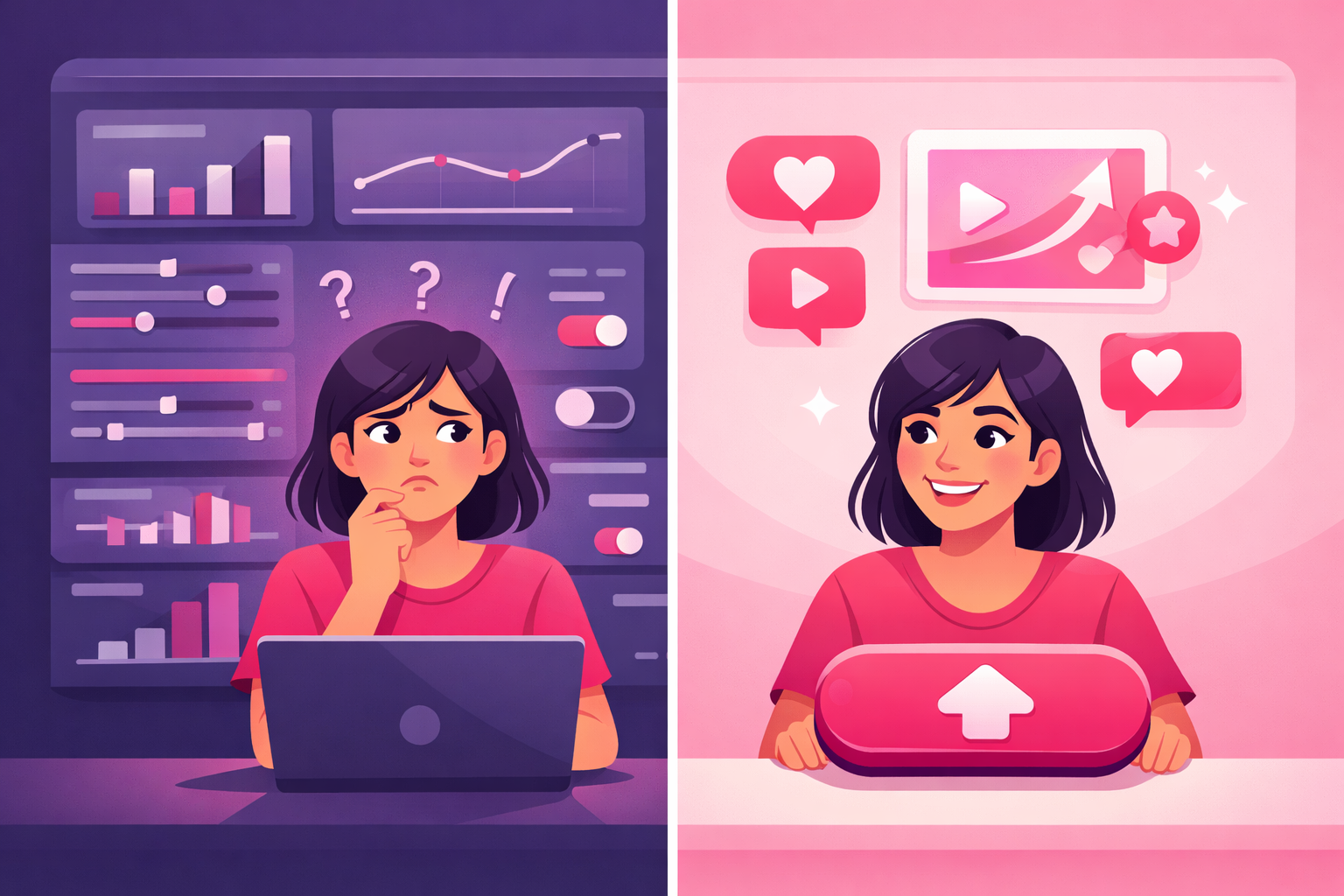
Creator-friendly tools sit on top of the same Spark Ads system but expose a simple interface designed for authors and creators, not brand marketers. You authorize your TikTok video, choose a budget, and the tool handles the targeting, audience testing, and budget protection in the background. The result is Spark-Ads-grade performance without the Ads-Manager learning curve.
Best for: authors who want sub-genre targeting and proper budget control but do not want to become a part-time TikTok ad operator. This is the dominant pattern for indie authors running BookTok ads in 2026.
Worst for: authors who genuinely want hands-on control of every targeting parameter or who are running such a large monthly spend that direct Ads Manager access is required.
Realistic Budgets and 2026 Benchmarks
BookTok advertising does not require a brand-sized budget to work. It does require honest benchmarks so you know whether your ad is performing or quietly failing. Here are the numbers most indie authors should expect in 2026.
2026 BookTok Ad Benchmarks
- Starting monthly budget: 100 to 300 dollars for indie authors testing for the first time. Scale only after a video proves out.
- Cost per save (sub-genre targeted): 5 to 15 cents per save is healthy. Above 25 cents usually means the video or targeting is off.
- Cost per click to reader magnet: 30 to 90 cents per click. Above 1.50 dollars is a warning sign.
- Cost per email signup (reader magnet): 1.50 to 4 dollars per email is normal. Authors with strong reader magnets can hit under 1 dollar.
- Return on ad spend (with backlist): 2x to 4x in direct book sales for indie authors with at least three titles in the sub-genre.
- Daily budget floor for stable delivery: 10 to 20 dollars per day. Below this, TikTok's delivery system tends to behave erratically.
For a deeper look at the underlying math — including how reader magnets convert to sales over time and the seven income streams that benefit from a single amplified video — pair this section with our BookTok monetization guide.
Which BookTok Videos Amplify Well (and Which Do Not)
Not every organic hit is a good amplification candidate. The single biggest factor in BookTok ad performance is the video itself. Here are the patterns that consistently amplify efficiently — and the ones that almost never do.
Videos That Amplify Well
- Trope-led videos — for example, “3 enemies-to-lovers romantasies that wrecked me.” Specific tropes pull precise reader pockets.
- Character-led videos — describing a single morally grey character or a single dynamic outperforms a full plot summary.
- Audiobook clip videos — 20 to 40 second audiobook clips with on-screen captions amplify unusually well in 2026.
- Reader-magnet teasers — videos that set up a hook, promise the rest in a free novella, and send viewers to your bio link.
- First-line videos — a strong opening line of your book read on camera with a single visual cue.
Videos That Do Not Amplify
- Generic book hauls — covers a half dozen unrelated books, sends no clear sub-genre signal, converts poorly.
- Pure aesthetic videos with no hook — beautiful book stack visuals are great organically but do not move readers to the next step in a paid context.
- Long author chats with no on-screen text — viewers in the For You feed scroll within two seconds without captions.
- Book-launch announcement videos — very low save rates because the call to action is ahead of the reader's buying intent.
Need help generating the kinds of videos that amplify well? Pair this section with our 50+ BookTok content ideas guide and our BookTok filming setup guide. Both are designed to produce the visual signals the algorithm rewards.
Sub-Genre Audience Targeting Without Losing Your Mind
Targeting is where most author BookTok ads quietly fail. The default move — targeting “Books” or “Reading” as an interest — pulls in a huge, mismatched audience and crushes your cost per save. Here is the targeting framework that actually works.
Layer 1: Sub-Genre Interest Targeting
Start with the narrowest sub-genre interest TikTok offers that maps to your book. Romantasy beats Romance. Cozy Mystery beats Mystery. Speculative Fiction beats Literary Fiction. The narrower the layer, the higher the save rate, the lower the cost per click. If you are not sure which sub-genre to lean into, start with the dominant pocket from our BookTok genres guide.
Layer 2: Behavioral Targeting (Save and Share Behavior)
Layer behavioral signals on top of your sub-genre interest — specifically, users who save and share book content. This filters down to active book buyers rather than casual viewers. The combined audience is small, but the conversion rate is dramatically higher than a broad interest audience.
Layer 3: Lookalike Audiences from Your Existing Readers
If you have an email list, upload it to Ads Manager (or to your creator-friendly tool) and build a lookalike audience. Reader-based lookalikes routinely outperform every other audience type in BookTok ads because reader behavior is unusually consistent within a sub-genre. Even a 500-person email list is enough to seed a useful lookalike.
Layer 4: Creator-Affinity Targeting
TikTok lets you target users who follow specific creators. For BookTok, that means you can target readers who follow well-known sub-genre BookTokers. This works best when you target five to ten creators in your exact sub-genre, not a single celebrity author. The smaller creators usually have a more concentrated reader audience.
The Funnel a BookTok Ad Should Send Traffic Into
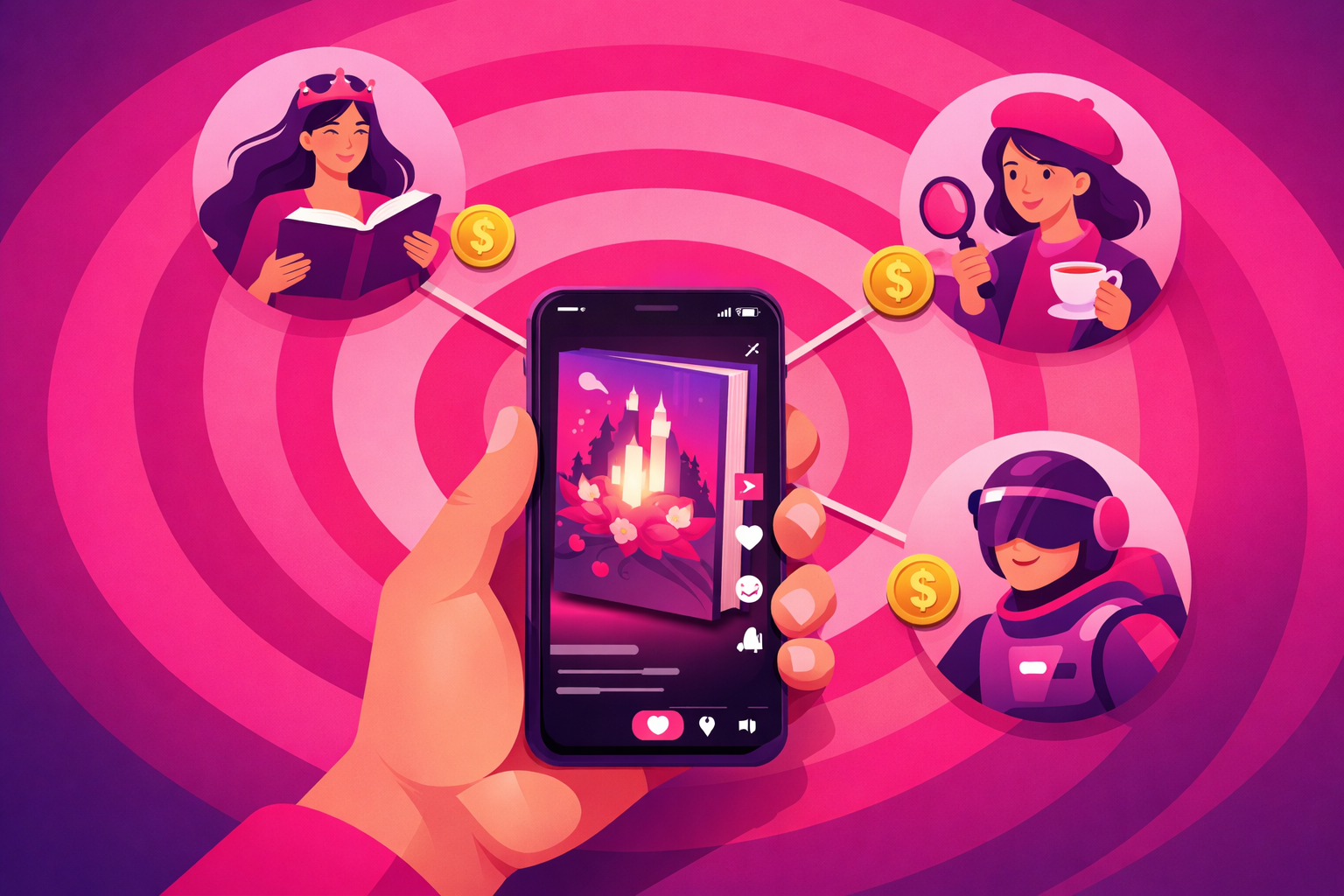
The single biggest leak in author BookTok ads is sending traffic to the wrong place. A beautifully amplified video that lands viewers on a generic Amazon page usually converts at a fraction of the rate a reader-magnet funnel would. Here is the structure that actually works.
Step 1: The Bio Link
Your TikTok bio link should point to a single landing page, not a Linktree of options. Choice paralysis kills BookTok funnels. The landing page should match the visual aesthetic of your video so the viewer immediately knows they are in the right place.
Step 2: The Reader Magnet (Free Novella or First Chapter)
The landing page should offer one specific reader magnet in your sub-genre. Free novella, bonus epilogue, or first three chapters all work. The promise has to match the video tone — a romantasy video should send viewers to a romantasy reader magnet, not a romance anthology.
Step 3: The Email Sequence That Sells the Backlist
After the reader downloads the magnet, a five to seven email welcome sequence should introduce them to your sub-genre voice, your most popular backlist title, and your current preorder. This is where most author BookTok ad spend converts to actual sales — not on the day of the click, but in the week after it.
Step 4: The Direct Sale
Only after the reader has been warmed up by the magnet and the email sequence should the funnel push for the direct purchase. Authors who skip steps 2 and 3 and send paid traffic directly to a sales page typically see 5 to 10 times worse return on ad spend than authors who use the full funnel.
How Authors Use Viryze to Run BookTok Ads Without Touching Ads Manager
Setting up sub-genre interest layers, behavioral overlays, lookalikes, and creator-affinity targeting inside TikTok Ads Manager is exactly the kind of work most authors do not have time for. A creator-friendly TikTok promotion service like Viryze does the heavy targeting work for you. You authorize the BookTok video you want to amplify, choose a budget, and Viryze tests multiple sub-genre audience combinations behind the scenes — using Spark Ads for proper budget control — so your video reaches the readers most likely to save it, click your reader magnet, and buy your book. No Ads Manager required.
How to Scale a Winning Ad Without Breaking the Math
Once a BookTok ad starts working, the temptation is to triple the budget overnight. That is almost always a mistake. TikTok's delivery system reacts badly to sudden budget jumps, and audience saturation hits faster in narrow sub-genres than in broad ones. Here is the scaling pattern that holds performance.
Rule 1: Scale by 30 to 50 Percent Every 3 Days
TikTok's algorithm needs time to re-optimize after a budget change. Increasing daily spend by no more than 30 to 50 percent every three days lets the system adapt without a cost spike. Doubling the budget overnight typically pushes cost per click 50 to 100 percent higher for at least a week.
Rule 2: Refresh the Creative Every 2 to 4 Weeks
Sub-genre BookTok pockets saturate fast. Even a winning video usually starts to fatigue somewhere between two and four weeks of paid amplification. Plan a creative refresh queue of three to five videos per quarter so you always have a fresh ad ready when performance starts to dip.
Rule 3: Cap Daily Budget at 5 Percent of List Size
For authors using ads to grow an email list, a useful ceiling is keeping your daily ad spend under 5 percent of your current list size in dollars. This keeps your unit economics sane and forces you to scale through email sales rather than through pure ad spend.
Rule 4: Watch the Save-Rate Decay Curve
The leading indicator of an ad burning out is a falling save rate at constant spend. When the save rate drops 30 percent or more from the video's peak, pause the amplification and rotate to the next creative. Continuing to spend after this point is where most authors' BookTok ad budgets quietly evaporate.
Common Mistakes That Burn Author Budgets
These are the mistakes we see most often when reviewing author BookTok ads. Each one is easy to fix once you know it is happening.
- Boosting a video before it has organic save data — you are paying to discover that the video does not work. Wait for the save signal.
- Targeting “Books” instead of a sub-genre — the broad audience seems safer but kills cost per click within a week.
- Sending traffic to a single Amazon page — almost always converts worse than sending traffic to a reader magnet.
- Mixing genres on one ad account — a mixed account confuses TikTok's pixel and lookalike data.
- Doubling the budget the moment something works — almost always raises cost per click for at least a week.
- Running ads forever on the same video — plan a refresh cadence; even your best ad will fatigue.
- Ignoring the email funnel — ads pay for themselves on the email side, not the ad-day click.
- Trying to learn Ads Manager mid-launch — either commit weeks to learning it properly or use a creator-friendly tool from day one.
For the broader 2026 BookTok playbook this advertising strategy fits inside, our author growth on TikTok playbook and our TikTok for Authors pillar guide cover the organic foundation that makes paid amplification compound.
Frequently Asked Questions
Does BookTok advertising actually work for authors?
Yes, but only when you amplify the right kind of video to the right sub-genre audience. BookTok advertising fails when authors boost generic book content to a broad audience. It works when authors amplify a video that already shows save and engagement signals, target a narrow sub-genre audience (for example fae romantasy readers, not all romance readers), and send viewers to a clear next step like a reader magnet or preorder. Done correctly, paid amplification typically returns two to four dollars in book sales for every dollar spent for indie authors with a strong backlist.
How much should an author spend on BookTok ads?
Most indie authors should start between 100 and 300 dollars per month and scale only after they find a video that amplifies efficiently. The 2026 benchmark for cost per save on a sub-genre-targeted BookTok video is roughly 5 to 15 cents, and cost per click to a reader magnet or preorder page is roughly 30 to 90 cents. If your numbers fall well outside these ranges, the issue is almost always the video or the targeting, not the budget. Increasing spend on a poor-performing video makes the math worse, not better.
Should I use TikTok Promote, Spark Ads, or something else?
TikTok Promote is the easiest entry point but has very limited targeting and almost no audience testing, which means it usually under-delivers for niche book audiences. Spark Ads, run through TikTok Ads Manager, gives you full sub-genre targeting and creative testing but has a steep learning curve built for global brands, not authors. Creator-friendly amplification tools like Viryze sit in the middle: they use Spark Ads under the hood for proper targeting and budget control, but expose a simple, author-focused interface so you can boost a video in a few clicks without learning Ads Manager.
What kind of BookTok videos amplify best?
Videos that already perform organically amplify best. Specifically, videos with a save rate above 6 percent of views, a clear sub-genre signal in the first second, a strong visual aesthetic, and a single clear next step at the end (reader magnet, preorder, or follow). Trope-led videos, character-led videos, and short audiobook clips with on-screen captions tend to amplify the most efficiently. Generic book hauls and review montages usually do not.
When is the right time to start running BookTok ads?
The right moment to start BookTok ads is once you have at least one video with a save rate above 6 percent, a clear genre niche on your account, and either a reader magnet, preorder link, or backlist title for traffic to convert against. Running ads before any of those three pieces are in place usually wastes budget. Most authors are best served by spending their first 30 to 60 days on organic content and only switching on amplification once they have a video and a funnel that already work.
Amplify Your BookTok Video the Easy Way
You picked your pocket. You proved a video. Now skip the Ads Manager learning curve and let Viryze put your strongest BookTok video in front of the exact sub-genre readers most likely to save, click your reader magnet, and buy your book.
Promote Your BookTok VideoRelated Articles
- TikTok for Authors: Complete Guide to Growing Your BookTok Audience
- BookTok Genres: Which Book Genres Dominate TikTok and How to Win Yours
- BookTok Trends 2026: What Authors and Readers Are Buying Next
- BookTok Monetization: How Authors Make Money on TikTok in 2026
- How Authors Grow on TikTok: The 2026 BookTok Playbook
- BookTok Content Ideas: 50+ Video Concepts That Sell Books
- How to Film BookTok Videos: Complete Setup Guide

Head of Creator Success at Viryze
TikTok growth strategist helping creators reach their first 100K followers through data-driven promotion strategies.