HomeTok moves faster than most creators realize. A project type that dominates the For You Page in January can feel tired by April. The DIY creators who keep growing are the ones who spot what's building momentum before it peaks—and position their content to catch the wave.
This isn't a list of vague predictions. These are the specific DIY and home improvement topics, video formats, and content angles gaining real velocity on TikTok in 2026. Some are brand new. Others are established trends that have evolved into something sharper and more searchable.
Whether you're launching a new HomeTok account or looking for fresh angles for an existing one, this breakdown will help you create content that the algorithm is actively rewarding right now.
HomeTok by the numbers in 2026:
- #HomeTok—over 85 billion views and climbing, up from 65B in late 2025
- #DIY—180 billion views, with budget-friendly projects leading the category
- 72% of Gen Z renters now turn to TikTok first for home inspiration before Pinterest or Instagram
- DIY transformation videos average 3.1x more saves than the platform average—a strong signal the algorithm favors this niche
What's Inside
1. The Hottest DIY Topics on TikTok Right Now
The topics getting the most traction on HomeTok in 2026 have shifted noticeably from even a year ago. Broad advice like “refresh your space” no longer cuts through. What performs now is specific, constraint-based, and often tied to the realities of renting, tight budgets, or small spaces.
Rental-Friendly Renovations
The single biggest topic in 2026 is renovation content designed specifically for renters. Peel-and-stick tile, removable wallpaper, damage-free wall treatments, and landlord-approved upgrades are getting massive engagement. The audience is huge: most people under 35 rent, and they're hungry for content that respects their lease while still delivering real transformation.
What's working:
- “I made my rental look like a $5K remodel for $300”
- Peel-and-stick tile installs with before-and-after reveals
- Removable backsplash and accent-wall makeovers
- “Tricks I use so my landlord never notices”
Thrift Flips & Furniture Rescues
Thrift flip content has exploded. Finding a beat-up dresser for $40 and transforming it into something that looks designer-made hits every algorithm sweet spot: transformation, budget-consciousness, sustainability, and personality. Creators who show the full process (not just the reveal) are outperforming polished glow-ups because viewers want to learn the techniques, not just admire the result.
Smart Home and Tech Installs
Affordable smart home content is having a moment. Installing smart switches, motion sensors, under-cabinet lighting, and voice-controlled blinds as DIY projects—without hiring an electrician—is pulling huge view counts. The hook is empowerment: showing viewers they can upgrade their home with tools they probably already own.
Tiny-Space Solutions
Small apartments, studio layouts, shared bedrooms, and tiny houses all drive huge HomeTok engagement. Storage hacks, vertical design, multi-purpose furniture builds, and “every inch counts” content resonates with city dwellers and first-time renters. The more specific the square footage, the more viewers feel seen.
Vintage & Character Home Restoration
Restoration content has a devoted audience. Creators buying 100-year-old fixer-uppers, salvaging original woodwork, restoring clawfoot tubs, and uncovering hidden details like transom windows or claw-foot legs build cult-like followings. The slow, patient pacing of restoration content is the opposite of fast-flip flips, and the algorithm rewards the higher watch times this content naturally produces.
2. Video Formats That Are Winning in 2026
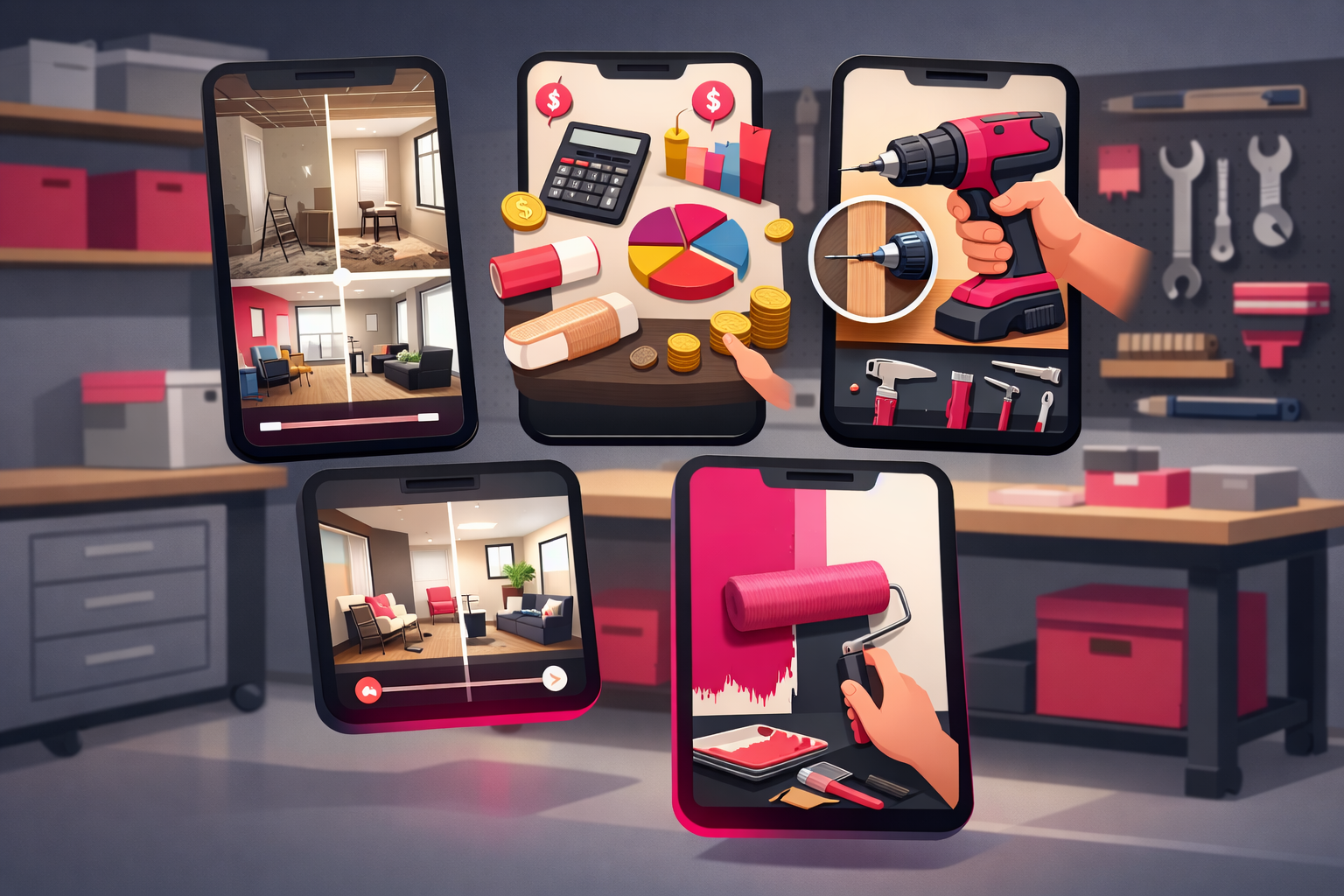
The topic matters, but the format determines whether someone watches past the first three seconds. These are the video structures getting the strongest completion rates and engagement in the DIY niche right now.
Before, During, After (Three-Cut)
Open on the worst-looking part of the space. Cut to the messy middle of the project (paint everywhere, tools scattered). Reveal the finished result. This three-beat structure is the single most reliable format in HomeTok. It works because it promises transformation in the first second and delivers emotional payoff in the last.
Satisfying Process Shots (ASMR-Style)
Close-up, slow-motion footage of paint pouring, caulk smoothing, wood being sanded, or grout being wiped. These videos lean into the sensory appeal of DIY work. Pair with minimal voiceover or ambient workshop sounds. Watch-time completion on this format is unusually high because viewers stay for the sensory loop.
Budget Breakdown on Screen
As you show each step of a project, overlay the cost of each material. “$12 for the paint... $8 for the hardware... $15 for the wallpaper.” Viewers screenshot these videos constantly. Transparent pricing builds trust and gives your content a reference-material quality that drives saves and shares.
Tool-of-the-Day Demos
Pick one tool and show every problem it solves in 30 seconds. Oscillating multi-tools, stud finders, laser levels, and Kreg jigs all have dedicated audiences. Viewers come for the practical tool tip and stay for the creator. These videos are also affiliate goldmines because they map to a specific purchase decision.
Storytelling Through the Build
Instead of a silent time-lapse, narrate the emotional journey of the project. “I bought this house at auction... the floor was rotting... here's what I found.” Personal stakes wrapped around practical content outperforms either one alone. The story hook delivers the watch time; the DIY tips deliver the saves.
3. Emerging Sub-Niches to Watch
The broad categories—bathroom renos, kitchen flips, furniture builds—are saturated with established creators. The growth opportunity in 2026 is in sub-niches: narrower topics with passionate audiences and less competition.

DIY for First-Time Homeowners
Content specifically aimed at people who just closed on their first house is growing rapidly. Creators explaining which projects to do first, what to skip, how to read home inspection reports, and the “things nobody tells you about owning a home” format build engaged, loyal audiences. This viewer has a high intent to learn and is making a lot of purchase decisions at once.
Curb Appeal & Exterior DIY
Most DIY content focuses indoors, which is why exterior content has room to grow. Front door refreshes, painted driveways, budget landscaping, outdoor lighting upgrades, and garden bed installations are underserved categories. Curb-appeal content also plays well beyond TikTok, making it easier to repurpose.
Accessibility & Universal Design DIY
Content showing how to modify homes for aging parents, disabled family members, or future-proof living is finding an engaged audience. Grab bars, ramp installs, doorway widening, and sensory-friendly design choices—these projects genuinely help people, and creators in this space report exceptional comment engagement.
Budget DIY Under $50
The “under $50” constraint format has become its own genre. Transform a bathroom for $50. Refresh a kitchen for $50. Style a home office for $50. The tight budget creates creative pressure that viewers love watching. Specific dollar constraints in the title drive much higher click-through than generic “budget-friendly” framing.
Hidden Home History
Discovering original floors under carpet, uncovering wallpaper from the 1920s, or finding old newspapers inside walls—“what I found” content has an almost magical pull. If you work on older homes, lean into this. These videos combine the transformation hook with the thrill of discovery.
4. Content Angles That Get Saves and Shares
The difference between a video that gets 500 views and one that gets 50,000 often comes down to the angle—how you frame the same project. These angles are consistently outperforming in 2026.

The “Landlord Won't Notice” Angle
Frame your rental-friendly content around what you can get away with. “My landlord hasn't noticed any of these yet.” It works because it speaks directly to the fear renters have about losing their deposit while still delivering the makeover they want.
The “Contractor Quoted Me” Angle
“A contractor quoted me $3,200 for this—I did it for $180.” Specific price comparisons between professional quotes and DIY costs generate debate in the comments (is it worth it? did you cut corners?), which the algorithm reads as strong engagement.
The Beginner Confession Angle
“I'd never used a saw before this.” Lead with vulnerability and beginner status. It gives viewers permission to try the project themselves and outperforms expert-toned content in both watch time and follower conversion.
The Room-Specific Angle
“Bathroom glow-up for $75” outperforms “small space makeover.” Name the exact room in the title and first two seconds. Room-specific content is highly searchable and matches intent when someone is mid-project on their own space.
The “Mistakes I Made” Angle
Hindsight content—“what I wish I knew before starting this project”—combines personal storytelling with practical warnings. It positions you as someone who learned the hard way so the viewer doesn't have to. Mistake content is also reliably saved for future reference.
5. What the Algorithm Is Rewarding for DIY Content
TikTok's algorithm has always favored watch time and engagement, but the specific signals it weighs for DIY content have become clearer in 2026. Understanding these helps you structure videos the platform actively pushes.
Key signals for HomeTok in 2026:
- Saves are everything. DIY content gets saved at a disproportionately high rate, and TikTok rewards this heavily. Structure videos so viewers want to return to them—step-by-step builds, material lists, and room-by- room checklists all drive saves.
- Loops and rewatches. Short time-lapses under 15 seconds with a satisfying reveal often get rewatched two or three times. The algorithm counts every rewatch toward your watch time total. Tighter edits pay off more than longer ones for this niche.
- Comment depth matters. Videos that spark genuine discussion (not just emoji reactions) get pushed harder. End with a specific question. “Would you paint your tub or replace it?” works better than “like and follow.”
- Series content gets boosted. TikTok increasingly favors creators who post serialized content. A five-part “renovating this rental kitchen” series gets more cumulative reach than five unrelated DIY tips.
If you want a deeper breakdown of how TikTok's recommendation engine works, our complete TikTok algorithm guide covers the mechanics in detail.
6. How to Ride Trends Without Chasing Them
There's a difference between being trendy and being trend-aware. The first makes your content feel disposable. The second makes it feel current and relevant. Here's how to stay on the right side of that line.
Build a Content Framework
Decide on three or four content pillars that define your channel—maybe rental renovations, thrift flips, and tool tutorials. When a new trend emerges, ask: does this connect to one of my pillars? If yes, create content around it. If no, skip it. This keeps your channel focused while still feeling timely.
Monitor the Right Signals
Don't rely only on TikTok's trending page. Watch which home improvement stories are breaking, what's happening in the r/HomeImprovement and r/DIY subreddits, and what questions keep showing up in your comments. The best HomeTok creators treat their comment section as a focus group. When multiple viewers ask the same question, that's a video that needs to exist.
Accelerate Growth with Strategic Promotion
When you create a video that aligns with a trending topic, timing matters. The window for trend-related DIY content is short—usually one to three weeks. Getting your video in front of the right audience quickly can mean the difference between catching the wave and missing it entirely.
This is where promotion becomes strategic rather than optional. Viryze helps DIY creators reach targeted audiences who are already interested in home improvement content. Instead of hoping the algorithm picks up your trend video organically, you can put it directly in front of people searching for that exact project—giving your content the initial momentum it needs to take off.
Batch Your Trend Content
When you spot a trend, create two or three videos around it rather than just one. Different angles on the same trending topic let you test which framing resonates. Post them over a few days. This signals to the algorithm that you're a consistent source on the topic, which increases the likelihood of your content being recommended to people searching for it.
Your 2026 HomeTok Trend Checklist
- ✓Pick one or two emerging sub-niches that match your expertise
- ✓Test at least three video formats from the list above
- ✓Structure every video for saves (steps, material lists, budgets)
- ✓End each video with a specific, debatable question
- ✓Create at least one content series (three to five connected videos)
- ✓Promote your best-performing trend videos to maximize reach
For more ideas on what to post, check out our 50+ DIY TikTok content ideas guide. And if you're ready to turn your HomeTok following into income, our DIY creator monetization guide breaks down every revenue stream available in 2026.
The creators who win on HomeTok in 2026 won't be the ones chasing every trend. They'll be the ones who pick the right trends for their audience and execute on them consistently. Start with one topic from this list, create three videos this week, and see what your audience responds to. The data will tell you where to go next.
Ready to grow your HomeTok audience faster?
Viryze helps DIY and home creators reach the right viewers through targeted TikTok promotion. Put your best projects in front of people who are actively searching for home improvement, renovation, and budget decor content.
Start Growing Your HomeTok ChannelFrequently Asked Questions
What DIY topics are trending on TikTok in 2026?
The top trending topics include rental-friendly renovations, thrift flips and furniture rescues, affordable smart home installs, tiny-space solutions, and vintage home restoration. Sub-niches like first-time homeowner content, curb appeal, and accessibility DIY are growing the fastest.
What video format works best for HomeTok?
The three-cut “before, during, after” format is the most reliable performer. Satisfying process shots (ASMR-style close-ups), on-screen budget breakdowns, and story-driven builds also consistently do well. Tutorial and transformation videos get the most saves, which is the strongest engagement signal for algorithmic distribution.
How do I find trending DIY topics before they peak?
Monitor your comment section for recurring questions, follow home improvement subreddits like r/HomeImprovement and r/DIY, watch which HomeTok creators are pivoting to new categories, and track rising hashtags in the home and DIY space. The TikTok Creative Center also shows trending hashtags and sounds by category.
Should I focus on one DIY niche or cover everything?
Focus on two or three related sub-niches rather than trying to cover every category. The algorithm favors creators who demonstrate clear expertise. A channel focused on rental-friendly decor will grow faster than one posting randomly about woodworking, plumbing, gardening, and painting. Once you build authority in your niche, you can expand.
How often should I post DIY content to grow?
Aim for three to five videos per week during your growth phase. Consistency matters more than volume—posting four videos every week is better than posting twelve one week and zero the next. Since DIY content benefits from longer filming sessions, batch-produce content from a single project into multiple videos.
Related Articles
TikTok for DIY & Home Creators: Complete Guide
The definitive guide to growing your HomeTok channel from scratch.
DIY TikTok Content Ideas: 50+ Video Concepts
Proven content ideas organized by category for HomeTok creators.
DIY TikTok Monetization: 7 Ways to Turn Projects Into Income
Every revenue path for HomeTok creators, from tool affiliates to courses.
How DIY Creators Grow on TikTok: From 0 to 100K Followers
The exact growth strategy for building a HomeTok audience from zero.

Head of Creator Success at Viryze
TikTok growth strategist helping creators reach their first 100K followers through data-driven promotion strategies.