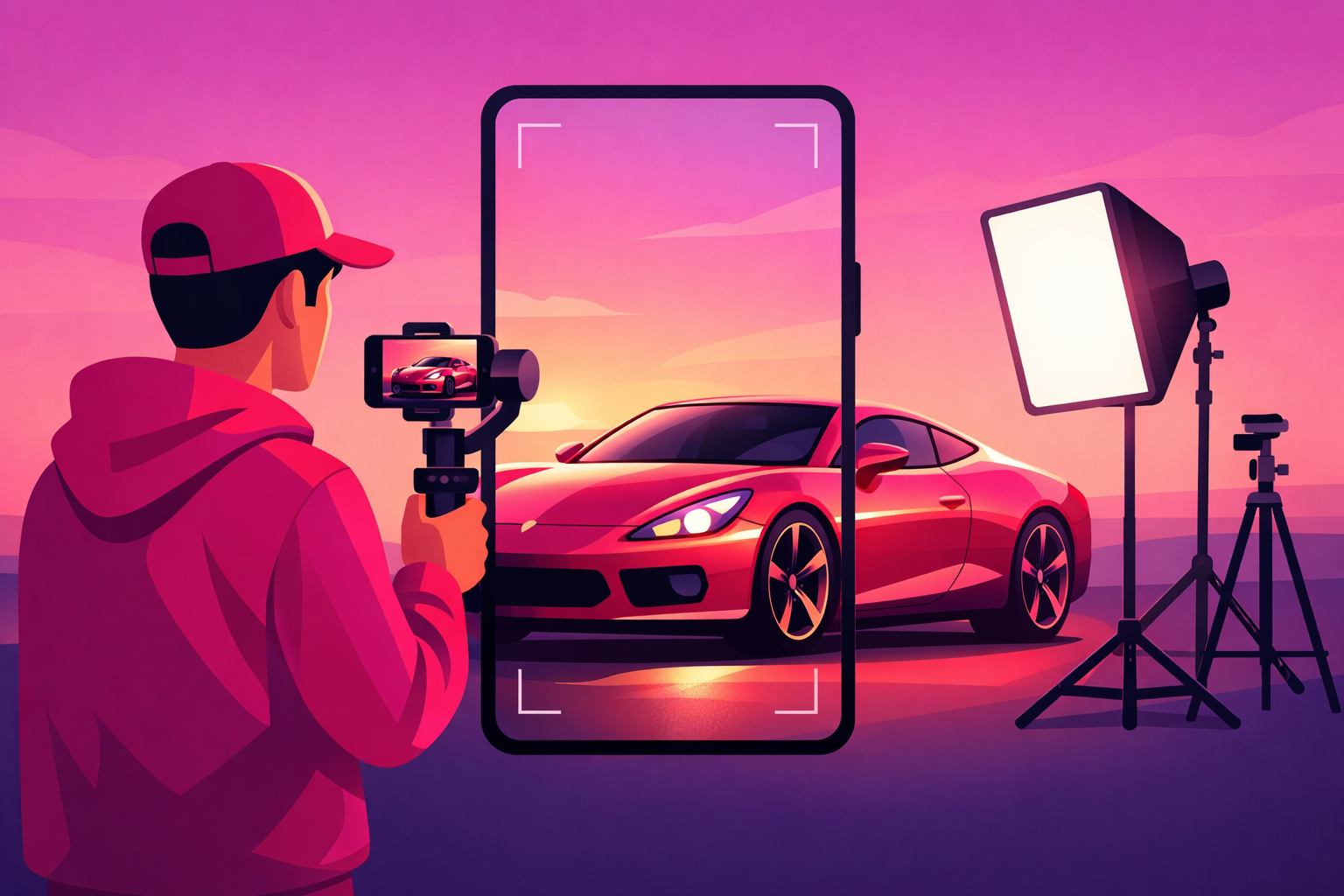
You shoot a car you love, the angle looks great in person, and then you watch it back and it looks... flat. The paint is dull, the motion is shaky, the audio is buried under wind, and the clip dies at 200 views. Almost every automotive creator hits this wall, and almost none of them realize the fix has nothing to do with buying a better car.
Here's the truth: the car clips that rack up millions of views aren't shot on cinema cameras. They're shot on phones - by creators who understand light, motion, and the first frame. The gap between a flat clip and a scroll-stopper is technique, not budget.
This guide is the complete playbook for how to film car videos for TikTok with gear you probably already own. We cover the only three pieces of equipment that actually matter, how to light paint so it glows, the signature shots that stop thumbs, how to kill wind noise for good, and a repeatable shoot-day workflow you can run in 45 minutes. If you're still deciding what to make, pair this with our vault of 50+ car content ideas and the complete guide to TikTok for automotive creators.
The three rules of car filming:
- Light makes the paint. The right light at the right time does more than any camera upgrade ever will.
- Smooth beats sharp. Stable, flowing motion reads as cinematic. Shaky 4K reads as amateur.
- The first frame is everything. Shoot your hero shot first, then lead with it in the edit.
What's Inside
1. Why Most Car Videos Look Flat
When a car clip looks "cheap," the problem is almost never the phone. Phones in 2026 shoot stunning footage. The problem is one of three things, and usually all three at once: bad light, shaky motion, and a slow opening.
Bad light is the silent killer. A car shot under harsh midday sun looks washed out and full of glare, while the exact same car in soft, low-angle light looks like a magazine cover. The paint is a giant mirror - what it reflects is what the viewer sees, so your job is to control those reflections.
Shaky motion is the second tell. Handheld footage that bounces and jitters instantly reads as amateur, no matter how nice the car is. Smooth, gliding movement is what your brain registers as "cinematic," and it's the single biggest reason a $40 gimbal outperforms a $1,500 camera for this kind of content.
The third killer is a slow start. A clip that opens with you walking up to the car, or a three-second logo intro, has already lost. TikTok's ranking leans heavily on watch-through rate, and a slow open tanks it in the first second. We'll fix all three - starting with the cheapest, highest-impact upgrades.
2. The Only Gear That Actually Matters
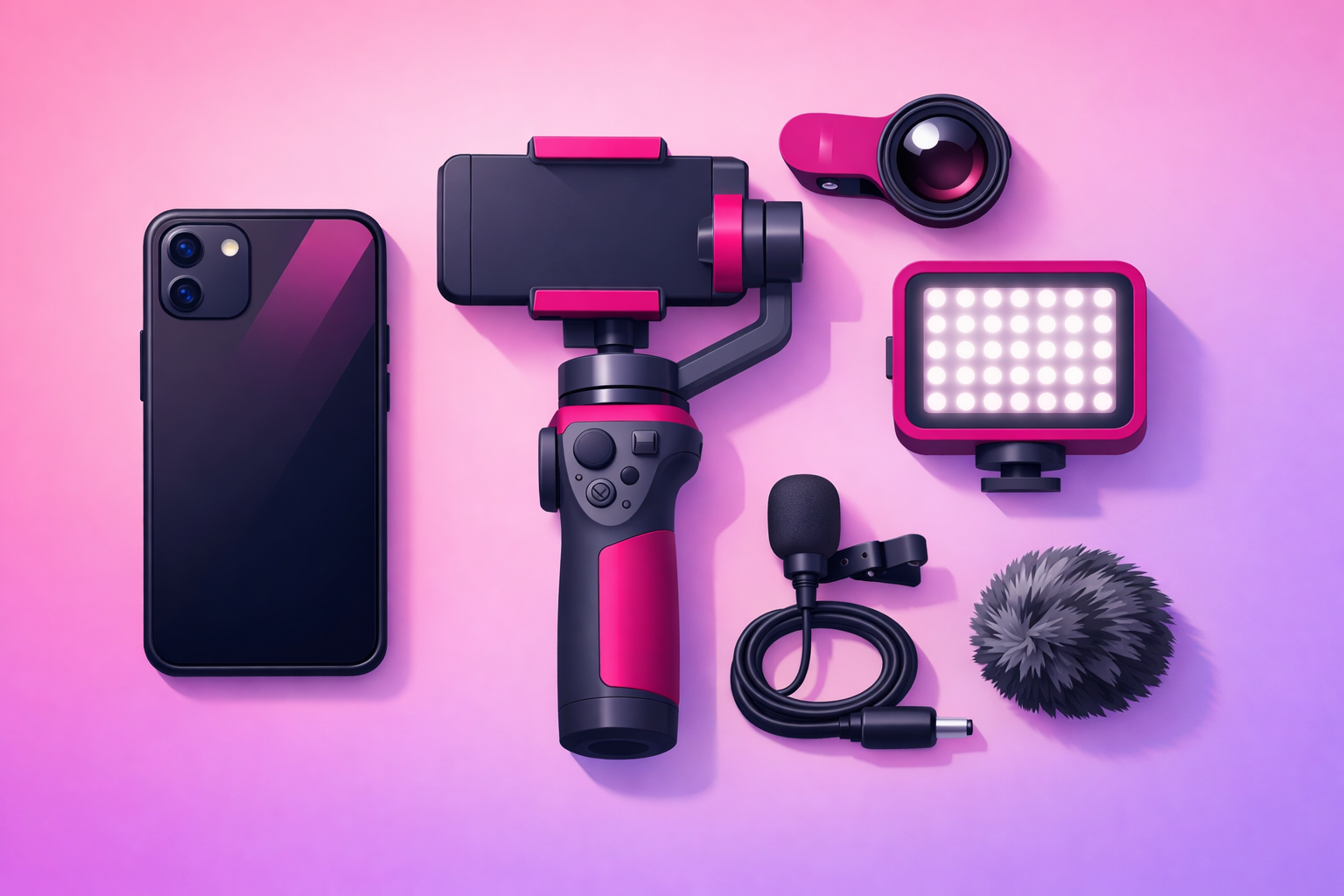
You can spend thousands on automotive video gear. You don't need to. For TikTok, three upgrades do 90% of the work, and together they cost less than a single cinema lens.
A gimbal (the non-negotiable)
A smartphone gimbal is the most important purchase you'll make. It turns shaky handheld footage into the smooth, gliding motion that defines cinematic car content. A solid one runs $80 to $150 and will instantly make your clips look like a different creator shot them. If you buy one thing, buy this.
A clip-on microphone
Whenever you talk on camera - reviews, walk-throughs, DIY explainers - your phone's built-in mic picks up wind and echo. A $30 to $60 clip-on or wireless lavalier mic with a wind muff fixes this completely. Clean audio keeps people watching, and watch-time is the signal that travels.
A portable LED light
For interior shots, engine bays, and detailing close-ups, natural light isn't always enough. A small, battery-powered LED panel ($25 to $50) lets you control the light exactly where you need it. It's the difference between a murky engine-bay clip and one that looks crisp and professional.
Optional, not essential
A phone car mount (for rolling shots), a clip-on wide or macro lens, and a small tripod are nice-to-haves once you're consistent. But don't let "I need more gear" become the reason you're not posting. The gimbal, the mic, and the light are enough to film professional-looking content this week.
3. Lighting Paint So It Glows
Car paint is essentially a mirror, so filming a car is really an exercise in controlling reflections. Master this one idea and your footage will look better than creators with ten times your budget.
Shoot in the golden hour whenever you can. The hour after sunrise and the hour before sunset give you low, warm, soft light that wraps around the body panels and makes the paint glow. Bodylines catch the light, the color goes rich, and glare disappears. This single habit is the biggest visual upgrade available to you, and it's free.
If you must shoot midday, find open shade. Park along the edge of a building, under a large tree, or inside a covered structure with light spilling in. Open shade gives you soft, even light without the harsh hotspots and reflections that direct overhead sun creates. Avoid filming a car in full midday sun - it flattens the paint and scatters glare across every panel.
Watch what the paint reflects. Before you hit record, look at the car the way the camera will. If you see clutter, a chain-link fence, or your own reflection in the door, reposition. A clean, simple backdrop - an open lot, a textured wall, a quiet street - keeps the focus on the car.
4. The Signature Shots That Stop Thumbs
You don't need a hundred different shots. You need a handful of reliable, repeatable moves you can pull off every time. These are the shots that make car content feel cinematic, and your gimbal makes all of them possible.
The Orbit Reveal
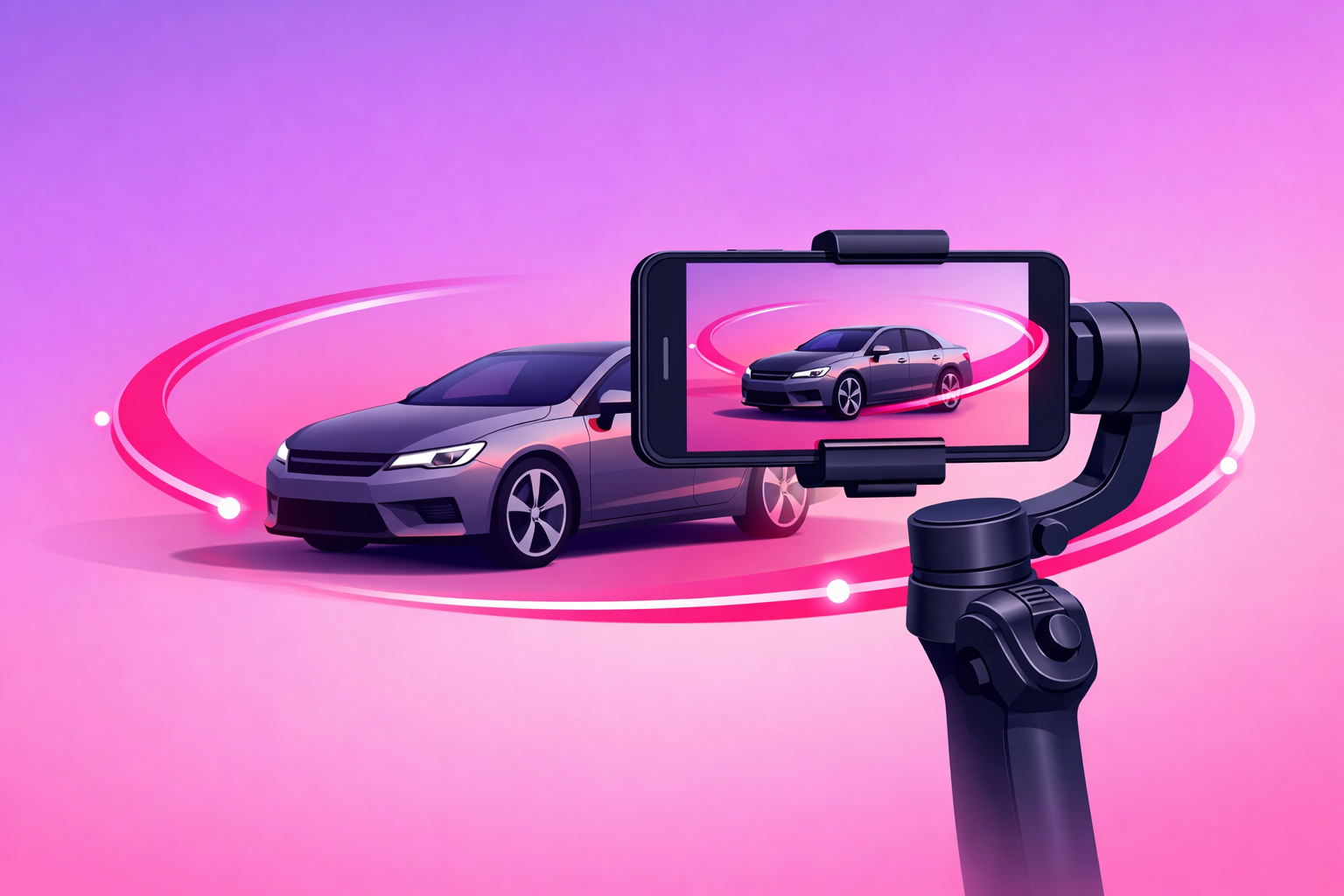
The single most powerful shot in the lane. With the car still, walk a smooth half-circle around it while the gimbal keeps the camera locked on the body. The car appears to rotate as the light slides across the paint. Use it as your opening hero shot - it's the automotive equivalent of a mic drop, and it works on a $3,000 daily driver just as well as a supercar.
The Detail Glide
Slow, smooth push-ins across the wheels, the badge, the stitching, the exhaust tips. Glide the gimbal toward one detail, hold for a beat, then cut. String three or four of these to a beat and you've got a satisfying, rhythmic sequence that screams premium.
The Before-and-After Cut
Essential for detailing and builds. Frame the "before" from the exact same angle and distance as the "after," then hard-cut between them. The matched framing makes the transformation hit twice as hard. Film the after first while the car is perfect, then recreate the angle for any before footage you still need.
The Rolling Shot
A car in motion is inherently more dynamic than a parked one. Mount your phone to the car (suction mount on the body or window) for an exterior tracking shot, or have a passenger film from a second car at low speed in a safe, legal setting. Even a slow roll out of a driveway adds energy a static shot can't.
Pro Tip
Master the Orbit Reveal first. It's the one shot that instantly elevates a clip, and it becomes your reliable opener for almost any car video. Once you can nail it every time, the rest of your footage just has to support it. To understand exactly why a strong opening shot drives reach, see our complete TikTok algorithm guide.
5. Killing Wind Noise & Capturing Sound
Great visuals get ruined by bad audio faster than anything else. When a viewer can't hear you over the wind, they swipe - and that swipe drags down your watch-through rate. Here's how to keep your sound clean.
- Always use a wind muff. The foam or furry cover on your clip-on mic is the difference between usable audio and a roar of wind. Never film outdoors without it.
- Block the wind with your body or the car. Turn so your back is to the breeze, or use the car as a windbreak when you talk. Small positioning changes make a big difference.
- Record engine and exhaust sound separately. The growl of a startup or a rev is its own scroll-stopping hook. Capture it in a dedicated take so it stays crisp, then layer it into the edit.
- Pick calmer conditions when you can. Early morning is usually the stillest part of the day - which conveniently overlaps with the golden hour.
One more thing: sound is content. A clean exhaust note, a satisfying door thunk, or the click of a turbo flutter can be the hook itself. Treat audio as a creative asset, not an afterthought, and you'll have one more way to stop the scroll.
6. The 45-Minute Shoot-Day Workflow
Talent isn't what makes creators consistent - a repeatable process is. Here's the exact order to run a shoot so you never waste light or miss the shot that matters. Call it the First-Frame-First Workflow: you capture your hero shot before anything can go wrong.
- Scout the light and angle (5 min). Position the car where the light rakes across the paint and the background is clean. Check the reflections before you commit.
- Shoot the hero reveal first (5 min). Nail your Orbit Reveal or before-and-after while the light and your energy are at their peak. This is the shot the whole clip leads with, so it gets priority.
- Collect coverage and detail shots (15 min). Glide across the wheels, badge, interior, and any feature you'll talk about. Grab a few extra B-roll passes for cutaways - it's always better to have too much than too little.
- Record your audio (10 min). Clip on the mic, block the wind, and film your talking segments. Then capture engine and exhaust sound in separate takes.
- Review on the spot (5 min). Before you pack up, scrub through your footage. If the hero shot isn't perfect, reshoot it now while the car and the light are still there.
- Log the clip idea (5 min). Note the hook and the story you'll tell in the edit so the footage doesn't sit unused on your phone.
Run this sequence every time and shoot days stop being chaotic. You'll walk away with a guaranteed hero shot and enough coverage to cut a clean clip - which is exactly the kind of consistency the algorithm rewards. For the bigger picture on building momentum post by post, our complete TikTok growth strategy guide shows how consistent posting compounds over 90 days.
7. Editing for the First Frame
Filming well is half the job. The edit is where a good clip becomes a great one - and it all comes down to the first frame.
- Open on the payoff. Your Orbit Reveal or finished before-and-after goes first. Never make the viewer wait for the good part - show it, then explain it.
- Cut to the beat. Sync your detail shots to the rhythm of your audio. Beat-matched cuts feel intentional and satisfying, and they hold attention.
- Keep it 15 to 40 seconds. Cut anything that doesn't earn its place. A tight 20-second clip beats a meandering 60-second one almost every time.
- Add captions. A large share of viewers watch with the sound off. On-screen text makes your clip work either way and reinforces your hook.
- End with a reason to engage. A question, a poll, or a "part two coming" turns viewers into commenters and followers.
Once your filming and editing dial in, you'll start producing the occasional breakout - a clip that clears your account's average save and completion rate. That clip is your signal. Instead of boosting every upload, the smart move is to put a focused budget behind the one that's already proving itself. That's exactly the model our TikTok promotion service is built around - selective amplification of clips with real organic momentum, which for local detailers and dealers turns directly into bookings.
Frequently Asked Questions
Do I need an expensive camera to film car videos for TikTok?
No. A modern smartphone shoots more than enough quality for TikTok, and the platform actually favors content that feels native to the phone. The three upgrades that make the biggest visible difference are a gimbal for smooth motion, a clip-on microphone for clean audio, and good light - all of which cost far less than a dedicated camera. Spend on stabilization and sound before you ever think about a cinema camera.
What is the best time of day to film a car?
The golden hour - the hour after sunrise or before sunset - is ideal because the low, warm light wraps around the body panels and makes the paint glow without harsh hotspots. If you have to shoot midday, move the car into open shade (like the edge of a building or under trees) to soften reflections. Avoid direct overhead sun, which flattens the paint and creates ugly glare.
How do I get rid of wind noise in my car videos?
Use a clip-on microphone with a foam or furry wind muff instead of relying on your phone's built-in mic, which sits exposed to the wind. Position your body or the car to block the wind when you talk, record in calmer conditions when you can, and capture engine and exhaust sounds in separate takes so they stay clean. Clear audio keeps viewers watching, and watch-time is the signal that decides reach.
What is the most important shot in a car TikTok?
The opening frame. On TikTok, the first second decides whether anyone keeps watching, so your strongest visual - the finished detail, the reveal, the orbit around the car - has to land immediately. A slow gimbal orbit or a sharp before-and-after cut is the most reliable hero shot in the automotive lane. Film it first, lead with it in the edit, and never bury it behind a slow walk-up.
How long should a car video be on TikTok?
Most high-performing car clips run 15 to 40 seconds. The reveal or payoff should land in the first second or two, and every shot after that should earn its place. Process-driven content like detailing or a build can stretch toward 60 seconds because the footage itself is satisfying, but only if the hook front-loads the finished result. When in doubt, cut it shorter.
Shot a clip that looks incredible? Make sure people see it.
Cinematic filming gets you clips worth watching - and consistency produces the occasional breakout. When one of your car videos clears your account's average save and completion rate, that's the moment to amplify it. Viryze only promotes clips that have already earned their reach organically, so your budget compounds your best work instead of rescuing your weakest. For detailers and dealers, that paid reach turns straight into booked appointments.
See how selective amplification worksRelated Reading
- TikTok for Automotive Creators: The Complete 2026 Guide - the pillar guide covering lanes, hooks, production, growth, and monetization.
- Car TikTok Content Ideas: 50+ Video Concepts That Convert - the idea vault to pair with your new filming skills.
- The Complete TikTok Algorithm Guide - why the first frame and watch-time decide which clips travel.
- The Complete TikTok Growth Strategy Guide - turning consistent clips into a growing account over 90 days.
- TikTok for Small Business - turning car content views into paying local customers.

Head of Creator Success at Viryze
TikTok growth strategist helping creators reach their first 100K followers through data-driven promotion strategies.