TikTok advertising looks straightforward from the outside: spend money, get views, grow. For comedy creators, the reality is more interesting. Comedy is one of the few categories where paid promotion can genuinely multiply organic momentum - and one of the easiest categories to waste an entire budget on the wrong clips. The difference is not how much you spend or how well you target. It is which clips you choose to amplify and how patient you are about reading the organic signal first.
This guide walks through the 2026 playbook for comedy creators who want to use paid TikTok promotion to grow followers, extend the life of hero clips, and feed the algorithm the signals it needs to keep pushing your account organically. We will cover the signal threshold a clip should cross before you promote it, the Spark Ads setup that works for comedy, the targeting choices that actually matter, smart budget ranges at each audience size, the metrics that predict follower growth, and the common mistakes that drain budgets.
Pair this with our full TikTok for comedy creators guide for the strategic frame, the comedy growth roadmap for the organic foundation, and the comedy monetization guide to see how paid amplification stacks with brand deals, CRP, and tour ticket sales.
The honest summary:
- Only promote clips that have already cleared an organic signal threshold.
- Spark Ads are the default for creator-led comedy promotion in 2026.
- Comedy creators see the best cost-per-follower in the $0.18 to $0.45 range on amplified hero clips.
- Targeting broader almost always beats narrower for comedy content.
What's Inside
- 1. Why Comedy Is a Strong Fit for Paid Amplification
- 2. The Organic Signal Threshold Every Clip Should Cross First
- 3. Spark Ads: The Default Format for Comedy Creators
- 4. Picking the Right Campaign Objective
- 5. Targeting Choices That Actually Move the Needle
- 6. Budgets and Time Windows by Audience Size
- 7. The Metrics That Actually Predict Follower Growth
- 8. Scaling a Winning Clip Without Killing It
- 9. Running Ads on Branded Comedy Clips
- 10. Mistakes That Drain Comedy Ad Budgets
- Frequently Asked Questions
1. Why Comedy Is a Strong Fit for Paid Amplification
Most categories on TikTok have a hard ceiling on how far paid promotion can take a single clip. The cost-per-result climbs sharply once the clip exits the creator's warm audience, the new viewers do not convert at the same rate, and the algorithm slowly stops pushing it organically. Comedy behaves differently, and the reason matters.
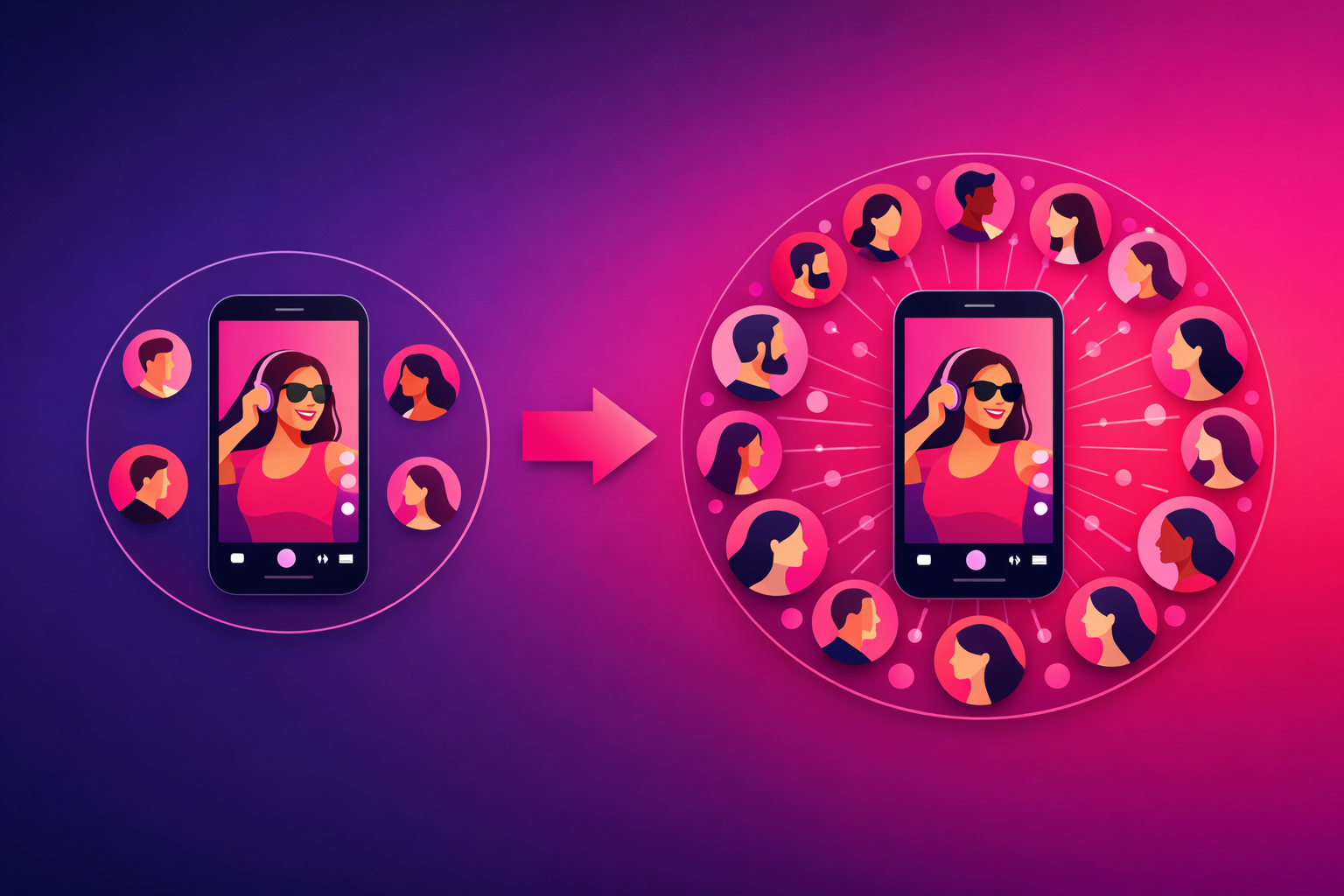
Comedy clips are shared at roughly 3.4 times the platform average. A share is a free impression, and a paid impression that earns a share is effectively two impressions for the price of one. Stacked over a 5-day campaign, that share multiplier turns a $100 budget into something closer to a $250 to $300 equivalent reach buy in any other category.
A few other reasons paid amplification works unusually well for comedy:
- Comedy clips hold attention. Watch-through rate is the most important ranking signal on TikTok, and comedy is the strongest watch-time category by a wide margin.
- Comedy clips age slowly. A funny clip can be promoted weeks or months after posting and still perform. Trend-dependent and aesthetic content cannot.
- Comedy converts to follows. Most viewers who laugh at a comedy clip assume the next clip will also be funny - that is the implicit promise of the lane - and they follow to find out.
- Comedy clips read native, even paid. Spark Ads from a comedy account look like normal For You content, which is exactly what the platform rewards.
The takeaway is that comedy creators are positioned to get more out of every paid dollar than nearly any other content category. The catch is that this only works when the underlying clip is already earning organic traction. Paid promotion is a multiplier, not a substitute.
2. The Organic Signal Threshold Every Clip Should Cross First
Selective amplification is the single most important idea in this guide. The mistake most comedy creators make is treating paid promotion as a way to rescue clips that did not work. That is not what paid promotion is for. It is a way to extend the life of clips that already did.
The signal threshold to look at before promoting a clip:
| Metric | Promote-worthy Threshold | What It Tells You |
|---|---|---|
| Save rate | > 1.0% of views | Viewers want to find this clip again - strongest quality signal |
| Share rate | > 1.0% of views | Clip has crossover appeal beyond the warm audience |
| Watch-through rate | > 55% (short) / > 35% (long) | Hook is landing and the punchline pays off |
| Comment-to-view ratio | > 0.3% of views | Audience is engaged enough to write, not just scroll |
| Follow rate | > 0.5% of viewers | Clip is converting new viewers - the core purpose of paid amplification |
A clip that clears three or more of these in the first 24 to 72 hours is a strong promotion candidate. A clip that clears all five is a hero clip, and you should treat it accordingly.
The reason this works is that the TikTok algorithm uses the same signals. When you promote a clip that already has high save and share rates, the paid traffic preserves those rates, which keeps the clip's overall quality score high, which keeps the algorithm pushing it organically alongside the paid push. Promote a clip with weak signals and the inverse happens - paid traffic with low engagement actually drags the clip's score down.
For more on the underlying ranking signals and how the algorithm reads them, see our TikTok algorithm guide and the algorithm ranking factors breakdown.
3. Spark Ads: The Default Format for Comedy Creators
Spark Ads are the format that promotes one of your own organic TikTok posts as an ad, directly from your account. Comments, likes, shares, and follows all accrue to your profile. This is the only ad format comedy creators should default to, and the reasons go beyond the obvious.
Why Spark Ads work for comedy:
- Follows accrue to your account. A regular ad sends viewers to a landing page or a campaign asset. A Spark Ad sends them straight to your TikTok profile.
- Comment threads live on your post. Comments are powerful social proof and reading them is part of why comedy clips earn long watch sessions. Keeping them on your clip compounds the lift.
- Organic engagement carries through. A clip that already has 50,000 organic likes shows up to new viewers with that count attached. Comedy is one of the categories where like count meaningfully changes how a new viewer reads the clip.
- Spark traffic boosts organic reach. Engagement earned through Spark Ads feeds the same ranking model that powers organic distribution, so paid pushes often unlock organic ones.
- Approval is faster. Spark Ads run against creator-published content, which means fewer compliance flags and faster review.
The mechanic is simple. In your TikTok app, generate a Spark Ad code from the relevant clip (Settings > Creator tools > Ads > Spark Ads > Generate code). Hand the code to whoever is running the ad - your own Ads Manager account, an agency, a brand partner, or a promotion service. The clip then runs as an ad without ever leaving your profile.
When non-Spark Ads make sense
Only one common case: a brand-funded campaign where the brand wants to host the creative on their own handle for paid amplification, often because they are running cross-platform consistency. In that case the brand will usually still ask for a Spark code as a secondary asset. For creator-led follower growth, Spark Ads stay the default.
4. Picking the Right Campaign Objective
TikTok Ads Manager offers a range of campaign objectives, and most comedy creators pick the wrong one. The default instinct is to choose Reach or Video Views because the numbers feel big and cheap. The right choice for follower growth is almost always Community Interaction (sometimes labeled Profile Visits or Follower Growth depending on the account type) or Engagement.
A practical mapping:
- Community Interaction / Follower Growth: The right choice for almost all creator-led comedy promotion. Optimizes for profile visits, follows, and on-clip engagement. Cost-per-follower is the metric to watch.
- Engagement: A reasonable fallback if Community Interaction is not available for your account or region. Optimizes for likes, comments, shares, and follows.
- Reach / Video Views: Cheap CPMs, low follower conversion. Useful for awareness-style brand campaigns, not creator growth.
- Traffic: Only for clips with a link in bio that needs traffic - tour tickets, merch drops, Patreon launches. Otherwise skip.
- Conversions: Mostly irrelevant for comedy creators unless you are running a direct-response funnel.
5. Targeting Choices That Actually Move the Needle
The most common targeting mistake comedy creators make is narrowing too aggressively. TikTok's targeting engine is already much better at finding the right viewers for a comedy clip than any list of interests or behaviors you can write manually. Over-narrow targeting limits the delivery engine, drives up the auction price, and usually hurts cost-per-follower.
A defensible 2026 default for comedy creators:
- Geography: The top two countries from your organic audience analytics. For most US-based comedy creators that is US plus Canada or UK. Skip single-city geo unless you are a regional comedy account.
- Age: Your organic core age band plus 5 years on either side. If your organic audience is 22 to 34, run 18 to 39.
- Gender: All, unless your organic audience skews 75-25 or more, in which case match the skew.
- Languages: Whatever language your clip is in.
- Interests: Pick three to six broad categories like Comedy, Entertainment, Lifestyle, and one or two that fit your lane (Workplace, Parenting, Travel, etc). Leave everything else off.
- Behaviors: Off, unless you have a specific reason. Behavior targeting tends to over-narrow.
Two situations where you should narrow more aggressively: regional comedy accounts where the joke really only lands in a specific country or city, and lane-specific accounts (trade comedy, healthcare comedy, parenting comedy) where the audience is genuinely narrower than the platform average.
6. Budgets and Time Windows by Audience Size
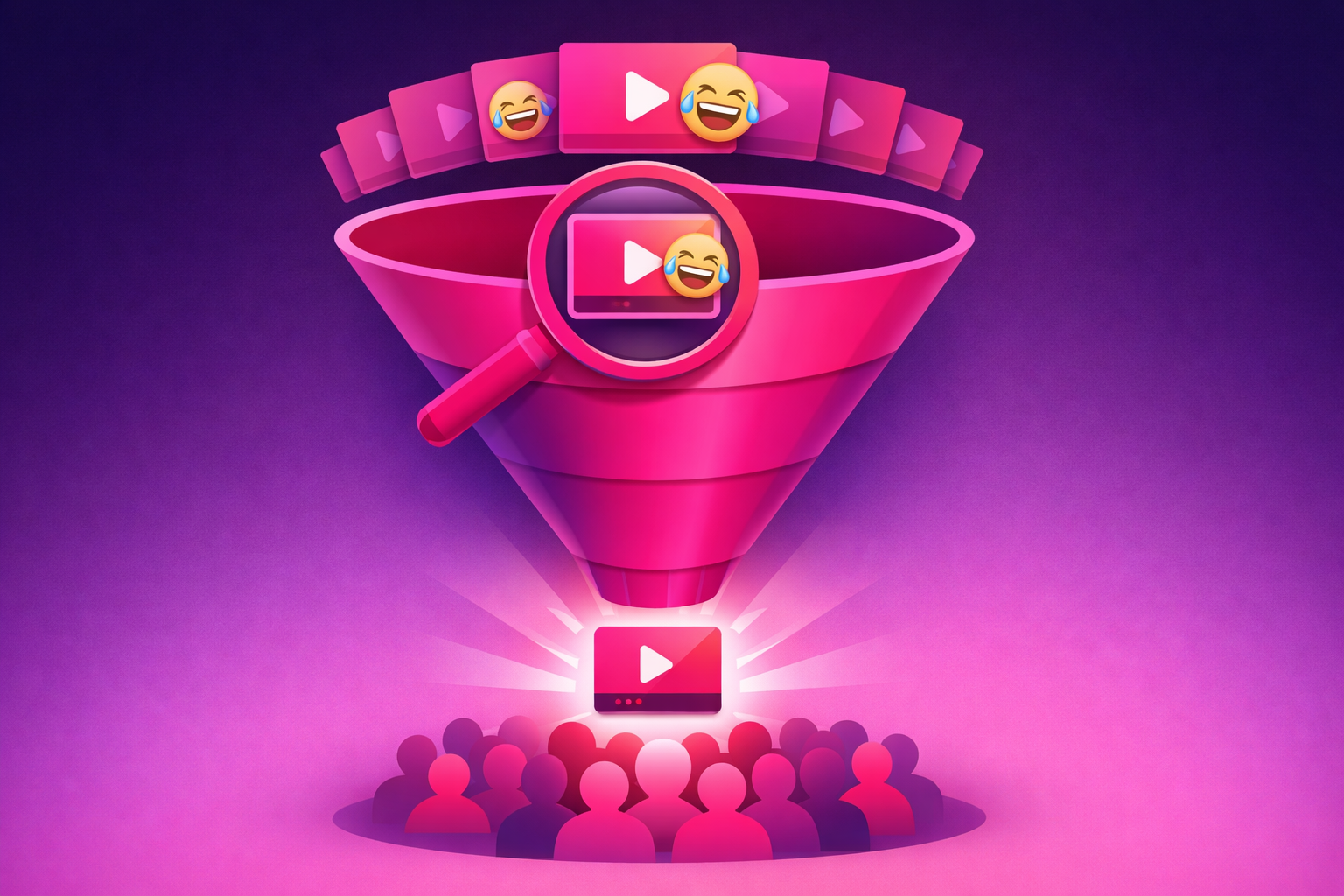
Budget is a function of audience size, the clip's organic strength, and how aggressive you want to be about scaling a winner. A rough framework that works in 2026:
| Account Size | Test Budget per Clip | Scale Budget on a Winner | Window |
|---|---|---|---|
| Under 25K | $30 - $60 | $100 - $250 | 3 - 5 days |
| 25K - 100K | $50 - $100 | $250 - $750 | 3 - 7 days |
| 100K - 500K | $100 - $250 | $500 - $2,500 | 5 - 10 days |
| 500K+ | $200 - $500 | $1,500 - $10,000+ | 5 - 14 days |
A few rules of thumb that hold across audience sizes:
- Never burn more than 30 percent of a monthly ad budget on a single test. Diversify across two to four clips so a single dud does not wipe the month.
- Run campaigns long enough for the algorithm to optimize. Under 48 hours and the data is noise.
- Use Cost Cap or Lowest Cost bidding, not Bid Cap. Manual bid caps almost always under-deliver for comedy.
- Keep separate ad groups per clip. Mixing creative inside one ad group makes it impossible to tell which clip won.
7. The Metrics That Actually Predict Follower Growth
Ads Manager shows a wall of metrics, most of which do not matter for a comedy creator trying to grow followers. The ones that do:
- Cost per follower (CPF): The headline number. For comedy clips that clear the organic signal threshold, $0.18 to $0.45 is healthy. Above $0.75 means something is wrong with the clip, the targeting, or the bidding.
- Profile visit rate: The share of paid viewers who click through to your profile. Above 1.5 percent is strong for comedy.
- Profile-to-follower conversion rate: The share of profile visitors who follow. Above 25 percent suggests the profile reads well to new audiences. Under 15 percent suggests the profile is doing the wrong work and needs cleaner pinned clips and a clearer lane statement.
- Average watch time on paid: Should track within 10 to 20 percent of organic. Big divergence usually means targeting is too broad and the clip is reaching audiences who do not match the lane.
- Frequency: How many times the average viewer has seen the ad. Keep this under 2.0 - higher and you are paying to reach the same people repeatedly.
Skip CTR, CPM, CPC, and Reach as primary signals. They are interesting context for paid marketers but they do not predict whether a comedy creator's followers will compound.
8. Scaling a Winning Clip Without Killing It
Finding a winner is the start, not the finish. Scaling poorly is how comedy creators turn a clip with a $0.22 CPF into a clip with a $0.95 CPF inside a single weekend.
The reliable scaling pattern:
- Wait for stable data. Two to three full days of stable cost-per-follower before you scale. Day one numbers always look better or worse than the truth.
- Raise the daily budget by 20 to 30 percent at a time. The algorithm re-optimizes when budgets jump too hard, and the new optimization phase usually drives CPF up.
- Wait 24 to 48 hours between increases. Let the algorithm settle into the new budget level.
- Watch frequency. If frequency climbs past 2.5, broaden targeting or accept that the clip has saturated the available audience.
- Stop when CPF rises 40 percent above the early baseline. Saturation is real and pushing past it wastes budget.
For most comedy creators, the right answer is to ride a winner for 7 to 14 days and then let it go organically. Promoted clips often keep getting organic distribution for weeks after the paid campaign ends, so the value compounds beyond the active spend window.
9. Running Ads on Branded Comedy Clips
Branded comedy clips - the ones funded by brand deals - have a different paid-amplification logic. The brand is usually paying for the amplification on top of the integration fee, and the goal shifts from follower growth to impressions and brand-defined performance metrics.
A few things to negotiate up front so the amplification helps rather than hurts your account:
- Always require Spark Ads. Brand-hosted creative drains profile visits away from your account. Spark Ads keep them on your handle.
- Cap usage windows at 30 to 90 days. Unlimited usage means the brand can run the clip against you forever. Cap it.
- Price amplification rights separately. A standard integration fee should not include unlimited paid amplification. Add 30 to 100 percent to the rate for paid usage rights.
- Ask for performance reporting. Paid amplification on a Spark Ad earns you data that strengthens your media kit. Ask for it.
Branded clips typically see 30 to 50 percent of the organic performance of an equivalent non-branded clip. Selective amplification on branded clips that clear an organic threshold can close most of that gap, which is why brands increasingly include paid amplification as part of the campaign brief.
10. Mistakes That Drain Comedy Ad Budgets
- Promoting weak clips. The single most common and most expensive mistake. If a clip did not clear the organic threshold, the answer is to post a better one, not to buy traffic to the bad one.
- Over-narrow targeting. Comedy is a broad-appeal category. Narrowing aggressively raises auction prices and usually hurts performance.
- Choosing Reach over Community Interaction. Cheap views, zero followers. Pick the objective that matches the goal.
- Bidding manually with a low cap. Manual caps that are below the natural auction price simply throttle delivery. Lowest Cost or Cost Cap is almost always better for comedy.
- Killing campaigns too early. Day one CPF is noisy. Give campaigns 48 to 72 hours before judging.
- Scaling too fast. Doubling daily budget overnight resets the optimization phase and usually breaks a working ad.
- Skipping the profile audit. If the profile is messy, paid traffic lands on a profile that does not convert. Clean pinned clips and a one-line lane statement at the top of the bio matter more than people think.
- Running ads instead of fixing the content. Paid promotion does not fix a weak creative pipeline. Two great clips a week beats four mediocre ones with budget behind them.
Where Viryze Fits for Comedy Creators
Viryze is built around the same idea this guide spends most of its pages on: paid promotion only works as selective amplification on clips with real organic signal. We watch the same threshold metrics - save rate, share rate, watch-through, follow rate - and we amplify the clips that clear the bar.
For comedy creators who do not want to learn TikTok Ads Manager from scratch, do not want to run their own Spark Ad campaigns, and just want their hero clips to reach more of the right audience without the wasted spend, our TikTok promotion service is the simplest path. We pick the clips, run the amplification, optimize for follower growth (not vanity views), and report on the metrics that actually predict whether your account is compounding.
If you would rather run your own ads but use Viryze on the clips you do not want to manually manage, that is a common pattern too. The point is not to replace your effort - it is to amplify the hero clips you already make.
Amplify the Comedy Clips That Earned It
Stop spending on clips that did not work organically. Viryze identifies your hero comedy clips and runs selective amplification campaigns that grow followers, not vanity views. Built for creators - no Ads Manager required.
See how Viryze amplifies comedy clipsFrequently Asked Questions
Should comedy creators run TikTok ads on every clip they post?
No. Paid promotion works best as selective amplification. Comedy creators get the strongest return when they only promote clips that have already cleared an organic signal threshold - a save rate above 1 percent, a share rate above 1 percent, and a watch-through rate near or above the niche average. Promoting weak clips burns budget without moving the algorithm.
What is the minimum budget a comedy creator needs to test TikTok ads?
A real follower-growth test starts at roughly $50 to $100 over 2 to 3 days per clip. Smaller daily budgets ($10 to $20) are useful for early signal sniffing across multiple clips, but final scaling decisions should be made on $50-plus campaigns where the data is statistically usable. Comedy creators typically see the best blended cost-per-follower in the $0.18 to $0.45 range on clips with strong organic signals.
Are Spark Ads better than regular TikTok ads for comedy creators?
Yes, for almost every comedy use case. Spark Ads promote a clip directly from your TikTok account, so engagement, saves, and follows accrue to you. They look native, feel like content rather than a paid post, and preserve the comments and shares that signal social proof to new viewers.
How long should a comedy creator wait before promoting a TikTok clip?
Wait at least 24 to 72 hours so the clip can establish a real organic baseline. Comedy clips often have a delayed second push - especially story-time and sketch formats - and the algorithm needs that window to surface real watch-time and share data. Promoting too early hides whether the clip would have moved organically.
What targeting should comedy creators use when running TikTok ads?
Start broader than you expect. The TikTok algorithm is already excellent at matching comedy clips to audiences. A defensible default is the clip's top two countries, the clip's natural age band plus or minus 5 years, and a handful of broad comedy and lifestyle interest categories. Narrow targeting is only useful for region-specific or category-specific comedy clips.
Can paid TikTok promotion hurt organic reach for comedy creators?
Not directly. TikTok does not penalize accounts that run ads, and promoting a strong organic clip generally increases - not decreases - downstream organic reach. The only way paid promotion hurts a comedy account is indirectly: promoting weak clips trains the audience to expect lower-quality content and dilutes the lane signal the algorithm uses to categorize your account. The fix is selective amplification, not avoidance.
Related Reading
Pillar Post
TikTok for Comedy Creators: The Complete 2026 Guide
The full strategic frame - lane, hooks, production, growth, monetization, and amplification - in one place.
Growth
Comedy Creator Growth on TikTok: From 0 to 100K Followers Fast
The 90-day organic plan that builds the foundation paid amplification multiplies.
Monetization
How Comedy Creators Make Money on TikTok in 2026
How brand deals, CRP, live, tours, and amplification stack into a full comedy creator business.
Brand Deals
Brand Deals for Comedy Creators: Land Your First Sponsorship
Rates, categories, pitch templates, and how paid amplification fits into brand deals.

Head of Creator Success at Viryze
TikTok growth strategist helping creators reach their first 100K followers through data-driven promotion strategies.